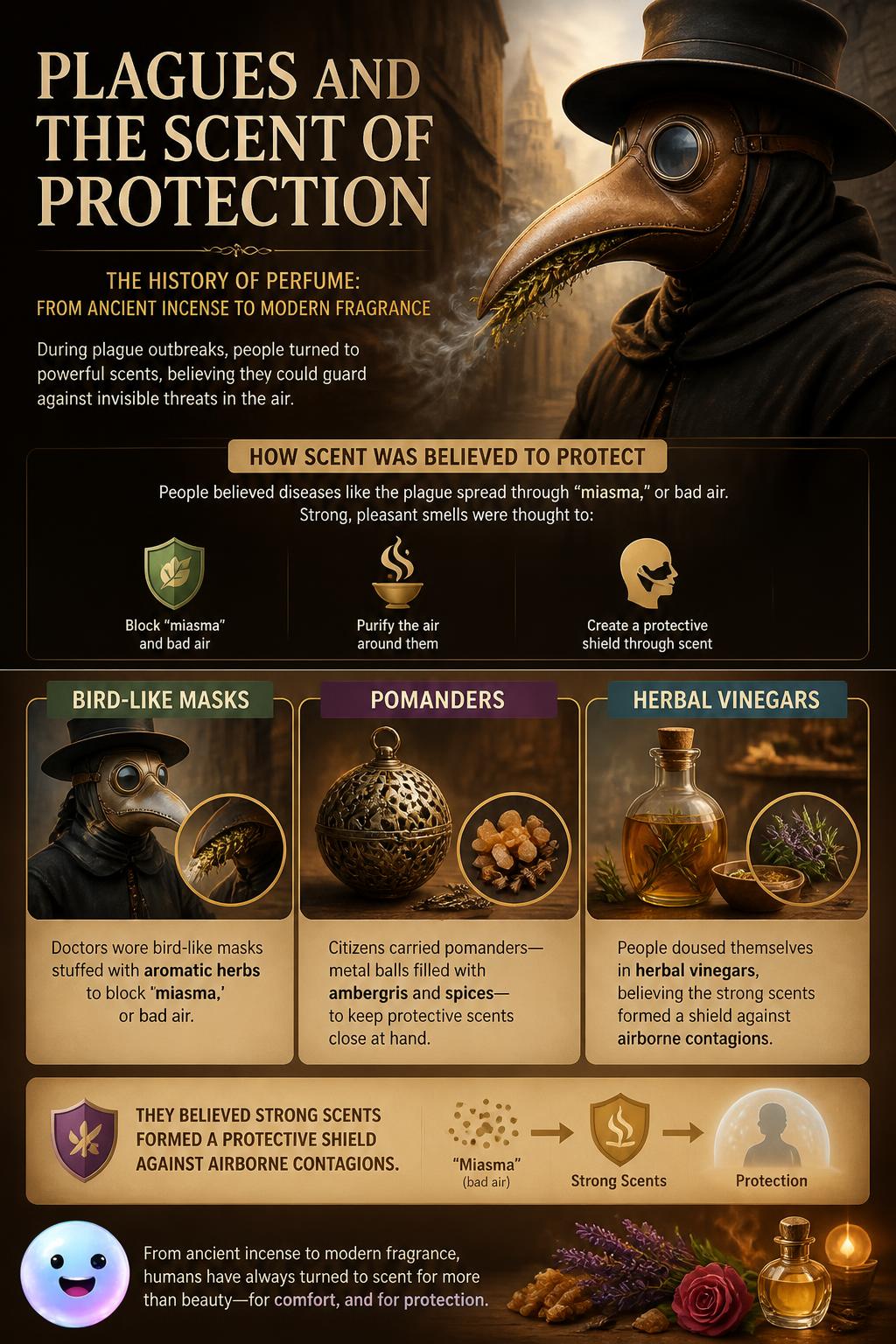
Plague Protection and Perfume History Infographic
A pointed bird-like mask, a metal pomander ball, and jars of herbal vinegar
Ancient origins and sacred smoke
The science of scent in the Golden Age
European courtly stench and the rise of Grasse
The modern synthetic revolution
elorea Doctors stuffed bird-shaped masks with herbs, while citizens carried spice-filled metal pomanders. These strong fragrances supposedly blocked deadly airborne miasma during historic outbreaks.
elorea French aristocrats avoided bathing because they feared water spread the plague. King Louis XIV used alcohol-soaked rags and strong animal scents to mask his body odor.
elorea Sixteenth-century French tanners in Grasse made foul-smelling leather. Catherine de' Medici introduced scented gloves to mask the odor, inspiring locals to grow flowers and create the world's perfume capital.
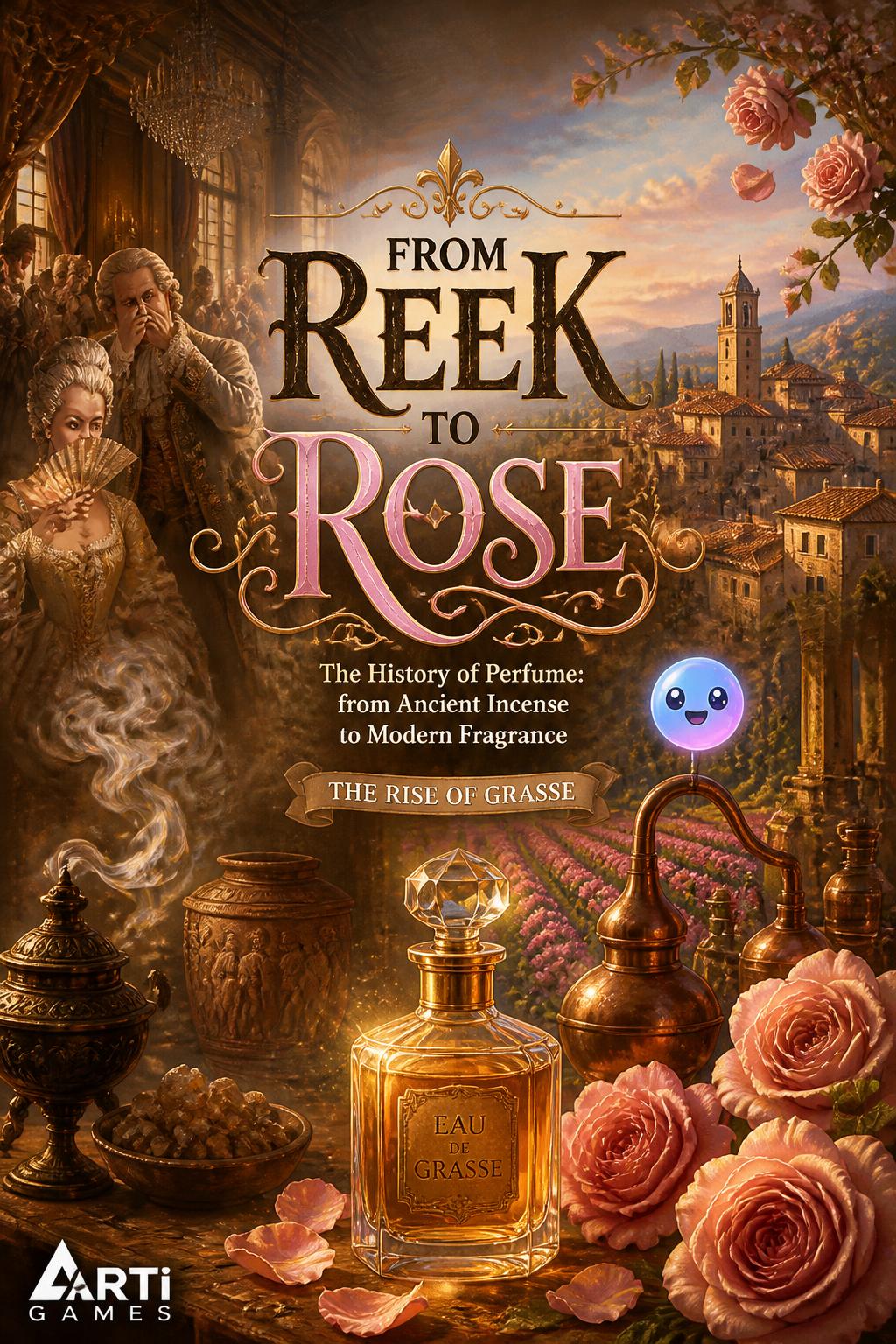
elorea Blend raw ingredients to discover how ancient incense evolved into modern perfume.
elorea Scented Gloves of Grasse
To mask the smelly leather, we soaked the gloves in rose / Now Grasse is making magic for every classy nose
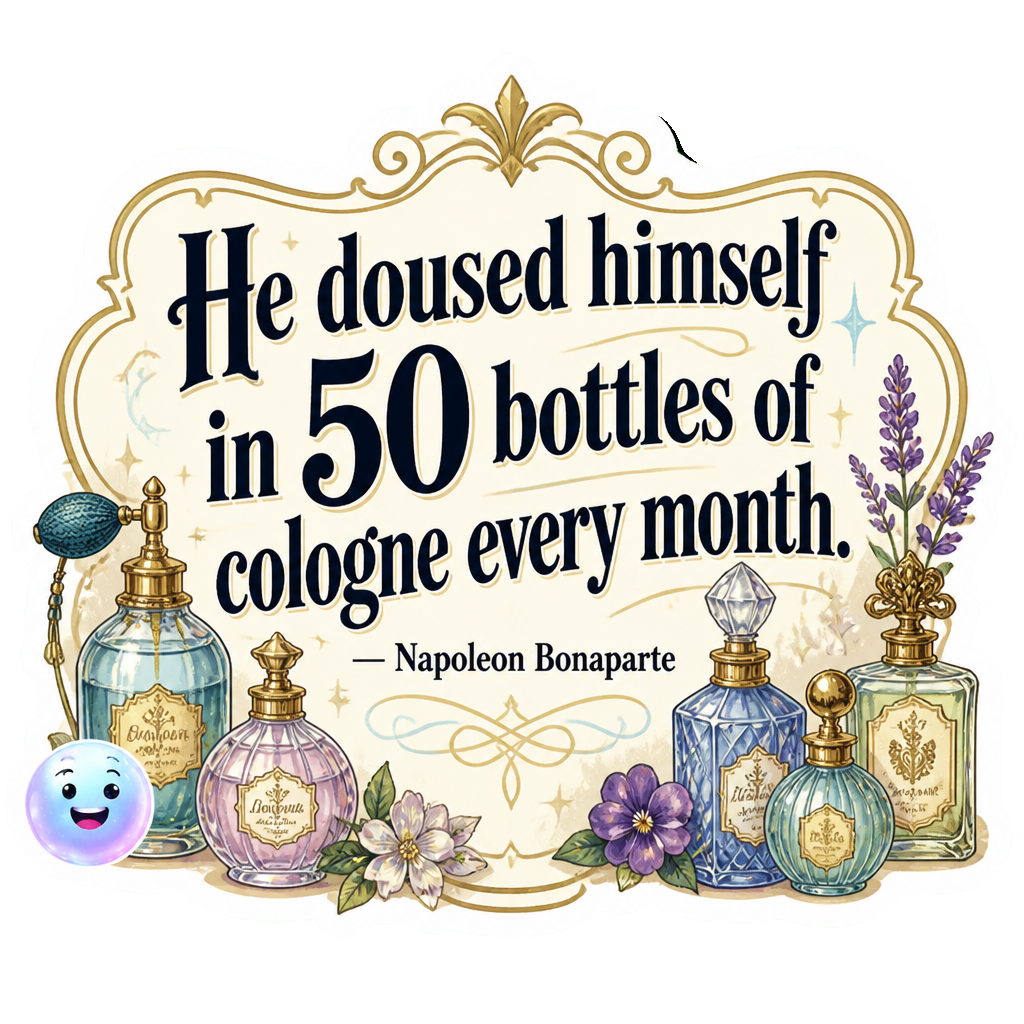
Napoleon's scent habit: Emperor Napoleon Bonaparte loved Eau de Cologne so much that he ordered 50 bottles a month to spray on himself.
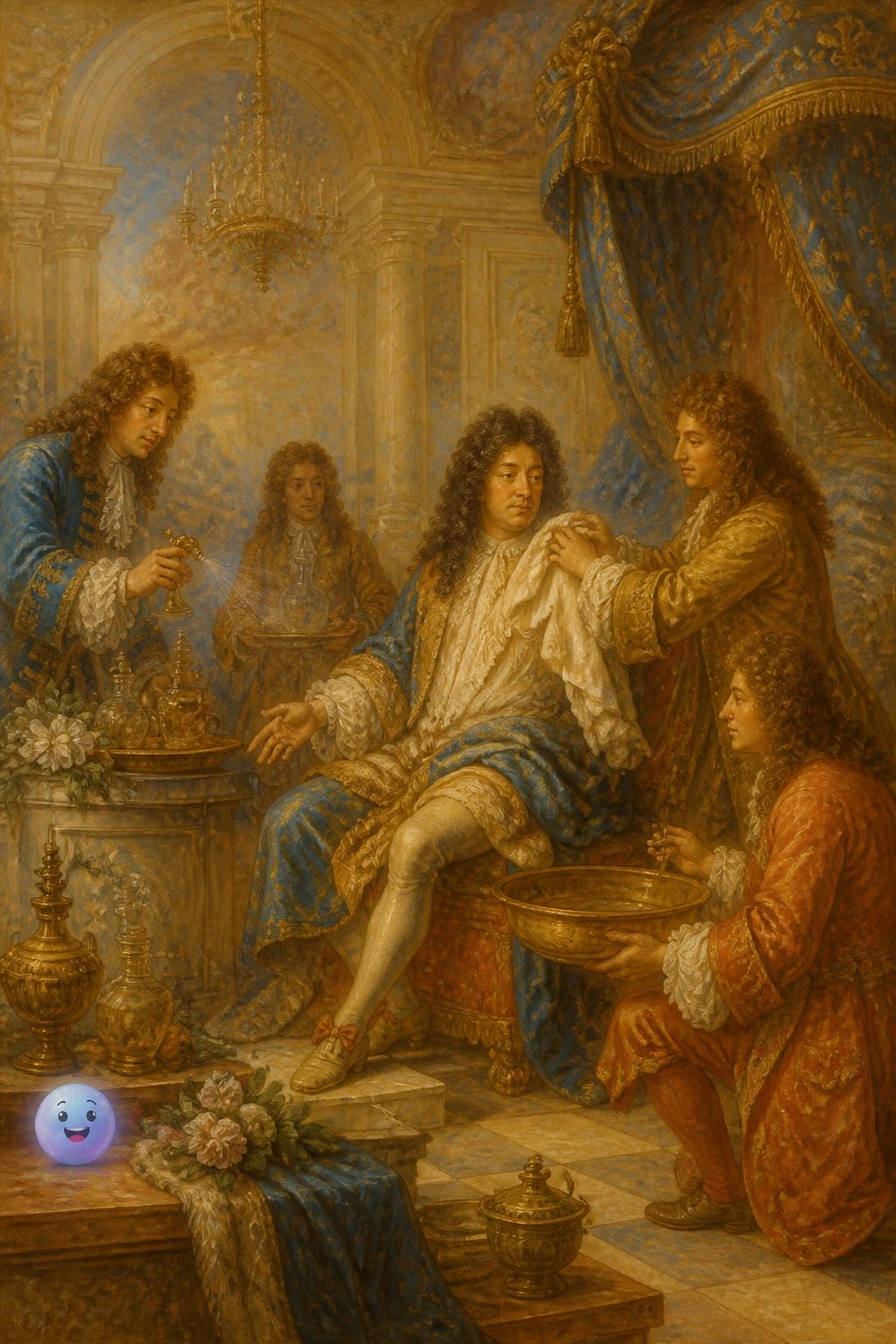
elorea French nobles gather under luminous classical light inside the Versailles court.
The art, business, or process of making perfumes. During the seventeenth century, Grasse transitioned from leather tanning to this industry to mask courtly odors.
Which French monarch was known as the 'sweetest smelling king' despite rarely bathing?
In which German city was the famous citrus-based 'Eau de Cologne' invented in 1709?
Which French town became the perfume capital of the world after starting as a smelly leather-tanning center?
What accessory did Catherine de' Medici popularize to mask the foul smell of tanned leather?