
Tiny Space Towers - A bit plain. * Backyard
Space towers in the backyard
The standard phone revolution
The global race to connect
Bright skies and crowded orbits

sonia Traveling at 27,000 kilometers per hour, these satellites squeeze and stretch their radio waves. Ground antennas must constantly recalculate these shifting frequencies to maintain a stable connection.
sonia Satellites orbiting between 160 and 2,000 kilometers up sit forty times closer than geostationary orbits. This proximity slashes signal delay, allowing standard smartphones to beam data directly into space.
sonia These spacecraft orbit 35,786 kilometers above Earth. Pocket-sized phones lack the antenna size and battery power to send signals across this massive gap.
sonia Space Towers in the Backyard
Tower in space, / Signals from orbit, / Straight to your phone!
sonia Engineers use geographic beamforming to steer satellite signals away from city towers. This precise technique lets orbiters safely use the 800 MHz band to connect standard smartphones.

sonia Build tiny space towers to discover how satellites connect directly to your backyard phone.
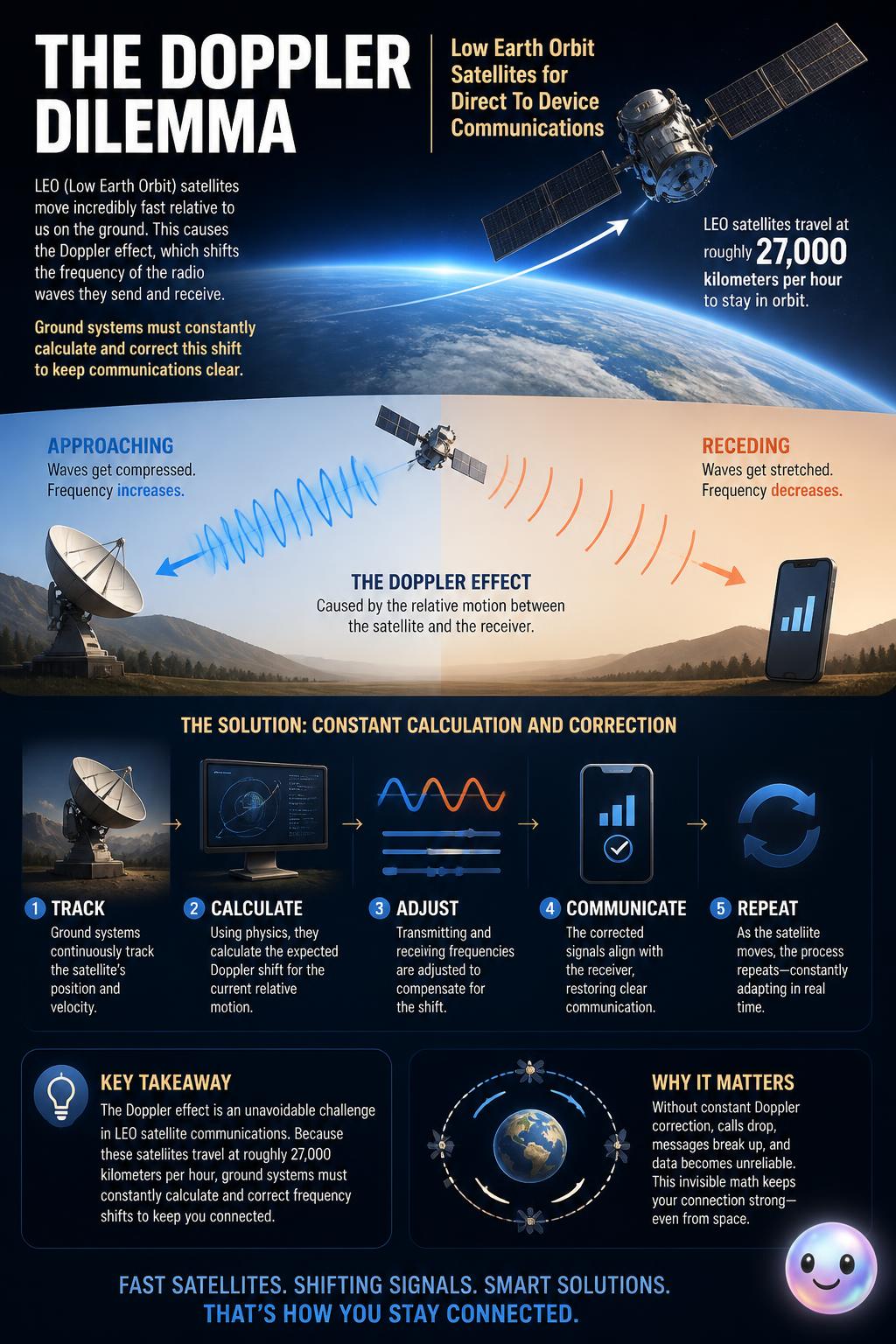
sonia Extreme satellite speeds warp radio frequencies, requiring smart software to keep calls connected.
LEO speed: LEO satellites travel so fast—about 27,000 km/h—that they circle the entire Earth in just 90 minutes.

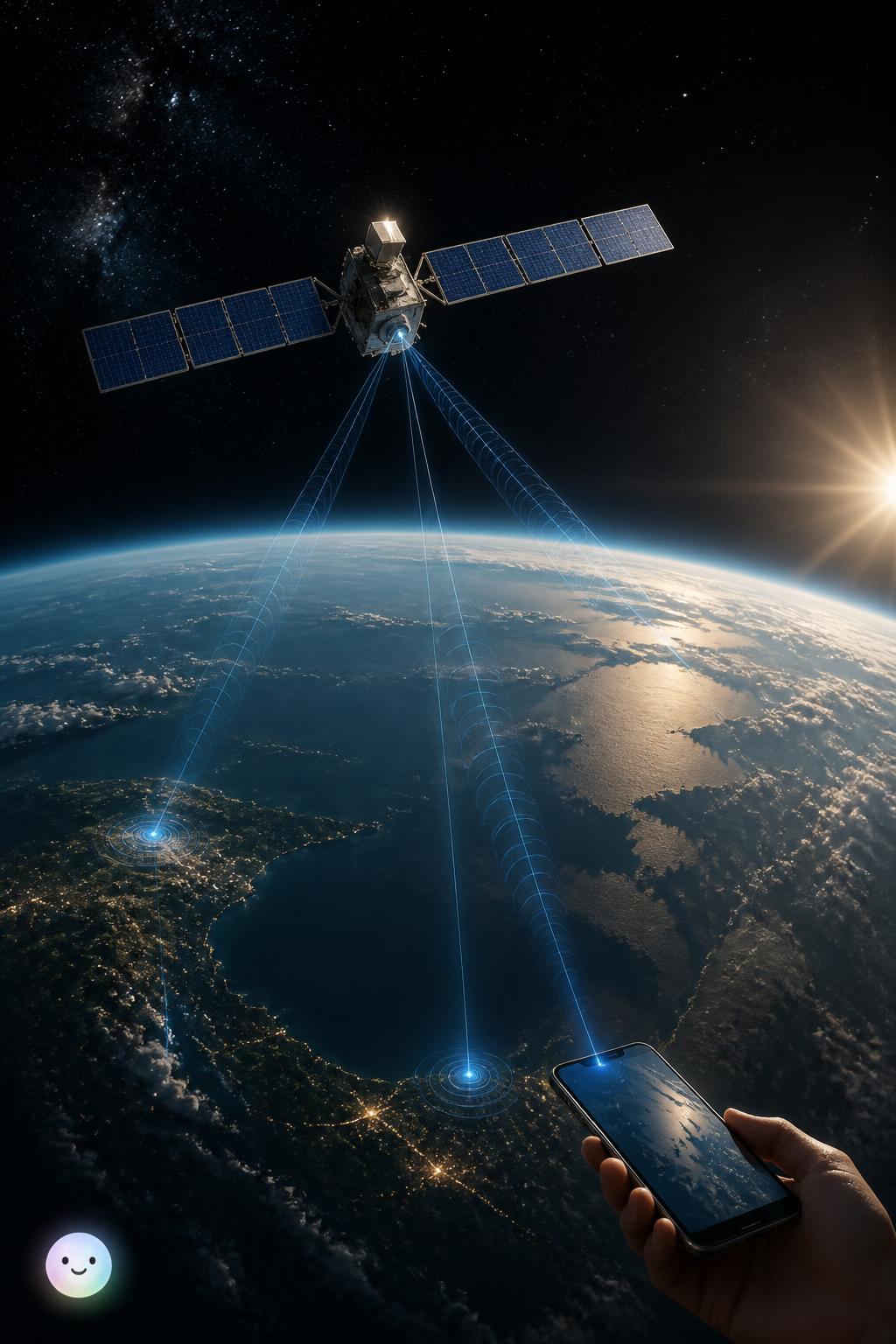
sonia Low Earth Orbit satellites zoom much closer to the ground, making direct-to-device communication physically possible.
An artificial body placed in orbit around the earth or another planet in order to collect information or for communication. In April 2023, AST SpaceMobile completed the first direct-to-cell voice call using an unmodified smartphone.
What is the primary advantage of LEO satellites over geostationary satellites for phone calls?
Which radio frequency bands are typically shared between ground towers and direct-to-device satellites?
What physical phenomenon causes a LEO satellite's frequency to shift as it moves past a phone?
How long does it take a typical LEO satellite to complete one full orbit around Earth?