The 30,000-year-old cold case at Breitenbach
The Bavarian cold case of Taimering
Neanderthals and the ancient giants
YOUR GOAL
Master of Mammoth hunters of ancient Germany

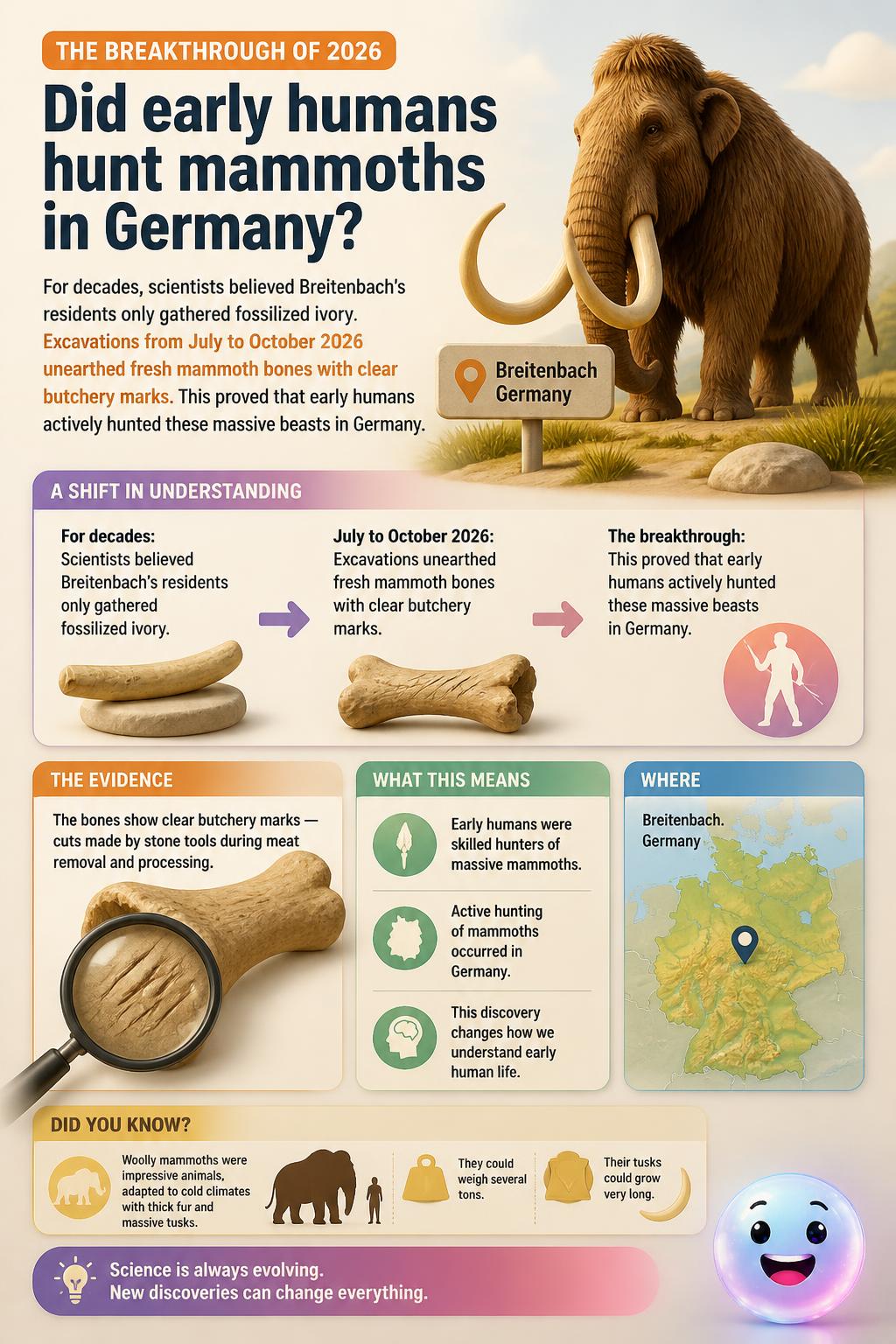
007skaty Excavations from July to October 2026 in Breitenbach revealed butchered mammoth bones, overturning the belief that humans only
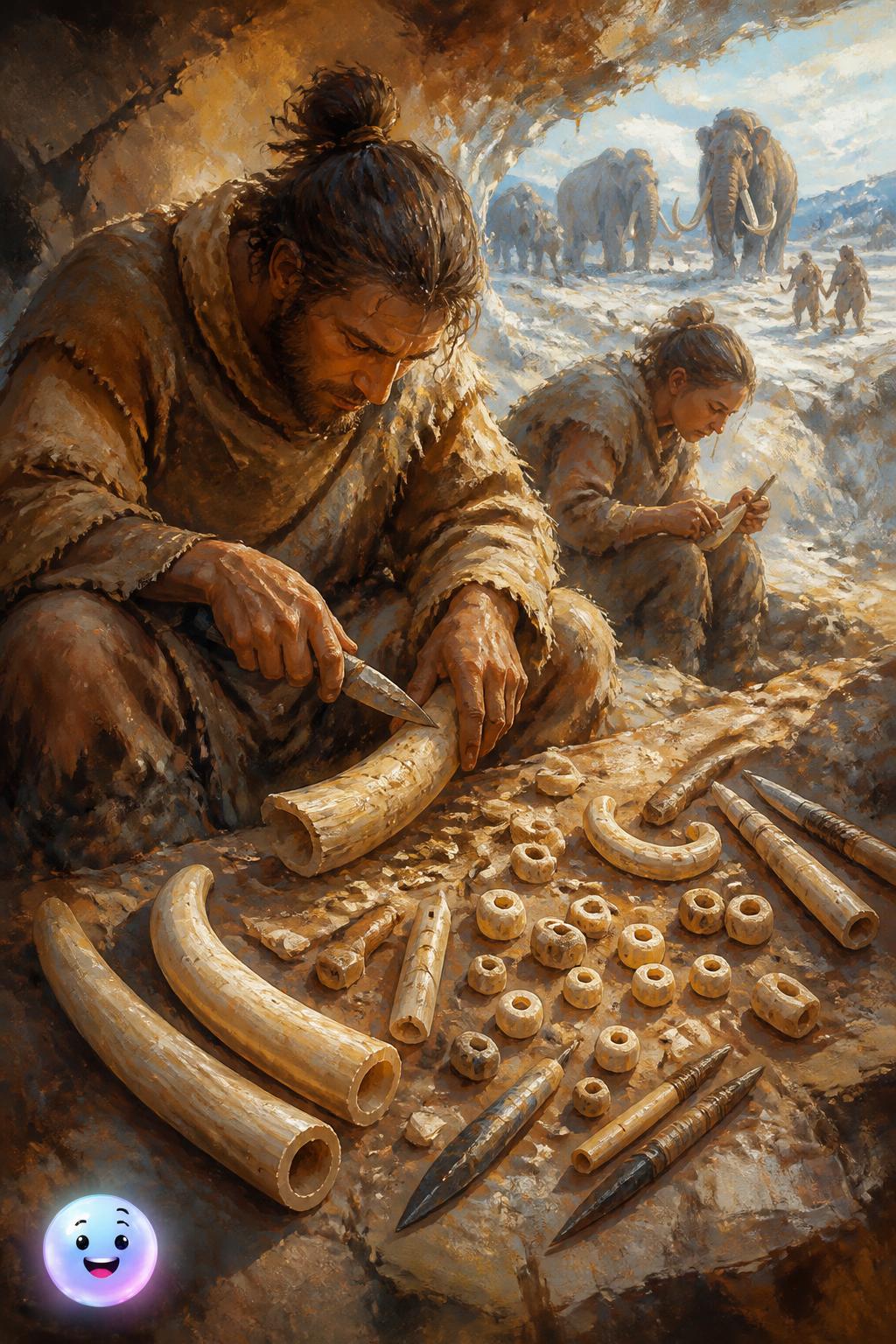
007skaty A vivid painting shows Ice Age artisans carving mammoth tusks in Saxony-Anhalt.
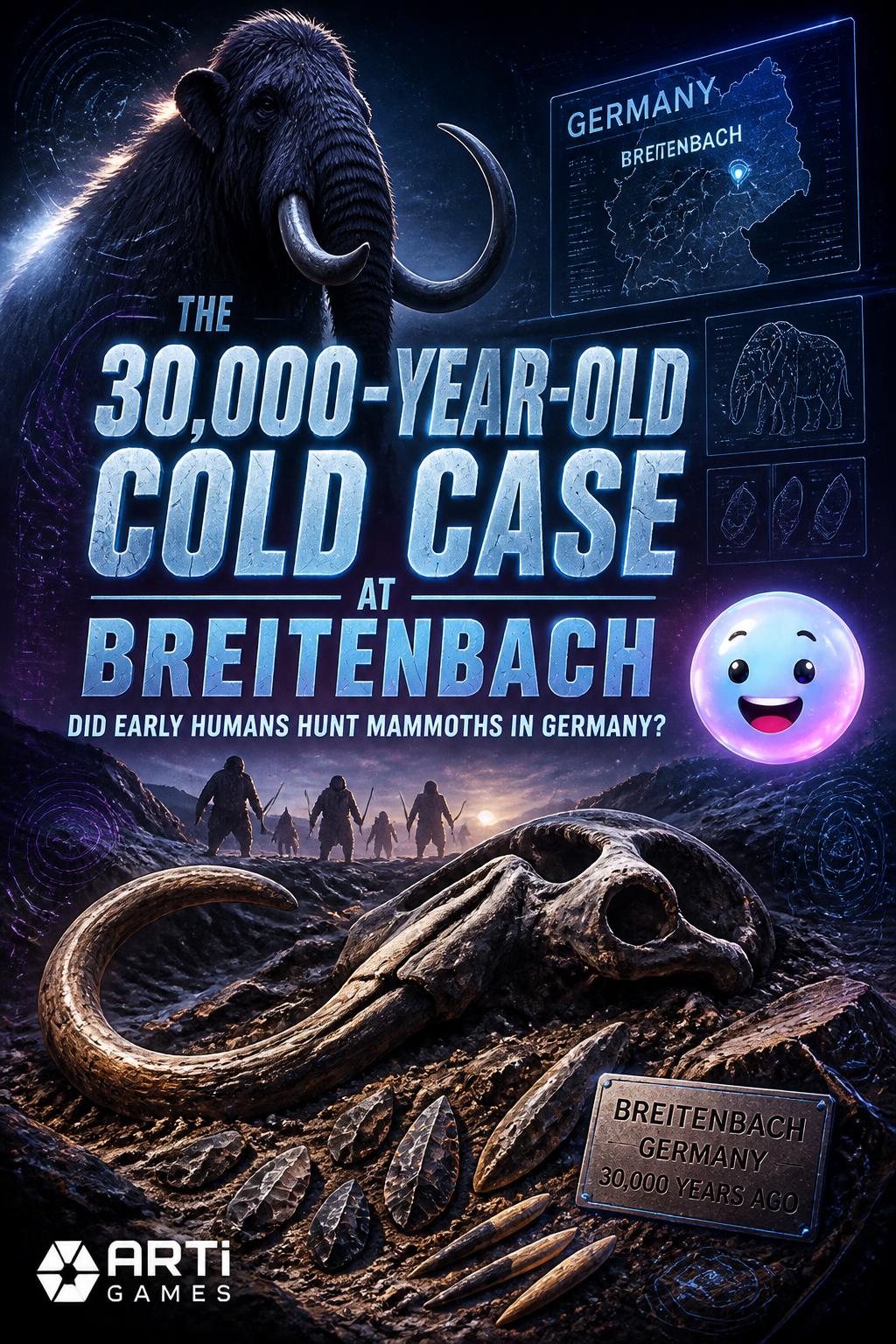
007skaty Piece together ancient clues to discover if early humans hunted mammoths in Germany.
Mammoth molar size: A single woolly mammoth molar tooth could weigh up to nine pounds and was about the size of a modern brick.
A large, extinct, hairy elephant of the Pleistocene epoch, typically having long, curved tusks. In Saxony-Anhalt, newly discovered bones suggest early humans actively hunted these giants 32,000 years ago.
Who first discovered the archaeological significance of the Breitenbach site in Germany?
007skaty Excavated animal bones reveal the diverse Ice Age diet of prehistoric humans.
In which German state is the Breitenbach-Schneidemühle archaeological site located?
Besides mammoths, what was the primary prey animal hunted by the people of Breitenbach?
What archaeological culture lived at the Breitenbach site in Germany around 32,000 years ago?
Why did scientists previously think Breitenbach humans did not hunt live mammoths?