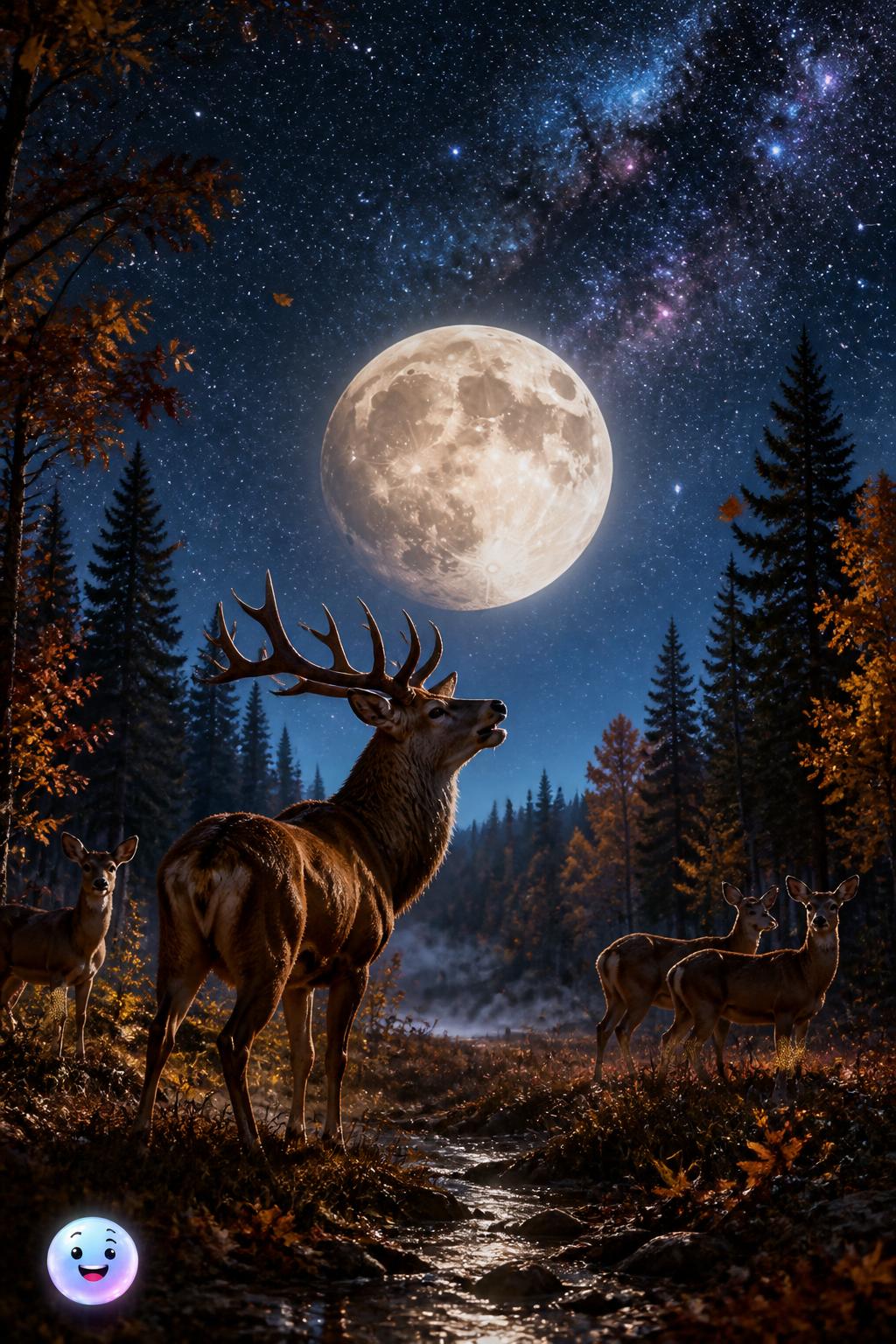
The autumn mating rush
The October deer mating season makes large animals highly active and easier to track.
The celestial mechanics of autumn light
Cultural history and ancient names
The ecology of the hunt
Global traditions and inverted skies
babyblue22 September harvests leave fields bare, drawing rabbits and pheasants to eat leftover grain. Under the bright October Hunter's Moon, predators easily spot these animals against the empty soil.
babyblue22 During the October peak, male deer lose their caution to find mates. Historic hunters used the bright autumn moonlight to target these active animals for winter food.
babyblue22 Early farmers cured and smoked meat during October's Hunter's Moon. This brief weather window stayed cold enough to prevent spoilage but warm enough to prevent freezing.
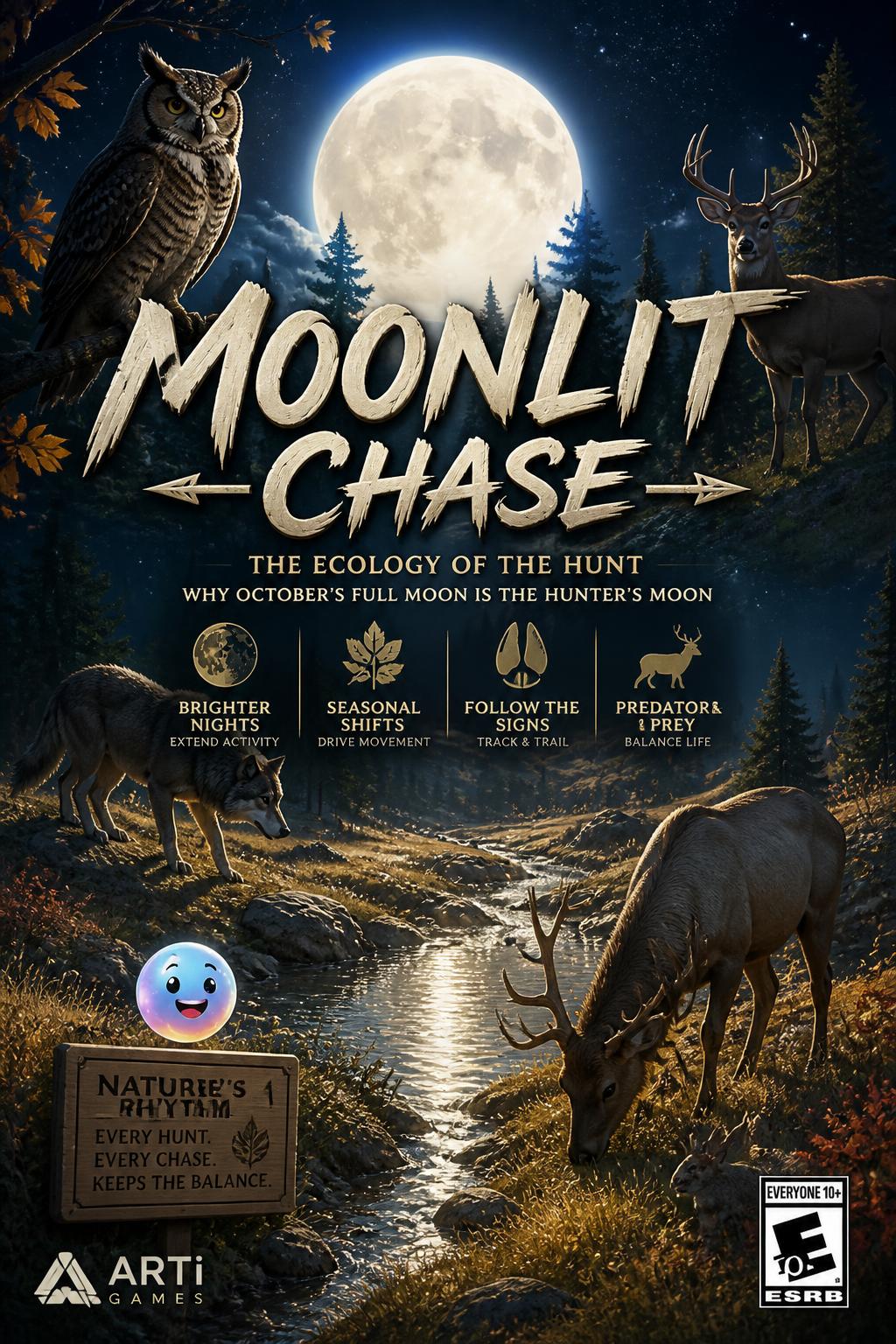
babyblue22 Chase prey through cleared autumn fields to discover why October has a Hunter's Moon.
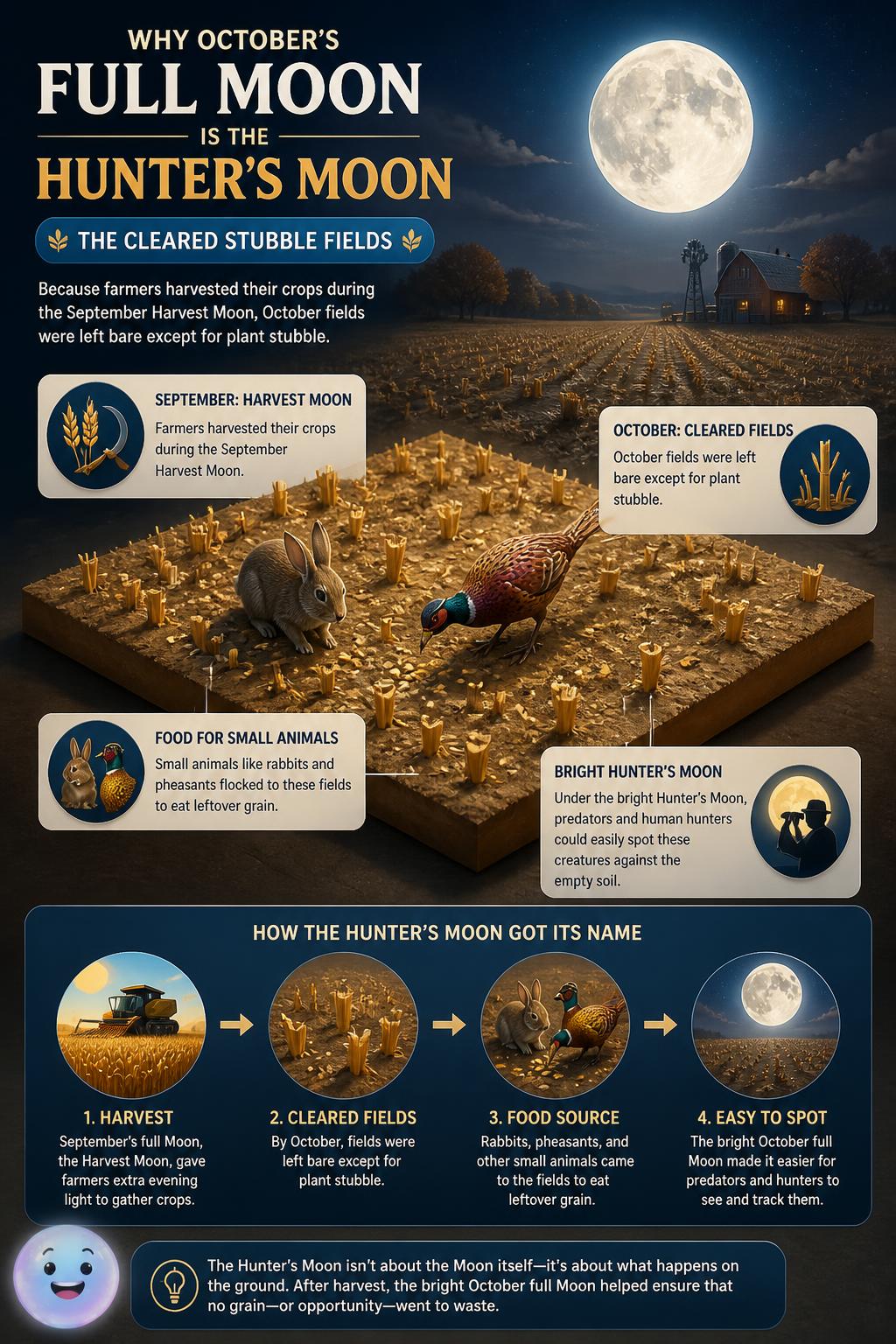
babyblue22 Post-harvest fields offer no protection for small game seeking leftover grains.
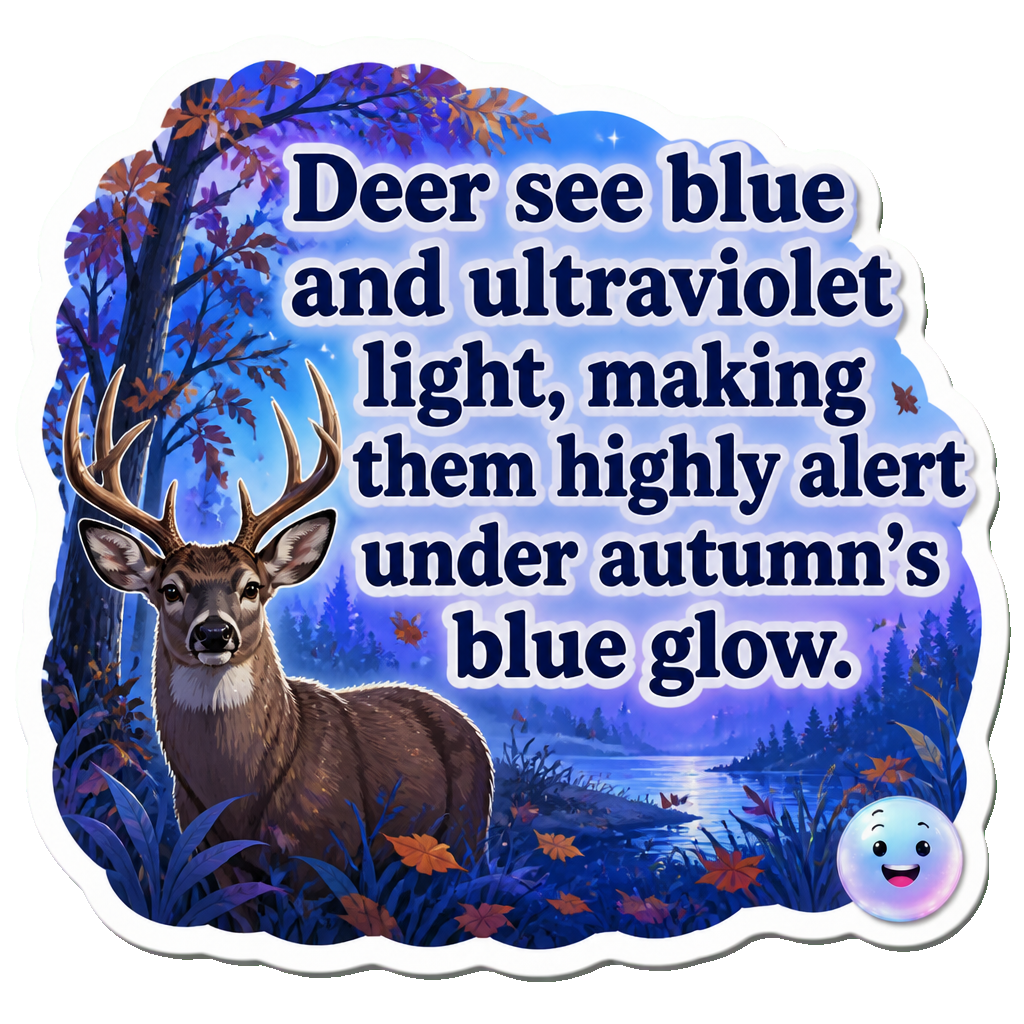
Deer vision: Deer see blue and ultraviolet light exceptionally well, making them highly alert under the cool, blue-tinted glow of autumn moonlight.
babyblue22 The October deer mating season makes large animals highly active and easier to track.
Wild animals hunted for food or sport. In October, hunters easily tracked these fattened animals across fields cleared during the autumn harvest.
Which animal behavior shifts in October as they prepare for winter hibernation?
What biological phase makes deer highly active and less cautious during October?
What survival strategy did pre-refrigeration communities rely on during the Hunter's Moon?
Why was October historically the ideal month for slaughtering and preserving livestock?