Chapter 1
The biology of goosebumps
Chapter 2
The magic of the leitmotif
Chapter 3
Setting the scene across the world
Chapter 4
The power of silence and sound design
Ch 1 · The biology of goosebumps

disney Heartbeat Synchronization
In the dark of the room, all our hearts are beating in time!
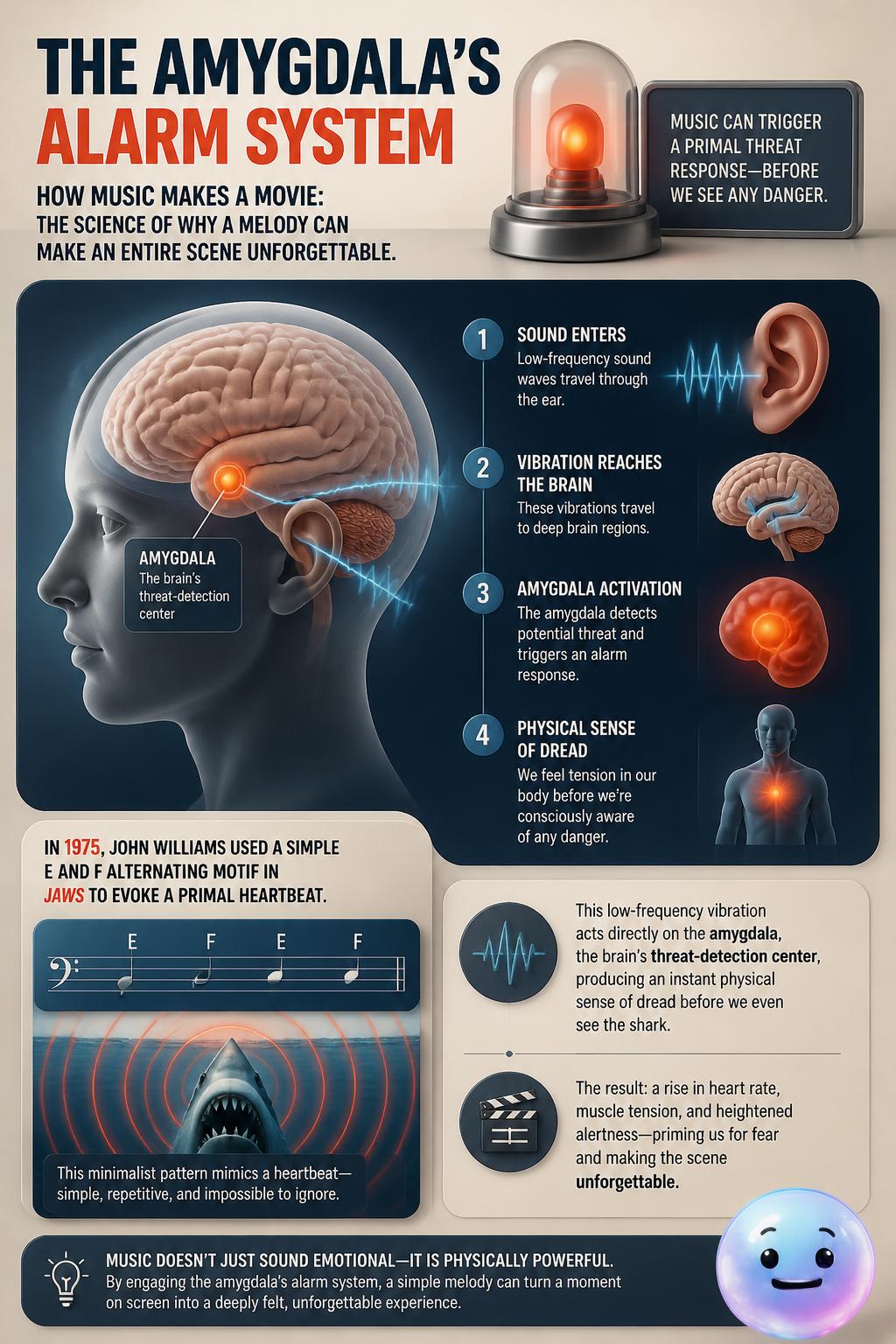
disney Low-frequency alternating E and F notes mimic a primal heartbeat, triggering instant physical dread before the shark even appears on screen
Quiz
Which brain structure is primarily responsible for the instant fear response triggered by low, repetitive musical notes like the Jaws theme?
Quiz
Which two musical notes did composer John Williams famously use to build the iconic, creeping tension in the 1975 movie Jaws?
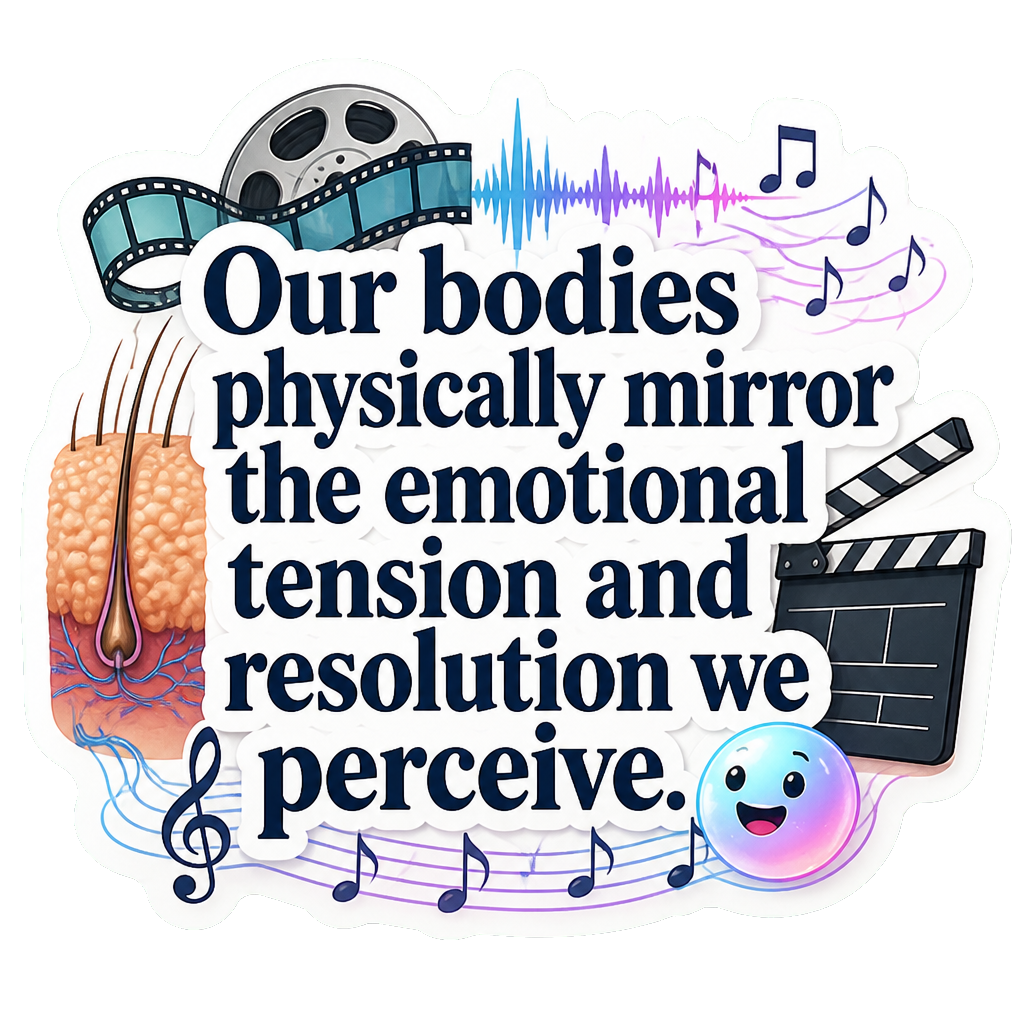
disney Delayed melodies trigger nervous system tension before resolving into a rewarding chemical release.
Quiz
What chemical does the brain release when a tense, unresolved musical melody finally resolves into a satisfying home chord?
Quiz
What is the psychological or physical term for the 'aesthetic chills' or goosebumps triggered by a deeply moving piece of music?
Fun Fact
Goosebumps science: About 50% of people experience physical chills, called frisson, when listening to powerful music, a trait linked to high neural connectivity between the auditory and emotional brain centers.
Quiz
In music theory, which interval is known as the 'tritone' or 'the devil's interval' due to its highly unstable and unsettling sound?
Quiz
Which specialized brain cells are responsible for helping us empathize and feel 'emotional contagion' when we hear sad music in a movie?
Glossary
piloerection (noun)
The involuntary erection of hairs on the skin, typically caused by cold, fear, or strong emotion. In 1995, neuroscientist Jaak Panksepp discovered that melancholy music frequently triggers this bodily reaction.
The involuntary erection of hairs on the skin, typically caused by cold, fear, or strong emotion. In 1995, neuroscientist Jaak Panksepp discovered that melancholy music frequently triggers this bodily reaction.
Quiz
What is the scientific term for when biological rhythms, like your heartbeat, synchronize with an external rhythmic beat?
Quiz
Which film composer is famous for using driving, rhythmic tempos and ticking clocks to physically raise the audience's heart rate?