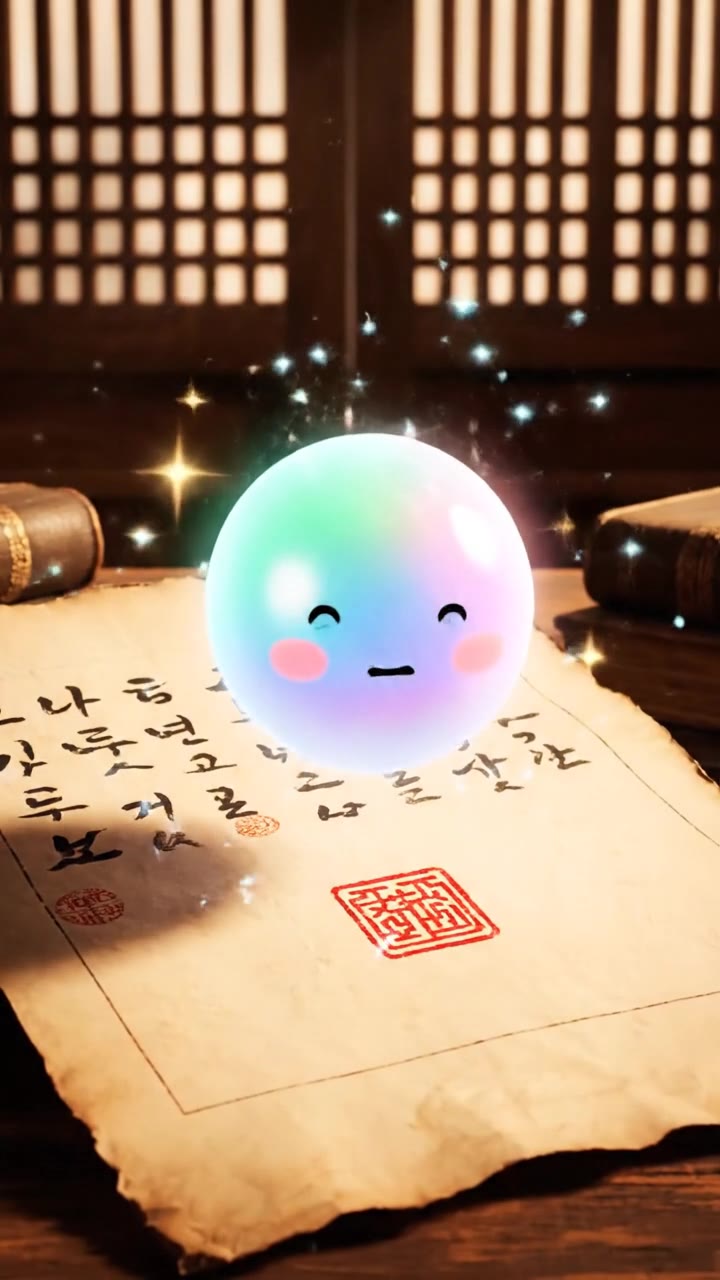
문창살에서 따왔다는 기막힌 오해
1940년 안동에서 훈민정음 해례본이 발견되기 전까지 한글의 창제 원리는 베일에 싸여 있었습니다. 이 때문에 일본 학자들은 한글을 화장실 창살이나 문창살을 보고 대충 만들었다고 폄하했으나, 해례본을 통해 고도의 과학적 원리가 증명되었습니다.
세종의 비밀 프로젝트와 훈민정음의 탄생
발음 기관을 본뜬 자음의 과학적 설계
우주를 담은 모음과 기하학적 미학
한글의 진화와 디지털 시대의 축복
soomin Fearing backlash from scholars like Choe Man-ri, King Sejong hid his work until 1443. He developed the alphabet in total secrecy with help from Princess Jeongui.
soomin Japanese scholars claimed the Korean alphabet copied toilet grates. The 1940 discovery of the Hunminjeongeum Haeryebon manuscript in Andong finally proved the script's scientific principles.
soomin King Sejong studied over ten hours daily, triggering blinding eye diseases in his thirties. He still created the Hunminjeongeum writing system before his death in 1450.
soomin King Sejong finished Hangul in December 1443. Because the exact day is missing, historians calculated October 9 as Hangul Day using a 1446 document.

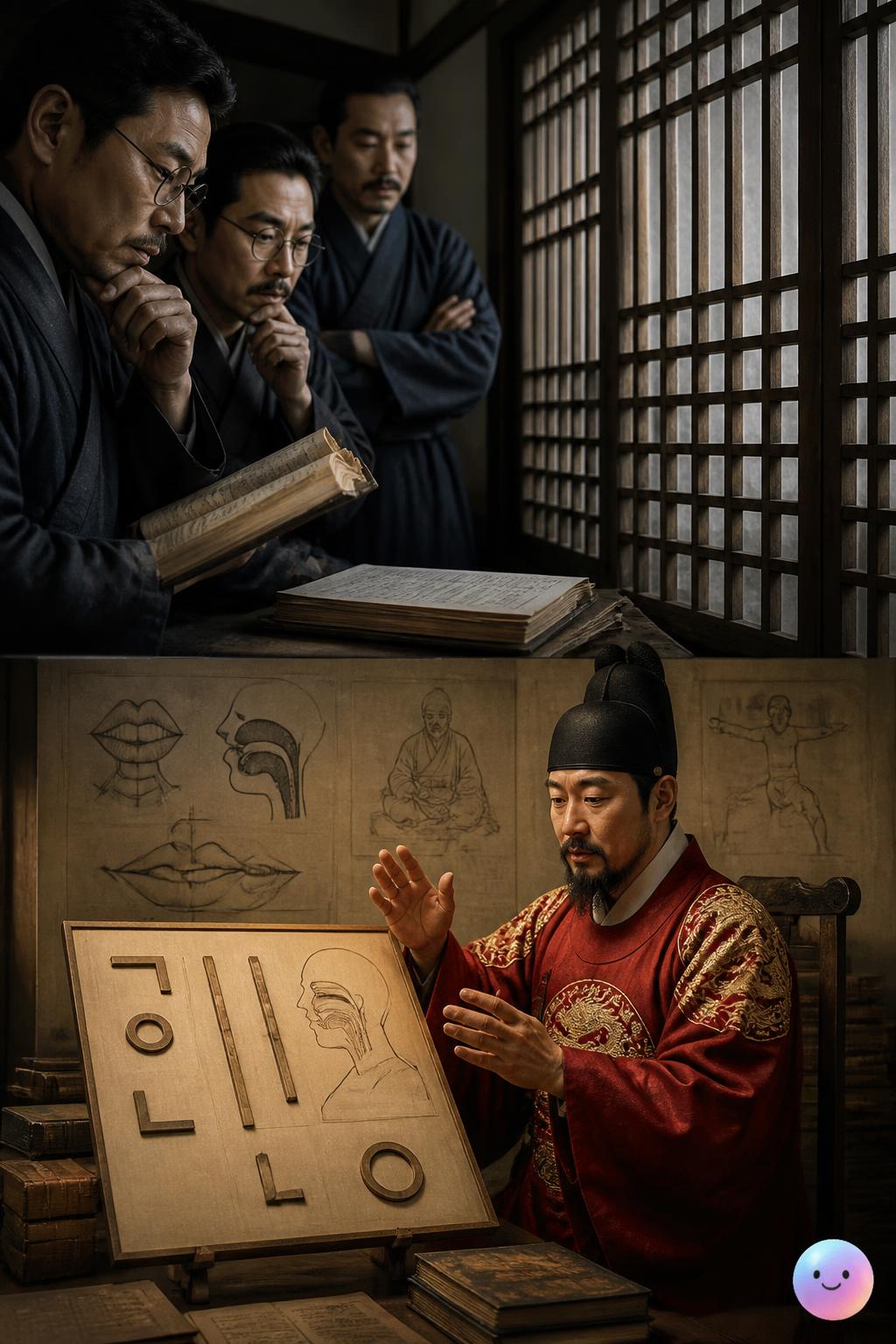
세종대왕이 창제하여 반포한 우리나라 고유 문자의 공식 명칭. 세종은 최만리 등 사대부들의 반대를 피해 1443년 극비리에 이 문자 체계를 완성했다.