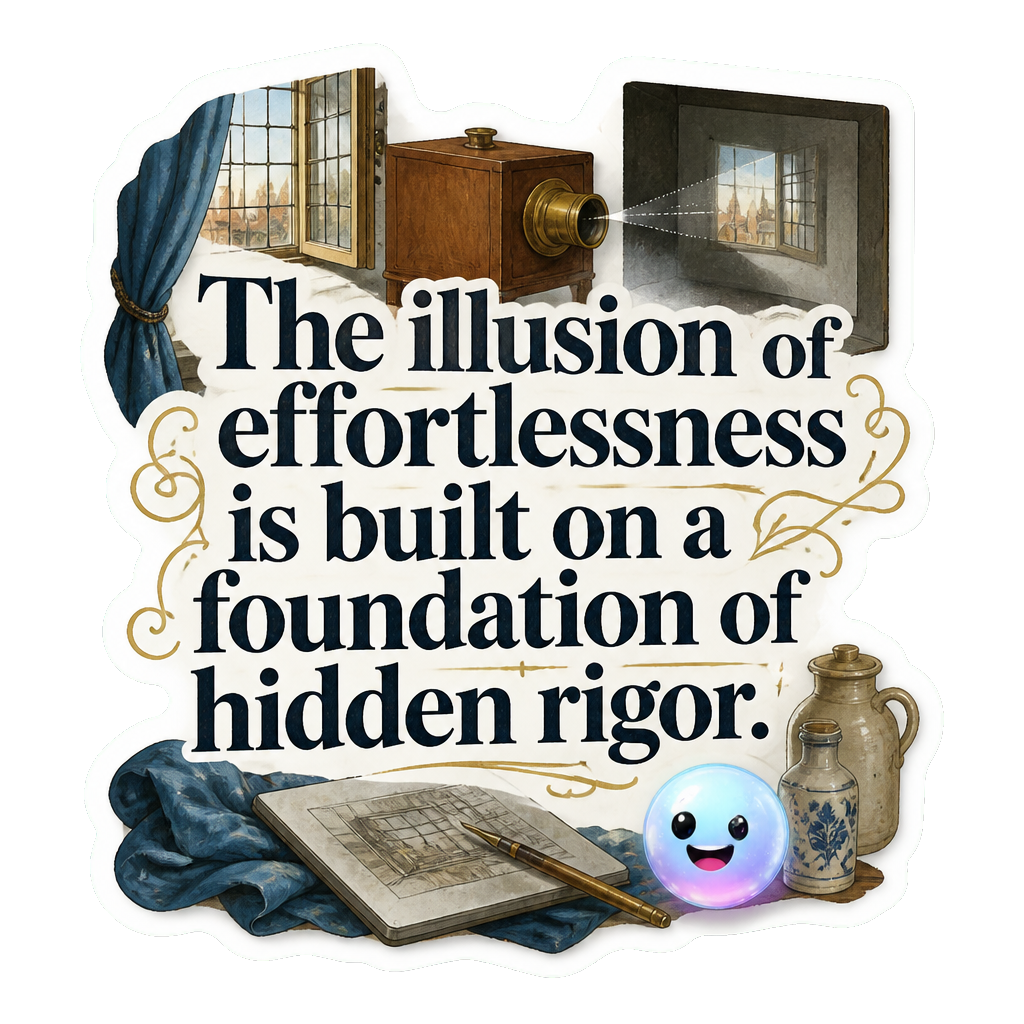
The optical magic of the camera obscura
The outrageously expensive blue
Everyday lives behind the glass
The great vanishing act and the fakes
YOUR GOAL
Master of Vermeer and the mystery of the quiet window
suaz The Lens-Making Neighbor
He polished up a lens to find the secrets of the small, And managed Vermeer's paintings when his neighbor left it all.
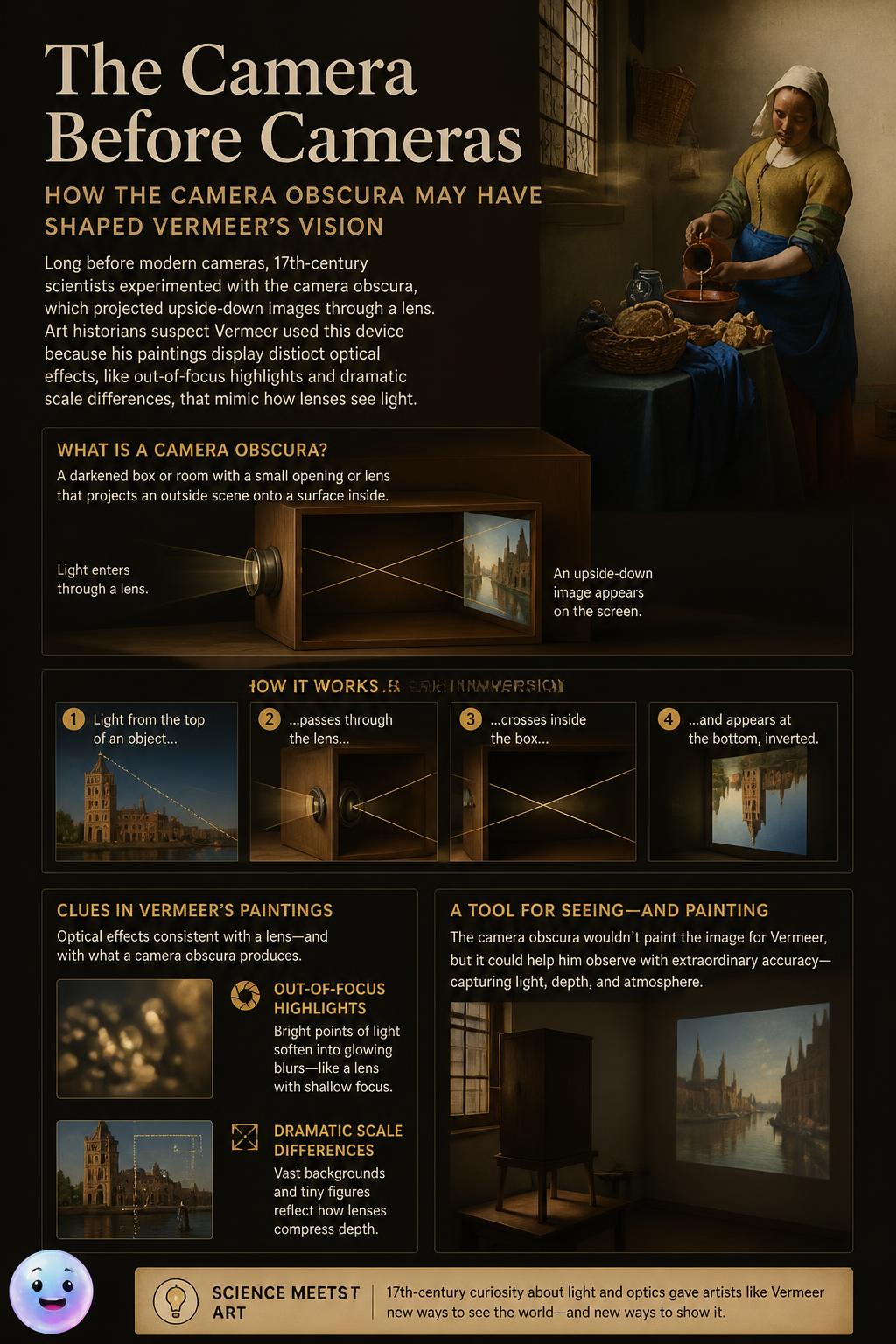
suaz Art historians suspect Vermeer used this lens device, which projected upside-down images, to paint his 34 everyday window scenes.
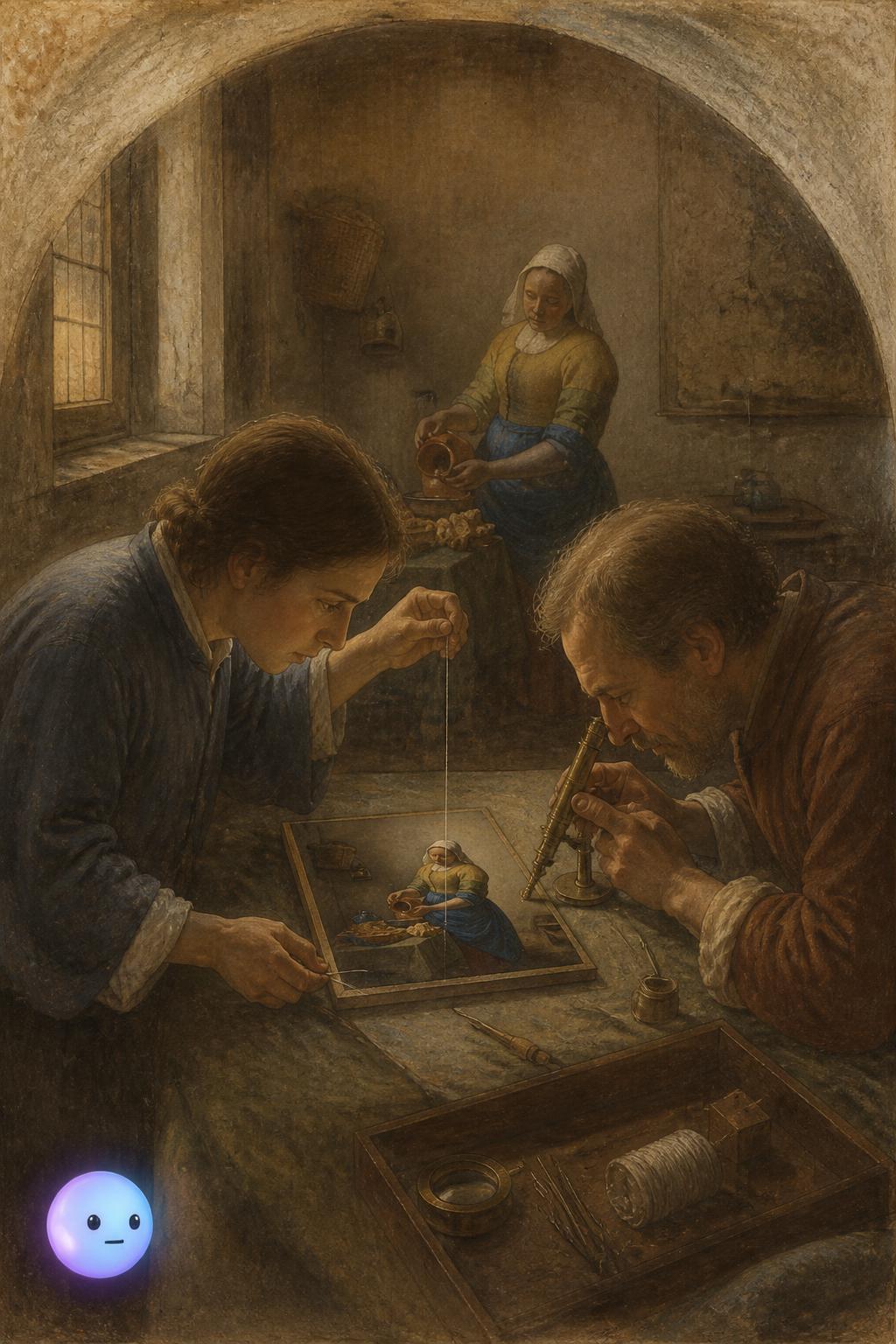
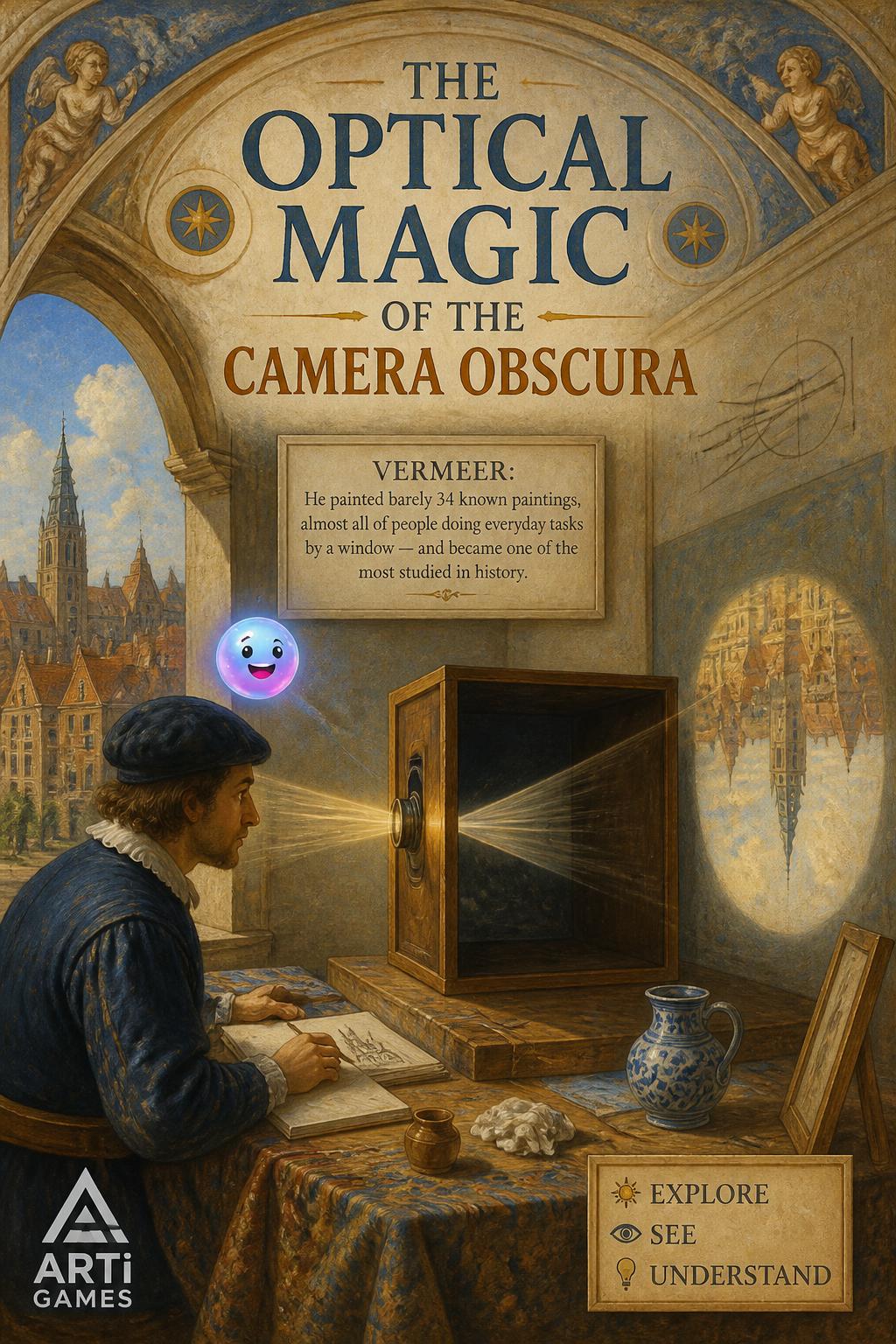
suaz Focus the camera obscura to discover how Vermeer painted his realistic window scenes.
Camera obscura: The term 'camera obscura' literally translates from Latin to mean 'dark room,' which is exactly what a room-sized optical projection box was.
An instrument consisting of a darkened chamber where light passing through a tiny hole projects an external image onto a screen. Scholars believe Vermeer used this device in his Delft studio to study light and perspective.
In which century did Johannes Vermeer live and paint his masterpieces in the Dutch Republic?
What optical device do historians believe Vermeer used to help project and paint his incredibly realistic scenes?
What physical clue did researchers find in the canvas of Vermeer's The Milkmaid that revealed his perspective technique?
What did Vermeer attach to the pins in his canvas to help draw straight lines toward the vanishing point?
What is the modern photographic term for the blurry, out-of-focus circles of light that Vermeer painted on objects like bread?
Why are Vermeer's painted 'circles of confusion' considered evidence that he used a lens?
For which two Vermeer paintings is scientist Antoni van Leeuwenhoek widely believed to have posed as the model?