
BETA

Hearing a false claim repeated multiple times makes our brains more likely to accept it as true.
renaissanceman Swipe through viral posts to discover how your brain decides what to believe.
renaissanceman Critical Thinking Power
Question everything! Question everything! Spot the truth, clear and bright.
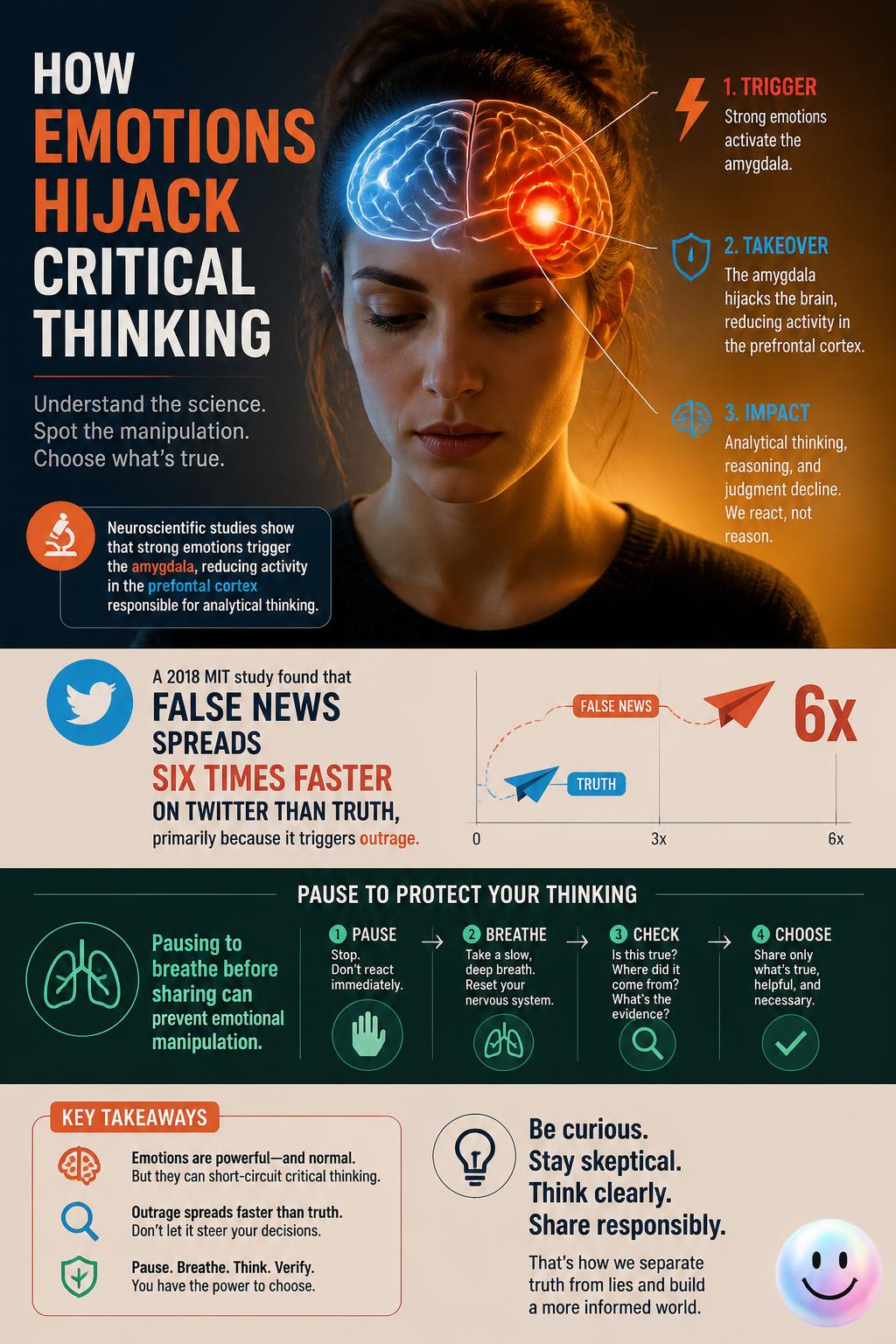
renaissanceman High-arousal emotions like anger and fear temporarily disable our logical reasoning centers, making us easy targets.
Fake news speed: False news spreads six times faster than the truth on social media platforms.

renaissanceman Hearing a false claim repeated multiple times makes our brains more likely to accept it as true.
In the 1979 Stanford study on capital punishment, how did participants react to fake studies that opposed their views?
What simple action is recommended to prevent emotional manipulation by online headlines?
Which brain structure is responsible for triggering strong emotions like anger, which can temporarily hijack our logical thinking?
What cognitive shortcut causes us to mistake familiarity for factual accuracy?
According to a 2018 MIT study, how much faster does false news spread on Twitter compared to the truth?
Which university conducted the landmark 1977 study on the 'illusion of truth' effect?