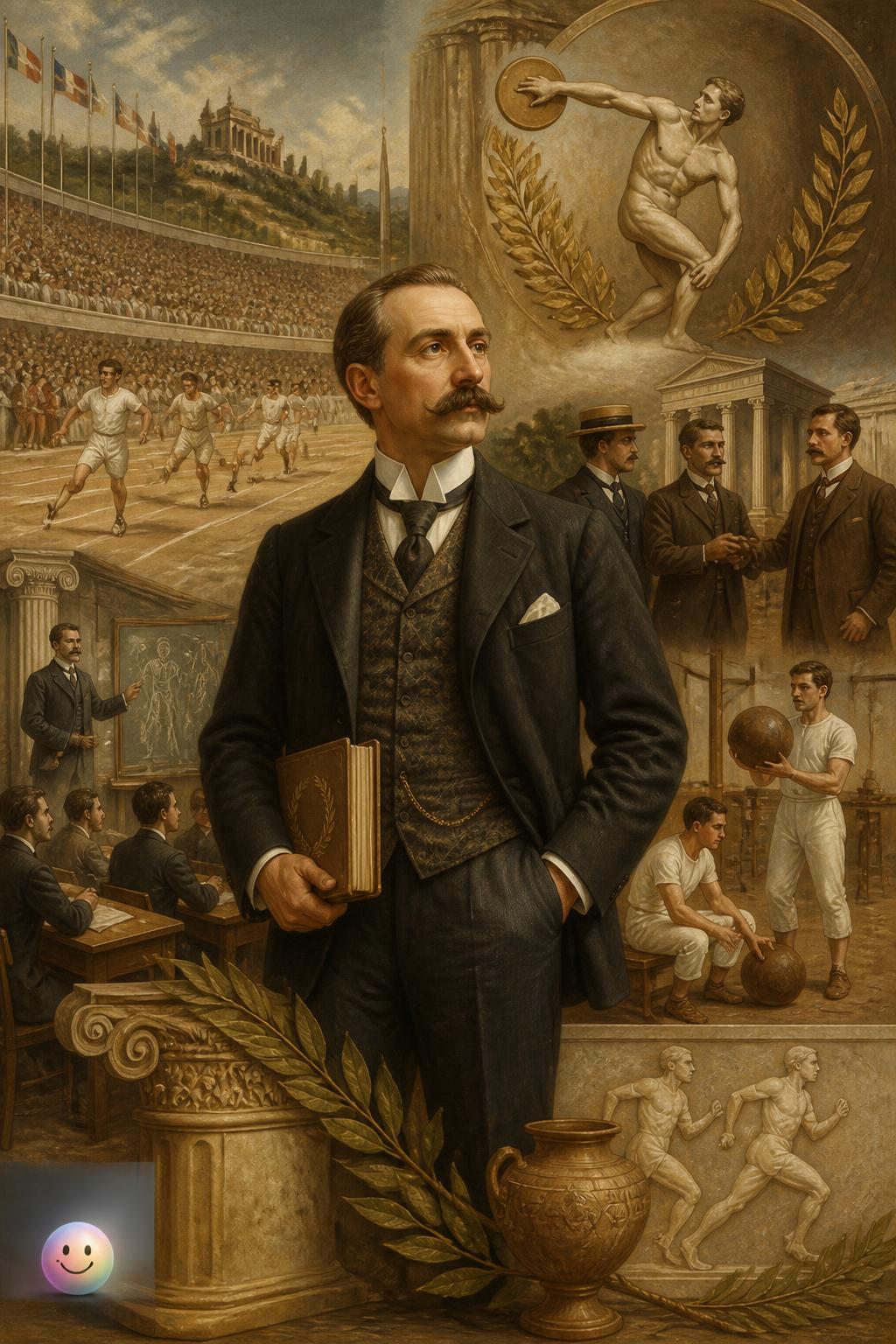
The vision of Pierre de Coubertin
Reviving the ancient games
Symbols, design, and rituals
Global expansion and complicated legacy
YOUR GOAL
Master of The birth of the modern Olympics
schopenhauer Olympic Rings
Every single flag, every single flag, Finds its color in the rings.
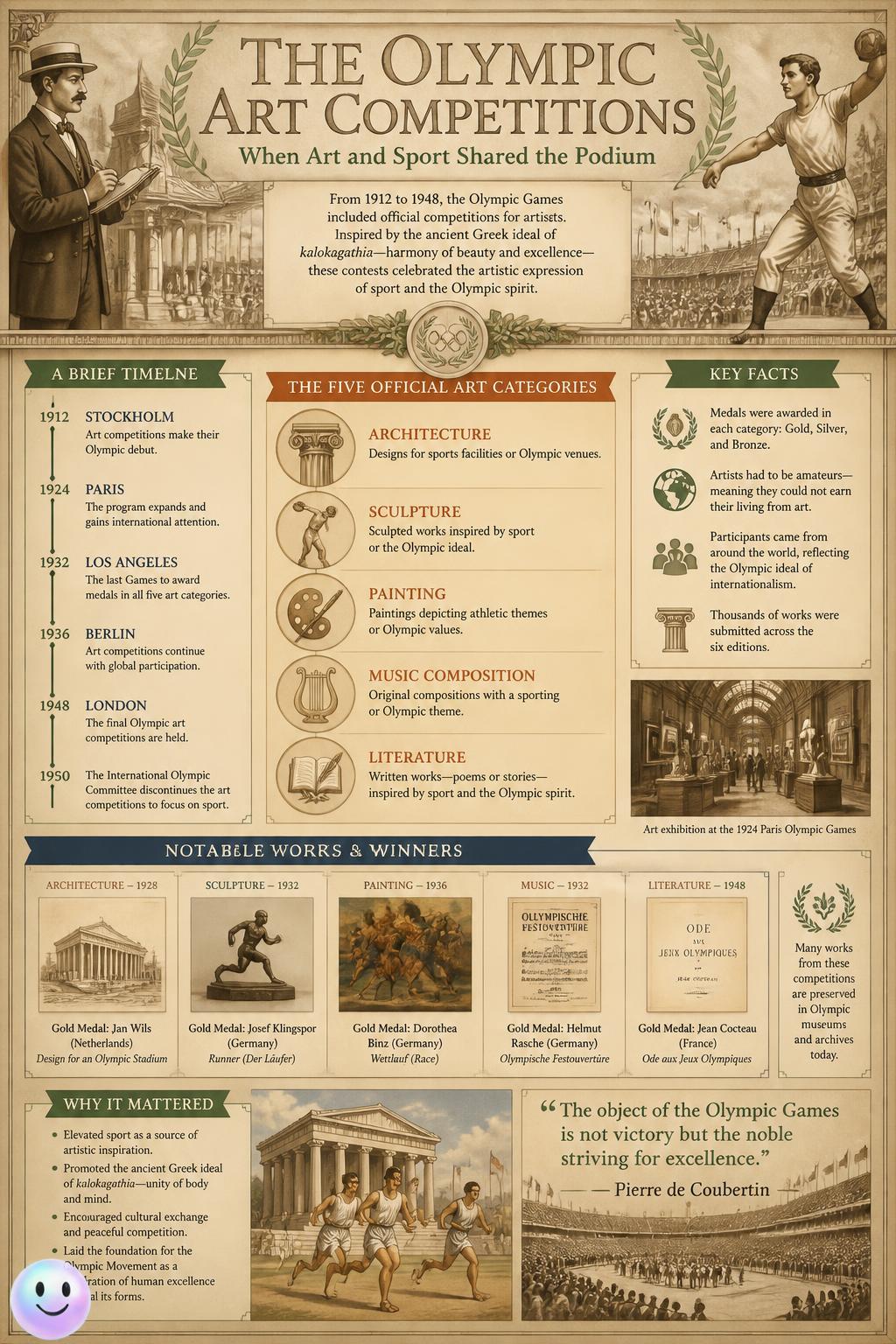
schopenhauer For decades, the Olympics awarded official medals for architecture, literature, music, painting, and sculpture.
schopenhauer The famous Olympic motto 'Citius, Altius, Fortius' was actually borrowed from a French Dominican priest.
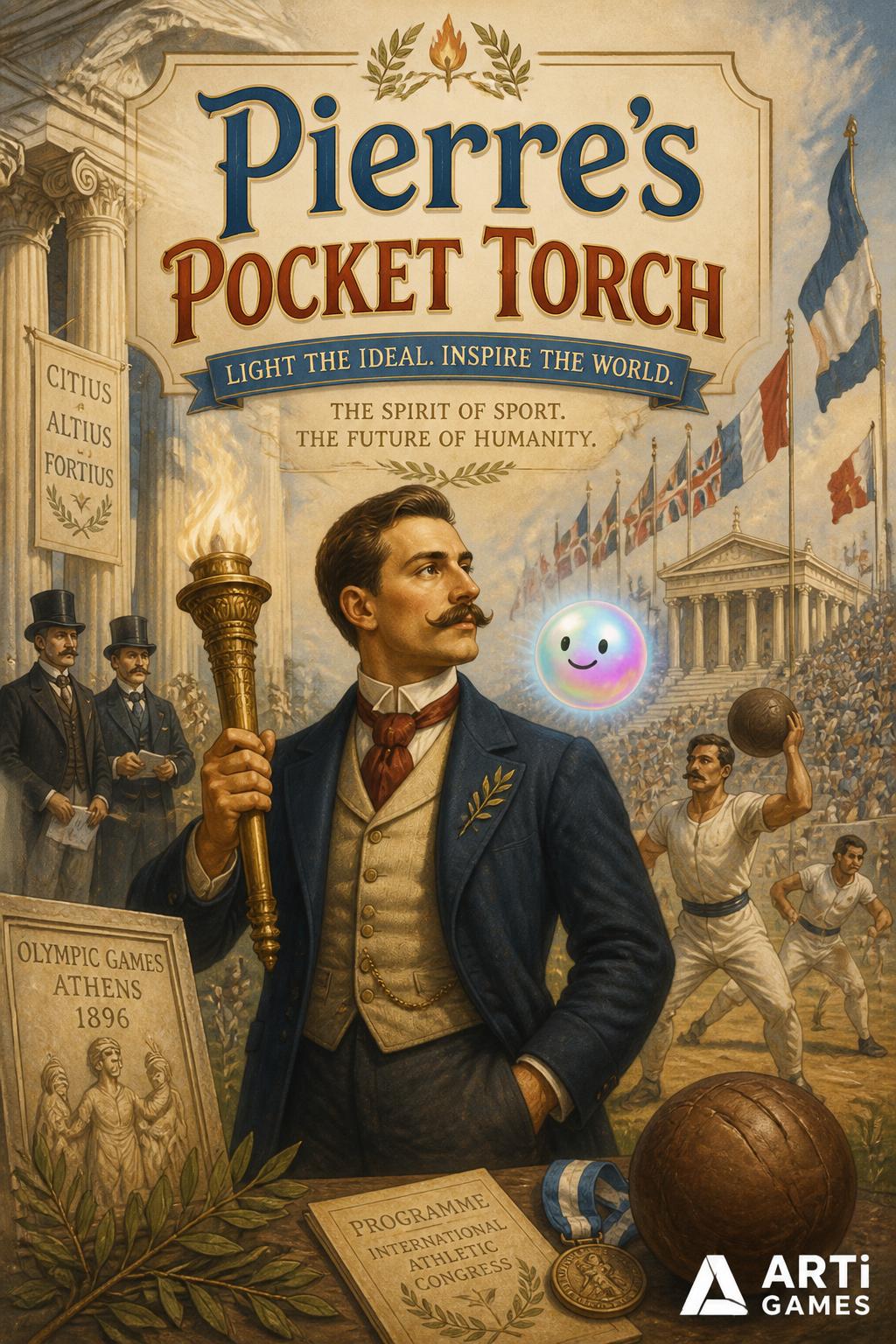
schopenhauer Swipe the pocket torch to discover how Pierre de Coubertin revived the Olympic Games.
Coubertin's secret gold: Pierre de Coubertin won an Olympic gold medal for literature in 1912 for his poem 'Ode to Sport,' written under a pseudonym.
A visual emblem consisting of five interlocking circles representing different regions of the world. Pierre de Coubertin designed the symbol in 1913, and it debuted at the 1920 Antwerp Games.
Between 1912 and 1948, what non-athletic category awarded official Olympic medals?
Who originally coined the Olympic motto 'Citius, Altius, Fortius' before Coubertin adopted it?
Who was the first athlete to recite the newly created Olympic oath at the 1920 Games?
Why did Pierre de Coubertin choose the specific colors for the five Olympic rings?
In what year did Pierre de Coubertin design the famous five interlocking Olympic rings?
Under what circumstance did Pierre de Coubertin win an Olympic gold medal in 1912?
What word was added to the official Olympic motto in 2021 to promote solidarity?
In which city were the Olympic oath and the Olympic flag first officially introduced in 1920?