
은행 대신 집주인에게 돈을 빌려준 역사적 배경
1970~80년대 한국 경제는 급성장했지만 개인을 위한 주택 담보 대출 제도가 매우 부족했습니다. 집을 사려는 사람들은 은행 대신 세입자에게 무이자로 목돈을 빌리는 '전세 보증금'을 활용해 집값을 치렀고, 세입자는 월세 부담 없이 저축할 기회를 얻었습니다.
논밭에서 대한민국의 심장이 된 강남의 역사
세계에서 유일한 금융 제도, 전세의 비밀
아파트 공화국, 콘크리트가 부의 상징이 된 날
청약 통장과 미래의 집
soomin Lower central bank interest rates prompt landlords to switch from Jeonse to monthly rent. This sudden drop in available housing deposits drives Jeonse prices higher.
soomin Past bank interest rates of twenty percent allowed landlords to profit from tenant deposits. They used this interest-free cash to buy more properties during the housing boom.
soomin Following the 1876 Treaty of Ganghwa, crowded cities like Seoul and Busan faced housing shortages. Landlords traded rooms for lump-sum loans, forming a system officially recognized in the 1910s.
soomin In the 1970s, scarce bank mortgages forced South Korean homebuyers to borrow interest-free Jeonse deposits from tenants. This system funded property purchases while letting tenants live rent-free.
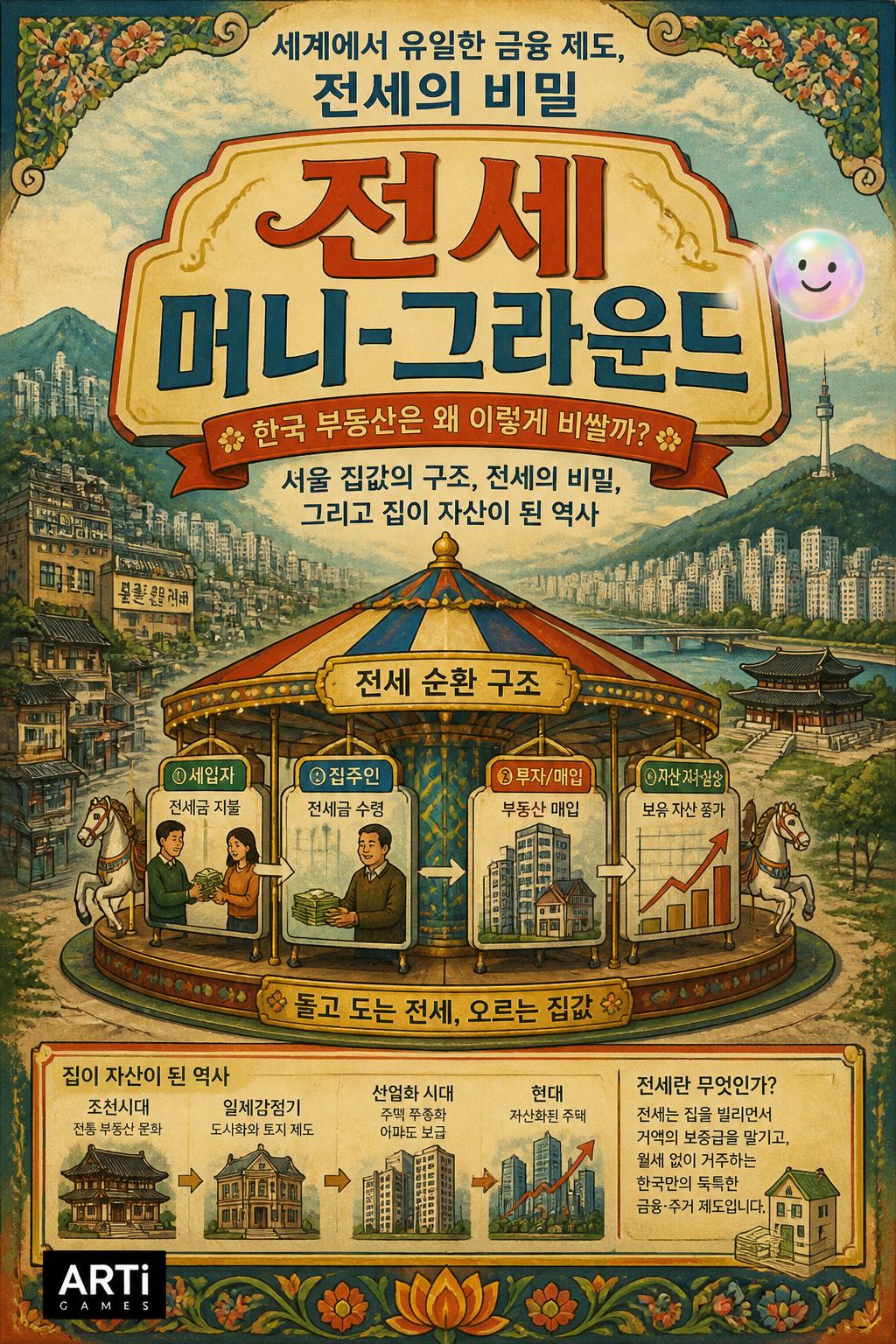
soomin Cycle tenant deposits to discover how the Jeonse system drives up Seoul's housing prices.
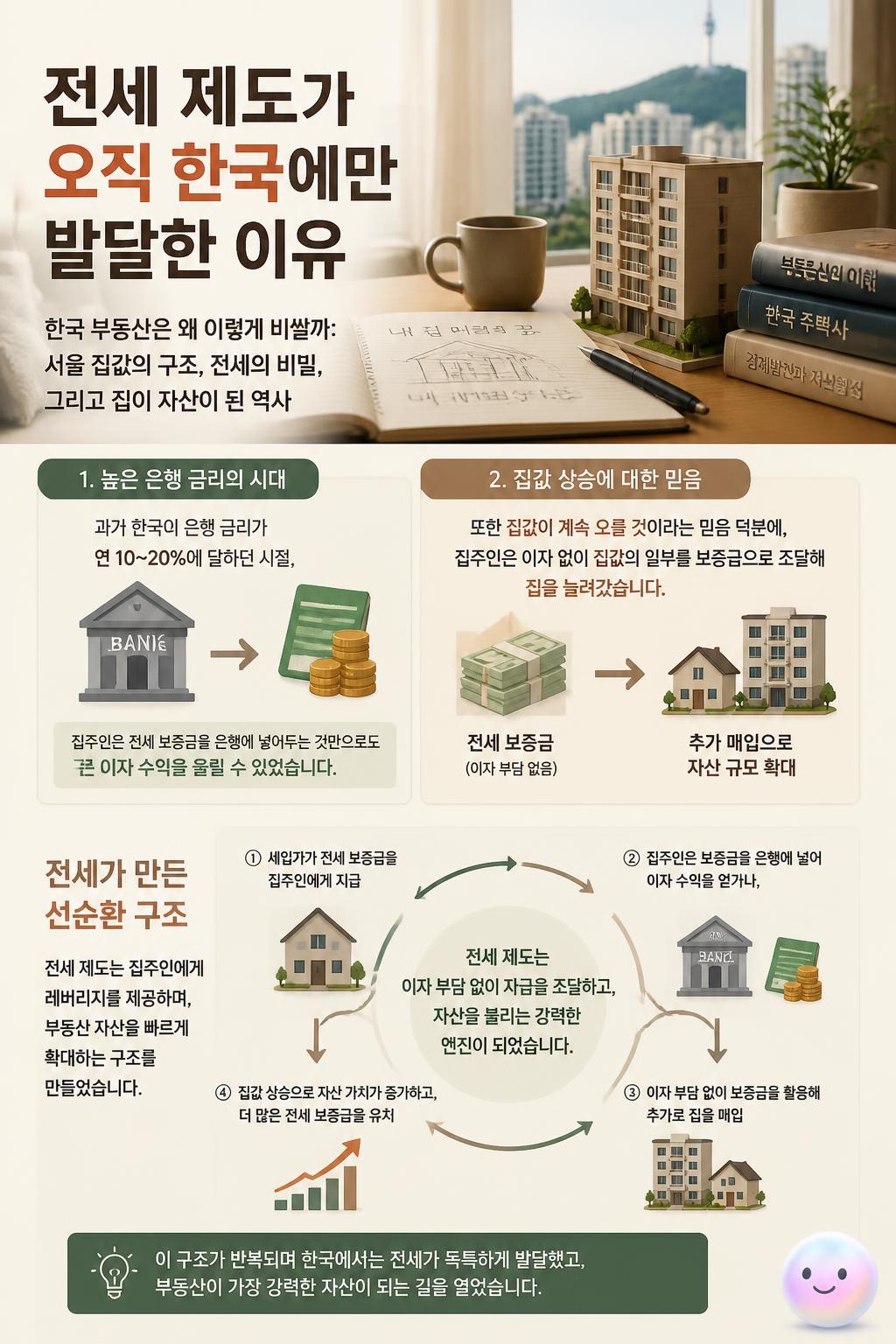
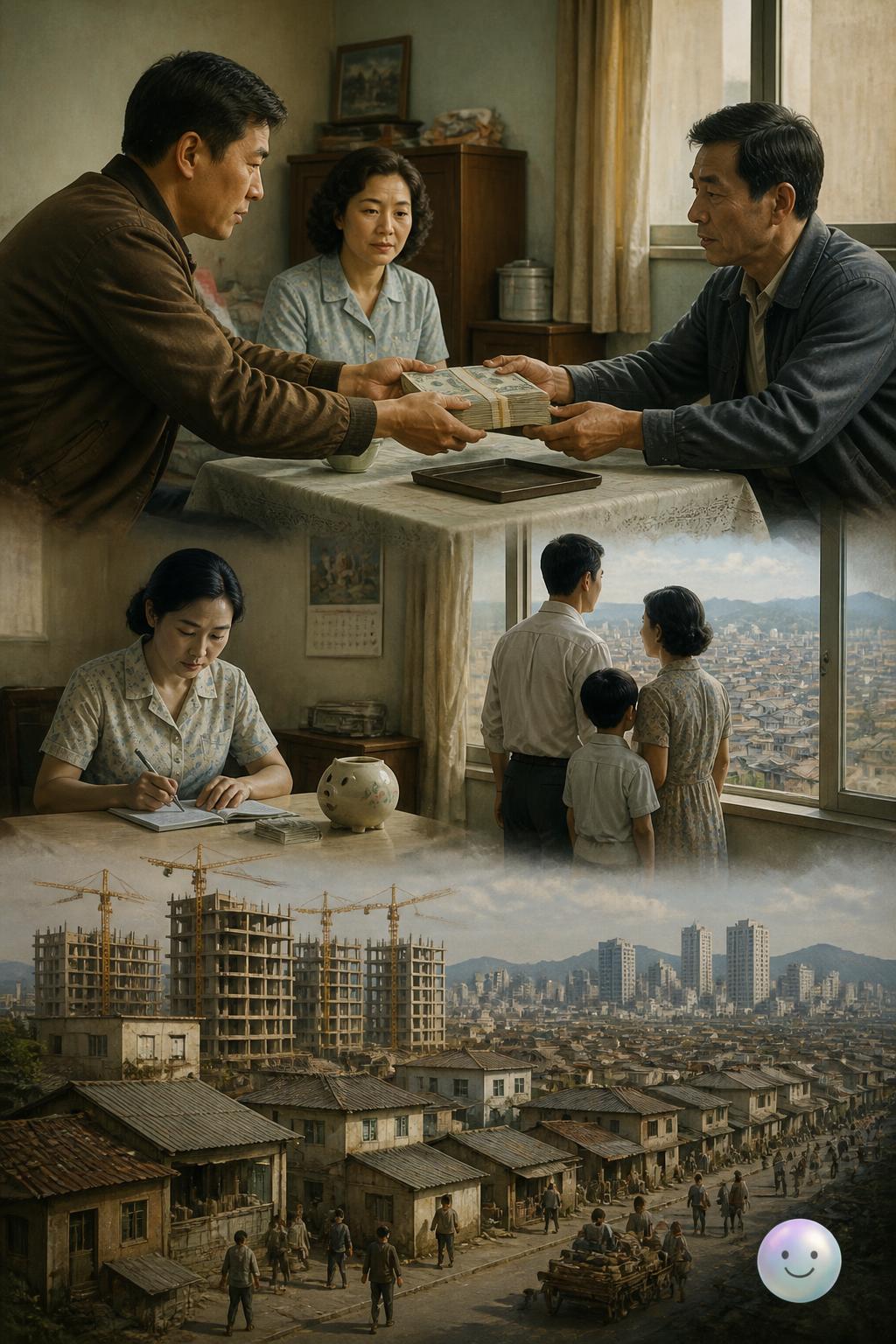
임차인이 임대인에게 일정 금액의 보증금을 맡기고 계약 기간 동안 부동산을 빌려 쓰는 주거 임대차 방식이다. 1970년대 한국의 고성장기 동안 제도권 주택 대출을 대체하는 사금융 제도로 기능하며 정착했다.