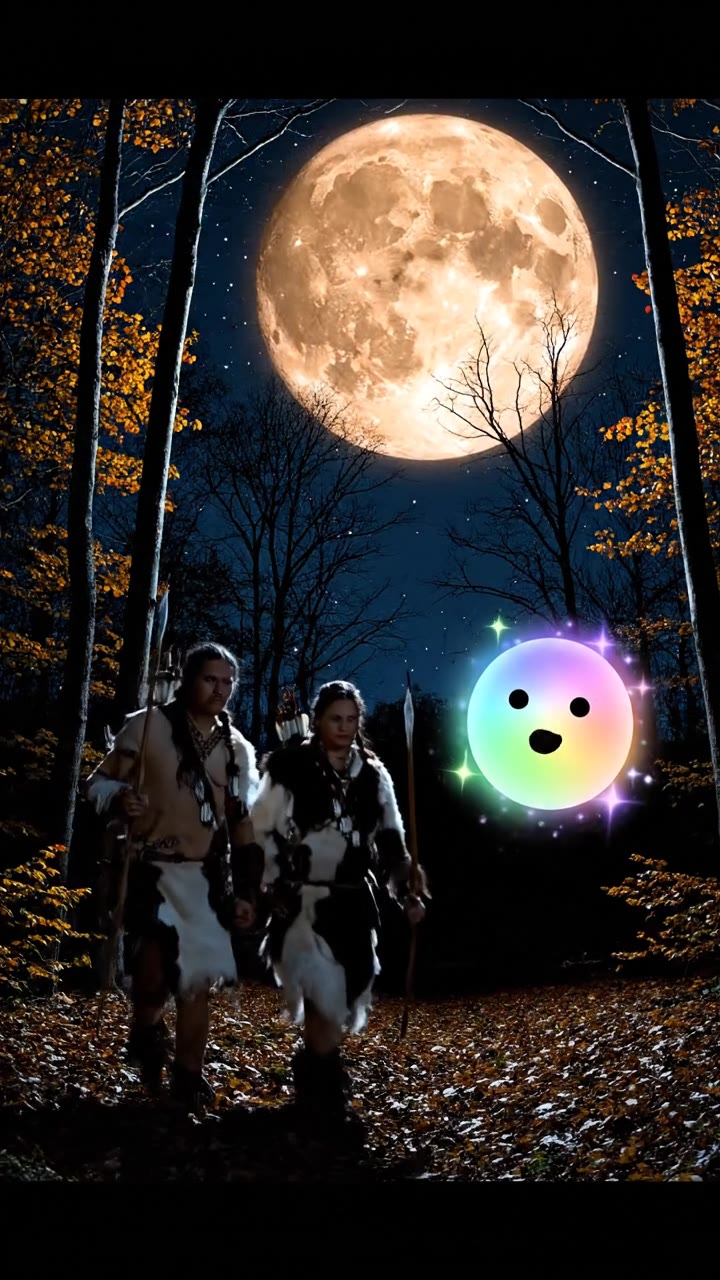
The Algonquin legacy
The Algonquin people, inhabiting regions from Canada to North Carolina, relied on the October full moon to hunt migrating animals. With winter approaching, tracking prey under the bright moonlight was critical for stockpiling meat. They shared this terminology with early European fur traders, cementing the name in history.
The celestial mechanics of autumn light
Cultural history and ancient names
The ecology of the hunt
Global traditions and inverted skies
babyblue22 Red autumn leaves and essential pre-winter animal hunts inspired this October moon name. It originally had nothing to do with modern lunar eclipses.
babyblue22 Pages from a 1710 edition of the journal The British Apollo reveal how European country people used autumn moonlight to guide their late harvests.
babyblue22 Algonquin hunters from Canada to North Carolina tracked migrating prey under the bright October full moon. They shared this terminology with European fur traders, cementing the name in history.
babyblue22 Traditional Moon Names
Crops cut down, Spot the deer, Hunter's moon glowing!
babyblue22 Cree communities tracked animal migrations while the Ojibwe observed autumn foliage to name this autumn moon. These diverse names reflect how regional ecosystems experienced the changing seasons.
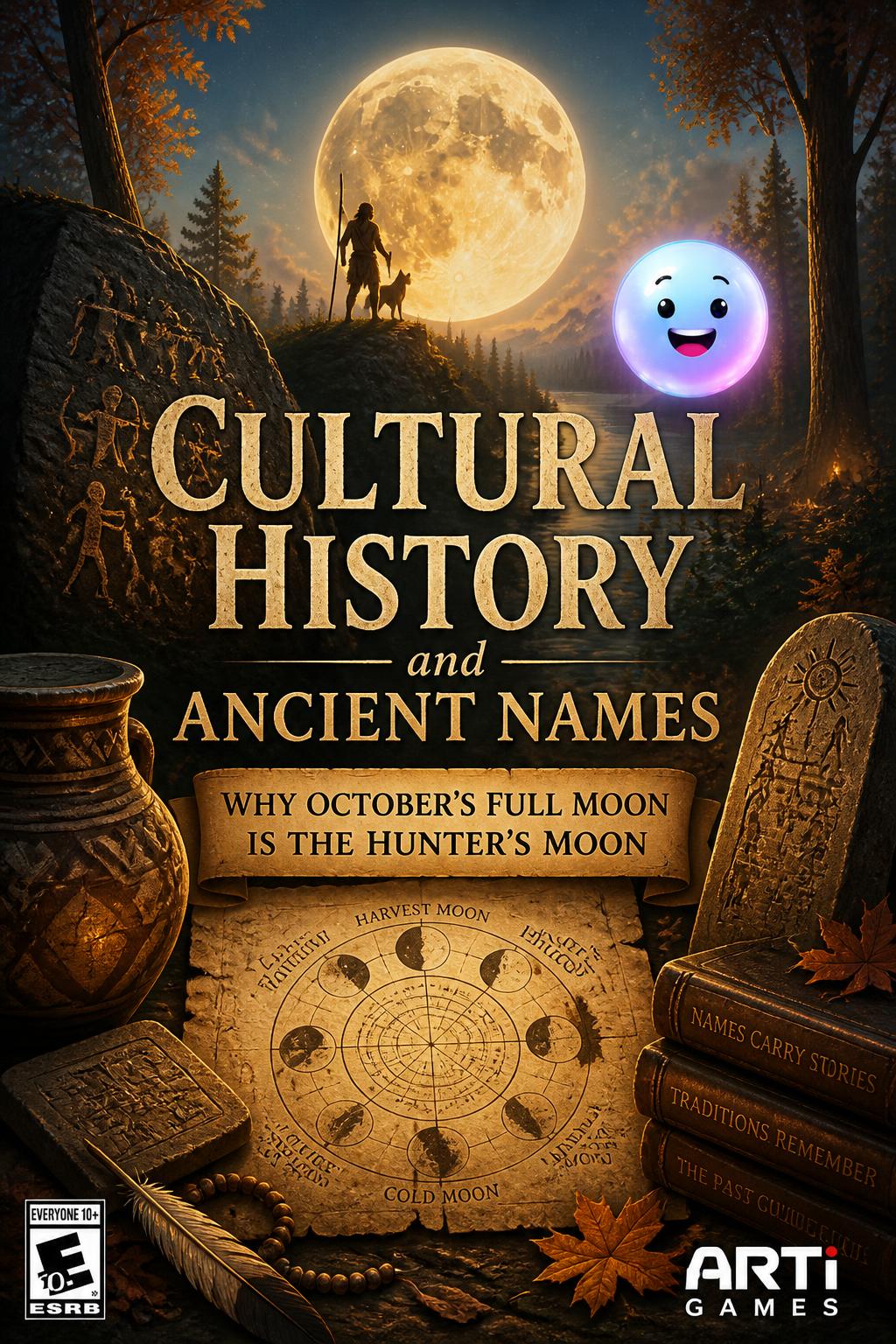
babyblue22 Match ancient names to their seasons to discover how the Hunter's Moon got its name.
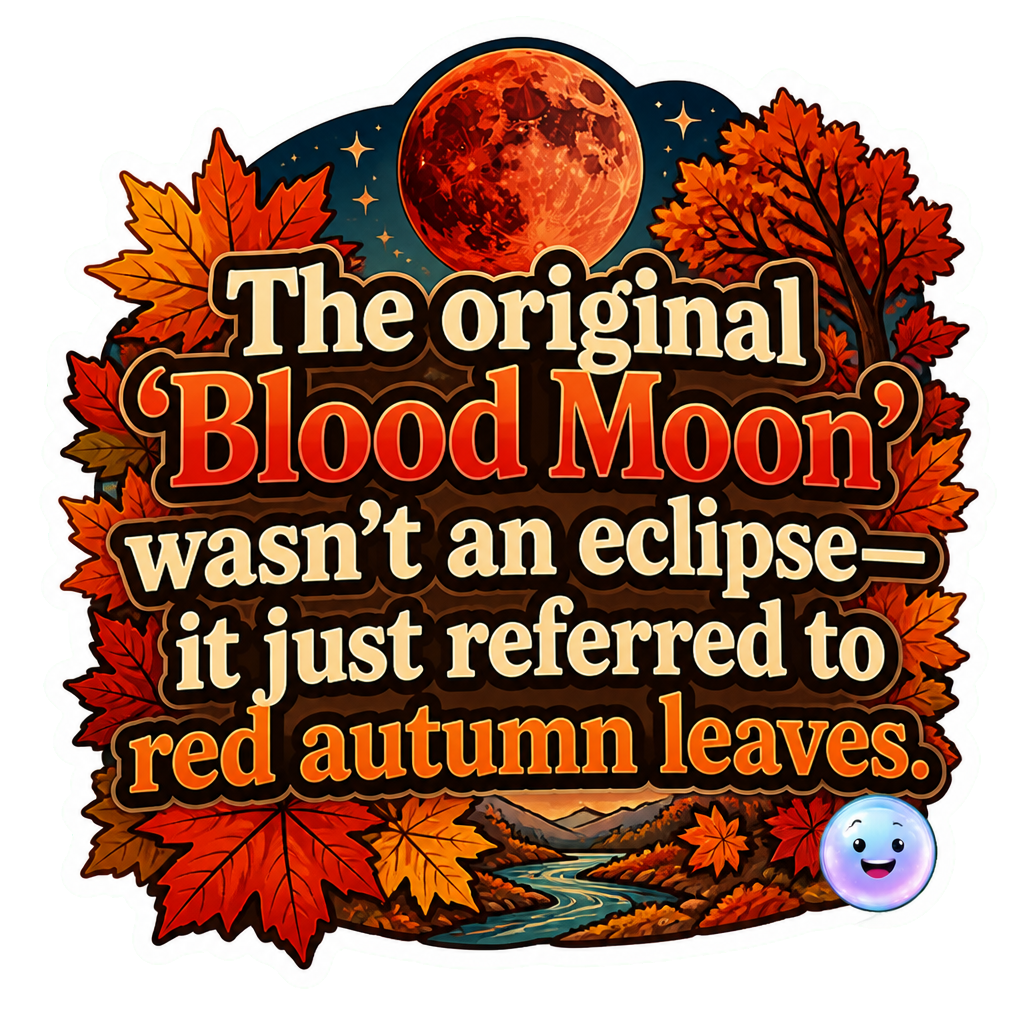
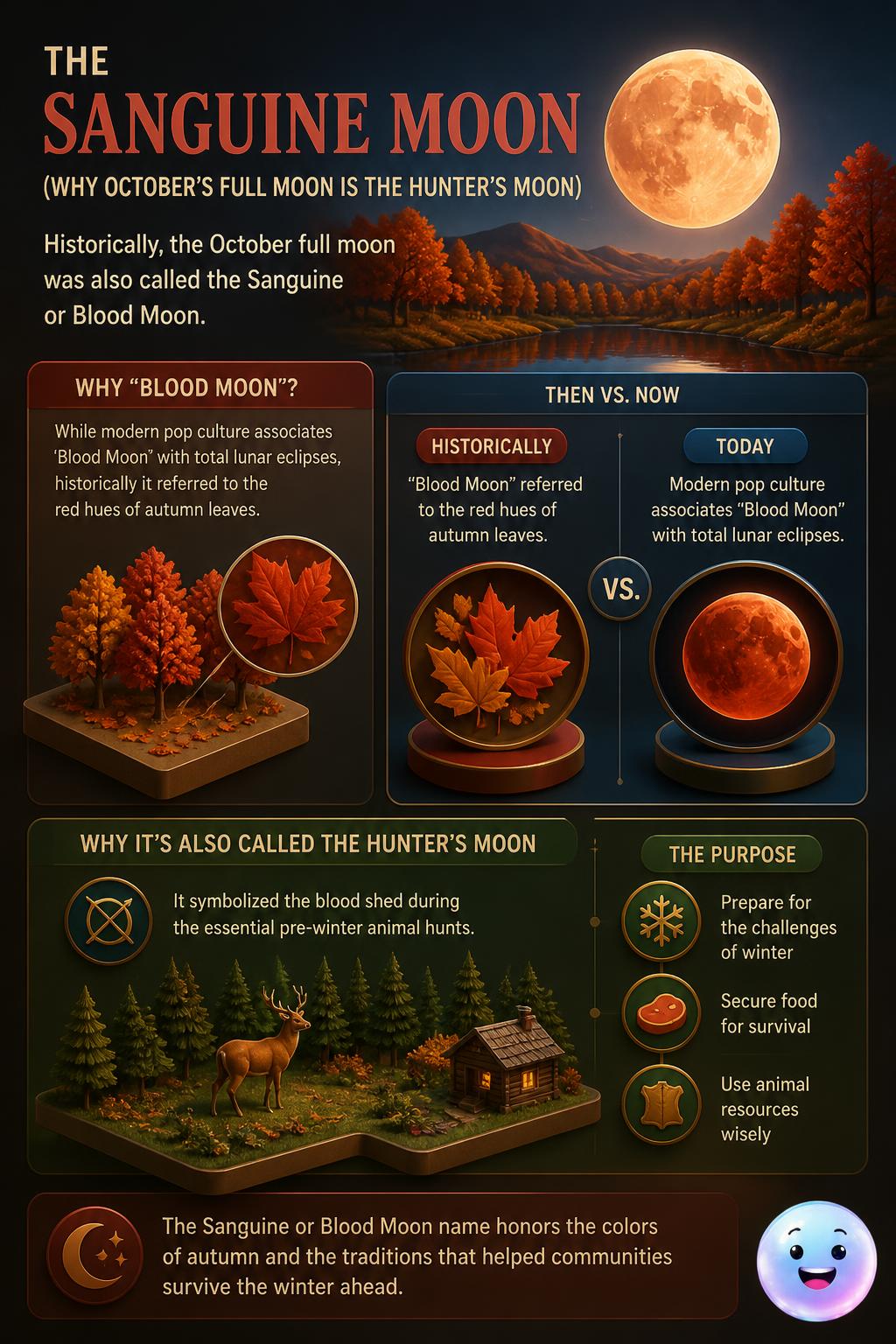
babyblue22 Alternative names like the Sanguine Moon reflect both natural foliage changes and hunting traditions.
First dictionary print: The term Hunter's Moon first appeared in the Oxford English Dictionary in 1710, credited to rural British country folk.
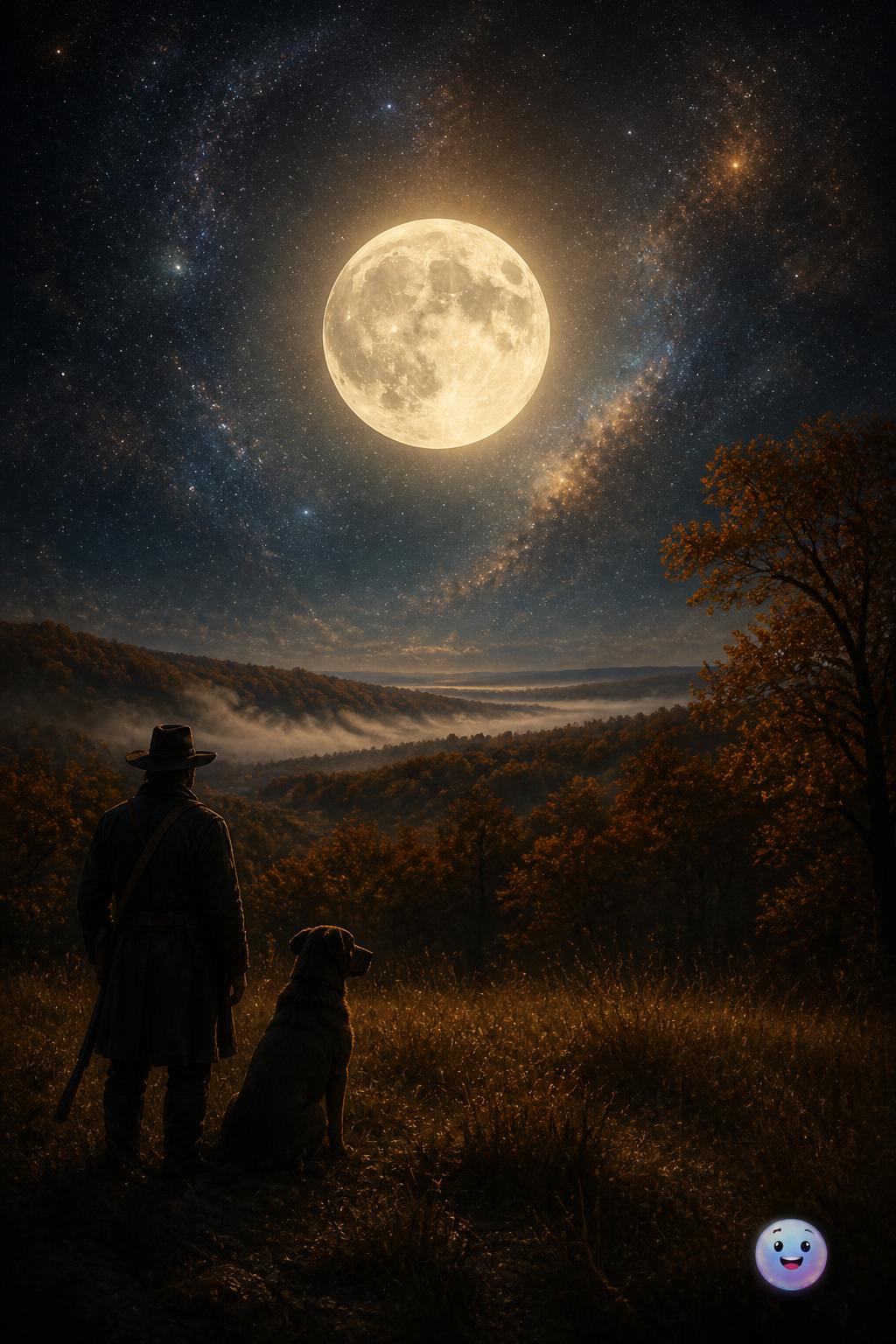
babyblue22 The term 'Hunter's Moon' entered written English in 1710 through a popular British publication.
The full moon that occurs immediately after the harvest moon. The Oxford English Dictionary cites the earliest written record of this seasonal name from 1710.
Why is the October full moon sometimes historically referred to as the Sanguine Moon?
Which season-tracking publication popularized traditional Native American moon names in modern North America?
What alternative name did some Native American tribes give the October full moon to signal migration?
What did the Anglo-Saxons historically call the October full moon before adopting 'Hunter's Moon'?
What does the traditional name 'Dying Grass Moon' signify about the October environment?
Which Native American language group is traditionally credited with popularizing the name 'Hunter's Moon'?
In what year was the term 'Hunter's Moon' first recorded in the Oxford English Dictionary?