Spark of life and first nerves
The rise of the central cord
The triune brain and land invasion
The modern human mind
YOUR GOAL
Master of Evolution of the brain
moonay Rise of the Central Cord
We flipped the fossil upside down (oh, flipped it!) / And found the nerve cord in its crown (we found it now!)
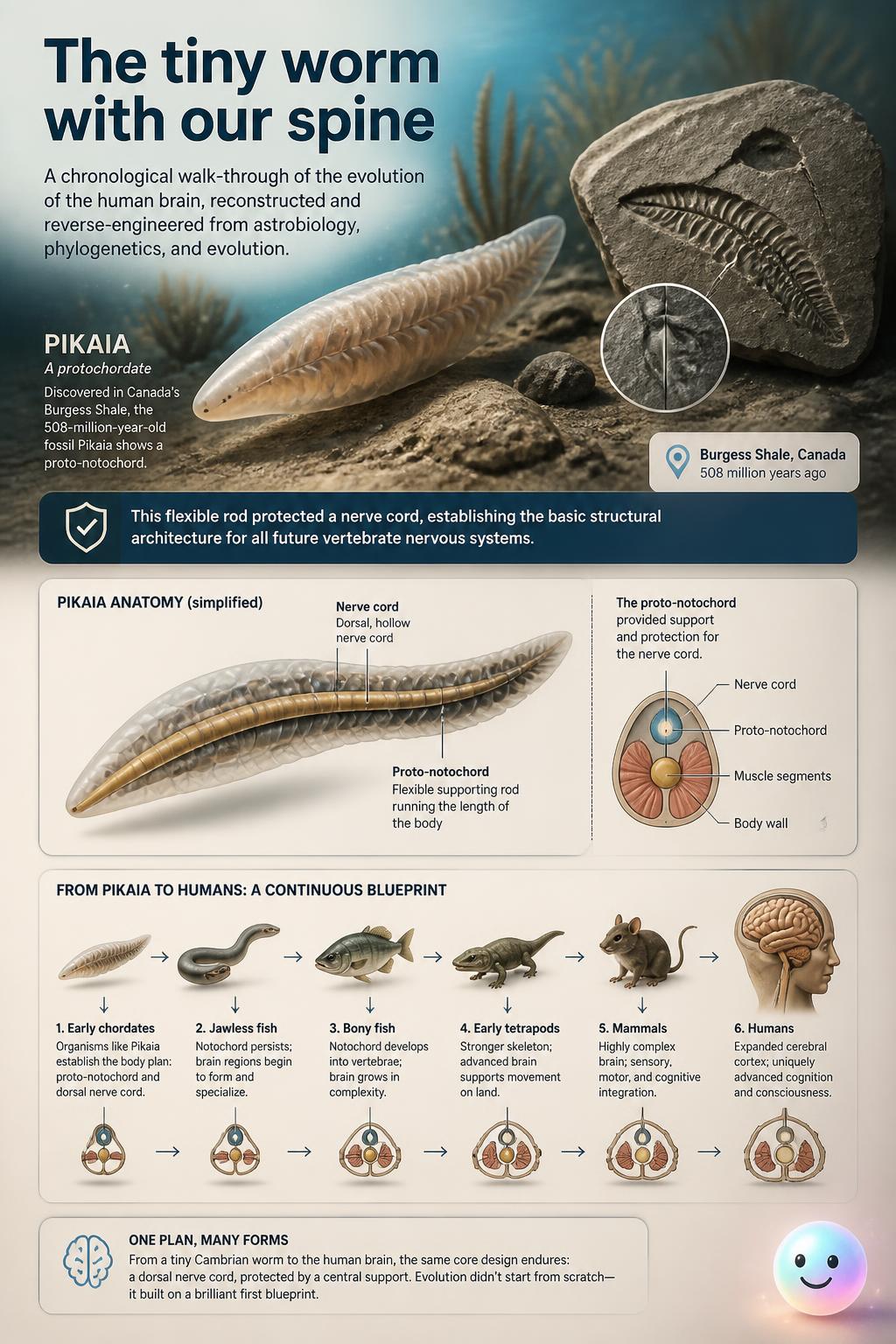
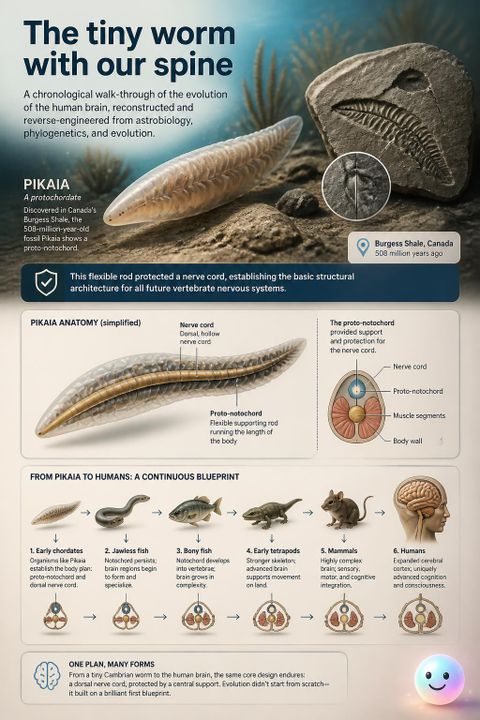
moonay A ribbon-like creature named Pikaia carried the primitive precursor to the human spinal cord.
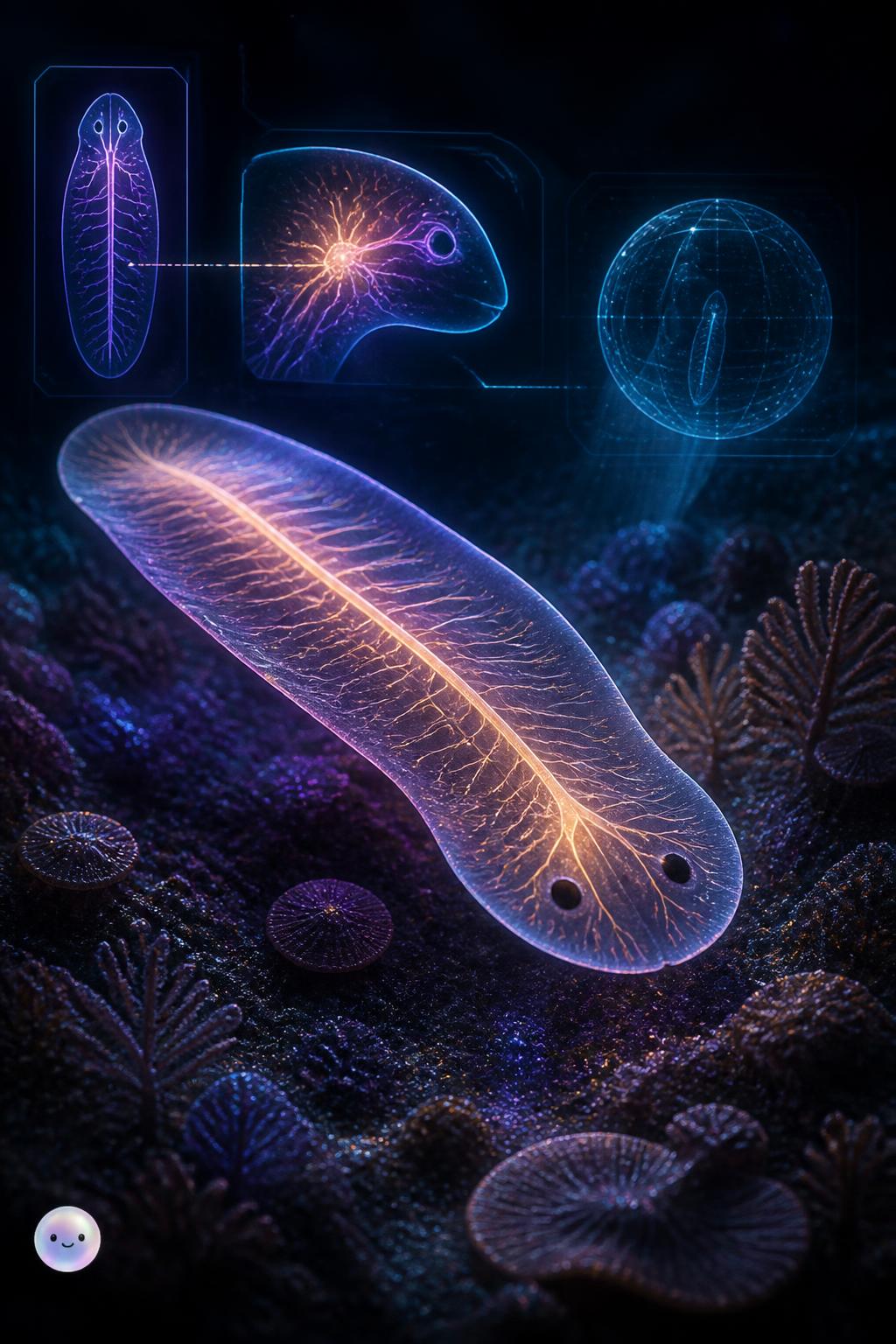
moonay Cephalization, or concentrating sensory organs at the front of the body, changed animal navigation forever.
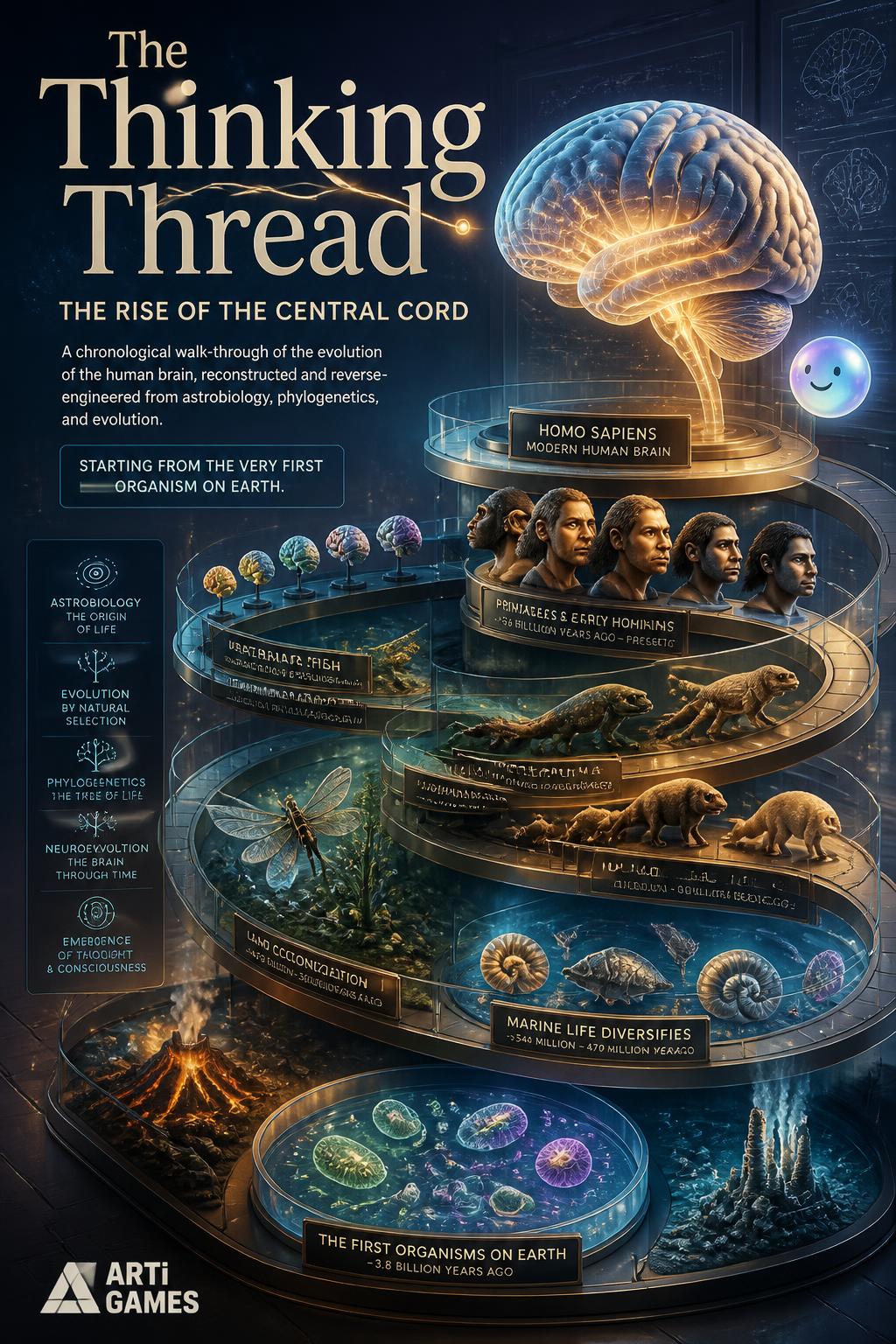
moonay Trace the evolutionary line to discover how the human brain grew from Earth's first organism.
Pikaia fossil spine: The ancient worm Pikaia is your oldest known ancestor to possess a proto-spinal cord.
A major longitudinal bundle of nerve fibers that forms a primary part of an animal's nervous system. Burgess Shale fossil Pikaia possessed a dorsal nerve cord, marking a critical step in vertebrate evolution.
Which geological event 541 million years ago triggered an evolutionary arms race and brain growth?
Why did the development of eyes during the Cambrian period require centralized brains?
What 508-million-year-old fossil from Canada represents an early precursor to the vertebrate spinal cord?
What is the term for concentrating sensory organs and brain tissue at the front of an animal?
Where was the famous Burgess Shale fossil site, containing early chordate fossils like Pikaia, discovered?
Which of these is one of the three main parts of the ancient vertebrate brain blueprint?