
Timpani ear training: Timpanists must tune their drums
Timpani ear training: Timpanists must tune their drums silently by putting their ear close to the head and whispering a pitch while the rest of the
The kings of the kitchen
The mighty kettles that sing
From battlefield to concert hall
The physics of making a racket
Stealing the spotlight
maestro Hard wooden mallets strike sharp, rapid beats on a marimba. Large felt mallets soften the impact to create deep, rumbling waves of sound.
maestro Dresden inventor Carl Pittrich patented this mechanical system in 1872. Pressing the pedal pulls metal rods to change drumhead tension, allowing musicians to slide smoothly between notes

maestro Tap and tune the timpani to discover how these drums shape the symphony orchestra's sound.
maestro Copper withstands immense tension from the tightly stretched drumhead. Hand-hammered dimples on the metal bowl scatter harsh harmonics to produce a warm, rich tone.
maestro The copper bowl of a timpani acts as a resonator to amplify one clear pitch. Musicians tune these drums to match the symphony's exact key.
maestro The Timpani
Press on the pedal to bend every pitch, These deep copper kettles make a musical switch!

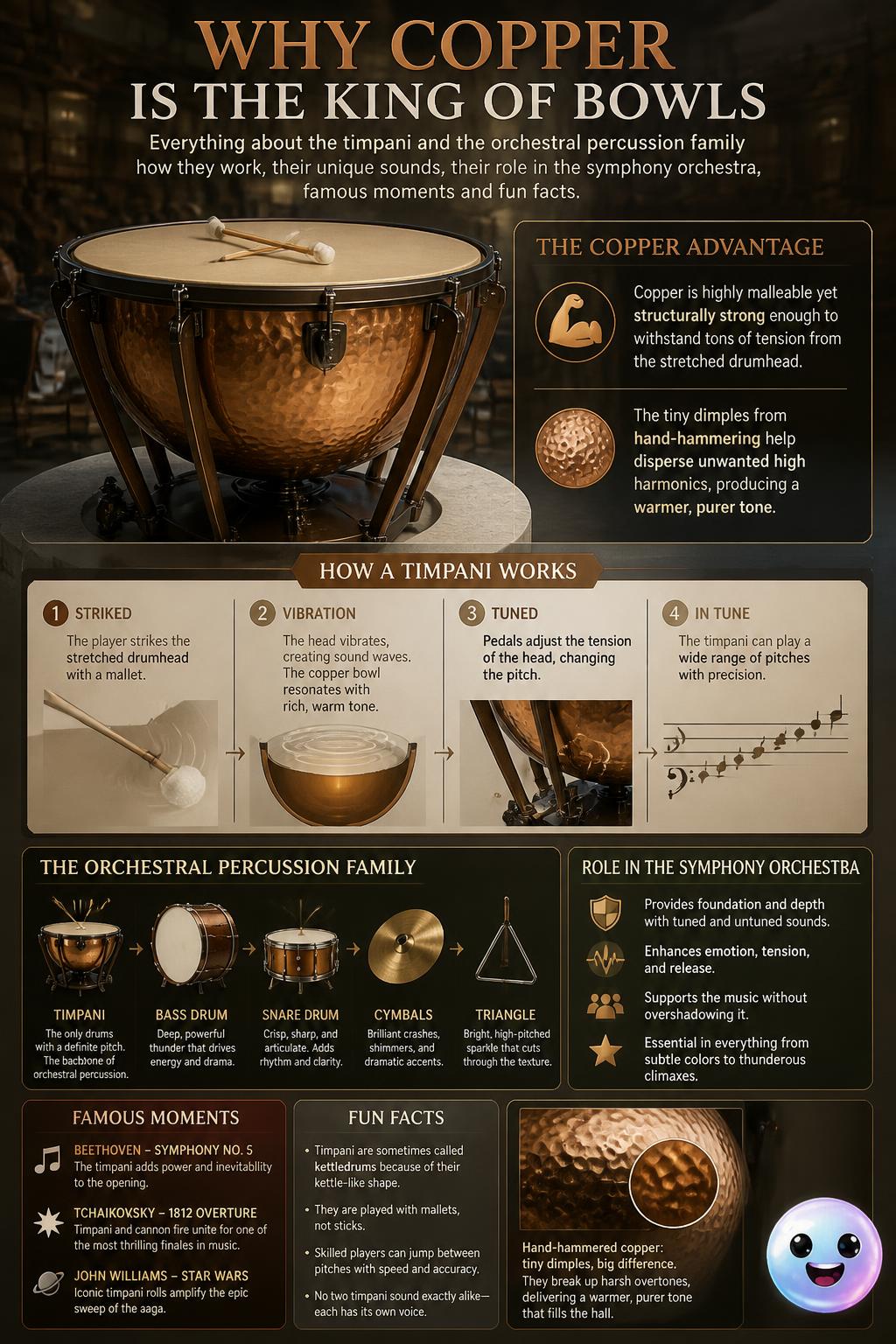
maestro A copper timpani bowl features tiny hand-hammered dimples beneath a stretched drumhead
Timpani ear training: Timpanists must tune their drums silently by putting their ear close to the head and whispering a pitch while the rest of the orchestra is playing.
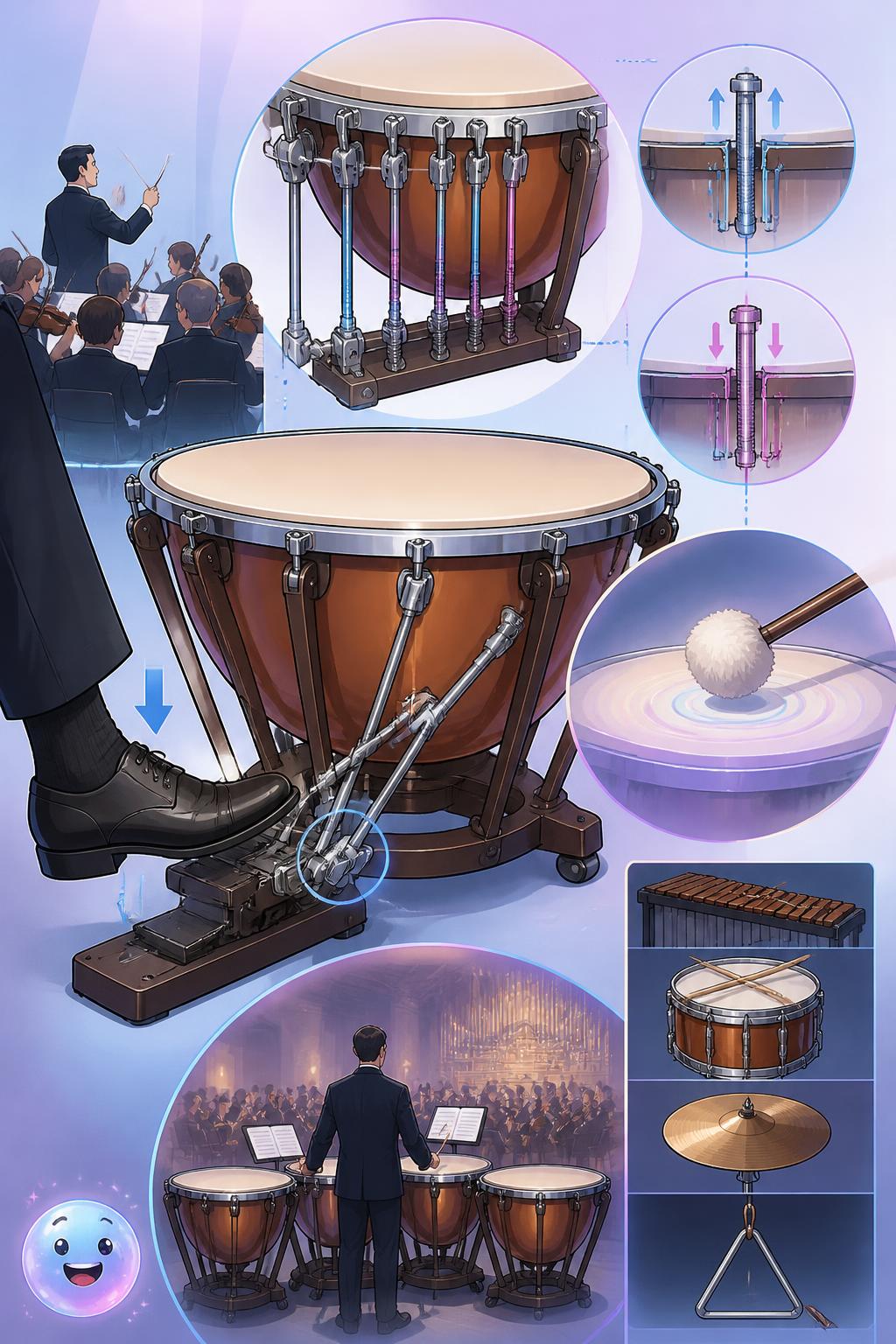
maestro A technical vector illustration shows a musician's foot pressing the drum's tuning pedal.
Kettledrums, especially when played by one performer in an orchestra. Composer Jean-Baptiste Lully first introduced these instruments to the classical orchestra in his 1675 opera Thésée.
What is the process of balancing the tension of all rods around a timpani head called?
What metal is almost exclusively used to construct high-quality orchestral timpani bowls?
How do modern timpanists change the pitch of their drums rapidly during a performance?
Why does a hand-hammered copper bowl produce a better sound than a smooth, machine-pressed one?