To remain firm, we must shed what makes us soft.
Chapter 1
The ancient roots of preservation
Chapter 2
The science of the crunch
Chapter 3
Pickles around the world
Chapter 4
Pickles on the high seas and space
Chapter 5
The modern pickle pop culture
Ch 2 · The science of the crunch
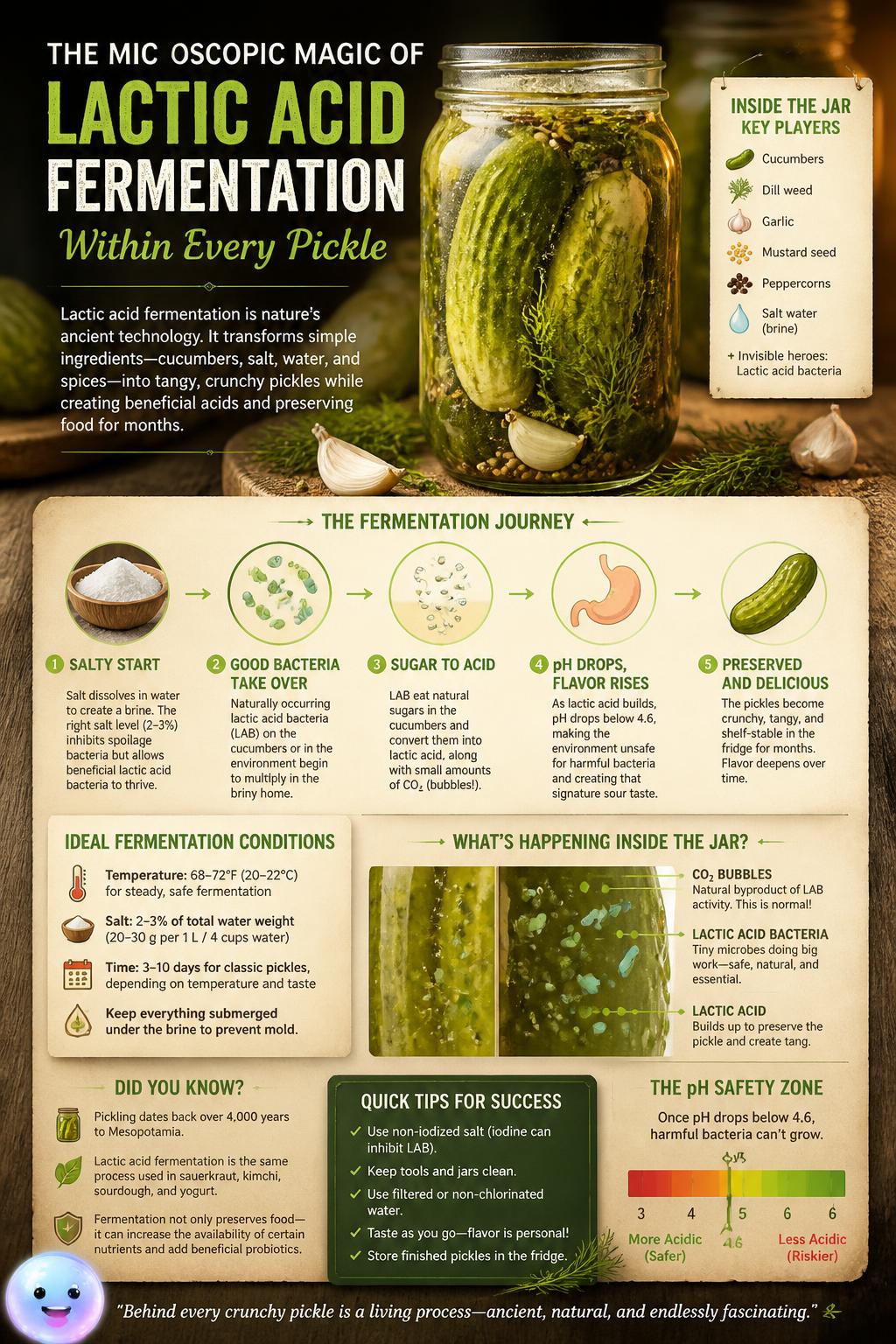
sonia In an oxygen-free, salty brine, Lactobacillus bacteria digest vegetable sugars to produce lactic acid.
Quiz
What is the critical pH threshold that fermented foods must drop below to prevent dangerous bacterial growth?
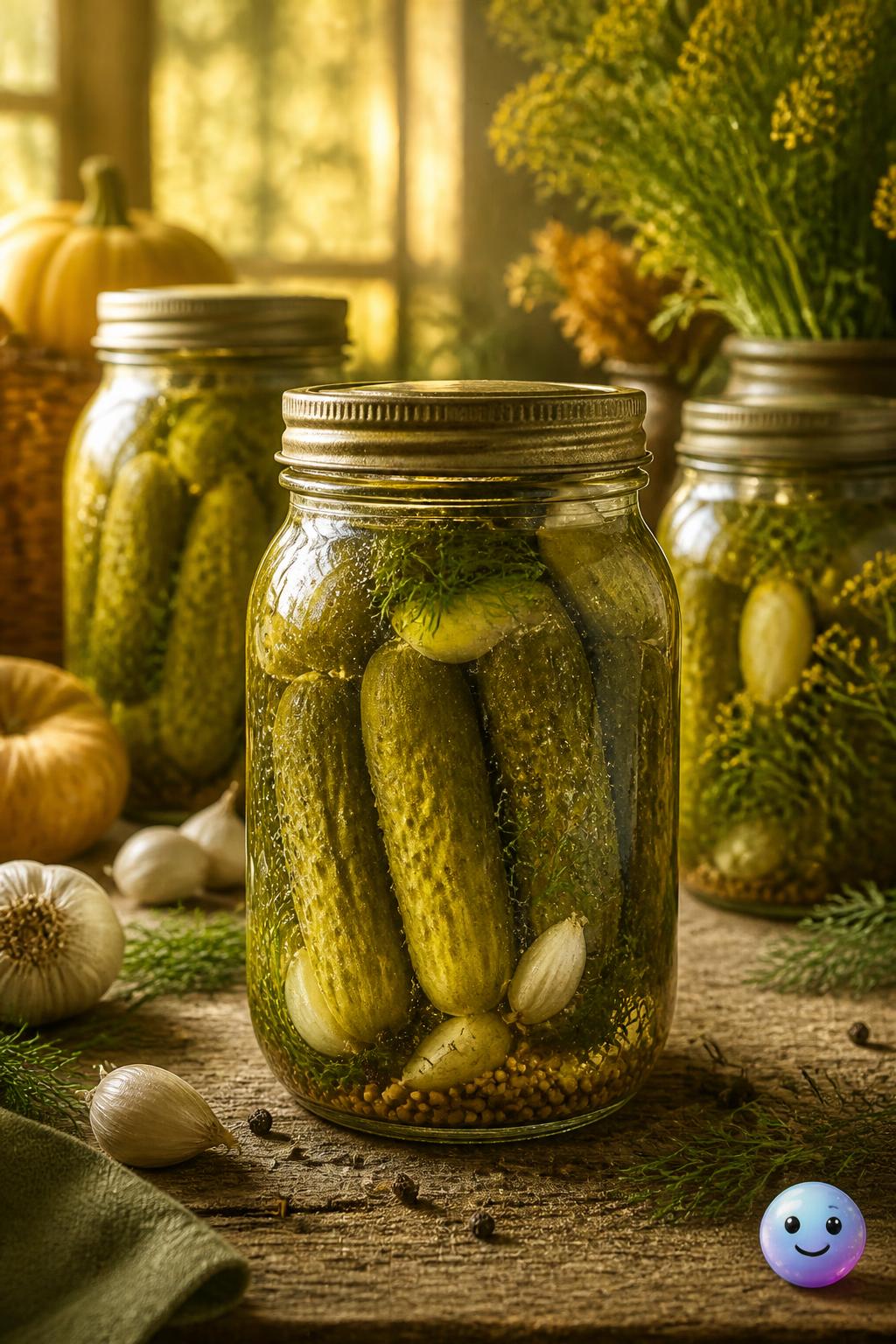
sonia National Pickle Day on November 14th celebrates preserving the autumn harvest with acid.
Fun Fact
The loudest crunch: A perfectly fermented pickle can produce a crunch loud enough to be heard from up to 10 paces (about 25 feet) away!
Quiz
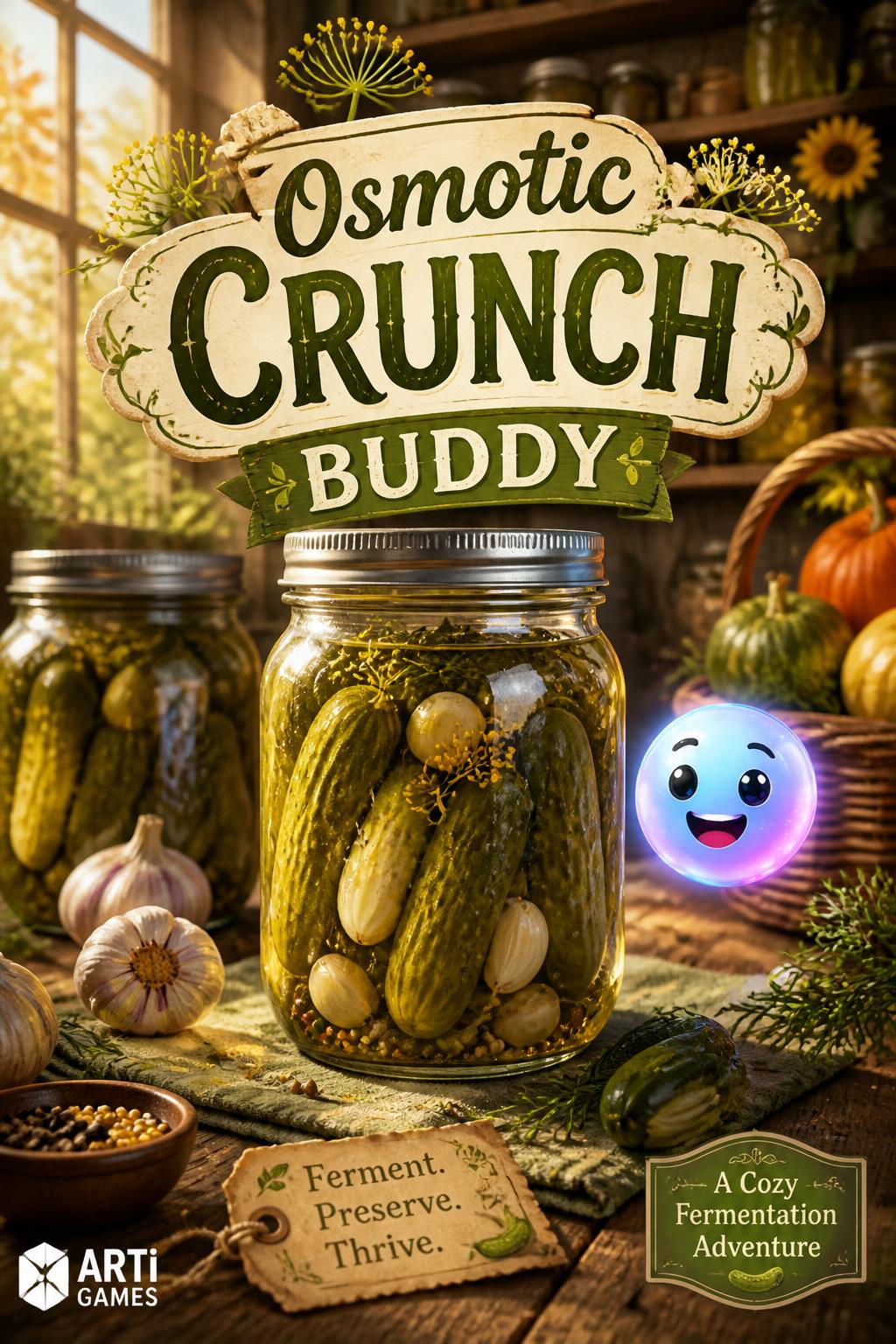
What scientific process causes water to leave vegetable cells when placed in a salty brine?
Glossary
osmosis (noun)
The passage of a solvent through a semipermeable membrane from a less concentrated to a more concentrated solution. Salting draws water out of cucumbers via this process, keeping the preserved vegetables firm and crisp.
The passage of a solvent through a semipermeable membrane from a less concentrated to a more concentrated solution. Salting draws water out of cucumbers via this process, keeping the preserved vegetables firm and crisp.
sonia Natural Plant Tannins
With plant tannins in the jar (oh yeah!) / Your pickles stay the crunchy star (so crisp!)
Quiz
Which plant component do pectinase enzymes break down, causing pickles to lose their crunch?