The math of a shadow: visualizing the fourth dimension
Flatland and the Victorian quest for higher realms
Cosmic portals and folding space: the tesseract in fiction
Real-world shadows: how 4D geometry shapes modern science
YOUR GOAL
Master of Stepping into the fourth dimension with the tesseract
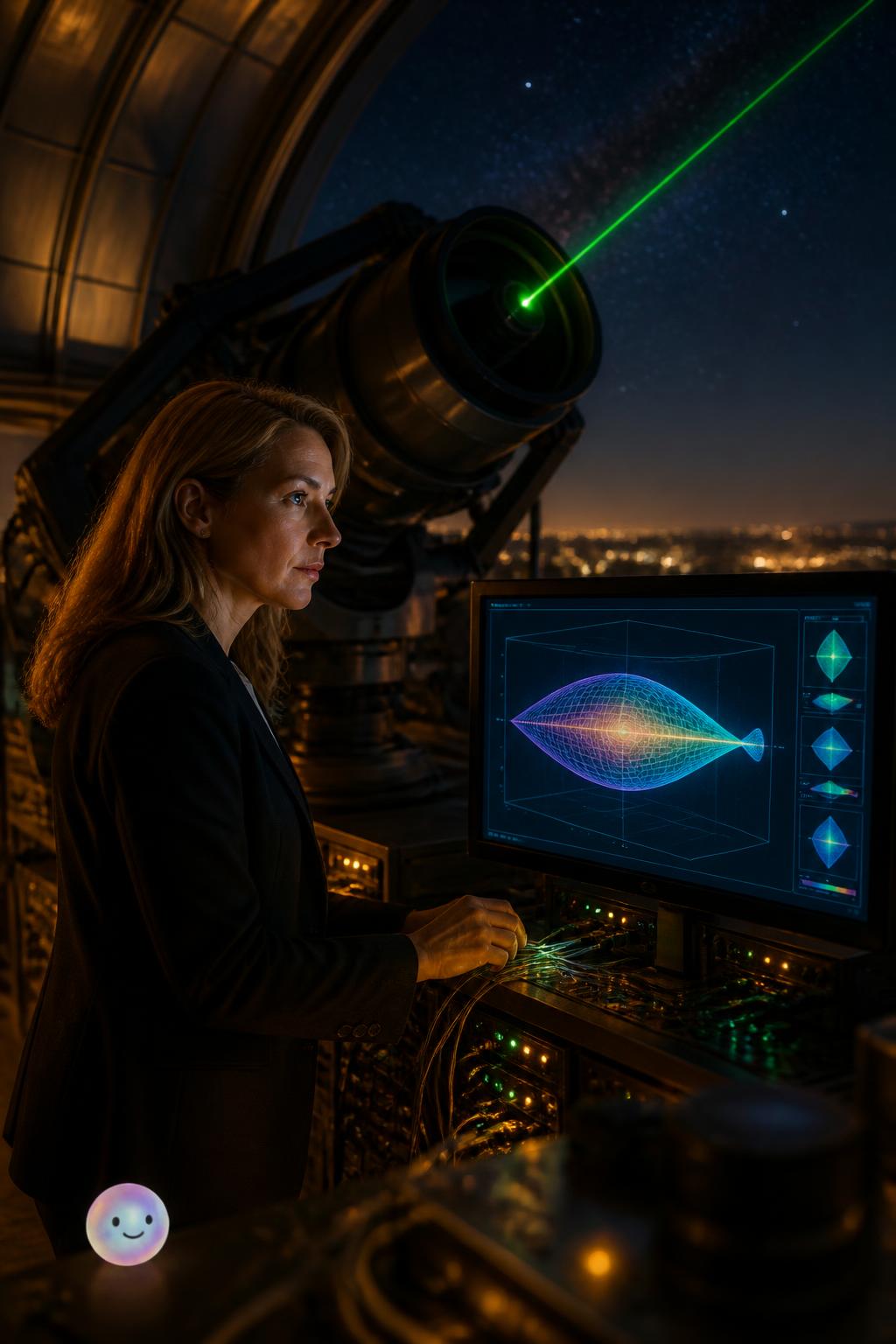
007skaty Tesseract Shadow Projection
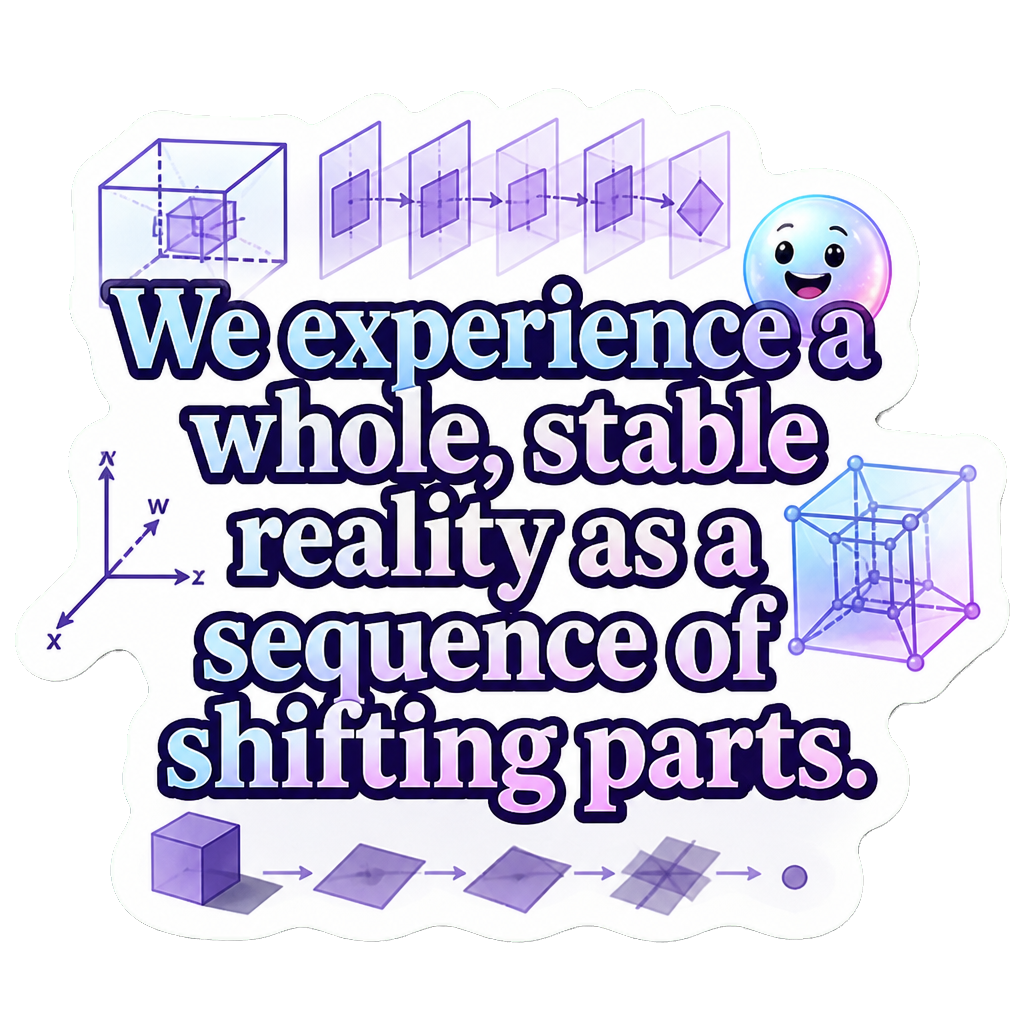
Folds inside out Folds inside out The shadow bends but the cube is rigid
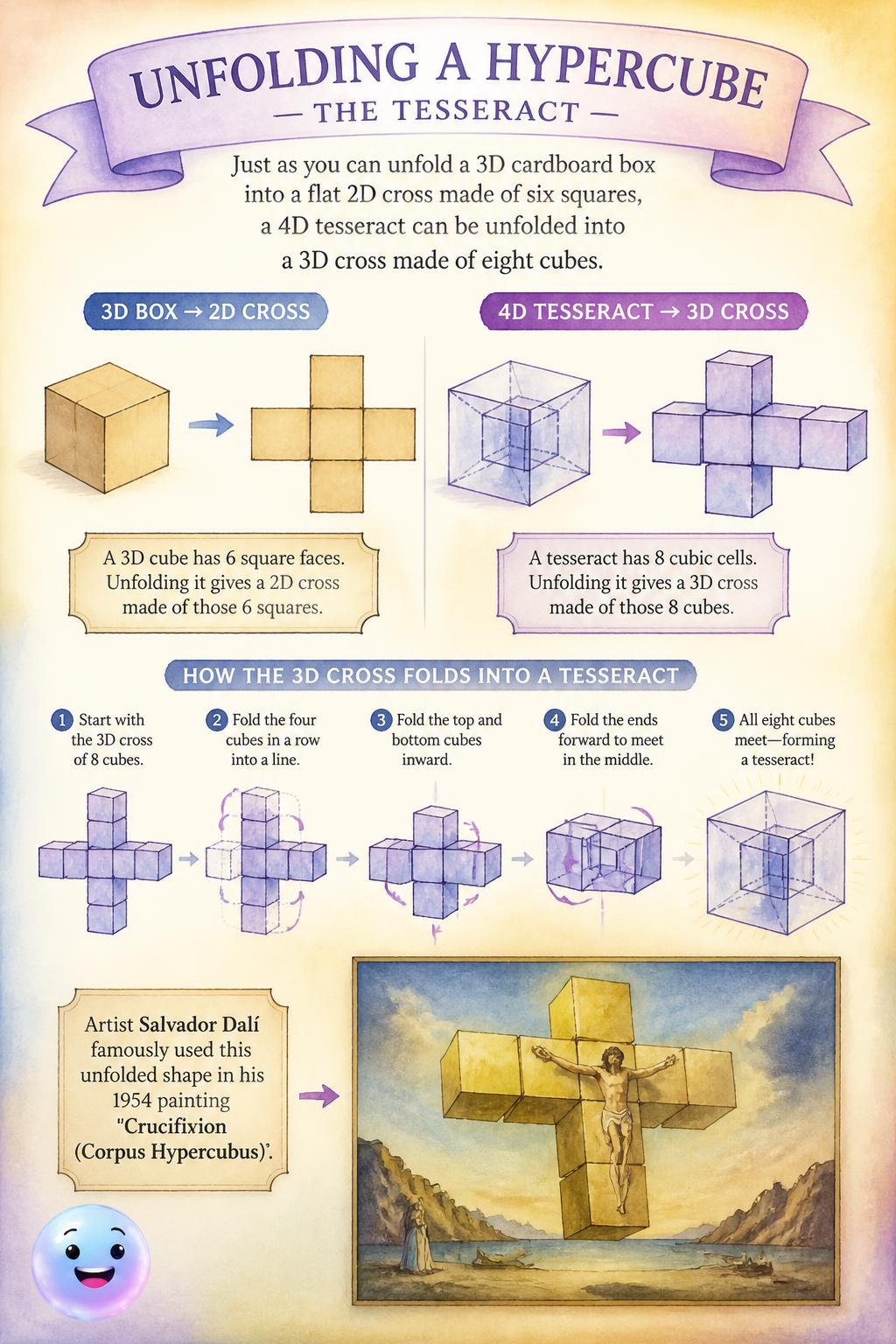
007skaty Unfolding 3D boxes into 2D shapes and 4D tesseracts into 3D crosses forms the basis of Salvador Dalí's
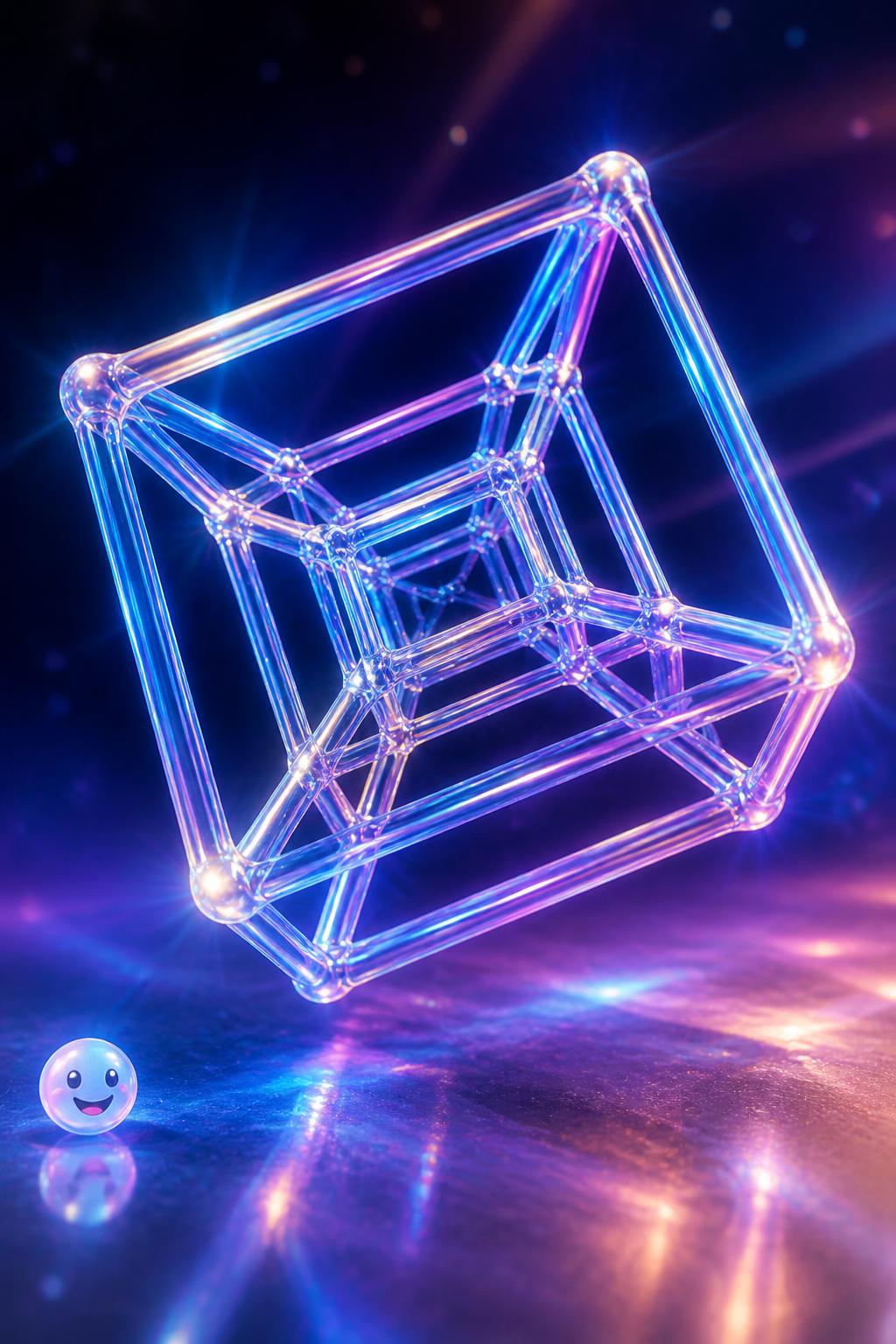
007skaty A glowing geometric hypercube twists and folds inside-out with dynamic, frozen-motion energy.
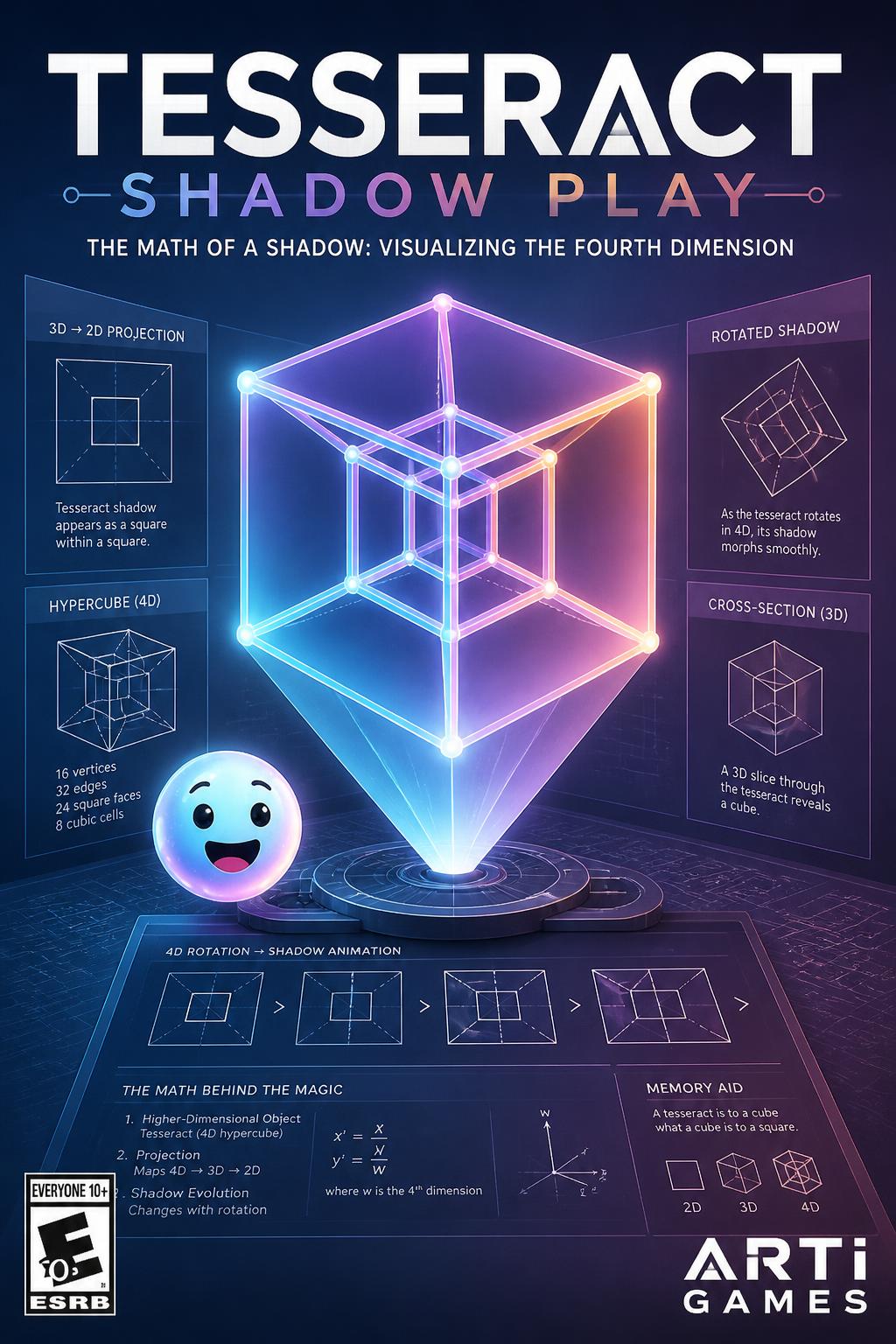
007skaty Rotate the tesseract to discover how a four-dimensional shape casts three-dimensional shadows.
Tesseract corners: A 4D tesseract contains exactly 16 corners, 32 edges, 24 square faces, and 8 cubic cells.
The representation of a geometric figure or higher-dimensional object on a lower-dimensional space. In 1886, Victor Schlegel used this method to project a four-dimensional hypercube into three-dimensional space.
If a 3D object casts a 2D shadow, what kind of shadow does a 4D tesseract cast in our world?
Which Spanish artist featured an unfolded tesseract in a 1954 crucifixion painting?