

Chapter 1
The physics of the pitch
Chapter 2
Evolution of the tools
Chapter 3
Global journeys of the game
Chapter 4
The data and defense revolution
YOUR GOAL
Master of Science and history of baseball
Ch 1 · The physics of the pitch
mankai Physics of a Curveball
With a rapid spin, The Magnus effect takes hold, Air pressure shifts, Watch the curve unfold!

mankai A knuckleball barely spins, causing unpredictable air currents to push it randomly.

Fun Fact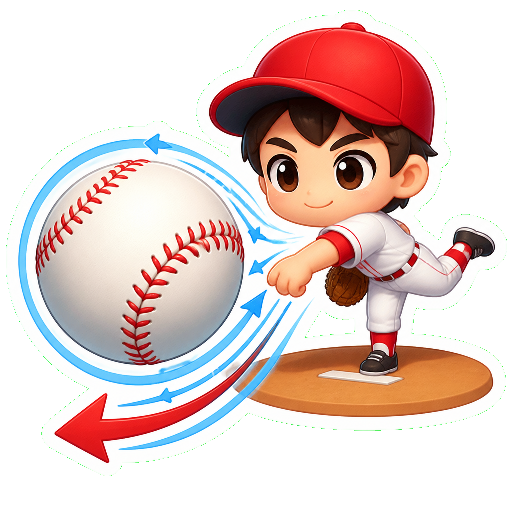
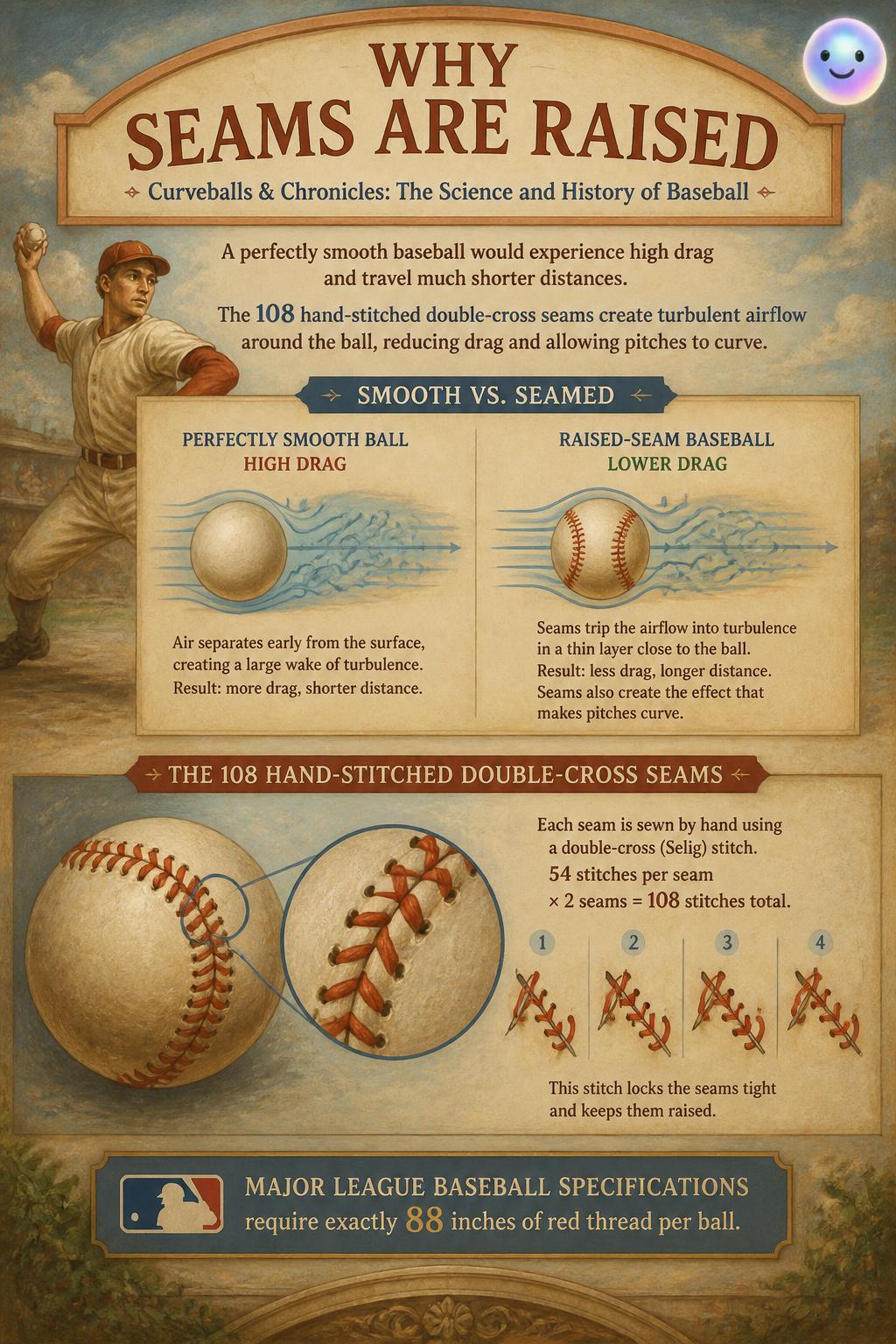
Vibrant Red Seams: Dating back to the 19th century, these traditional stitches aren't just for looks. They create aerodynamic drag, allowing pitchers to throw curving pitches.
Glossary
seams (noun)
The raised lines of stitching that hold a baseball's leather cover together. These ridges disrupt the surrounding airflow to create tiny pockets of turbulent air, which reduces drag and helps the ball fly much farther. Without them, your favorite pitcher's curveball wouldn't curve, and home runs would be incredibly hard to hit!
The raised lines of stitching that hold a baseball's leather cover together. These ridges disrupt the surrounding airflow to create tiny pockets of turbulent air, which reduces drag and helps the ball fly much farther. Without them, your favorite pitcher's curveball wouldn't curve, and home runs would be incredibly hard to hit!
Fun Fact
Knuckleball velocity: A knuckleball travels at only 60 to 70 miles per hour, but its unpredictable movement makes it incredibly difficult to hit.
Glossary
magnus effect (noun)
The force exerted on a rapidly spinning cylinder or sphere moving through a fluid, causing it to curve away from its straight path. In 1959, physicist Lyman Briggs used wind tunnels to prove this phenomenon causes breaking pitches to curve.
The force exerted on a rapidly spinning cylinder or sphere moving through a fluid, causing it to curve away from its straight path. In 1959, physicist Lyman Briggs used wind tunnels to prove this phenomenon causes breaking pitches to curve.
Quiz
Who is the German physicist who first described the aerodynamic force that curves spinning balls?
Quiz
What is the scientific name of the physical force that causes a spinning baseball to curve?
Quiz
Approximately how long does a 95-mile-per-hour fastball take to reach home plate from the pitcher's mound?