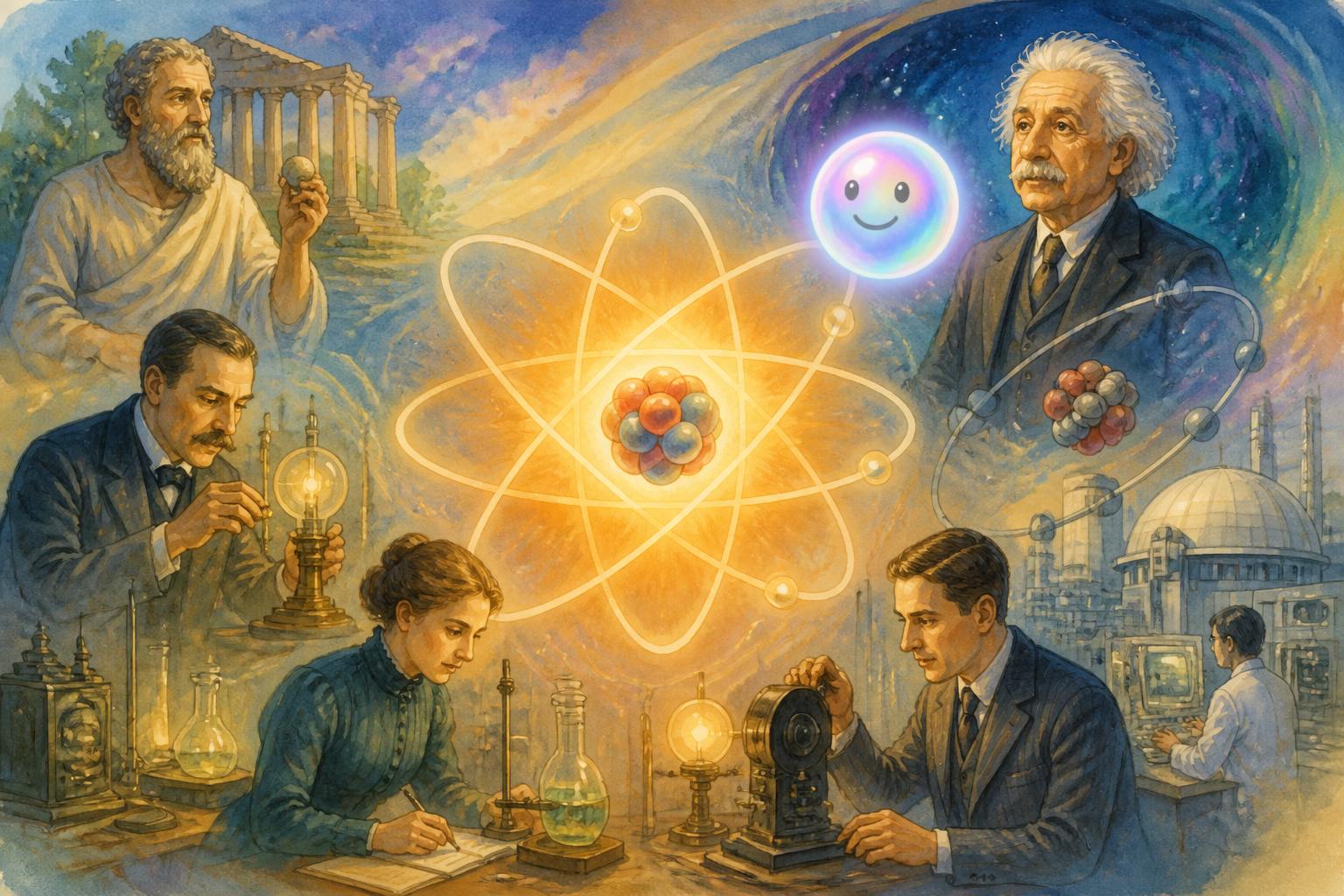
What does the Greek word 'atomos' literally translate to?
Test your history of science knowledge with this quiz question about the literal English translation of the ancient Greek word 'atomos'.
Chapter 1
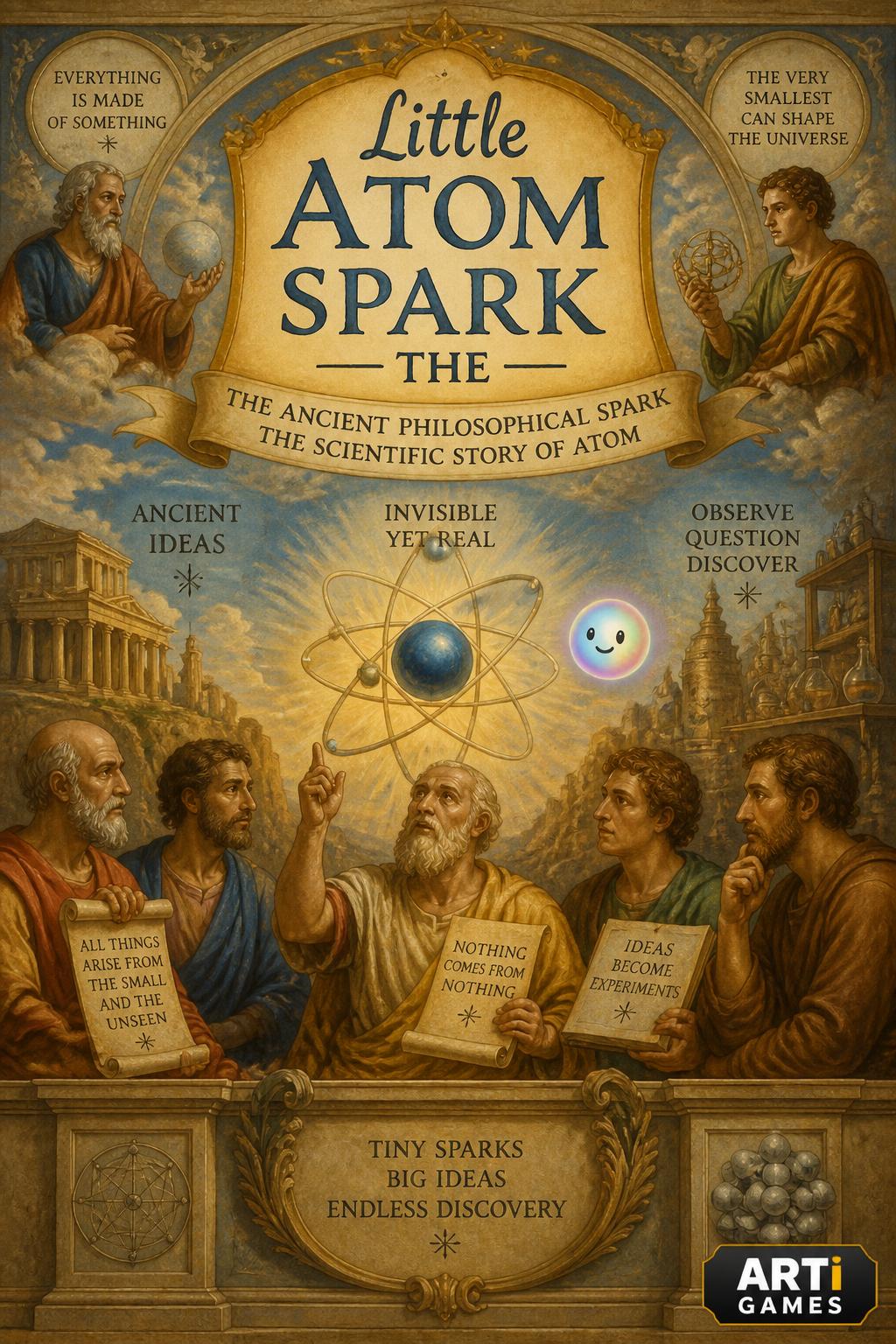
The ancient philosophical spark
Chapter 2
Cracking the shell
Chapter 3
Mapping the nucleus
Chapter 4
The quantum cloud
Ch 1 · The ancient philosophical spark
testerr The Ancient Philosophical Spark
We're just tiny uncuttable pieces drifting through the void
testerr Explore the fascinating scientific history of how a single poem played a crucial role in saving the atom in this educational video.
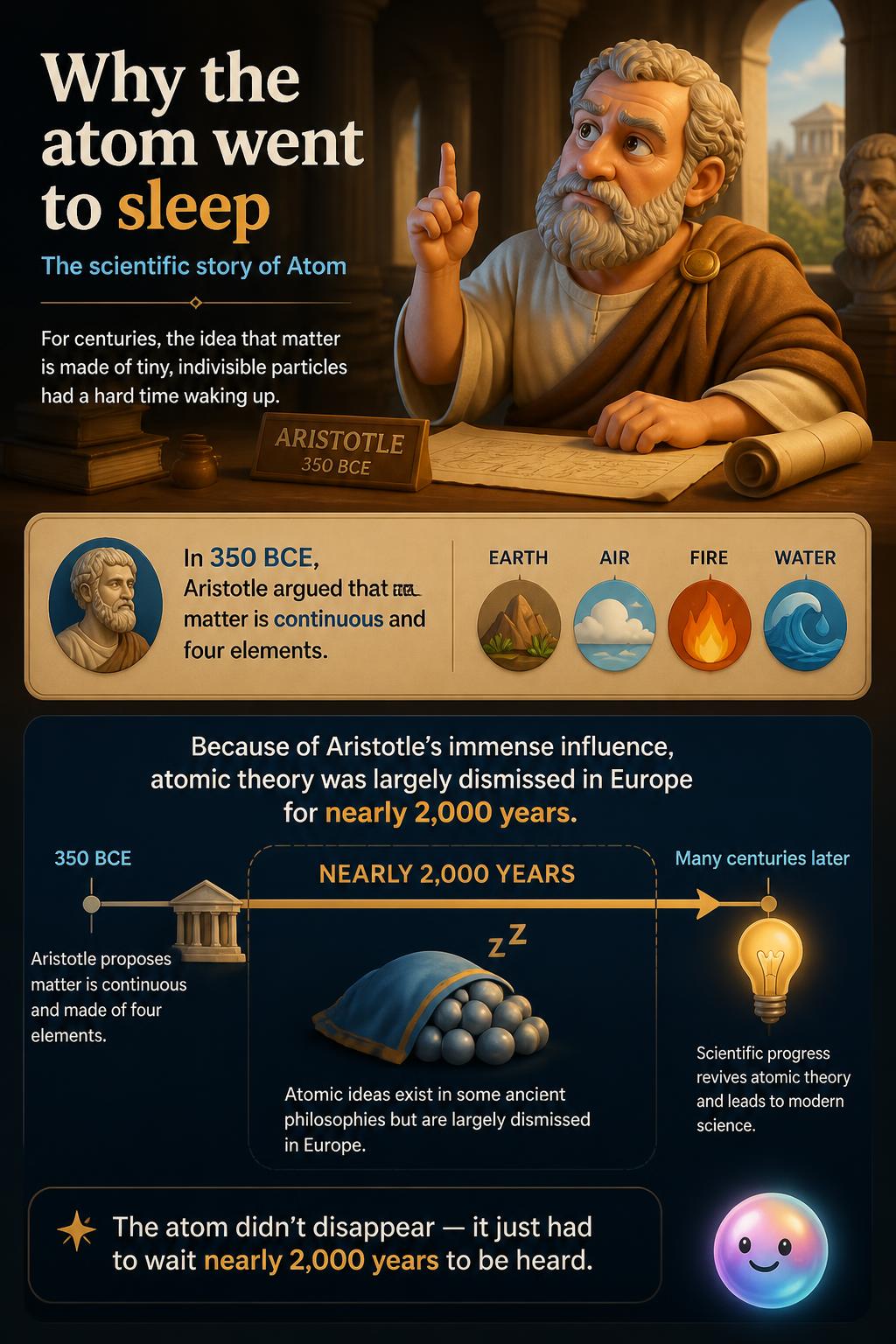
testerr Powerful philosophers like Aristotle rejected the atom, causing the idea to be ignored for centuries.
Fun Fact
Ancient Greek atoms: Democritus believed iron atoms had hooks that locked them together, while water atoms were smooth and slippery.
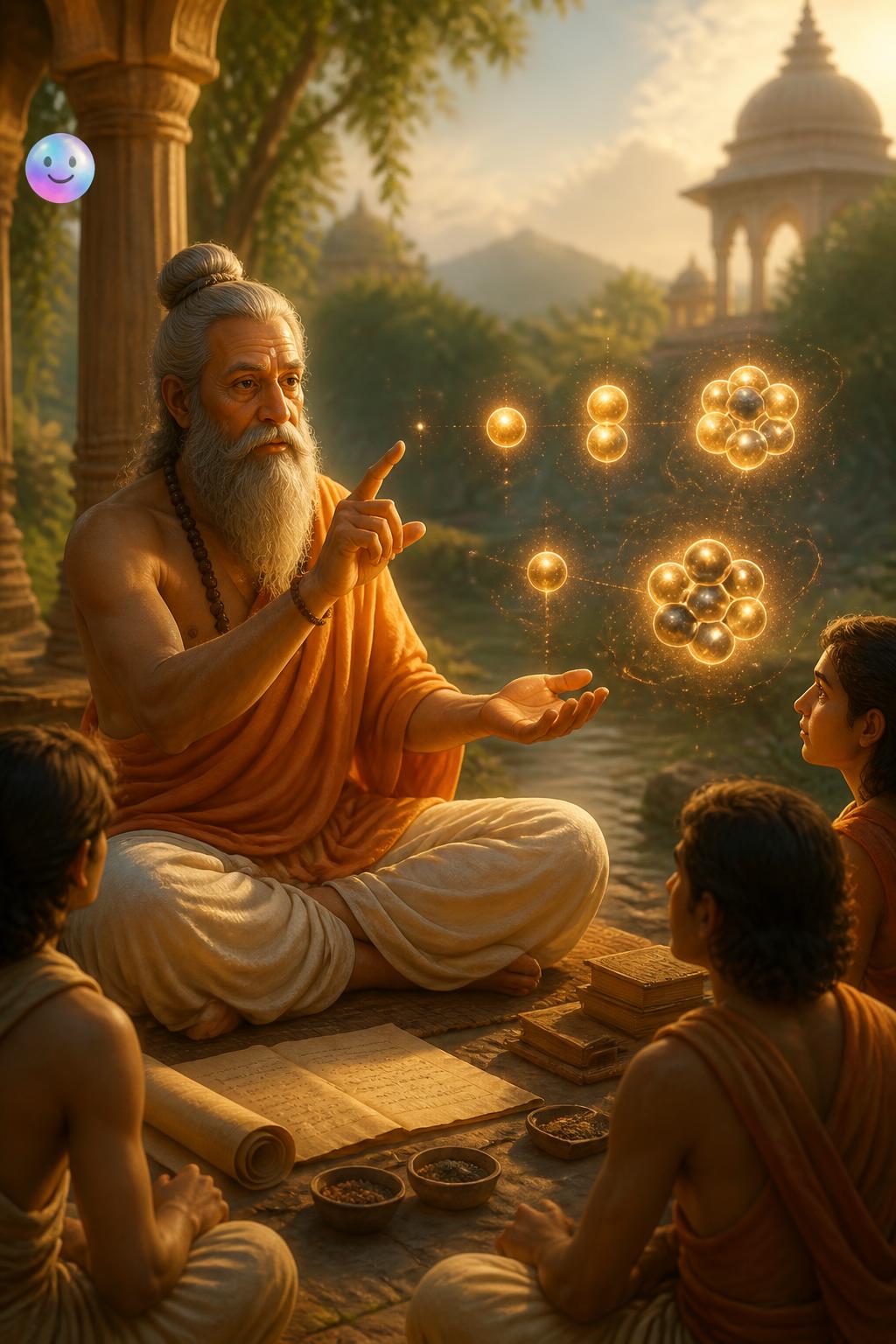
testerr In ancient India, the philosopher Kanada independently conceived of indivisible particles called anu.
Glossary
atomism (noun)
The doctrine that physical matter is composed of simple, indivisible particles. Democritus formulated this doctrine in ancient Greece around 400 BCE to describe the nature of matter.
Quiz
In which year was the lost manuscript of Lucretius's atomic poem rediscovered in a German monastery?
BETA
testerr Drag electrons into their orbits to discover how a tiny atom creates a spark.
testerr Explore the scientific story of the atom and how the concept of cutting the uncuttable originated in ancient Greece.
Quiz
Which ancient Greek philosopher was Democritus's mentor in developing early atomic ideas?
testerr Watch this educational video to discover the scientific story of the atom and learn the physics concepts behind why the atom went to sleep.
Quiz
Which ancient Indian philosopher independently proposed the concept of the indestructible particle "anu"?
Quiz
Why did atomic theory lose popularity in Europe for nearly two thousand years after 350 BCE?