Chapter 1
The Florentine spark that ignited a revolution
Chapter 2
The fierce rivalry of the ultimate polymaths
Chapter 3
Princes, popes, and the business of art
Chapter 4
The chemistry and math behind the masterpieces
YOUR GOAL
Master of The Italian recipe for a cultural rebirth
Ch 4 · The chemistry and math behind the masterpieces
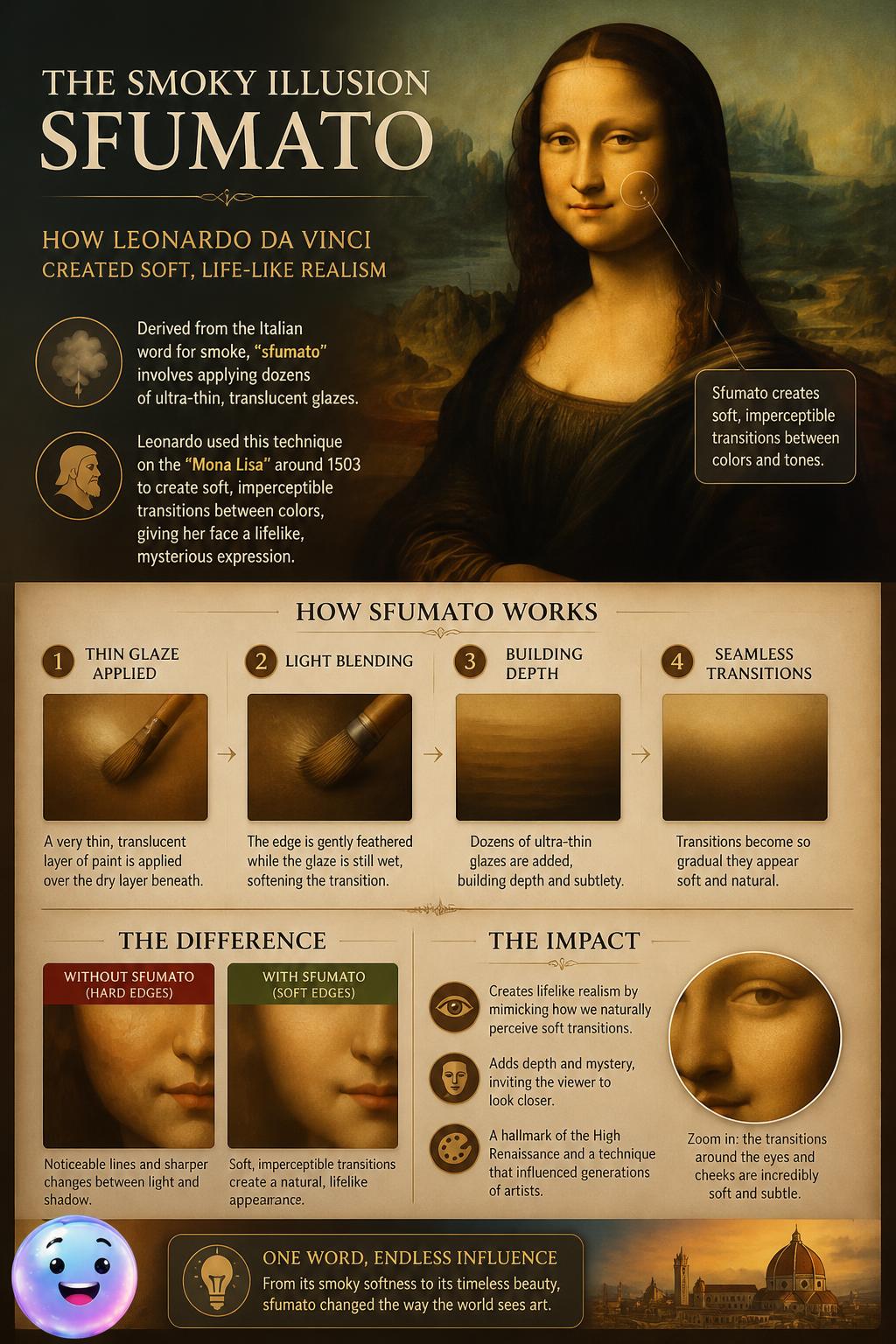
andy Around 1503, Leonardo da Vinci used this smoky method on the Mona Lisa to build imperceptible transitions between
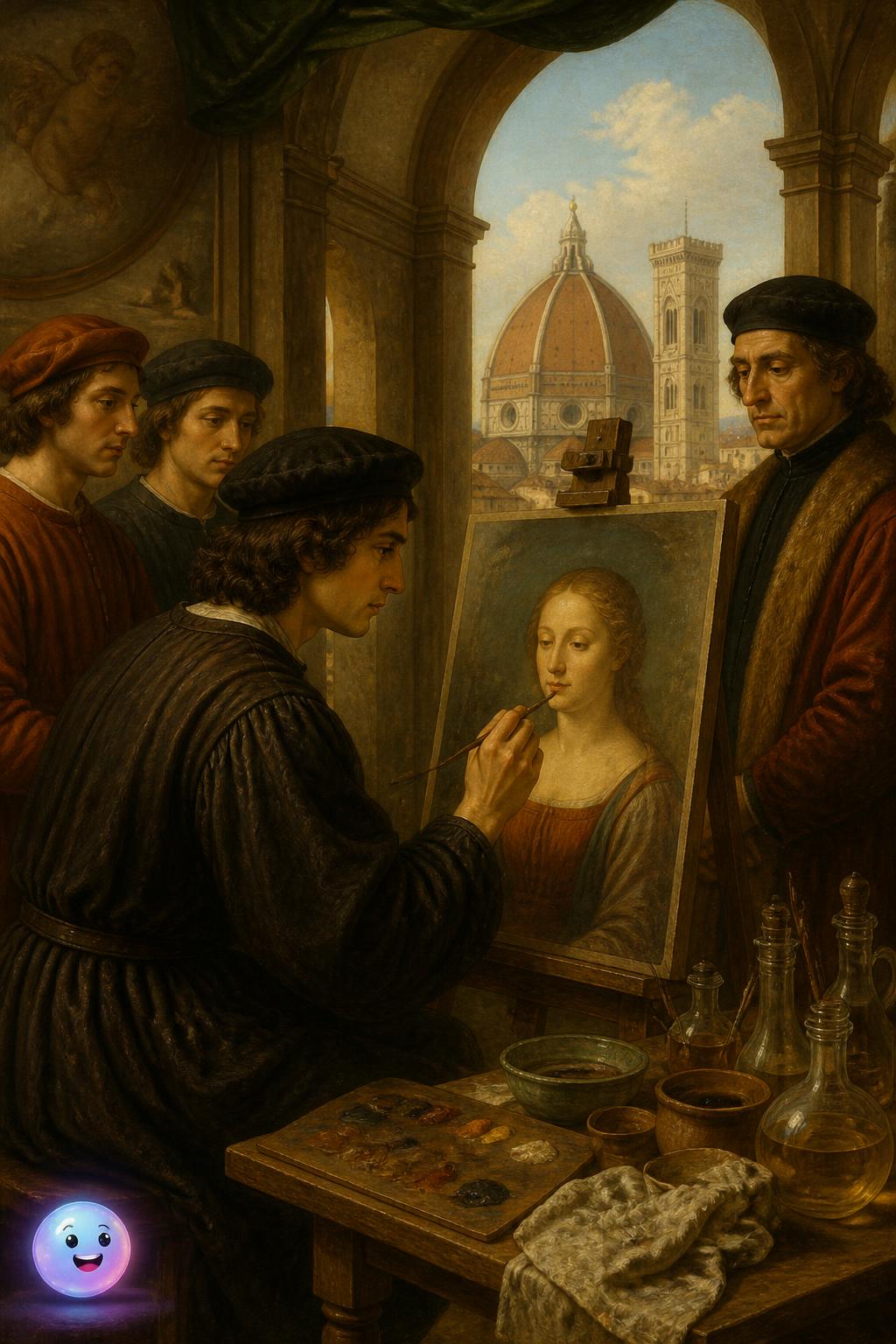
andy Luminous light illuminates a Renaissance artist applying thin, glowing layers of oil paint.
Fun Fact
Egg wash: Before oil paint, artists used egg yolk mixed with powdered pigments, a fast-drying paint known as egg tempera.
Glossary
perspective (noun)
A technique of depicting three-dimensional volume and spatial relationships on a flat surface. Around 1415, Filippo Brunelleschi mathematically formulated this system to create realistic architectural depth in Florentine paintings.
A technique of depicting three-dimensional volume and spatial relationships on a flat surface. Around 1415, Filippo Brunelleschi mathematically formulated this system to create realistic architectural depth in Florentine paintings.
Quiz
What fast-drying paint medium, made by mixing egg yolk with powdered pigments, did artists use before oil paint?
Quiz
In what year did Leonardo da Vinci begin painting the Mona Lisa, utilizing his famous sfumato technique?
Quiz
Around what year did Leonardo da Vinci draw the 'Vitruvian Man' to show the ideal proportions of the human body?
Quiz
What is the literal English meaning of 'sfumato', Leonardo da Vinci's famous painting technique?
Quiz
Why did fresco painters have to apply water-based paint directly onto wet lime plaster?
Quiz
From which European region did Italian Renaissance artists adopt the slow-drying oil painting technique?
Quiz
Which ancient Roman architect's writings inspired Leonardo da Vinci's drawing of human proportions?