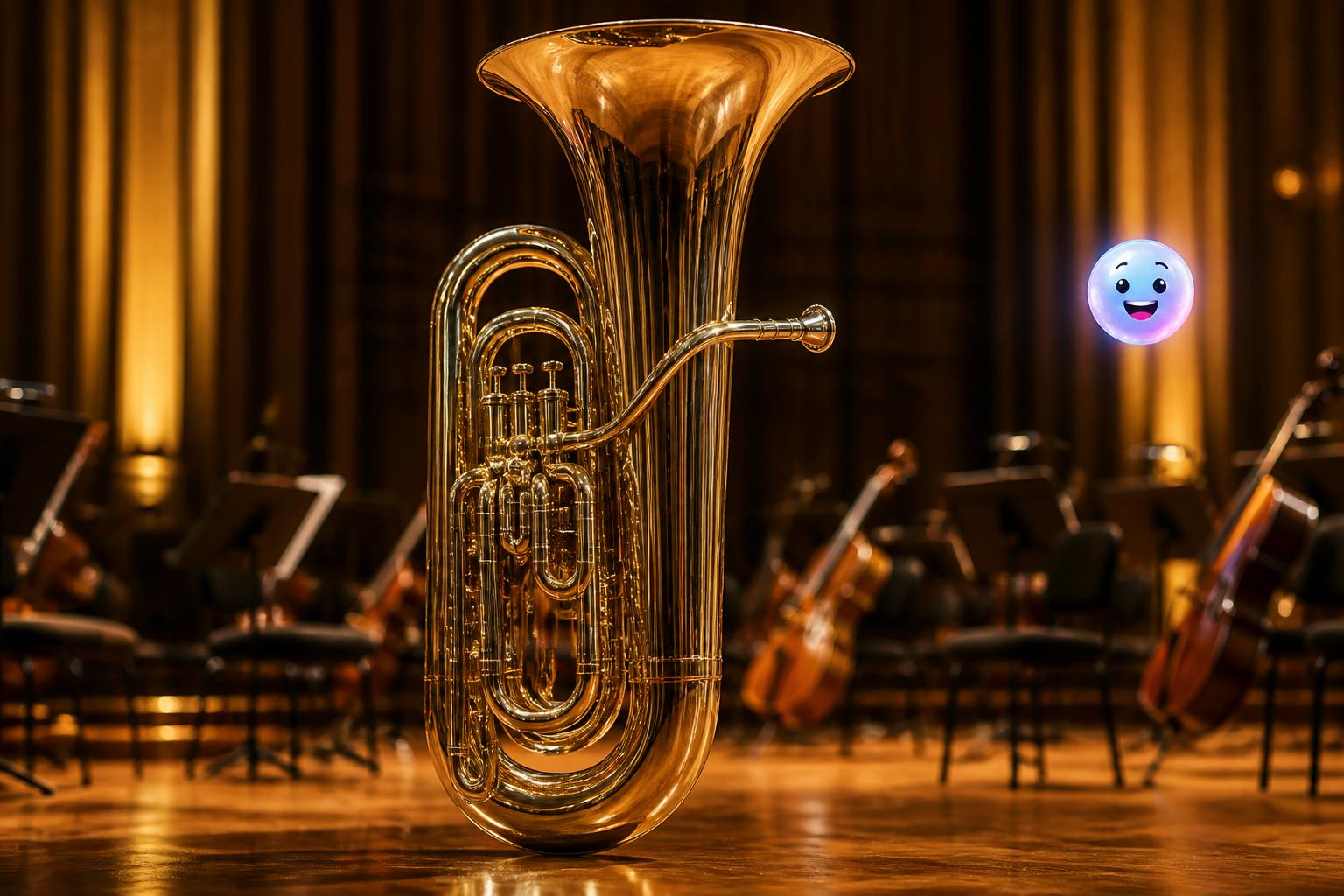
What is the main physical design difference between a marching
What is the main physical design difference between a marching sousaphone and a standard concert tuba?
Heavy metal physics
The birth of a brass giant
Global cousins and band leaders
Orchestral power and famous solos
maestro In the late nineteenth century, musicians blended military brass with African rhythms. Tubist Anthony 'Tuba Fats' Lacen proved the giant instrument could play dancing, syncopated basslines.

maestro Drag the brass valves into place to learn how a tuba produces its unique sound.
maestro Global Tuba Cousins
Sousaphone leads the march, Cimbasso rules the pit, Helicon wraps around!


maestro Colorful illustrations display tuba valves, orchestral seating, and New Orleans street band musicians
Rain catcher: The earliest marching sousaphones had bells pointing straight up, which earned them the nickname rain-catchers before the design changed.
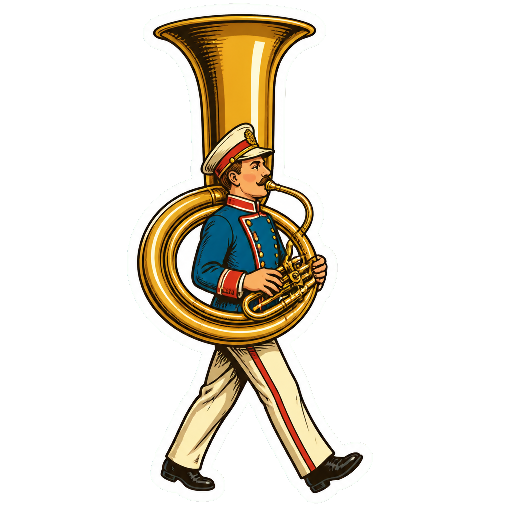

A large brass wind instrument with a forward-facing bell, designed to wrap around the player's body for marching. John Philip Sousa commissioned this instrument in 1893 to project sound over his touring concert band.
What is the main physical design difference between a marching sousaphone and a standard concert tuba?
In which American city did street brass bands first combine military brass with syncopated jazz rhythms?
Which smaller cousin of the tuba is pitched one octave higher and known for its sweet, tenor voice?
Which musical genre from northwestern Mexico features the sousaphone playing rapid, energetic basslines?
What humorous nickname was given to early sousaphones because their bells pointed straight up?
What circular, shoulder-mounted brass instrument is a popular predecessor to the sousaphone in Balkan brass bands?