
What kind of bridge joints became the bats' home?
Quiz yourself on Austin's famous bridge bats. Do you know what type of architectural bridge joints accidentally became their ideal roosting home?
The architectural accident
The August explosion
The Mexican free-tailed bat's journey
From pests to protectors

sonia Watch how concrete crevices in bridges create the ideal warm microclimate that supports Austin's famous bat colony before they take flight in August.
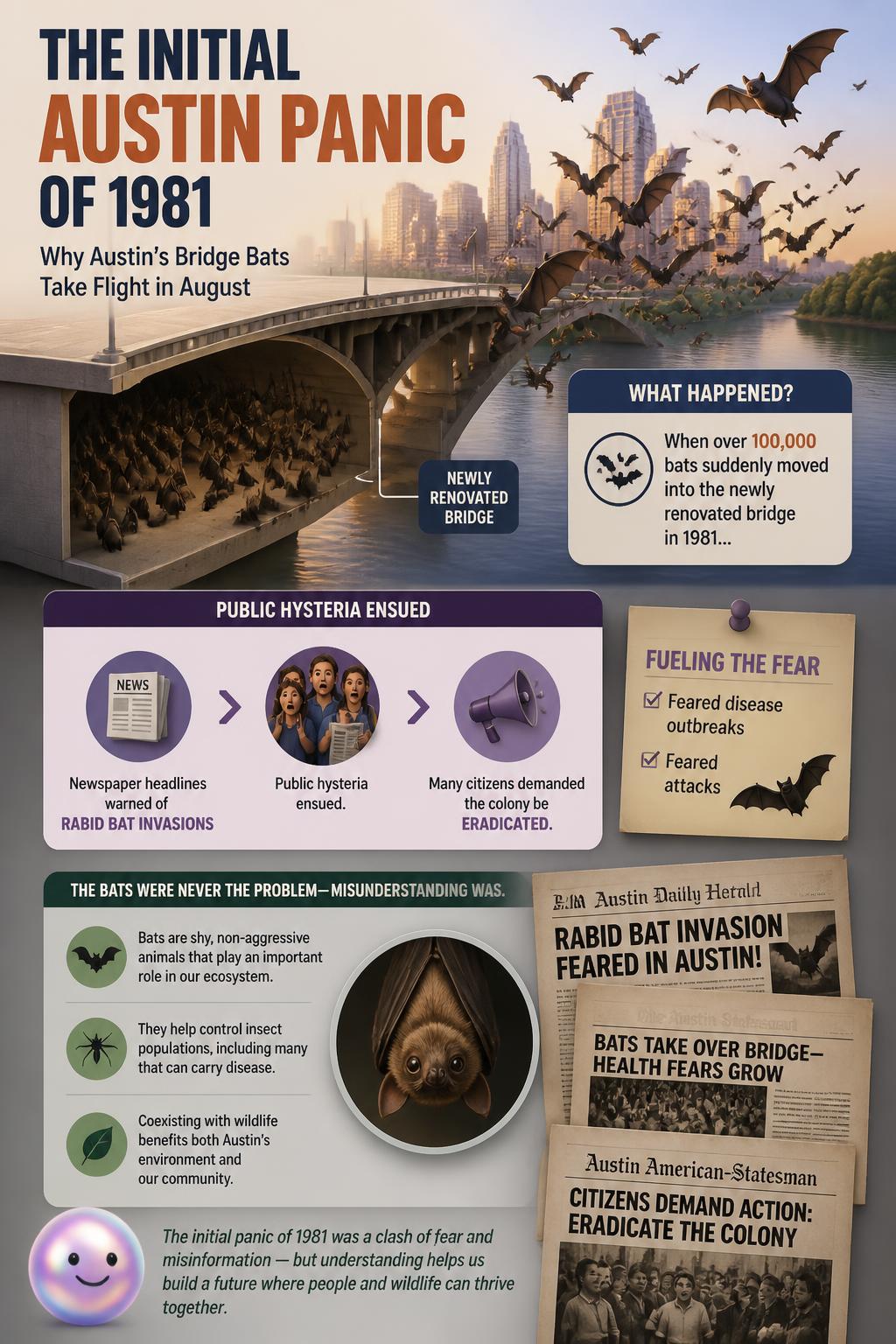
sonia Watch the history of the 1981 Austin bat panic and discover why these famous bridge bats take flight every August.
sonia Watch how the 1980 rebuild of Austin's bridge created the perfect home for the famous bats that take flight every August.

sonia Play Bridge Bat Bungalow to explore the architectural accident behind Austin's famous bridge bats in this interactive educational game.
sonia The Architectural Accident
One inch of space, An accidental place, A million wings take flight!
sonia Watch to learn why Austin's famous bridge bats chose this urban landscape and what makes their August flights so spectacular.
Bridge crevices: The expansion joints under the Congress Avenue Bridge are exactly 0.75 to 1.5 inches wide, which is the precise size Mexican free-tailed bats prefer for squeezing into.
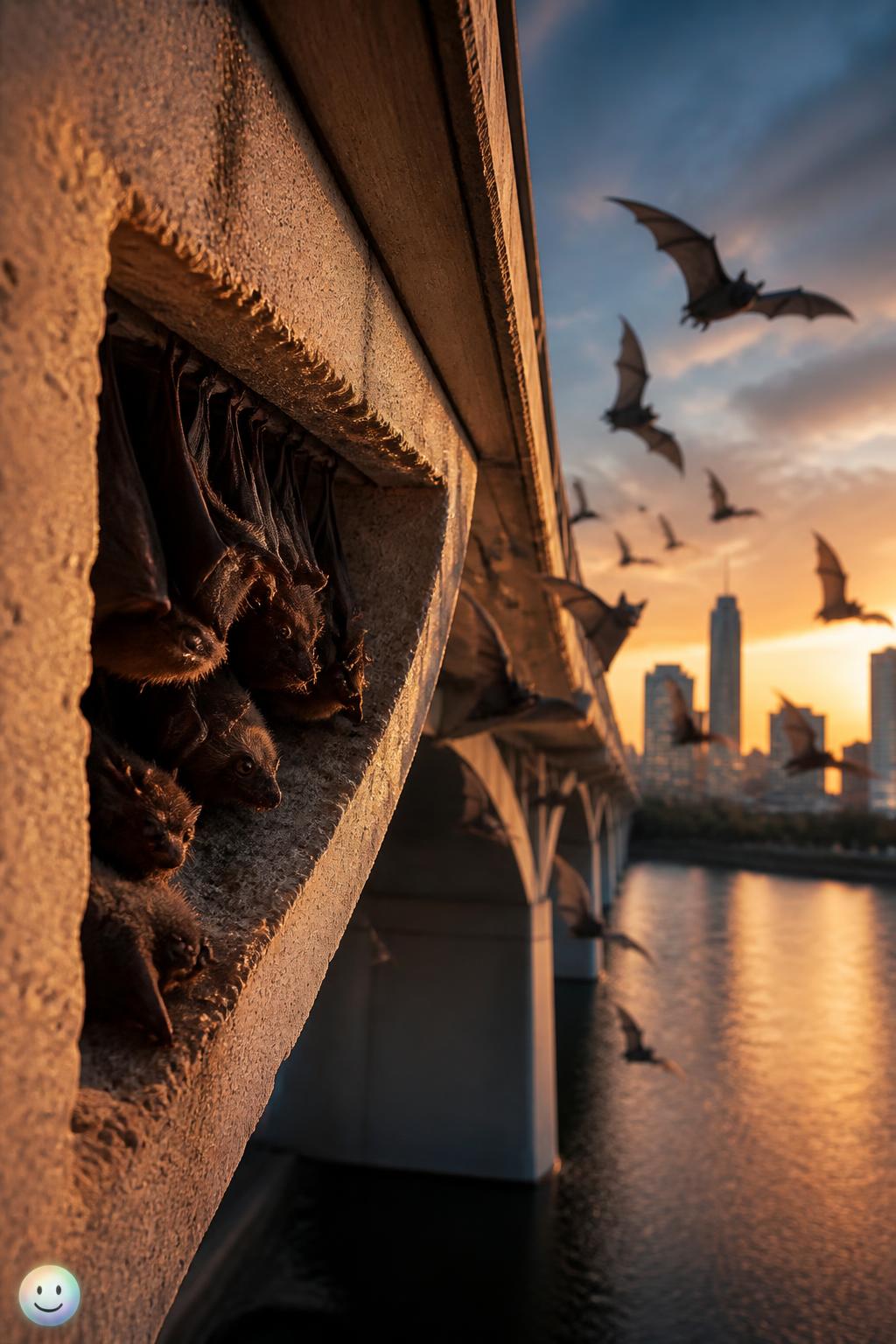
A narrow opening or fissure, especially in a rock or wall. Renovations to the Congress Avenue Bridge in 1980 created concrete crevices that unintentionally attracted migrating bats.
What material was used in the Congress Avenue Bridge that helps retain heat for the bats?
Which water body lies directly beneath the Congress Avenue Bridge, providing water for the bats?
What is the width range of the expansion joints under the Congress Avenue Bridge that bats prefer?
How did Austin residents initially react when the bat colony first established itself in 1981?