Chapter 1
The magic of oil and Jan van Eyck
Chapter 2
Hieronymus Bosch and his wild imagination
Chapter 3
Pieter Bruegel and the celebration of the commoner
Chapter 4
The merchant money that bought a renaissance
YOUR GOAL
Master of The oil paint rebels of Flanders
Ch 4 · The merchant money that bought a renaissance

andy Flemish Merchant Wealth
Trading the wool, stacking the gold, watch as the art unfolds!
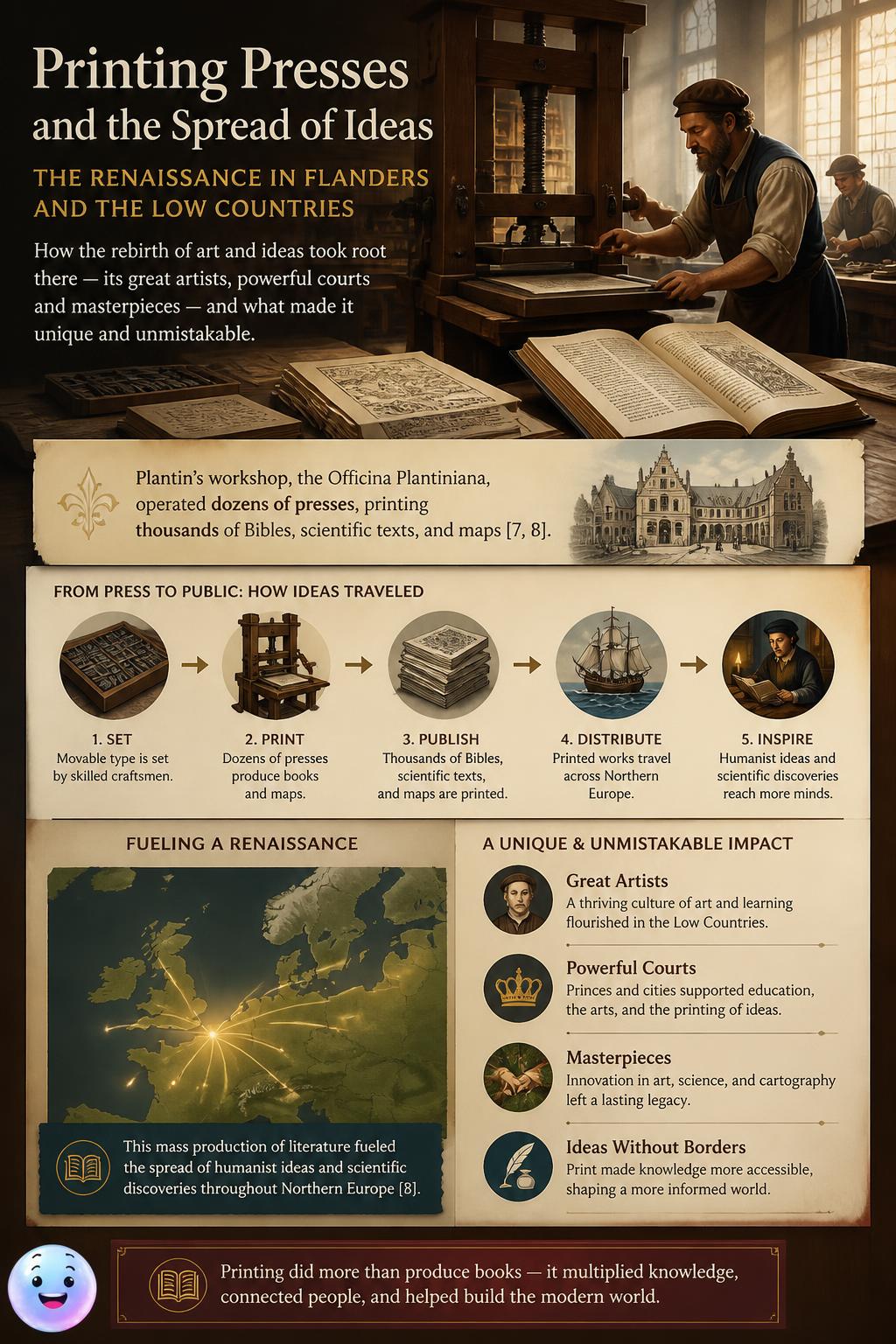
andy The Officina Plantiniana operated dozens of presses, printing thousands of Bibles, maps, and scientific texts to power this
Fun Fact
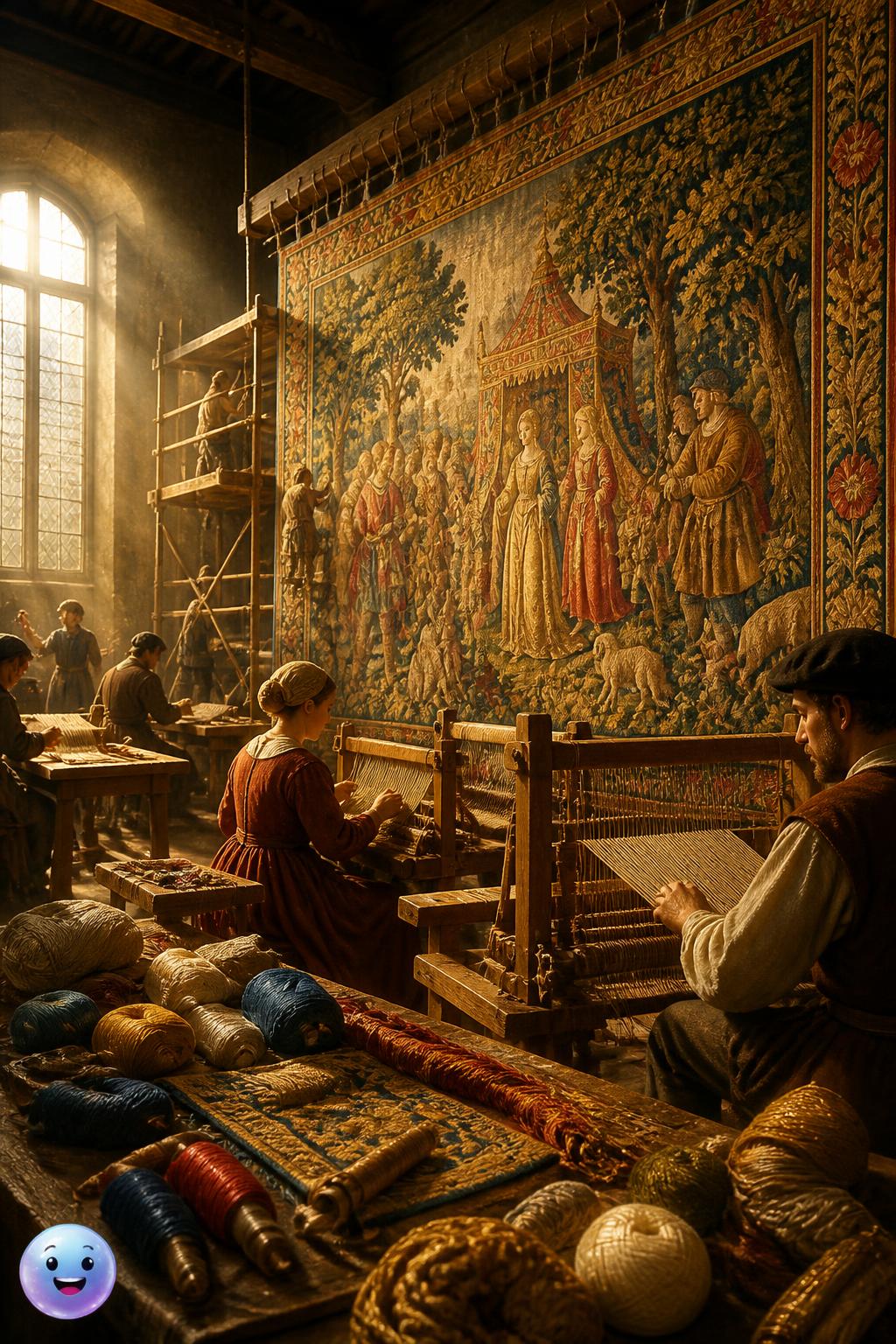
More expensive than gold: A single Brussels tapestry could cost more than a warship, making it the most expensive art form of the Northern Renaissance.
Glossary
patronage (noun)
The financial support, backing, or encouragement given by an individual or organization to an artist. In fifteenth-century Bruges, wealthy traders used commercial profits to commission masterpieces from painter Jan van Eyck.
The financial support, backing, or encouragement given by an individual or organization to an artist. In fifteenth-century Bruges, wealthy traders used commercial profits to commission masterpieces from painter Jan van Eyck.
Quiz
What strict rule did the Guild of Saint Luke enforce regarding the pigments used by Flemish painters?
Quiz
In which Flemish city did Christopher Plantin establish his massive, revolutionary printing press in 1555 [7, 8]?
Quiz
Which saint gave his name to the powerful artists' guilds that regulated art quality in the Low Countries [9]?
Quiz
What was the primary source of wealth for the powerful merchant class in 15th-century Flanders?
Quiz
Which powerful trade alliance connected Flemish merchant cities like Bruges to the rest of Northern Europe?
Quiz
What material was primarily used to insulate cold castle walls while doubling as a display of immense wealth?
Quiz
What luxury textile, woven in Brussels, was actually more expensive than oil paintings during the Renaissance?