
What must a bassoonist do to a dry reed immediately before playing it?
How to fold nine feet of maple
The voice of drama and comedy
The intense craft of reed making
The heavy metal giant
maestro Scraping the reed heart removes the dark tone, but adjusting the channels helps low notes speak easily. This demonstration reveals how different zones control the instrument's voice.
maestro Porous cane absorbs moisture from saliva and air. A reed crafted in sea-level San Francisco plays completely differently in high-altitude Denver.
maestro Musicians use gouging and profiling machines to scrape cane down to a paper-thin point. Even a microscopic mistake ruins the entire handmade reed.
maestro Bassoon players depend on giant perennial cane grown in Var, France. This unique plant has the perfect density and flexibility to vibrate at precise orchestral frequencies.

maestro Match the bassoon's distinct sounds to discover its special role in the symphony orchestra.
maestro Bassoon Reed Making
We wrap the cane in wire and thread (wire and thread!) / Then scrape the tip to find the sound (find the sound!)


Cane aging: Before a bassoonist can carve a reed, the wild cane must be dried and aged for up to two years.
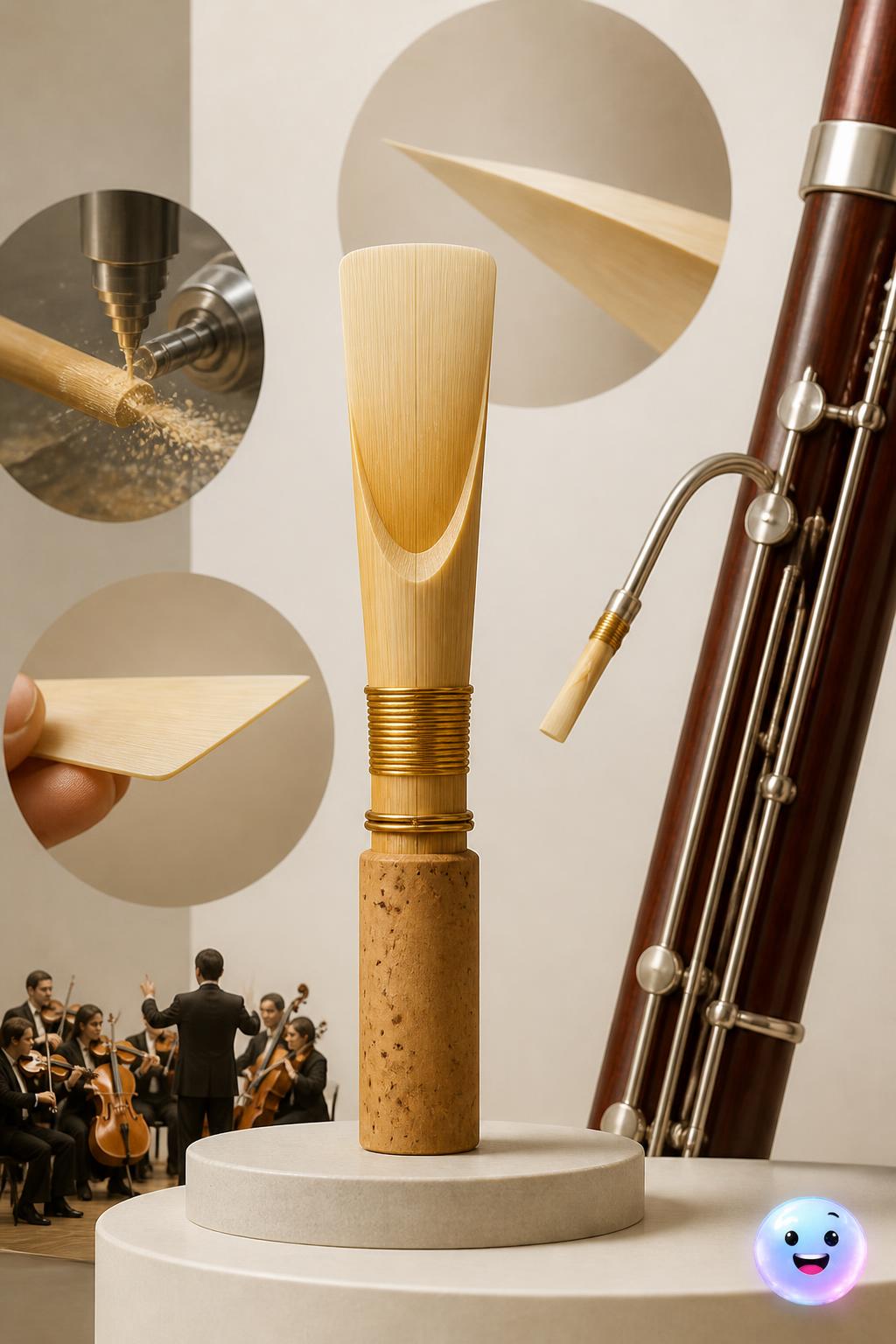
A thin piece of material that vibrates to produce sound in a woodwind instrument. Bassoon players traditionally source Arundo donax cane from southern France to craft these delicate musical mouthpieces.
What tool do bassoonists use to scrape and shape the exterior profile of a reed by hand?
What is the approximate thickness of a bassoon reed's tip after it is fully shaved?