
The honest truth about why we fib
Reading the tells that do not exist
When lying becomes a habit
The grand illusions we play on ourselves
YOUR GOAL
Master of The secret life of our little lies
infamousd Everyday Lying Behavior
We bend the truth to seem cool (oh yeah!) / Ten-minute chat, we slip up twice (yes we did!)
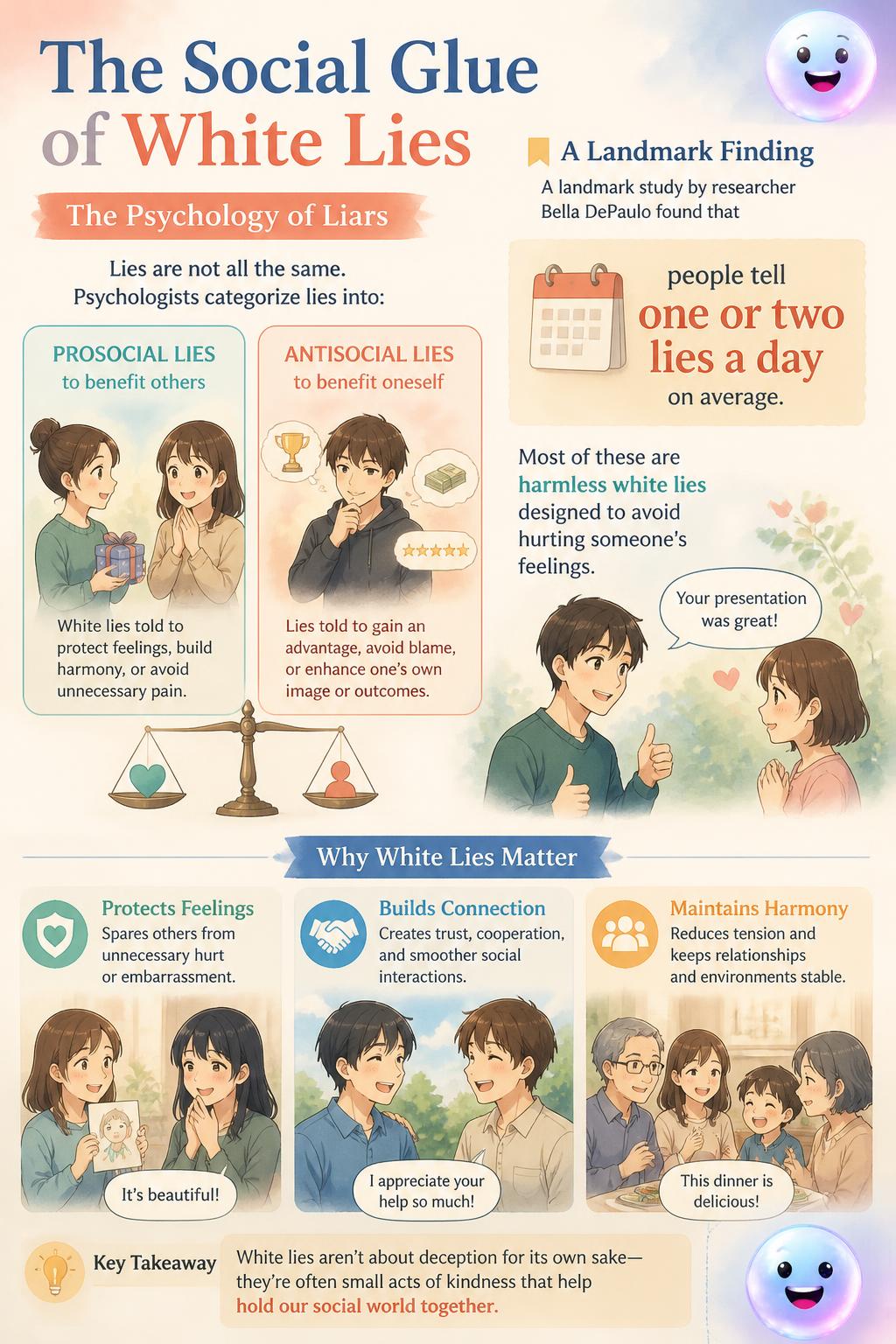
infamousd Psychologists categorize human lies as prosocial or antisocial, explaining why we tell harmless daily lies to protect other
infamousd Isometric glass and chrome brain model with precise labels mapping the psychology of lying.
infamousd Spot the suspect's physical tells to master the psychology of deception.
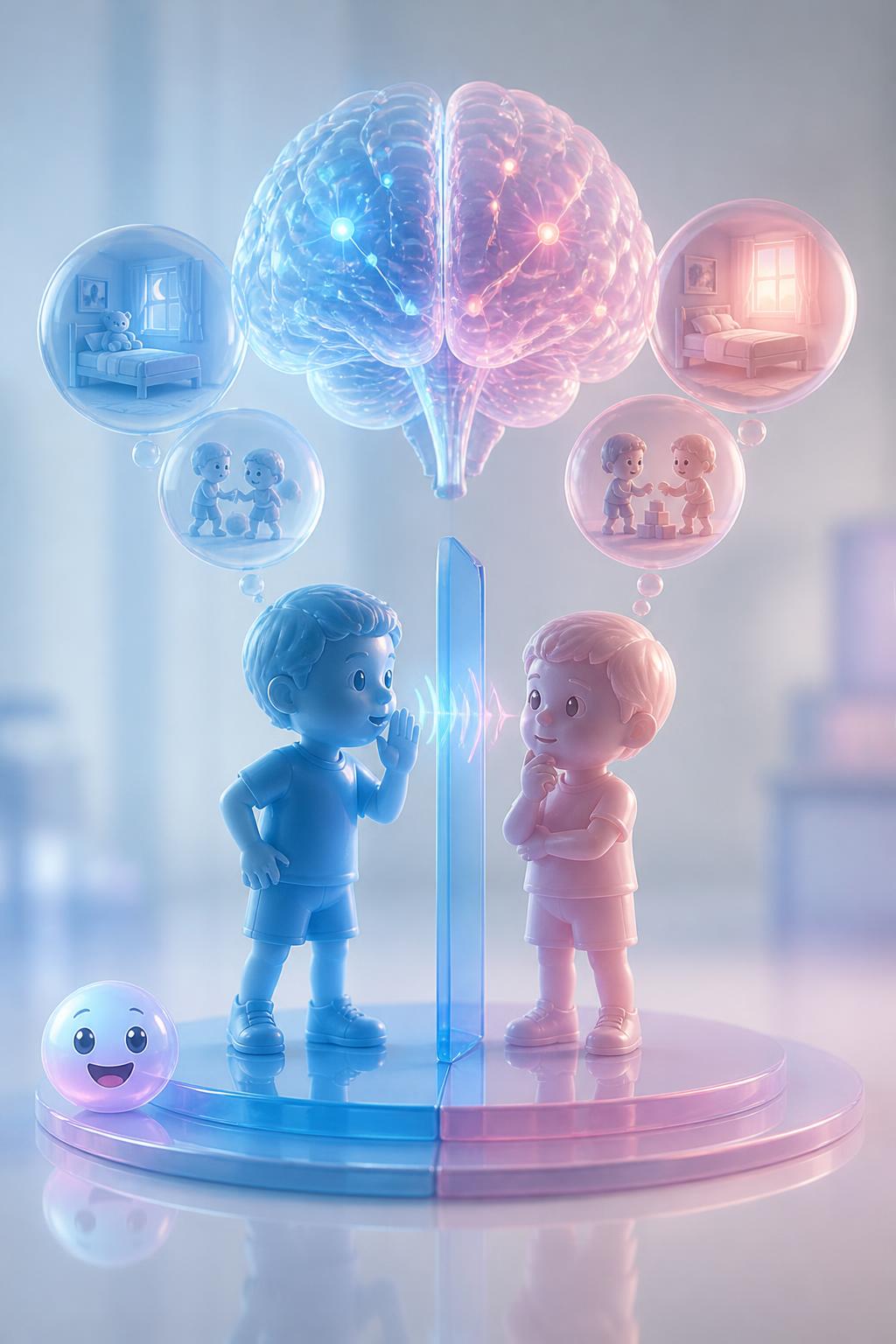
Kids and brains: A toddler's first lie is actually a sign of healthy brain development, proving they understand that other people have different thoughts than they do.
A trivial or unimportant lie. Dan Ariely used a matrix task to study how people tell minor lies to benefit themselves.
In cross-cultural studies, children from collectivist cultures are more likely to lie to achieve which goal?
Which primate has been documented using tactical deception, such as faking an injury, to trick its peers?
What psychological term describes a child's realization that other people have different thoughts and beliefs than they do?
At what approximate age do children typically start telling their first simple lies?
According to researcher Bella DePaulo's studies, about how many lies does the average person tell per day?
What do psychologists call lies that are told specifically to protect or benefit another person?