
Chapter 1
The global roots of nature therapy
Chapter 2
The organic chemistry of trees
Chapter 3
What happens to a body in the wild
Chapter 4
Designing your own nature ritual
Ch 4 · Designing your own nature ritual
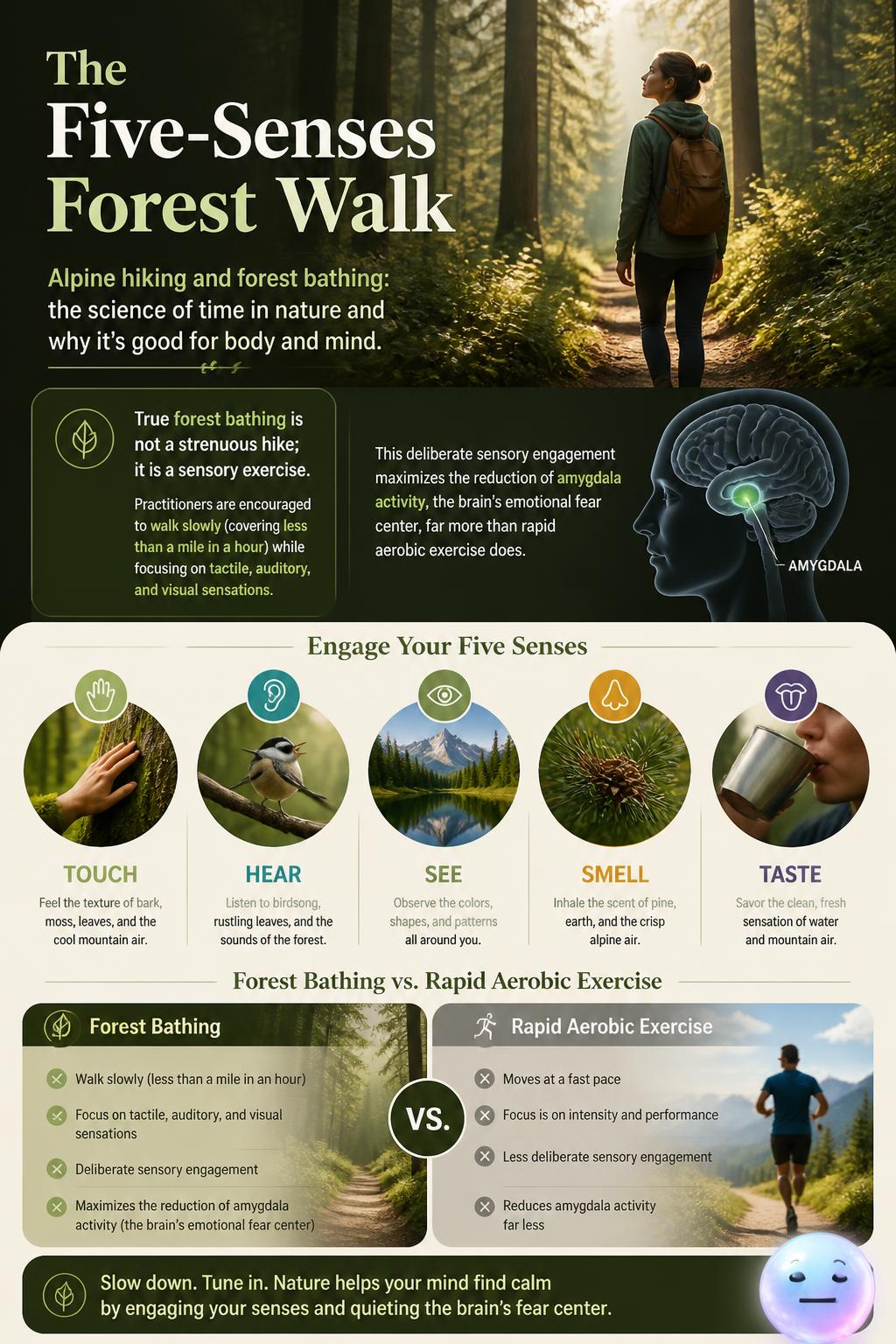
lara Focusing on tactile, auditory, and visual sensations during slow walks reduces amygdala activity far more than a strenuous hike.
Quiz
What is the recommended average distance to cover during a dedicated 60-minute forest bathing session?
Quiz
Which region of the brain, responsible for processing fear and anxiety, is calmed most during a slow, sensory walk?


Quiz
What simple home practice can disperse actual, health-boosting tree phytoncides into your indoor living space?
Quiz
Which scientific journal published the landmark 2015 study proving that touching indoor houseplants reduces physical stress?
Fun Fact
Houseplant power: NASA's Clean Air Study proved that certain common houseplants, like the Peace Lily, filter out harmful indoor toxins like benzene.
Quiz
According to the 'Nature Pyramid' rule, how many minutes of green time should you get at least three times a week?
Quiz
What is the recommended annual 'dose' of deep, off-grid wilderness camping or hiking in the Nature Pyramid?
Glossary
shinrin-yoku (noun)
The practice of spending therapeutic time in a forest or other natural environment. Coined in Japan in 1982, this sensory practice provides the foundation for structuring personalized outdoor wellness routines.
The practice of spending therapeutic time in a forest or other natural environment. Coined in Japan in 1982, this sensory practice provides the foundation for structuring personalized outdoor wellness routines.
Quiz
Which outdoor ethics framework outlines seven core principles to minimize human impact on natural environments?
Quiz
What psychological benefit is uniquely elevated by doing active conservation work compared to just walking in nature?