What spectacular feature on Enceladus shoots salty water ice plumes
What spectacular feature on Enceladus shoots salty water ice plumes into space?
The anatomy of a gas giant
Rings of ice and dust
The wild worlds of Saturn's moons
Humanity's eyes on the giant

sonia The giant Herschel crater stretches 130 kilometers wide, covering nearly one-third of Mimas. This massive impact almost shattered the entire moon into pieces.
sonia The Cassini spacecraft found giant water plumes erupting from tiger stripe fractures. This subsurface ocean contains organic molecules and energy sources that could support alien life.
sonia Titan shares Earth's nitrogen atmosphere, but extreme cold of minus 179 degrees Celsius freezes water. Instead, liquid methane and ethane flow through its orange channels.
sonia Dark dust from outer moons warms Iapetus, evaporating ice that settles on the colder side. A massive equatorial ridge gives this Saturnian moon a walnut shape.
sonia Saturn's Moons
Enceladus is spraying ice! (Right into space!) / Feeding Saturn's giant ring! (Oh, what a place!)
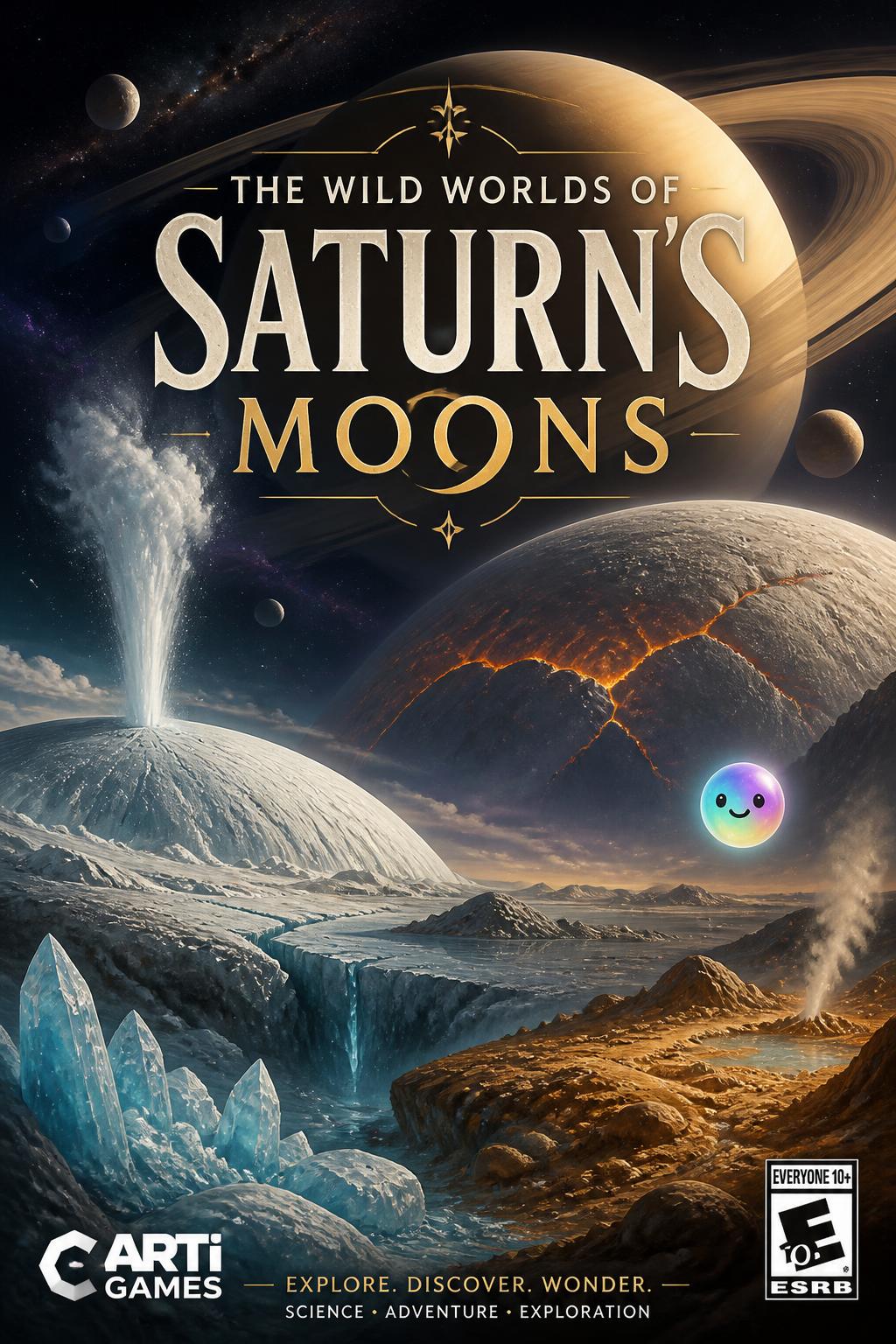
sonia Match each moon to its extreme environment to discover the wild worlds orbiting Saturn.
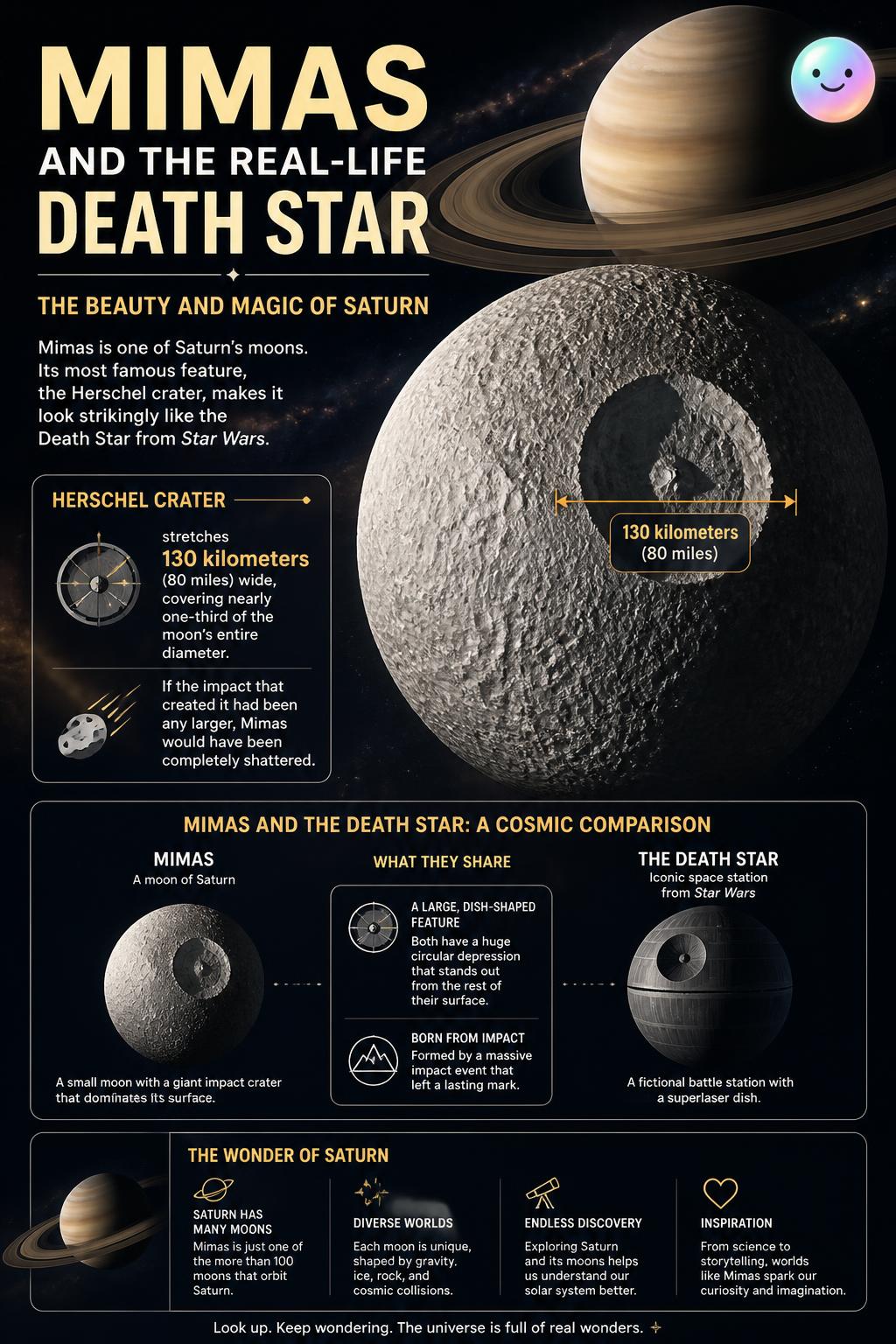
sonia The small moon Mimas looks astonishingly like the Death Star from Star Wars due to a colossal impact crater.
Moon maker: Saturn has over 140 confirmed moons, making it a mini-solar system where new tiny moonlets are constantly being discovered.
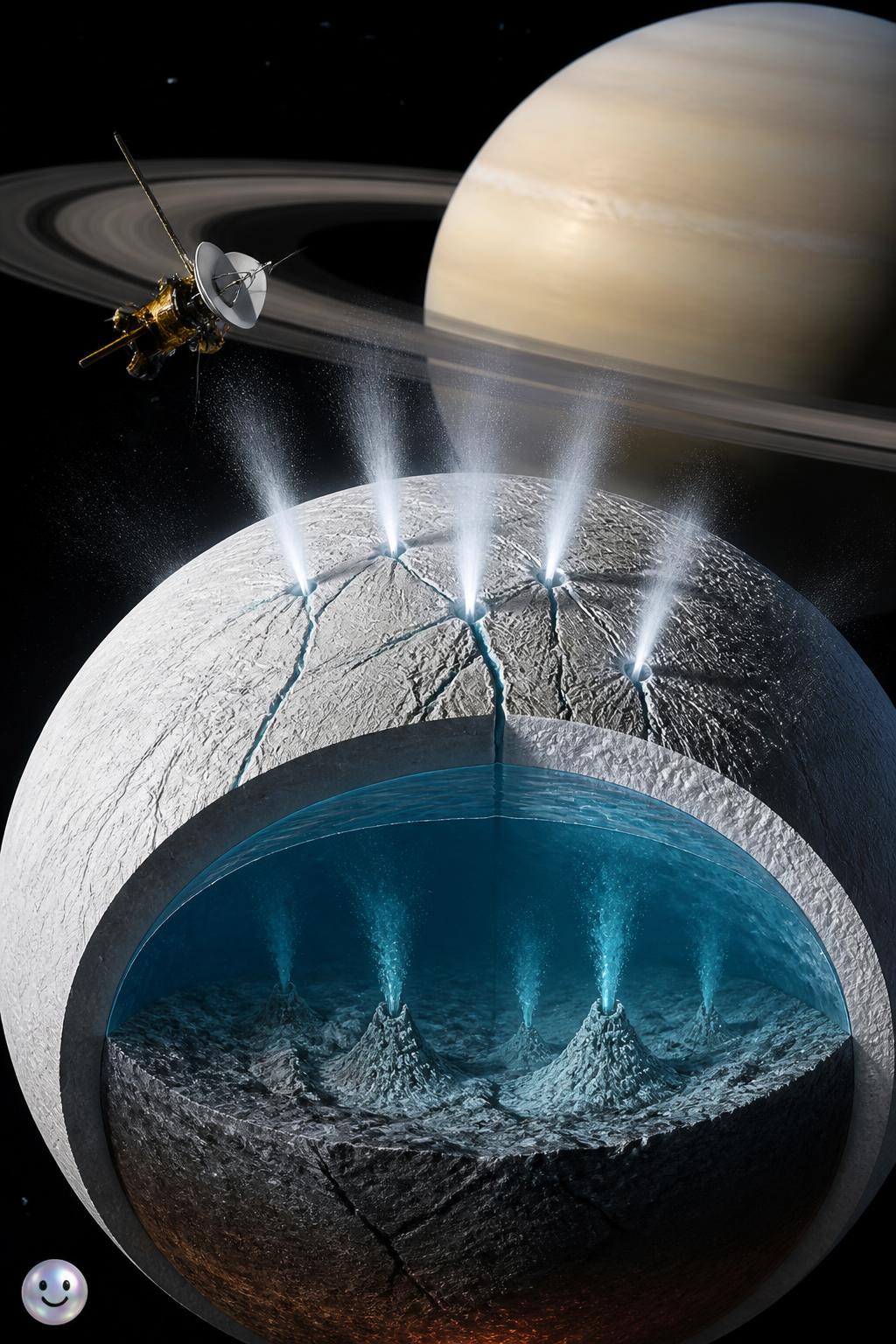
sonia The tiny, icy moon Enceladus shoots massive plumes of salty water into space from a hidden underground ocean.
A volcano that erupts volatiles such as water, ammonia, or methane instead of molten rock. In 2005, the Cassini spacecraft photographed icy geysers erupting from the south pole of Saturn's moon Enceladus.