Where did Raymond Davis Jr. build his Nobel-winning neutrino detector
Where did Raymond Davis Jr. build his Nobel-winning neutrino detector in 1965?
Meet the cosmic ghost
Building in the deep freeze
How ice catches a ghost
Messengers from the edge of time

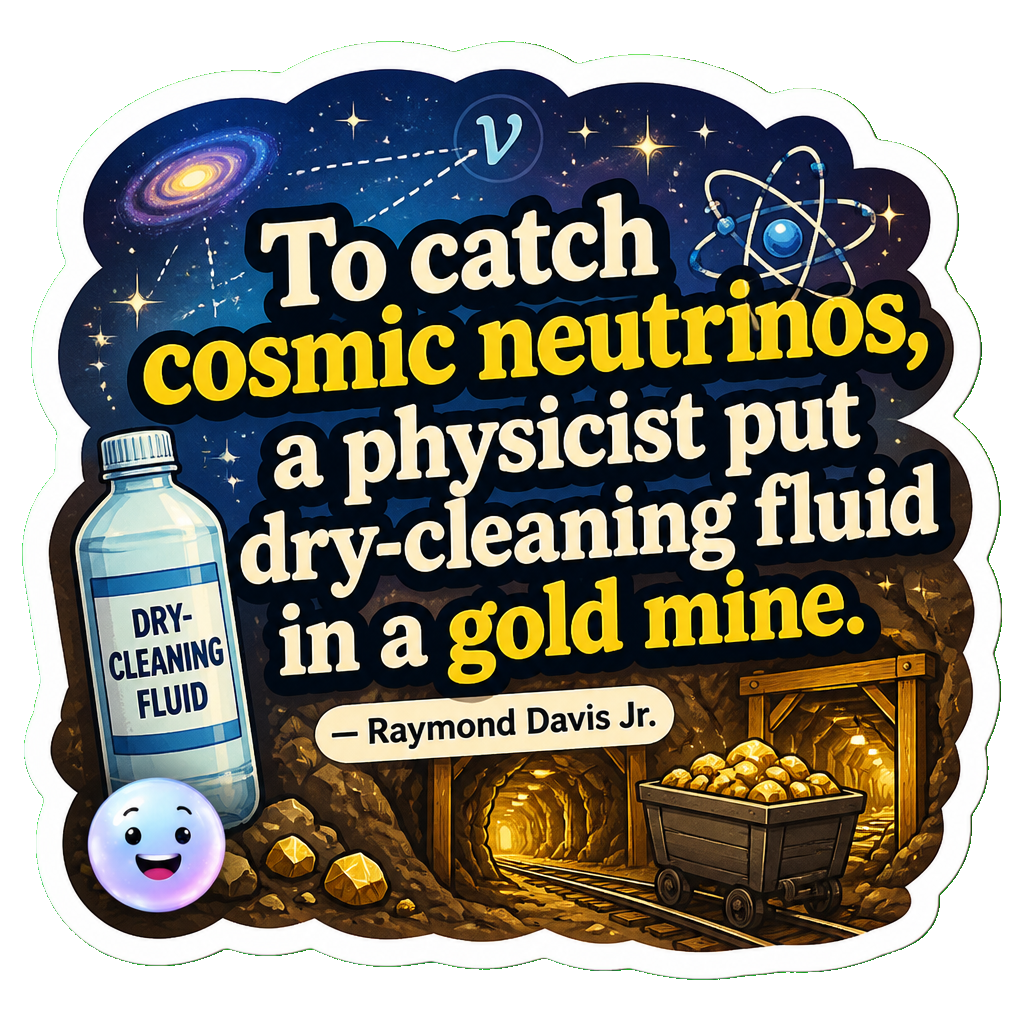
diego In 1965, Davis poured dry-cleaning fluid into a deep South Dakota gold mine. This massive underground detector captured elusive solar neutrinos and won him a Nobel Prize.
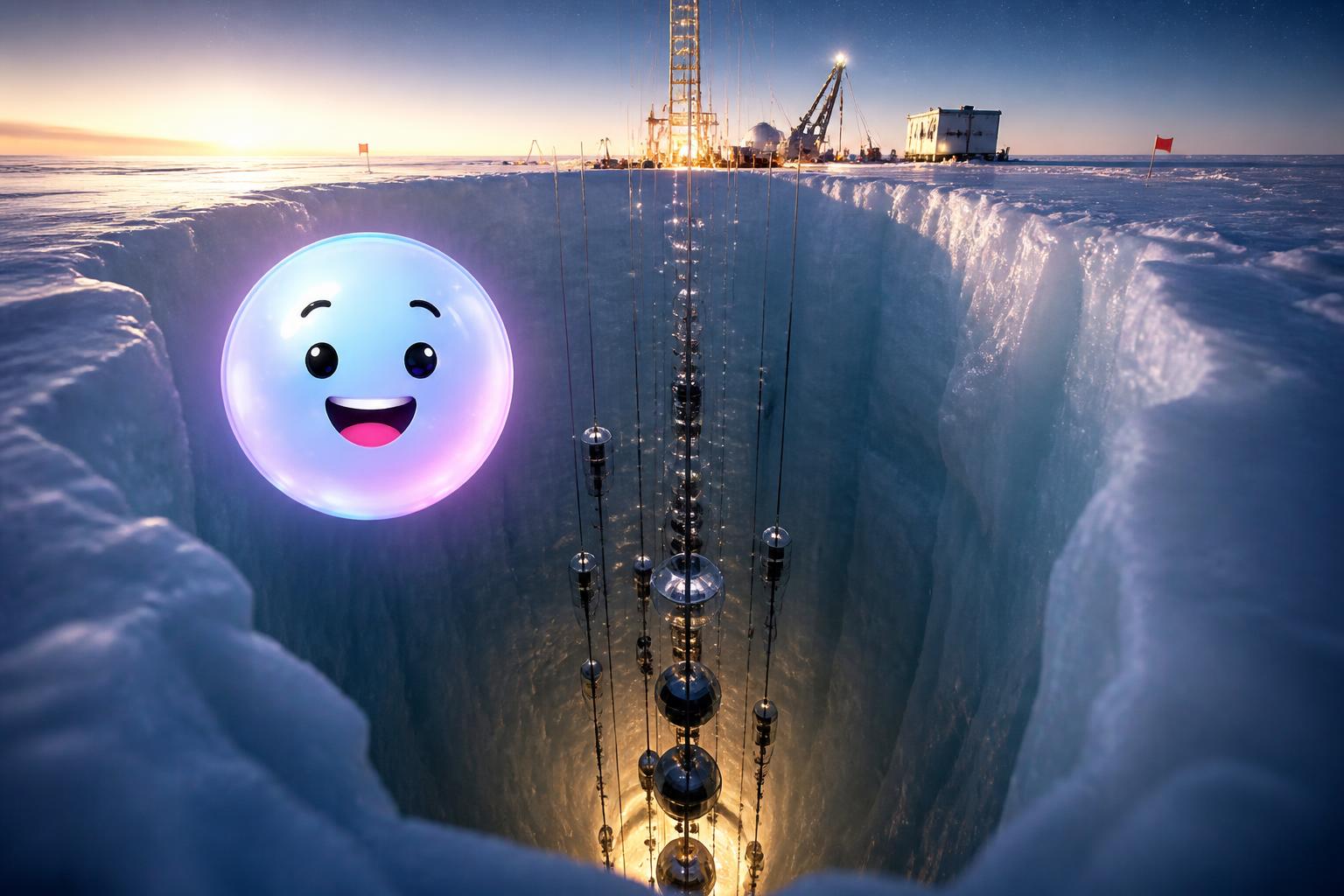
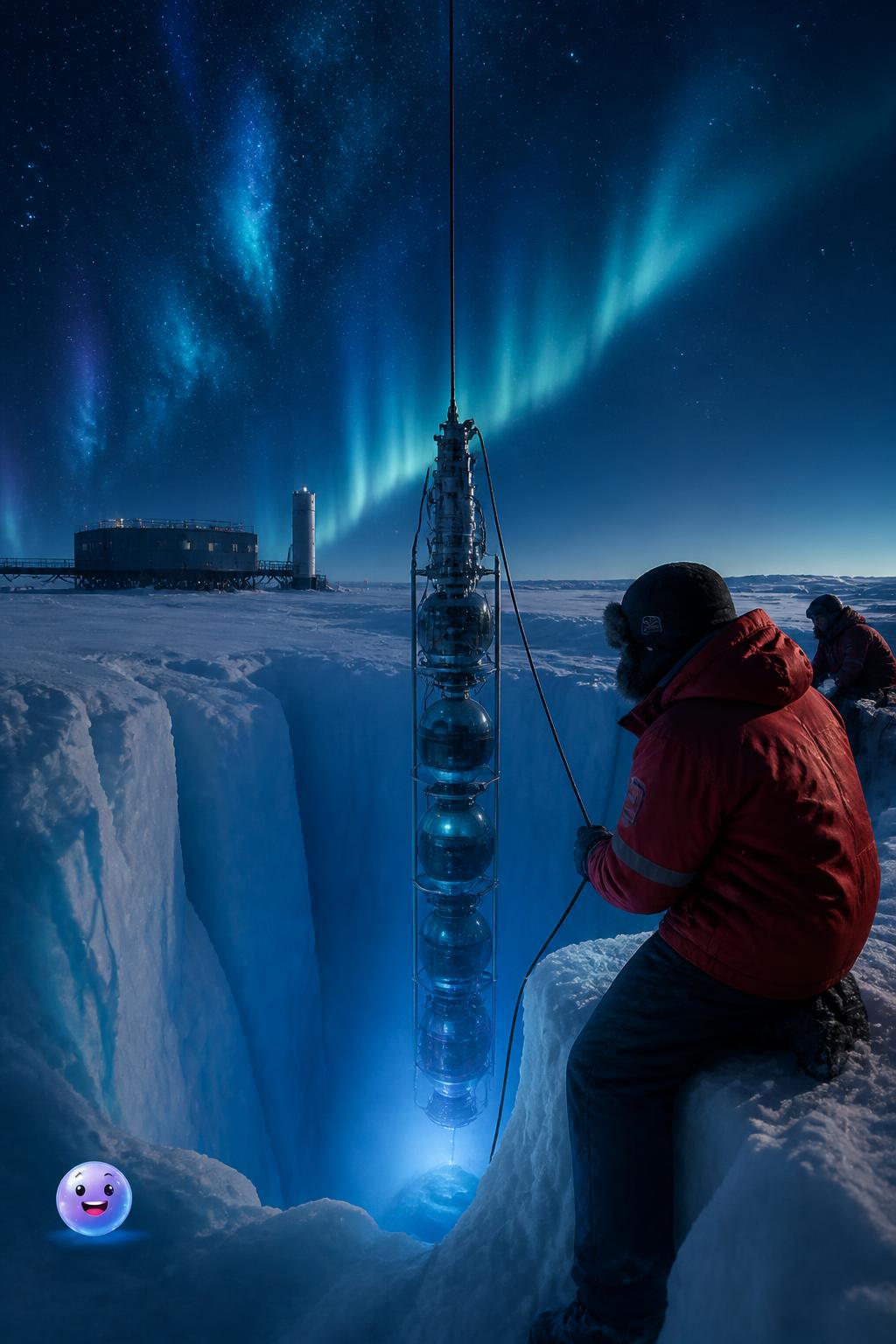
diego Unaffected by gravity or magnetic fields, these particles travel in straight lines. The IceCube Observatory in Antarctica detects them to map the edge of the universe.
diego IceCube Neutrino Observatory
They're flashing in the deep dark ice (Deep dark ice!) / Catching cosmic ghosts from paradise (Yeah we are!)
diego Late 1980s calculations showed that catching rare, high-energy neutrinos required a detector larger than any artificial tank. Scientists realized they had to use the ocean or Antarctic ice.

diego Swipe the glowing particles in the ice to discover how we catch ghostly cosmic neutrinos.
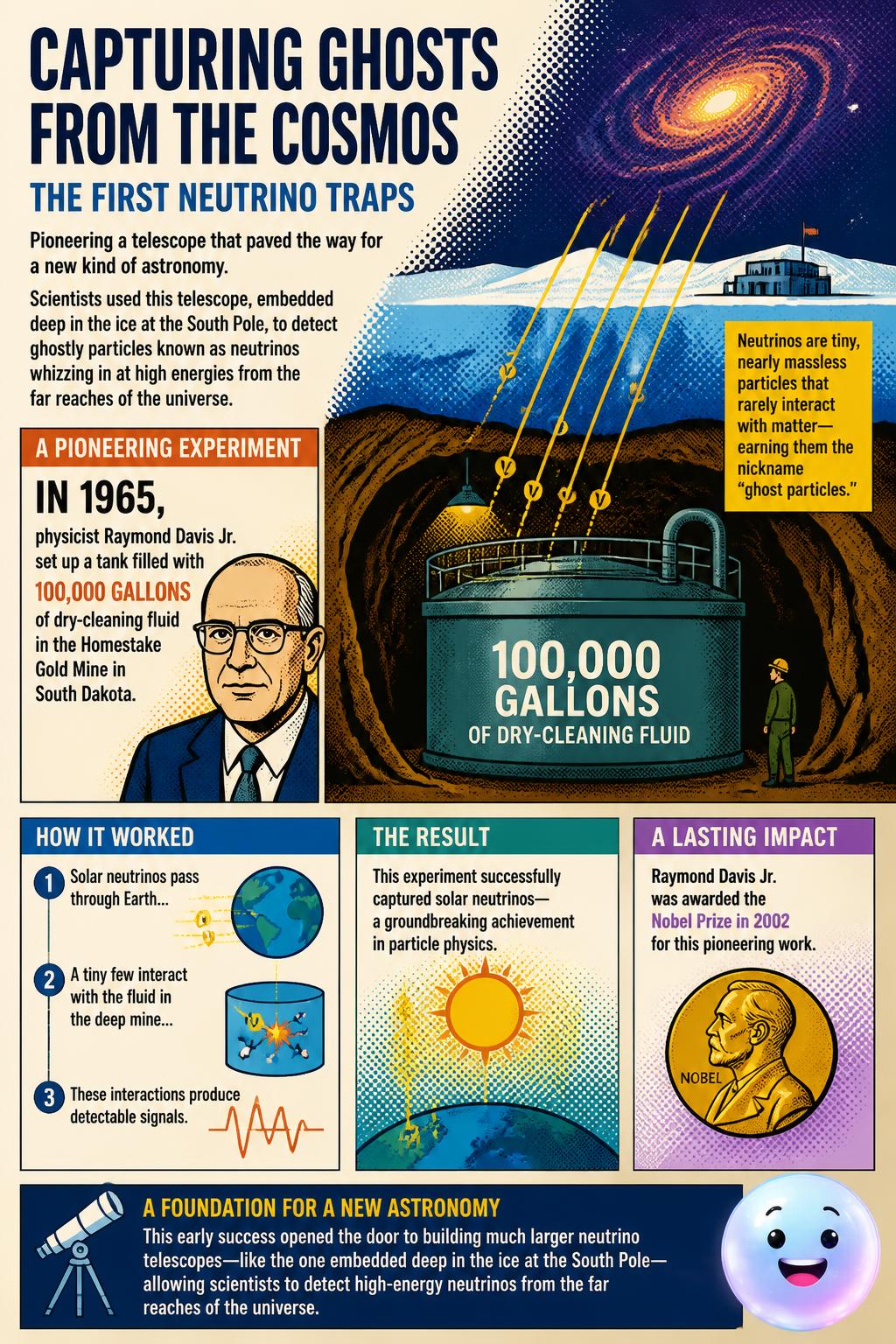
diego Early scientists built massive underground pools of cleaning fluid and water to capture the rare flashes of neutrino collisions.
Neutrino abundance: About 100 trillion neutrinos from the Sun pass through your body every single second, even during the night when they must travel straight through the Earth first!
diego Because they have no electric charge and almost no mass, neutrinos can pass through solid lead as easily as light passes through glass.
A nearly massless, electrically neutral subatomic particle that interacts only weakly with matter. In 2013, the IceCube observatory in Antarctica first detected these elusive particles coming from deep space.
How large did scientists calculate a neutrino detector needed to be to catch deep-space neutrinos?