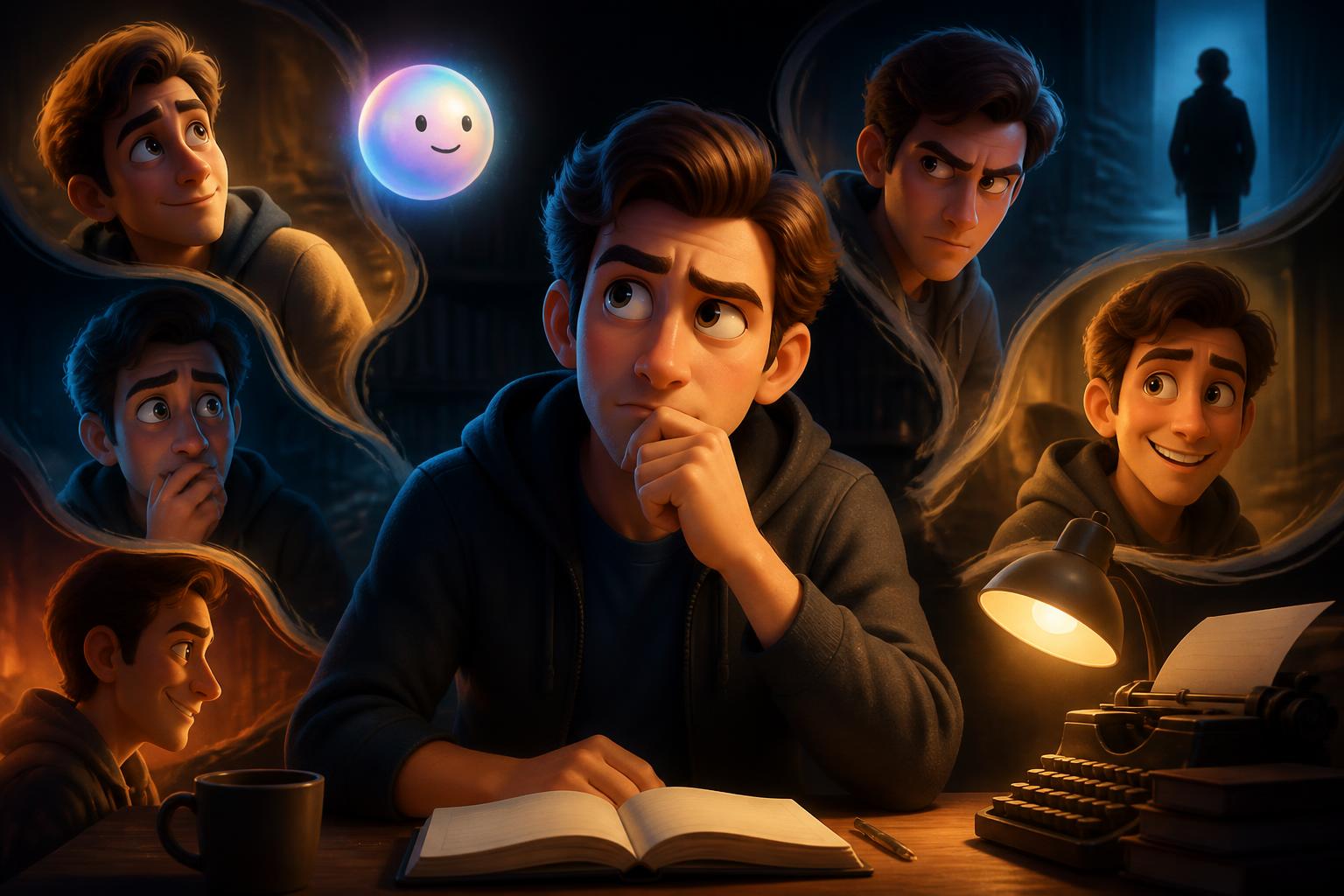
A mental shock when you realize what you thought was true in a story is actually a lie. Think of finding out the main character was the villain all along!
Which chemical is released in the brain when we experience a
Which chemical is released in the brain when we experience a satisfying, surprising plot twist?
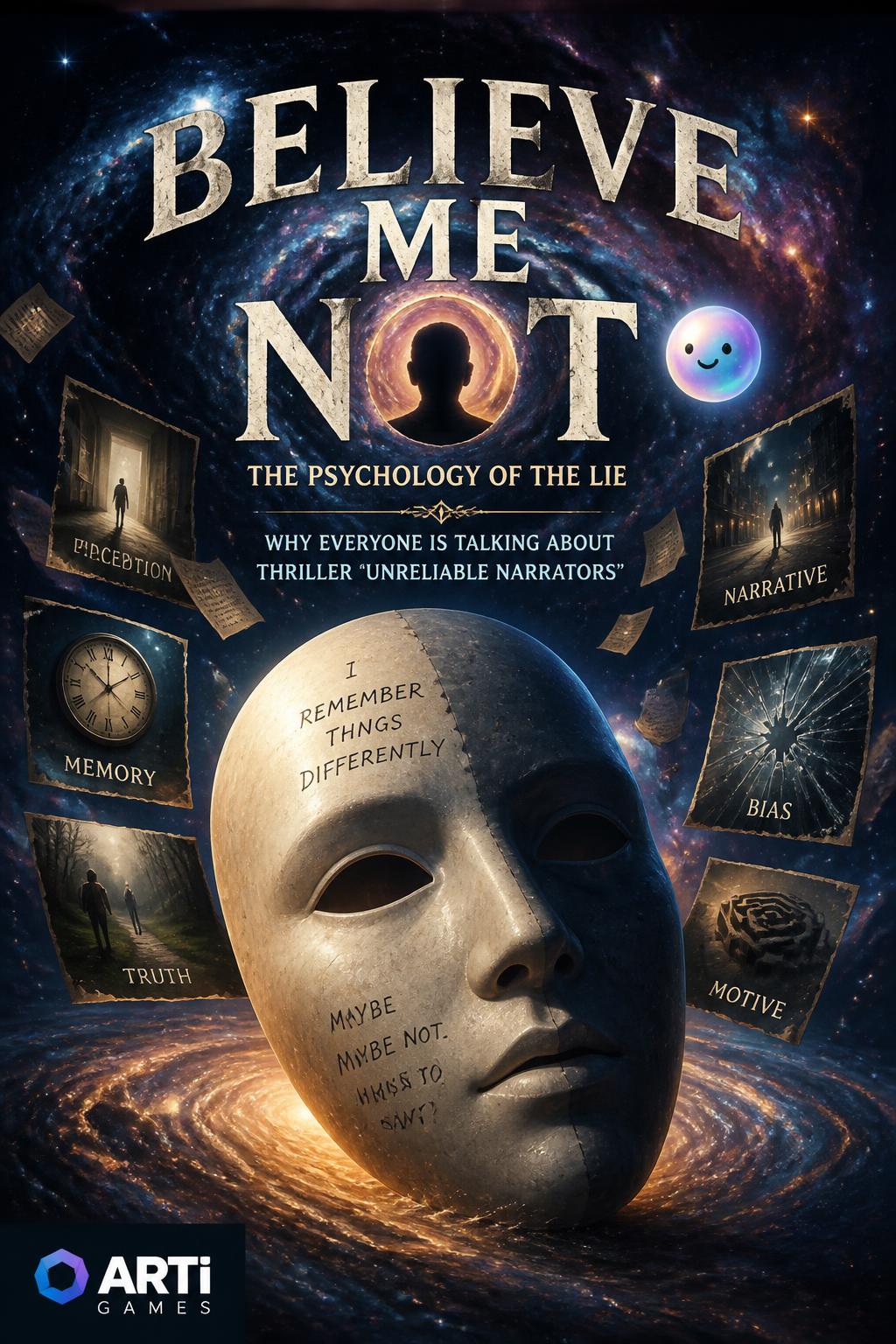
The psychology of the lie
Masterpieces of the page
Screen-tested deception
Spotting the cracks
A mental shock when you realize what you thought was true in a story is actually a lie. Think of finding out the main character was the villain all along!

mahan Lava Planet HD 3167 b
Webb caught a cosmic liar in HD 3167 b, hiding its burning lava under a mask of air!
nella Neuroscientists use fMRI scans to show how Timothy Levine's truth-default theory works. You track how dopamine floods the brain when a sudden story twist breaks this natural trust.
elmo Psychologist Timothy Levine developed this theory in 2014 to explain our automatic trust. Authors exploit this evolutionary shortcut to keep us hooked until a shocking plot twist.
elmo In 1944, psychologists Fritz Heider and Marianne Simmel proved we assign motives to moving shapes. Trusting a storyteller's perspective saves mental energy but easily fools us.
elmo William Riggan's 1981 study identifies five distinct types of untrustworthy storytellers in books. These characters distort the truth because of madness, innocence, playfulness, bragging, or deliberate deception.

elmo Sort the clues from the lies to learn how thriller writers use unreliable narrators.
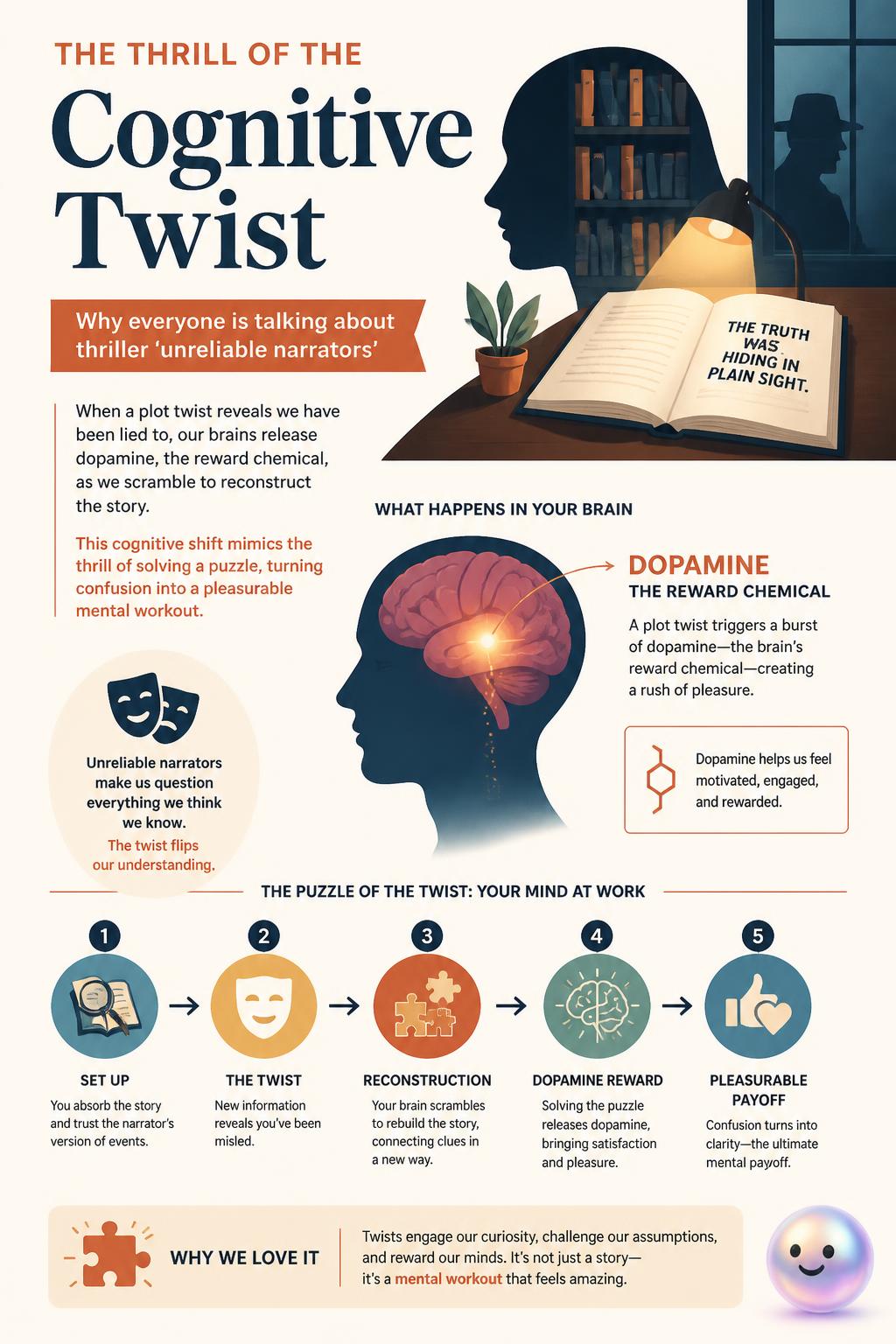
Brain chemistry: When a twist reveals a narrator lied, your brain releases dopamine, treating the surprise like a solved puzzle.

elmo We naturally assume people are telling the truth until overwhelming evidence proves otherwise.
What is the term for an unreliable narrator who is too young or innocent to understand the events they describe?
What psychological phenomenon causes readers to search for information that confirms their existing trust in a narrator?
Which type of narrator in Riggan's system exaggerates their own achievements for comedic or heroic effect?
In William Riggan's 1981 study, how many distinct types of unreliable narrators were identified?
Which chemical is released in the brain when we experience a satisfying, surprising plot twist?
Which psychologists showed in 1944 that humans naturally assign complex motives even to moving geometric shapes?
