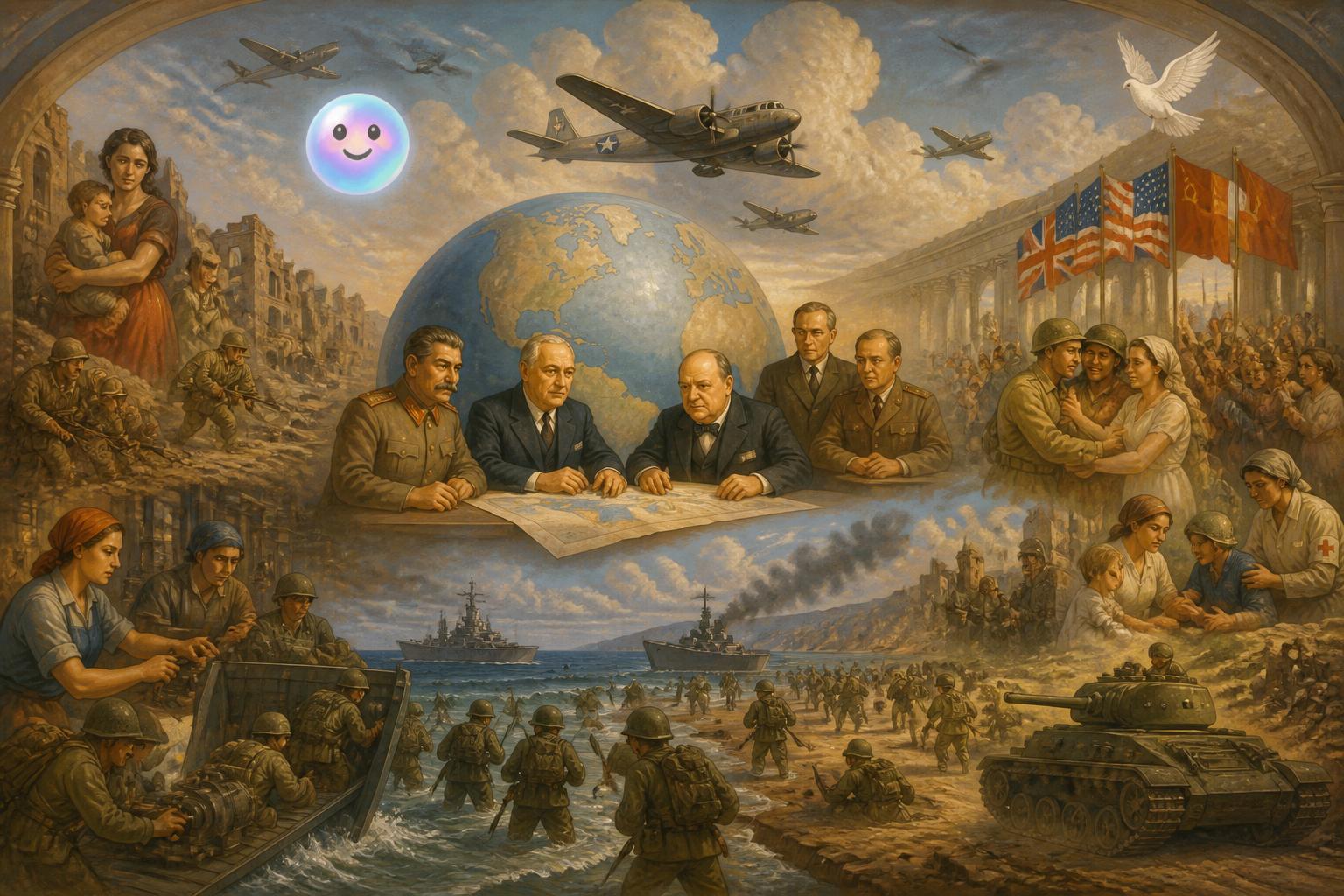
Which WWII character represented women factory workers?
Test your WWII history knowledge. Do you know which iconic cultural character represented American women working in defense factories? Find out now!
Sparking a global conflict
Secrets, codes, and silent weapons
Everyday life on the home fronts
Turning tides and lasting legacies
tester Discover the dark history and reality of Japanese-American internment camps during World War II in this educational video.
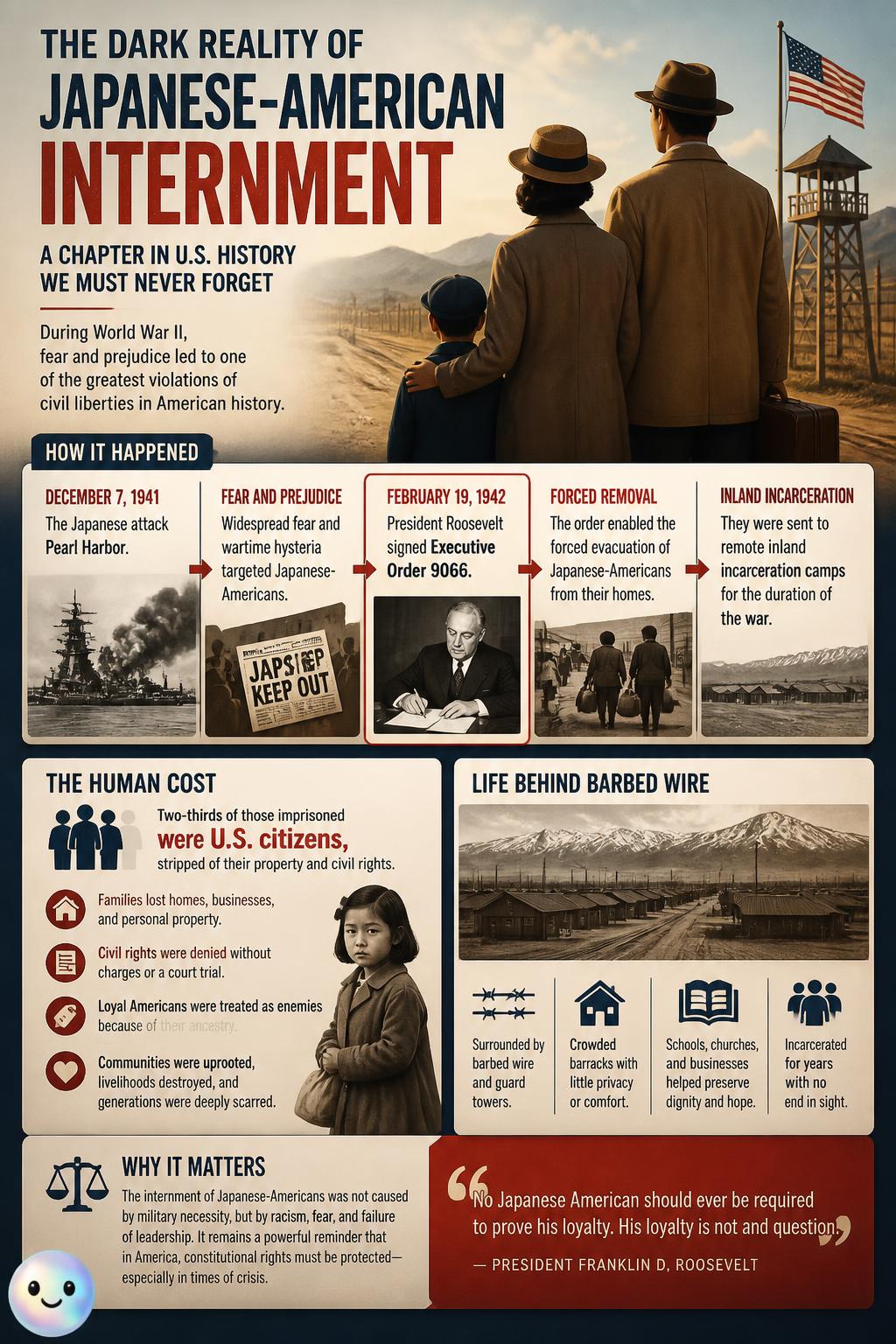
tester Fear and prejudice led to the forced relocation and imprisonment of over 120,000 people of Japanese descent.
Oscar alternatives: Due to metal shortages during the war, the Oscar statuettes handed out by the Academy were made of painted plaster.
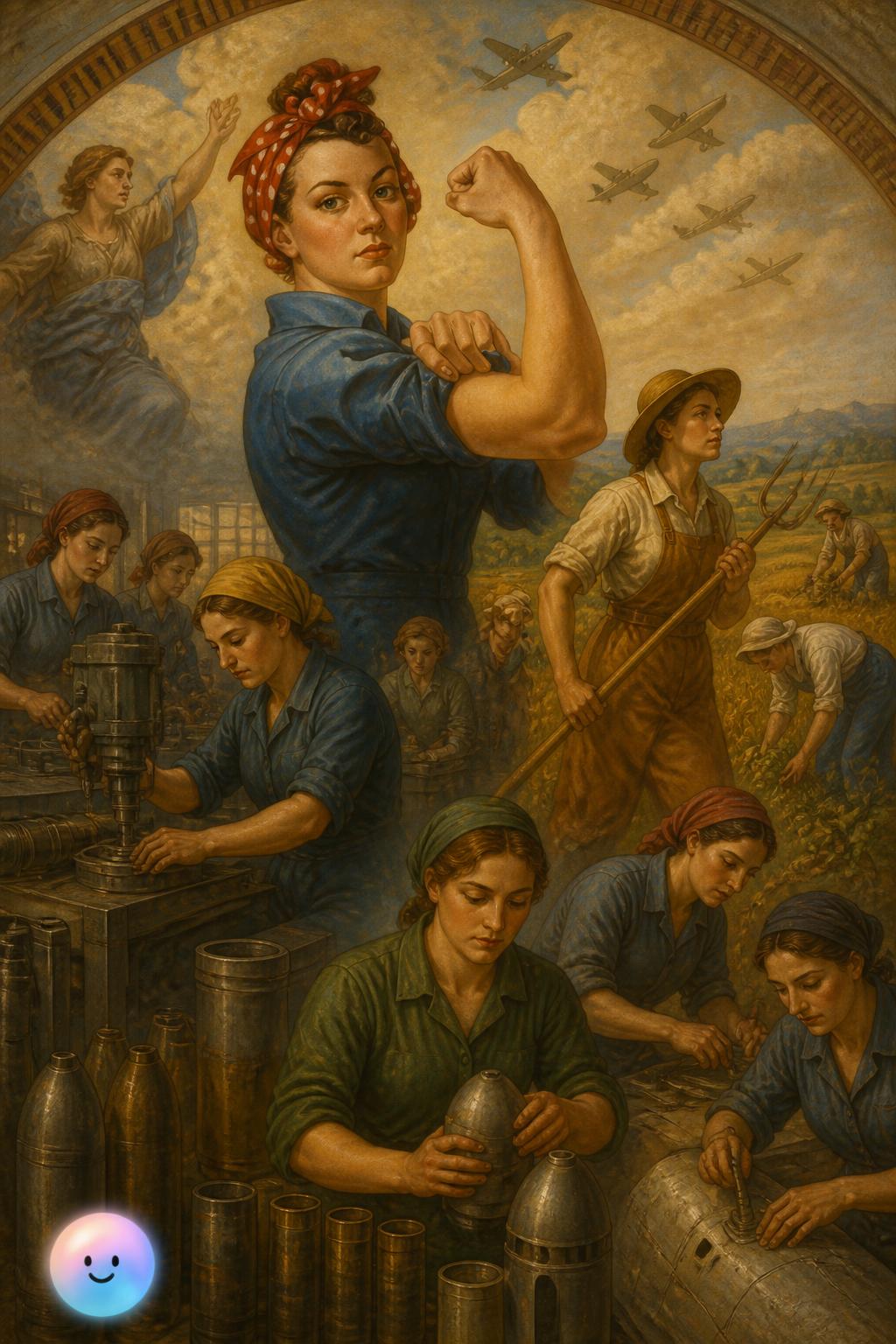
tester Millions of women entered the industrial workforce to build weapons, ships, and aircraft while men fought overseas.
The controlled distribution of scarce resources, goods, or services to a population. In January 1940, Great Britain introduced ration books to manage food shortages caused by enemy blockades.
Which of the following household items was heavily rationed and recycled for military use during World War II?

tester Match ration stamps to daily meals to discover how families survived on the homefront.
tester Watch how Rosie the Riveter symbolized the surge of female labor in US factories and changed the workforce during World War II.
Who was the legendary Soviet female sniper credited with 309 confirmed kills during World War II?
tester Watch how home front efforts like scrap metal drives and victory gardens helped support the Allied war effort during World War II.
Which iconic cultural character represented American women working in defense factories during World War II?
tester Watch this video to explore the history of Soviet women in frontline combat during the Second World War.
What was the name of the British organization that recruited women to work on farms to maintain food production?
Approximately how many people of Japanese descent were forced into US internment camps during the war?
What percentage of vegetables grown in the United States came from Victory Gardens by 1944?
Which US President signed Executive Order 9066, leading to the internment of Japanese-Americans?