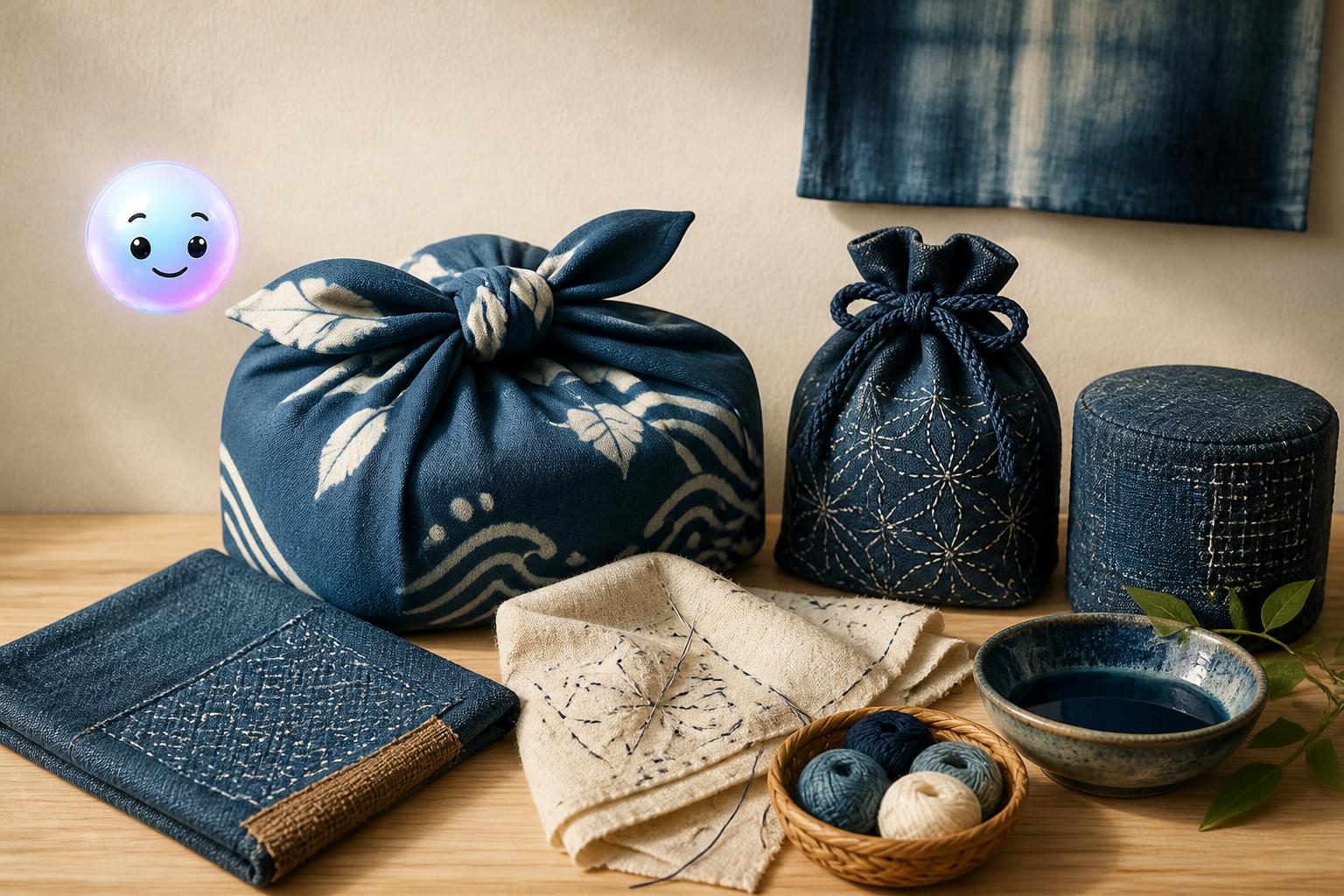
Aizome and the deep secrets of Japanese indigo
Sashiko and stitching strength from scraps
Furoshiki and the origami of wrapping
Fukuro toji and the art of the bound book
Japanese denim and the vintage obsession
YOUR GOAL
Master of How Japan mends wraps and dyes the world

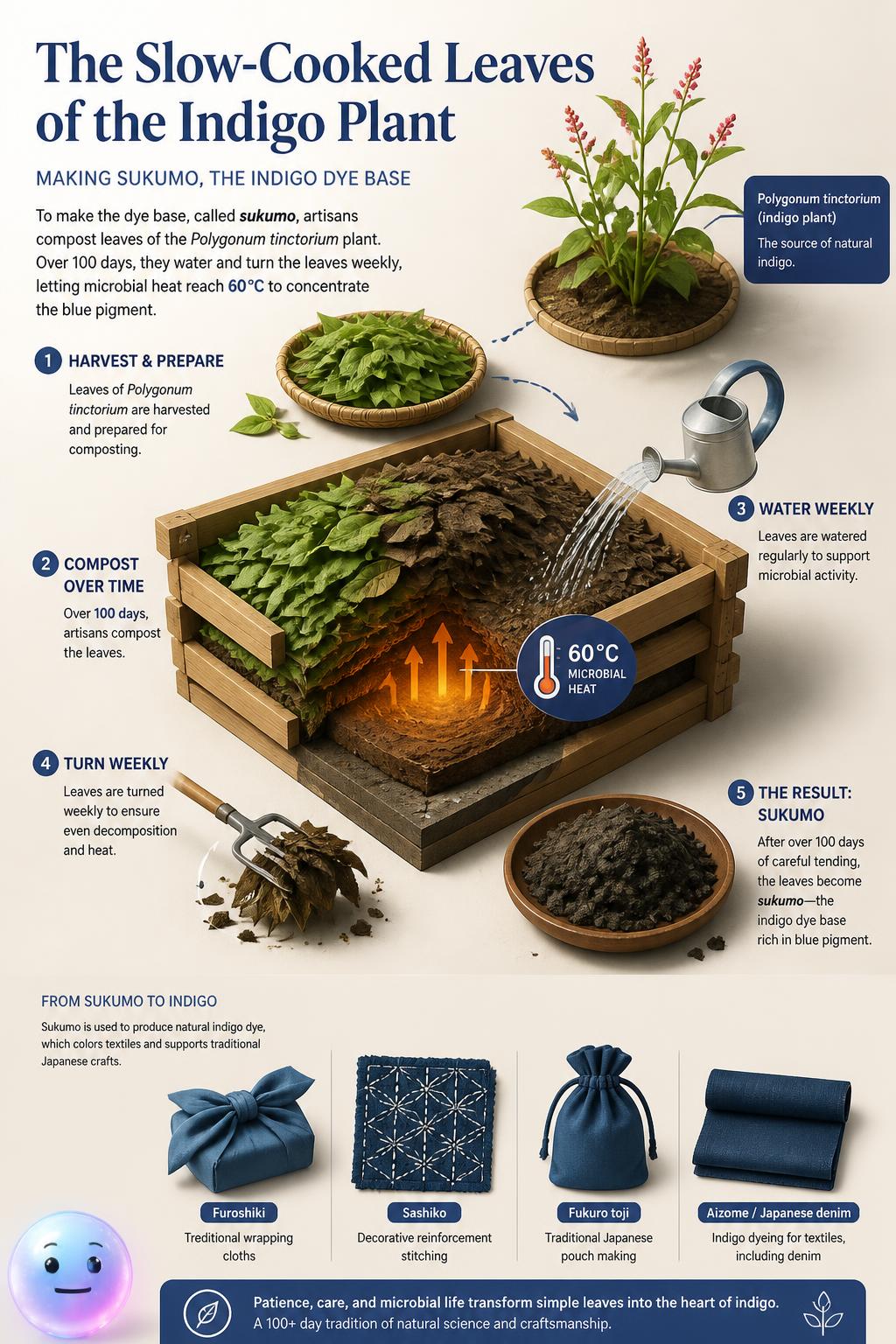
매운김치 Weekly watering and turning generates microbial heat up to 60 degrees Celsius to concentrate the plant's natural blue pigment.
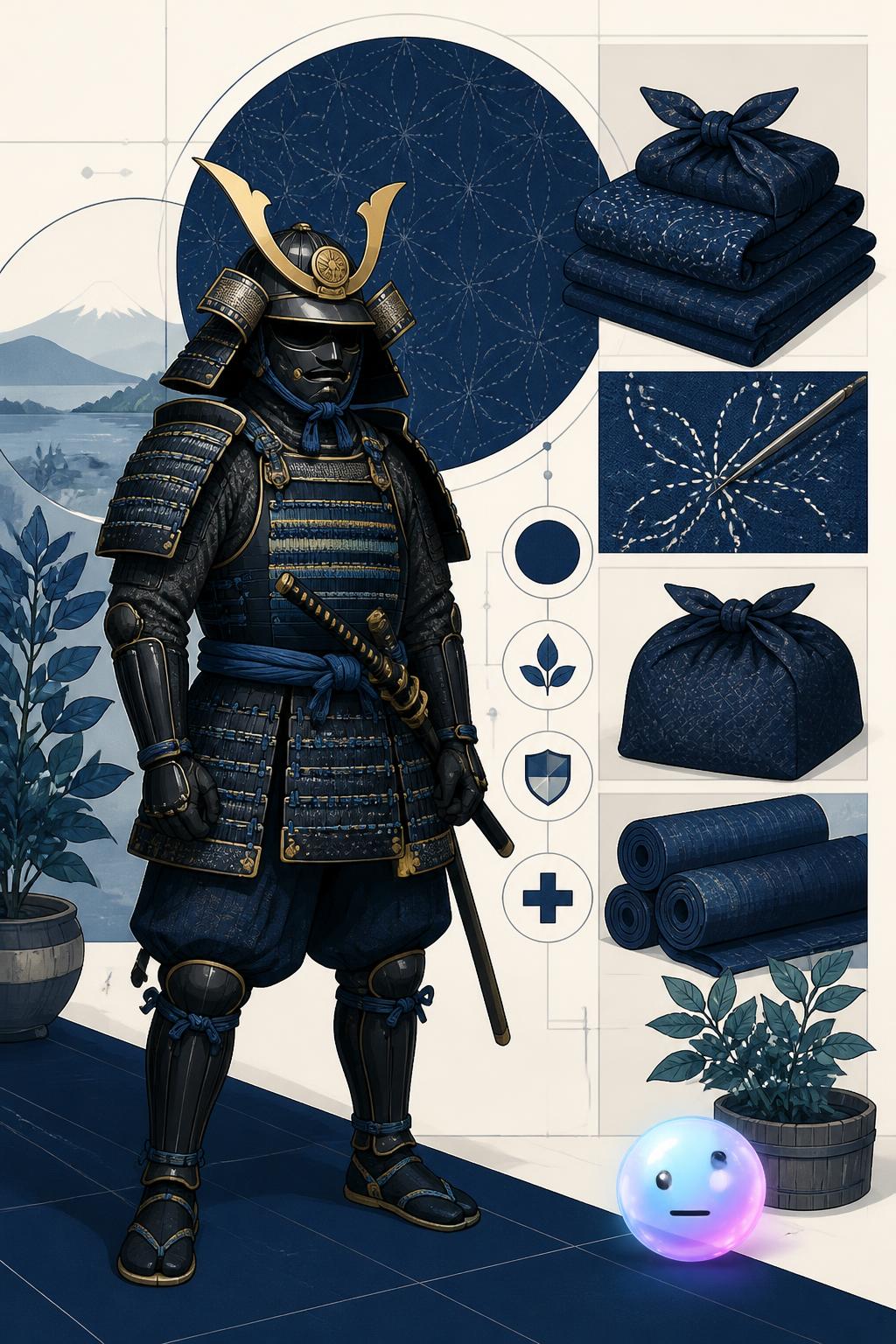
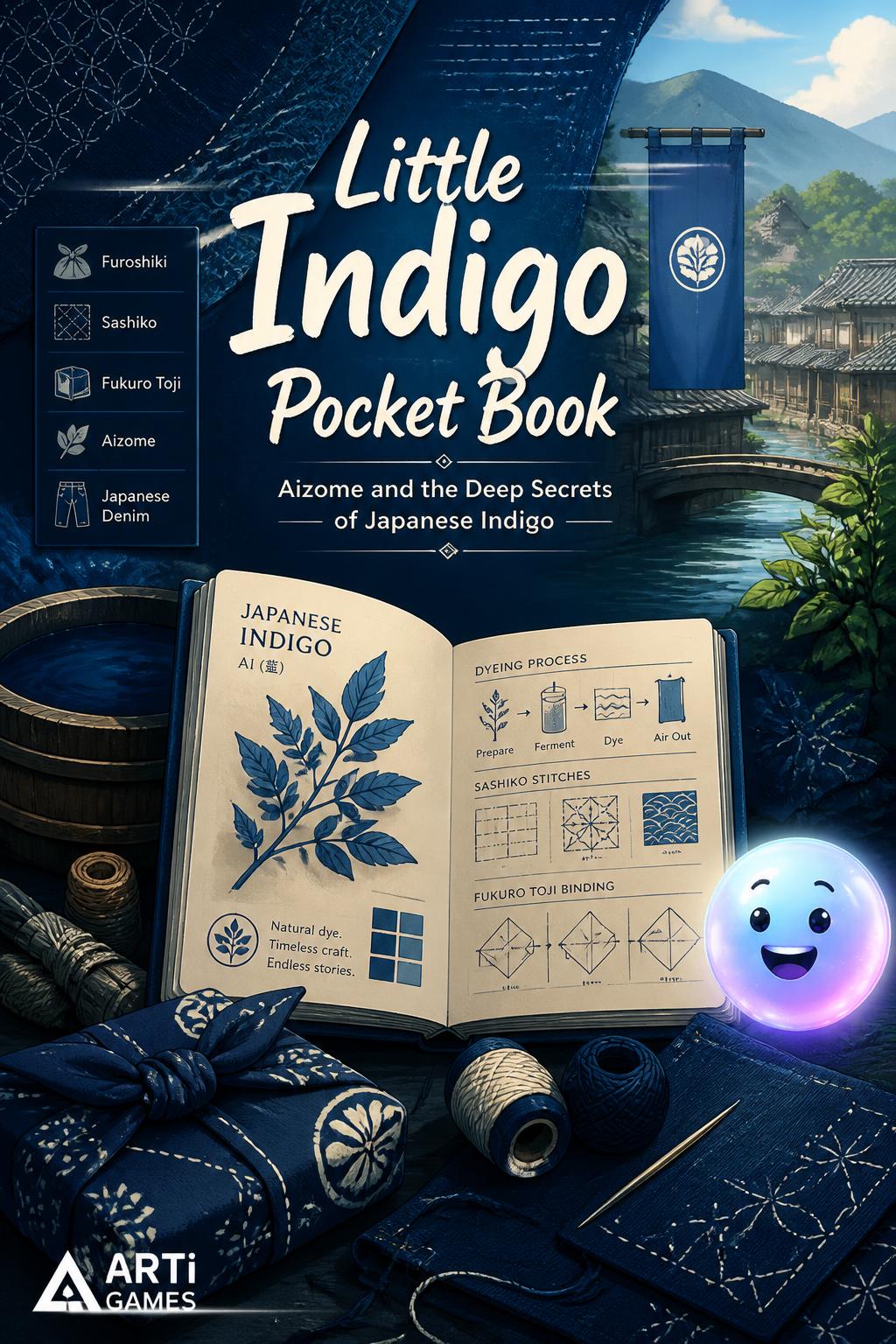
매운김치 Dye fabrics and stitch patterns to master the ancient art of Japanese indigo textiles.
Indigo scent: Freshly prepared natural aizome dye vats have a distinct, pungent herbal smell because they are actively fermenting living organisms.
A traditional Japanese dyestuff made from composted and fermented indigo leaves. In Tokushima, master artisans ferment the leaves for one hundred days to produce this deep blue pigment.
Which plant species is traditionally cultivated in Japan to produce natural indigo dye?
What is the name of the fermented indigo leaf compost that forms the base of traditional Japanese aizome dye?
Why did Kamakura-period samurai wear undergarments dyed with the deep kachiiro indigo shade?
What does the word 'kachi' originally mean in the context of dyeing the kachiiro color?
What is the iridescent, coppery bubble on an active indigo vat called by Japanese dyers?
Which Japanese prefecture is historically celebrated as the heart of traditional aizome indigo production?