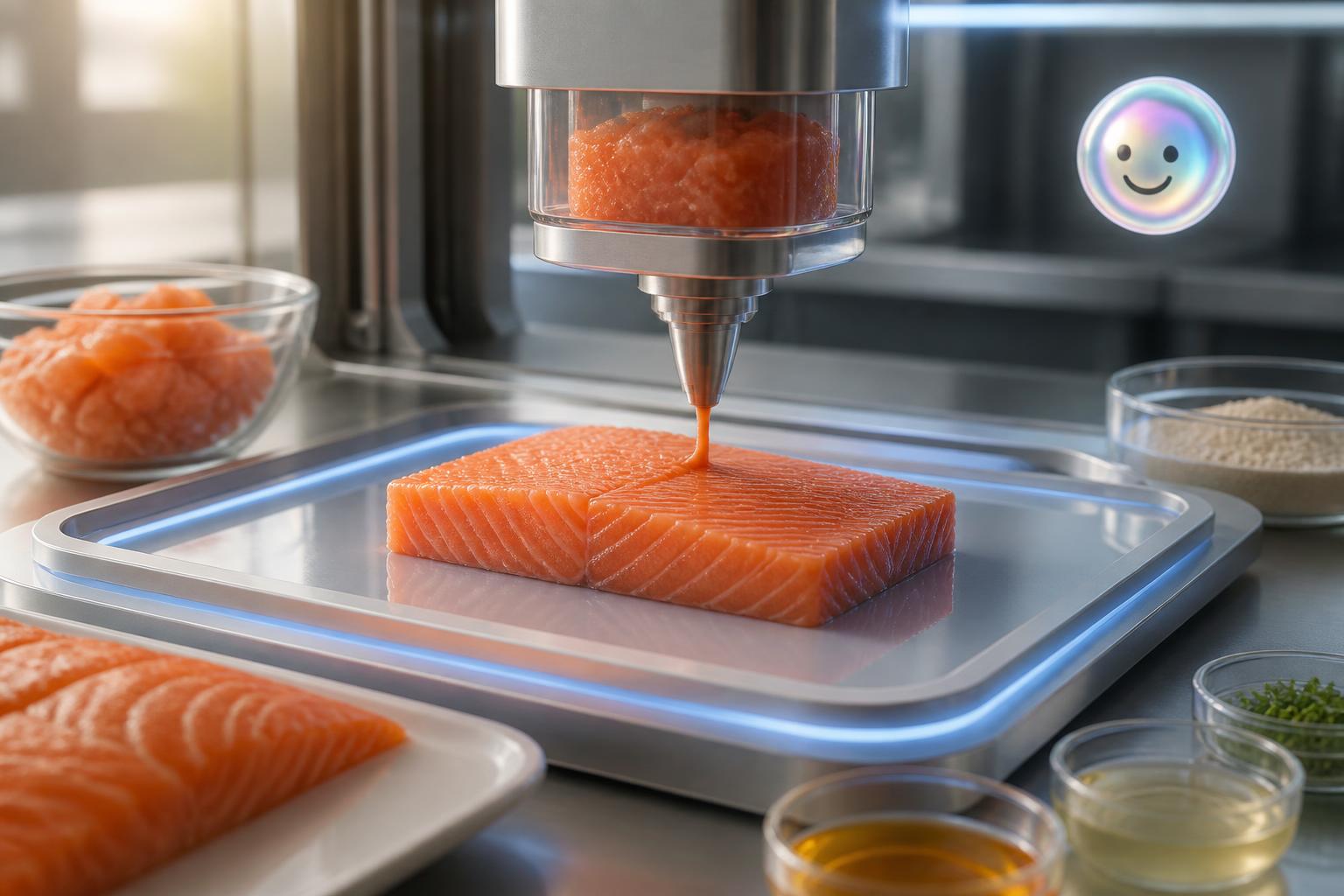
Why is mycelium preferred over soy for 3D printed seafood?
Test your knowledge on alternative proteins! Learn why food scientists choose mycelium over processed soy when 3D printing realistic faux seafood.
Chapter 1
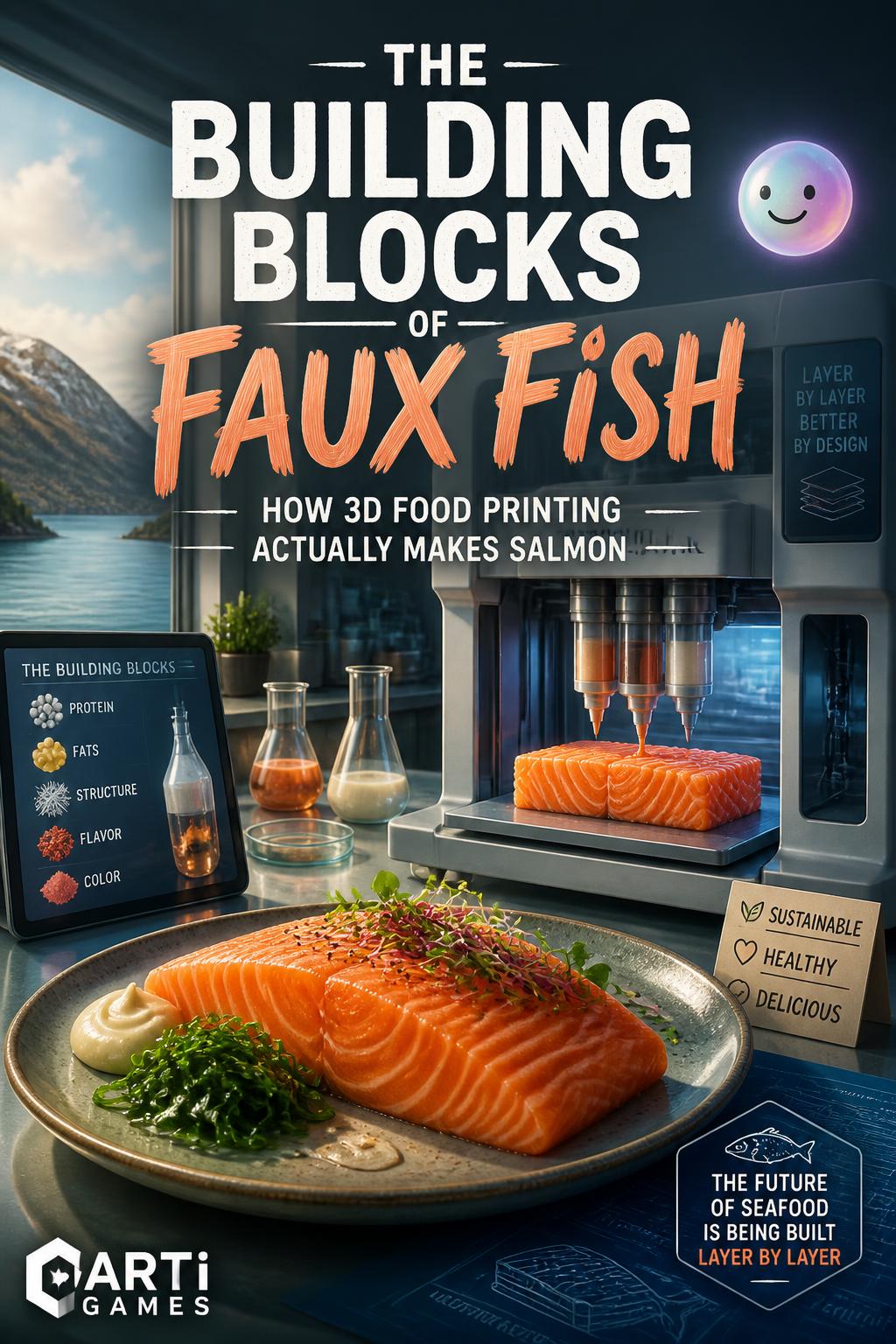
The building blocks of faux fish
Chapter 2
The magic of 3D structuring
Chapter 3
From the lab to your plate
Ch 1 · The building blocks of faux fish

sonia 3D Printed Salmon Filet
Print the mycelium, / layer up the fat, / salmon made of fungi!
sonia Learn how ingredients are bound into a printable paste to create realistic 3D printed salmon in this video.
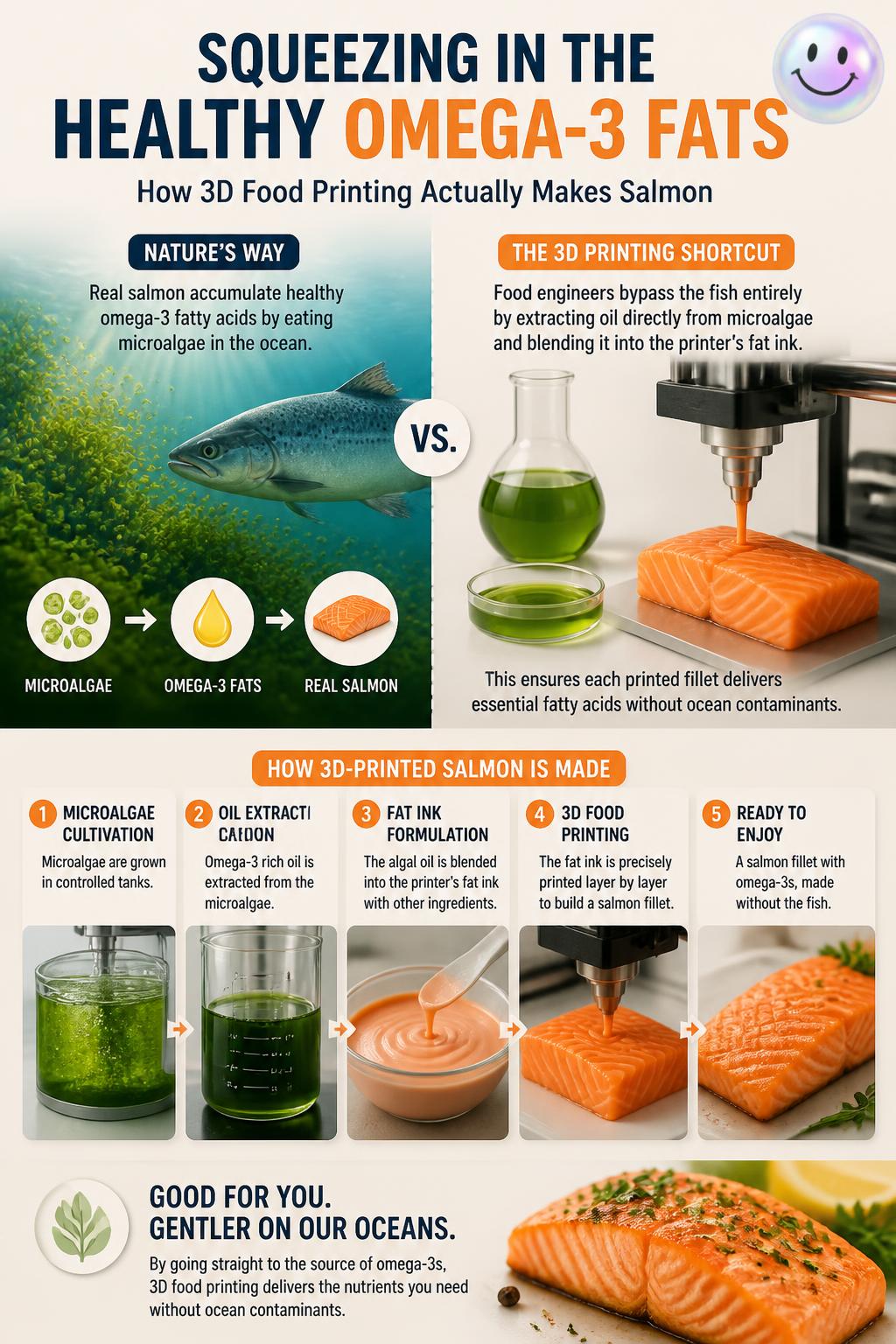
sonia Microalgae oil is blended into the fat layers of the printed fish to deliver healthy omega-3 fatty acids.
Fun Fact
Algae power: The omega-3 fats in 3D printed salmon come directly from microalgae, cutting out the middle-fish entirely.

sonia Natural plant extracts and beta-carotene give printed salmon its signature bright orange hue.
Glossary
mycoprotein (noun)
A protein-rich food substance of fungal origin. In 2023, Austrian startup Revo Foods utilized this ingredient to 3D-print their plant-based salmon fillets.
A protein-rich food substance of fungal origin. In 2023, Austrian startup Revo Foods utilized this ingredient to 3D-print their plant-based salmon fillets.
BETA
sonia Stack the plant layers to discover how 3D printers build realistic faux salmon.
sonia Watch how 3D food printing technology recreates the signature orange color of salmon in plant-based seafood alternatives.
Quiz
What is the primary ingredient used to mimic the muscle fiber texture of 3D printed salmon?
sonia Watch how 3D food printing technology actually makes salmon and integrates healthy omega-3 fats into alternative seafood.
Quiz
Which plant protein is mixed with mycelium to boost the printed fillet's protein content?
sonia Watch how 3D food printing uses fungal roots to recreate the realistic texture of salmon, transforming the future of alternative seafood.