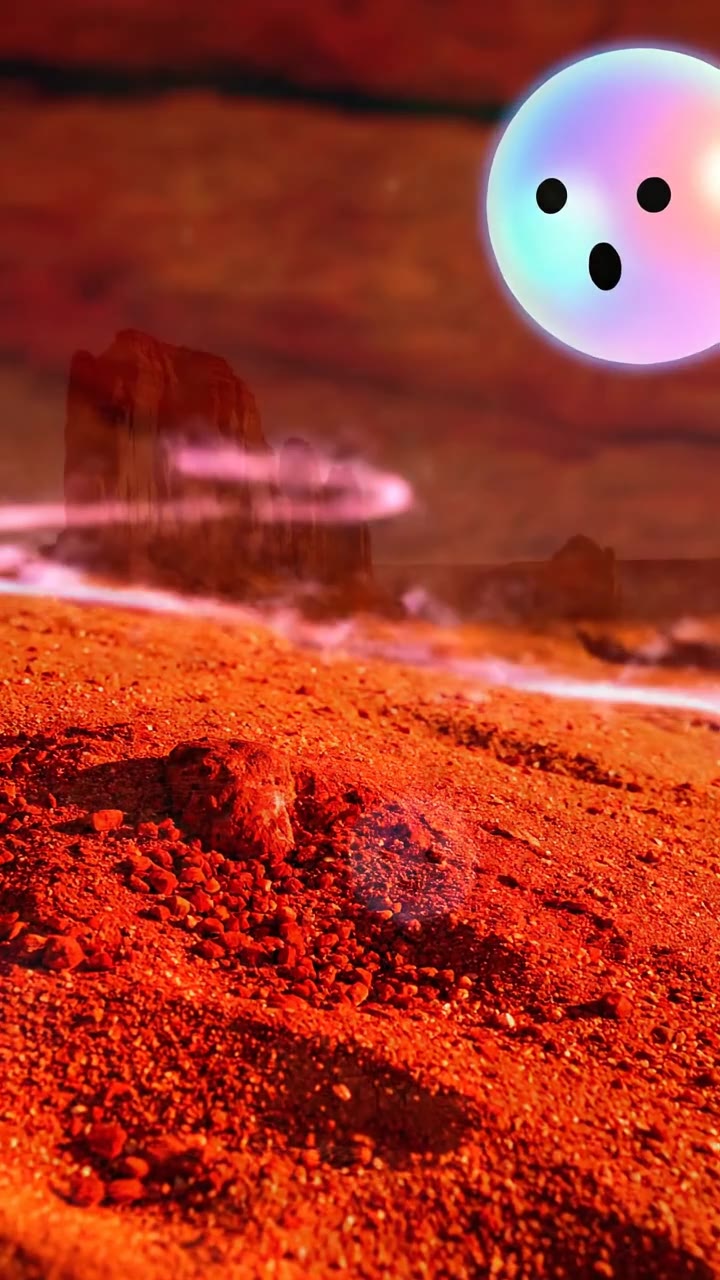
Why Sedona's Rocks Are So Red
The rocks belong to the Schnebly Hill Formation, deposited during the Permian period about 280 million years ago. Chemical weathering rusted the iron minerals in the sand, creating the iconic red hematite coating.
Chapter 1
The anatomy of Sedona's energy centers
Chapter 2
Geology behind the red rock magic
Chapter 3
Indigenous roots and the birth of the myth
Chapter 4
The global phenomenon of earth energy
Ch 2 · Geology behind the red rock magic
42artisocial Sedona's Red Rocks
Glowing in the desert sun (yeah, it's rusting!) / Iron on the ancient sand (oh, so rusty!)
42artisocial Friction from underground water moving beneath Sedona may create the electromagnetic fields linked to its vortexes.
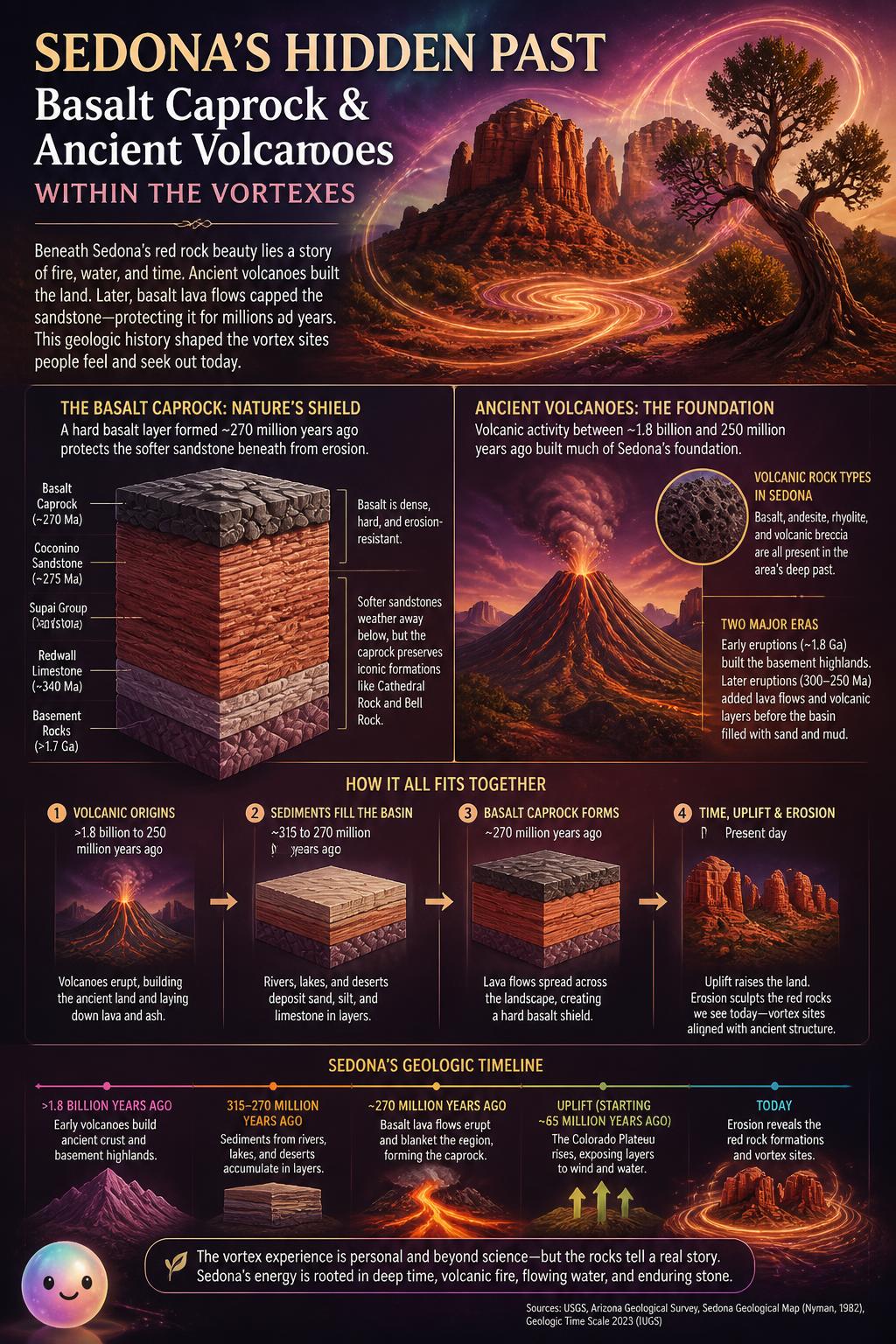
42artisocial Ancient volcanic activity left dark basalt layers on top of Sedona's red rocks.
Fun Fact
Sedona's rusty rocks: The brilliant red color of Sedona's cliffs is literally rust, caused by iron oxide coating the sandstone grains over millions of years.
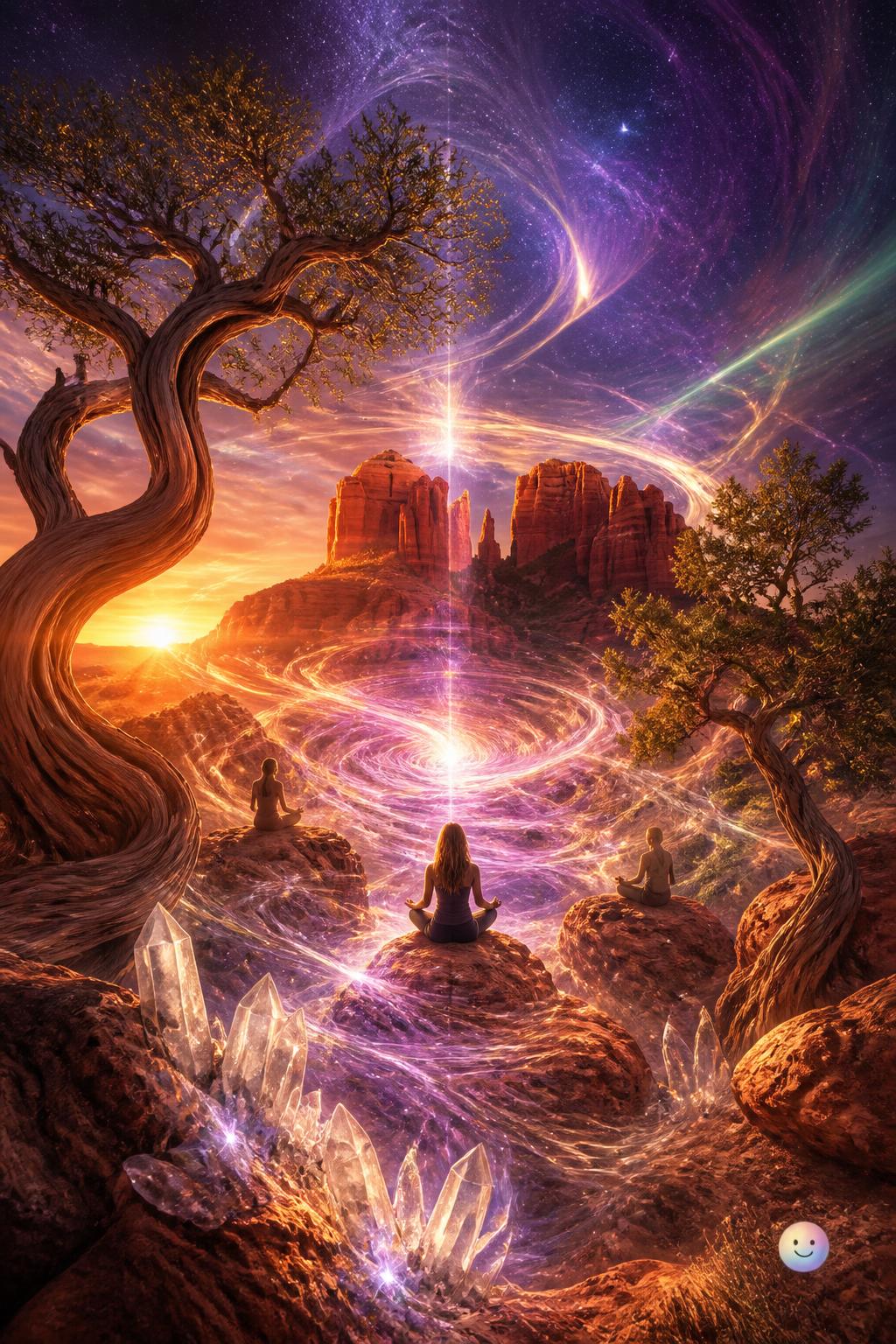
42artisocial Sedona's soil is packed with quartz crystals, which some believe amplify energy.
Glossary
sandstone (noun)
A sedimentary rock consisting of sand grains cemented together, typically red, yellow, or brown. Sedona's famous crimson cliffs are composed of this rock, deposited during the Permian period.
Quiz
How do some scientists explain the slight electromagnetic variations measured in Sedona?

BETA
42artisocial Trace the spiraling energy paths to discover how Sedona's vortexes twist the local juniper trees.
42artisocial Sandstone at Sedona's vortex sites contains quartz, which generates an electric charge under physical pressure.
Quiz
Why did the red sandstone in Sedona not wash away entirely over millions of years?
42artisocial Weathering rusted the iron minerals in the sand, creating the red coating on Sedona's vortex rocks.
Quiz
What chemical compound gives Sedona's rocks their famous brilliant red color?
42artisocial Tough basalt caprock from ancient volcanoes protected Sedona's red vortex rocks from eroding.
Quiz
What property of quartz crystals allows them to generate electricity under physical pressure?
Quiz
What type of dark volcanic rock sits on top of Sedona's sandstone, protecting it from erosion?
Quiz
Which active freshwater source flows directly through Sedona, carving its famous canyons?
Quiz
What is the name of the specific geologic formation that makes up Sedona's red rock cliffs?
Quiz
During which geological period was the Schnebly Hill sandstone in Sedona deposited?