
The Japanese art of forest bathing
High altitude healing and the Alpine cure
How green spaces rewire our brains
Global traditions of nature connection
YOUR GOAL
Master of The wild prescription of trees and peaks
lara Natural Soundscapes
Let the forest block the noise, you can feel your heart slow down.
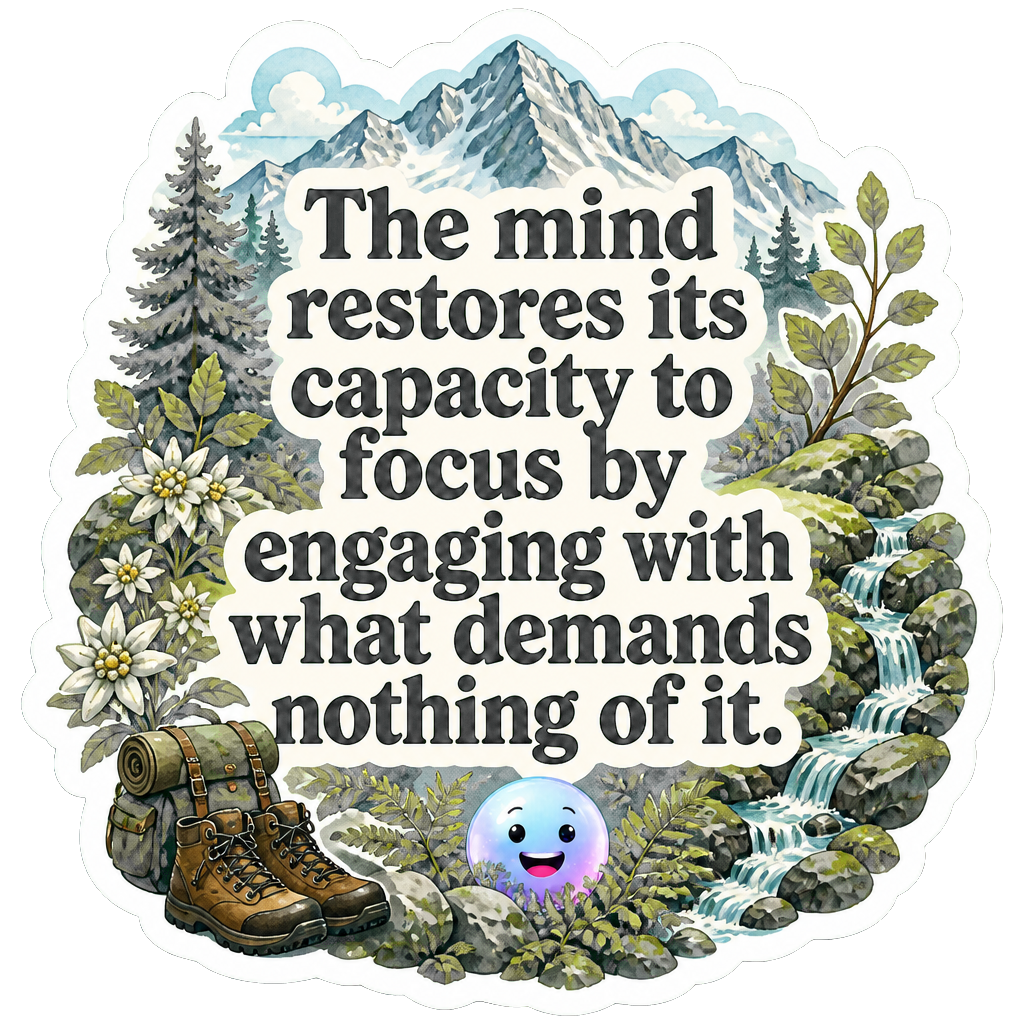
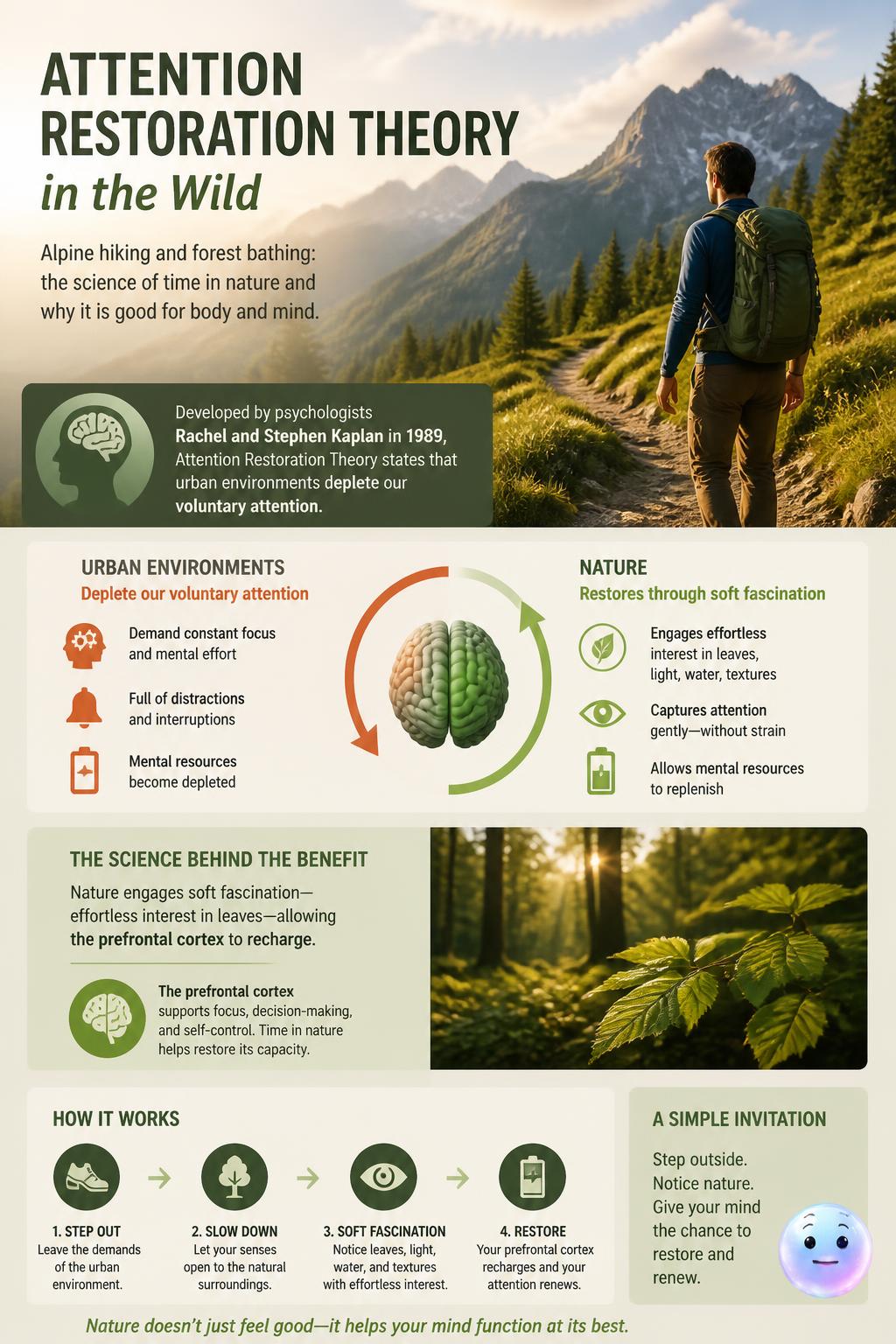
lara While city life drains voluntary attention, Attention Restoration Theory shows how nature's soft fascination effortlessly recharges the prefrontal cortex.


lara Build alpine hiking trails to discover how time in nature boosts your brain power.
Brain recharge: Looking at pictures of nature for just forty seconds can boost your focus and reduce mistakes.
The ability of the brain to form and reorganize synaptic connections, especially in response to learning or experience. In the 1980s, Japanese researchers proved that mindful forest immersion physically alters neural pathways to reduce stress.
Who developed the Attention Restoration Theory (ART) in 1989 to explain how nature heals mental fatigue?
What term did researchers use to describe the effortless, calming attention triggered by watching leaves rustle or clouds move?
Where was the 2017 study conducted that linked forest proximity to a healthier amygdala structure in city dwellers?
Which region of the brain, responsible for processing fear and stress, is healthier in people living close to forests?
Which Stanford researcher led the 2015 study showing that a walk in nature reduces negative rumination?
Which region of the brain, active during sadness and worry, showed decreased activity after a ninety-minute nature walk?
Which university led a 2021 study analyzing the profound health benefits of natural soundscapes like birdsong?