Chapter 1
The ultimate survival cheat codes
Chapter 2
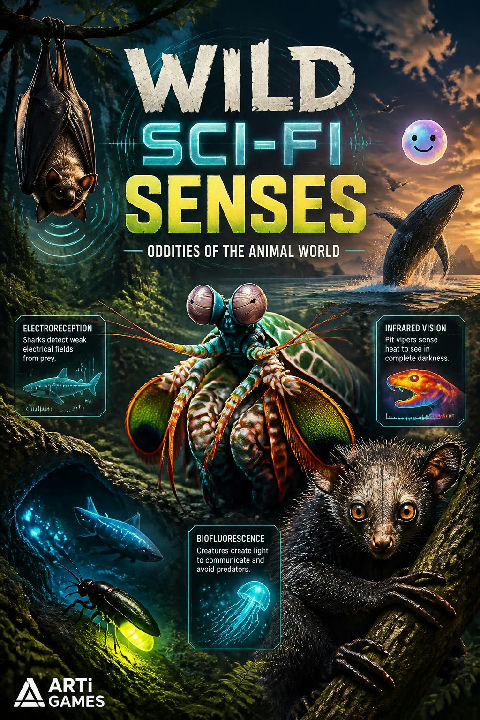
Senses that sound like science fiction
Chapter 3
Outrageous defense mechanisms
Chapter 4
Unconventional family dynamics
Ch 2 · Senses that sound like science fiction

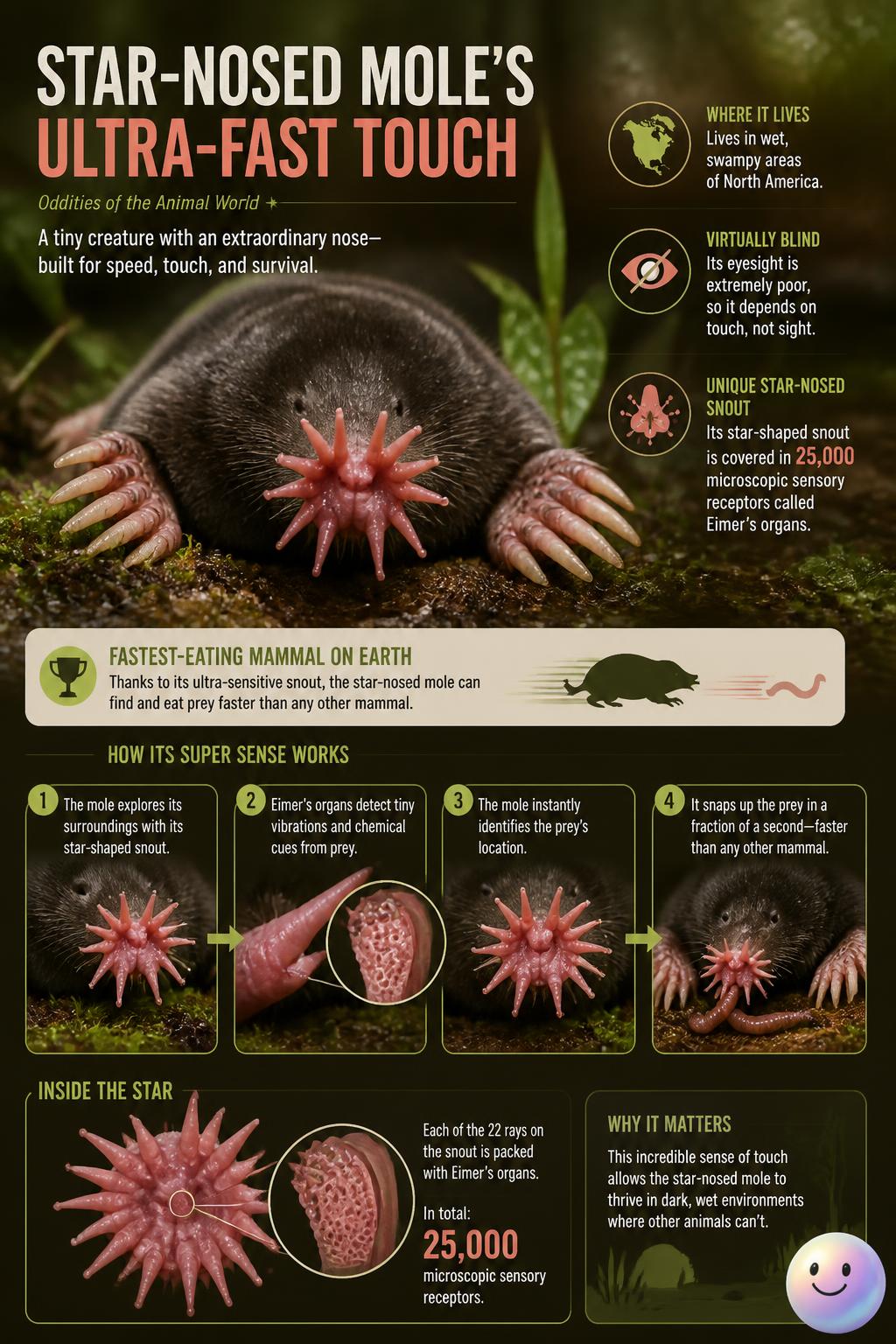
schopenhauer The star-nosed mole uses twenty-two fleshy snout tentacles to identify and eat prey in under 120 milliseconds.
Fun Fact
Mantis shrimp punch: The mantis shrimp strikes prey with the speed of a .22 caliber bullet, boiling the surrounding water.
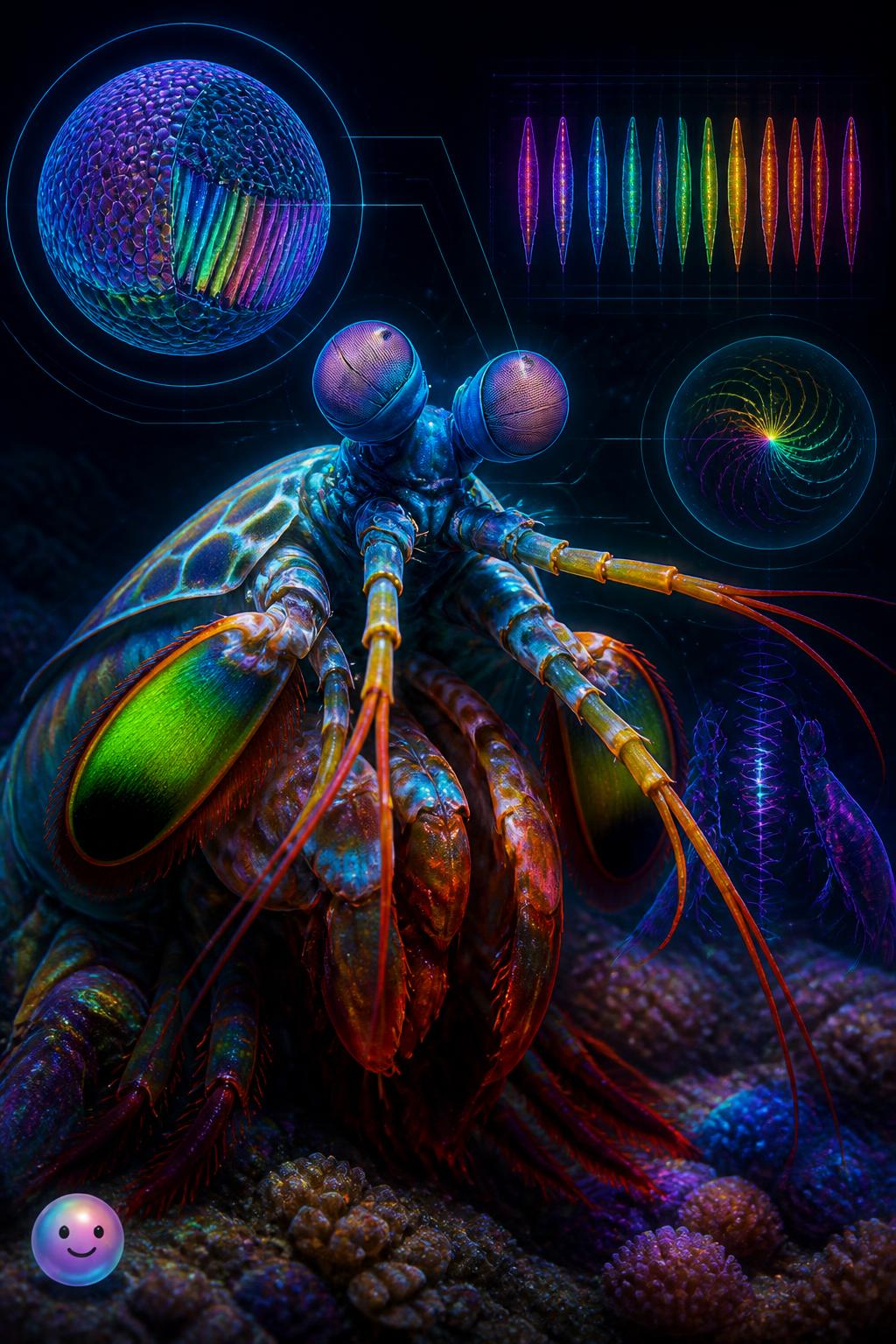
schopenhauer Mantis shrimp possess sixteen color-receptive cones, allowing them to see polarized light and colors invisible to humans.
Glossary
echolocation (noun)
The location of objects by reflected sound, in particular that used by animals such as dolphins and bats. Sperm whales use this technique to hunt giant squid in the pitch black depths of the ocean.
The location of objects by reflected sound, in particular that used by animals such as dolphins and bats. Sperm whales use this technique to hunt giant squid in the pitch black depths of the ocean.
Quiz
What unique method does the aye-aye of Madagascar use to find grubs inside tree trunks?
BETA
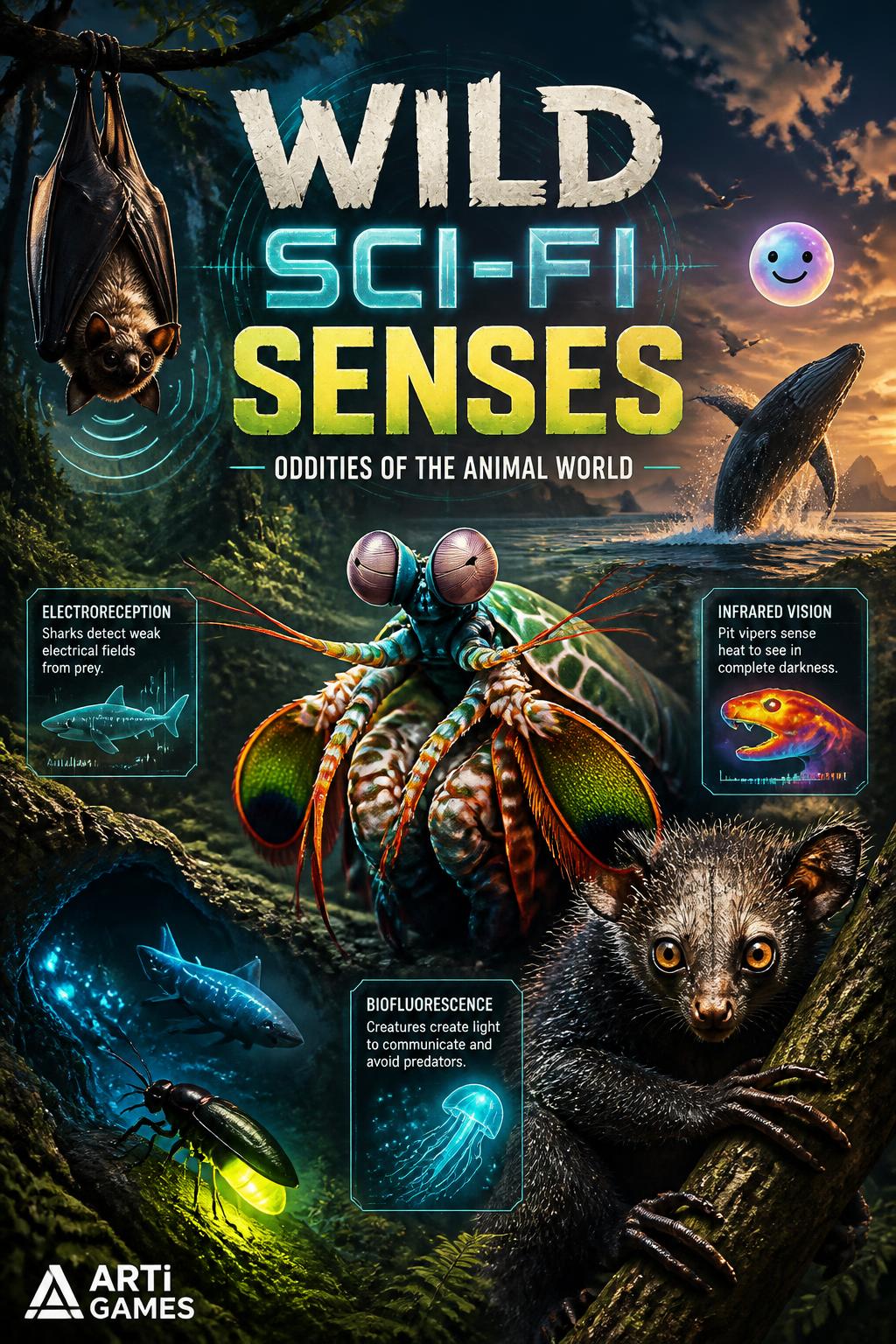
schopenhauer Match bizarre animal superpowers to learn how creatures navigate using real sci-fi senses.
Quiz
What type of light, invisible to humans, can the mantis shrimp detect to help navigate ocean currents?
Quiz
How does a platypus find prey underwater while keeping its eyes, ears, and nostrils tightly closed?
schopenhauer The North American star-nosed mole navigates dark wetlands using its sensory snout.
Quiz
Which animal holds the Guinness World Record for the fastest-eating mammal, identifying food in under 120 milliseconds?
Quiz
What is the star-nosed mole's snout covered with to help it navigate dark underground tunnels?
Quiz
Compared to humans who have three types of color-detecting cells, how many does the mantis shrimp have?