
Would you try eating purple sea urchin uni?
The spiky anatomy of a living pin cushion
The great kelp forest battle
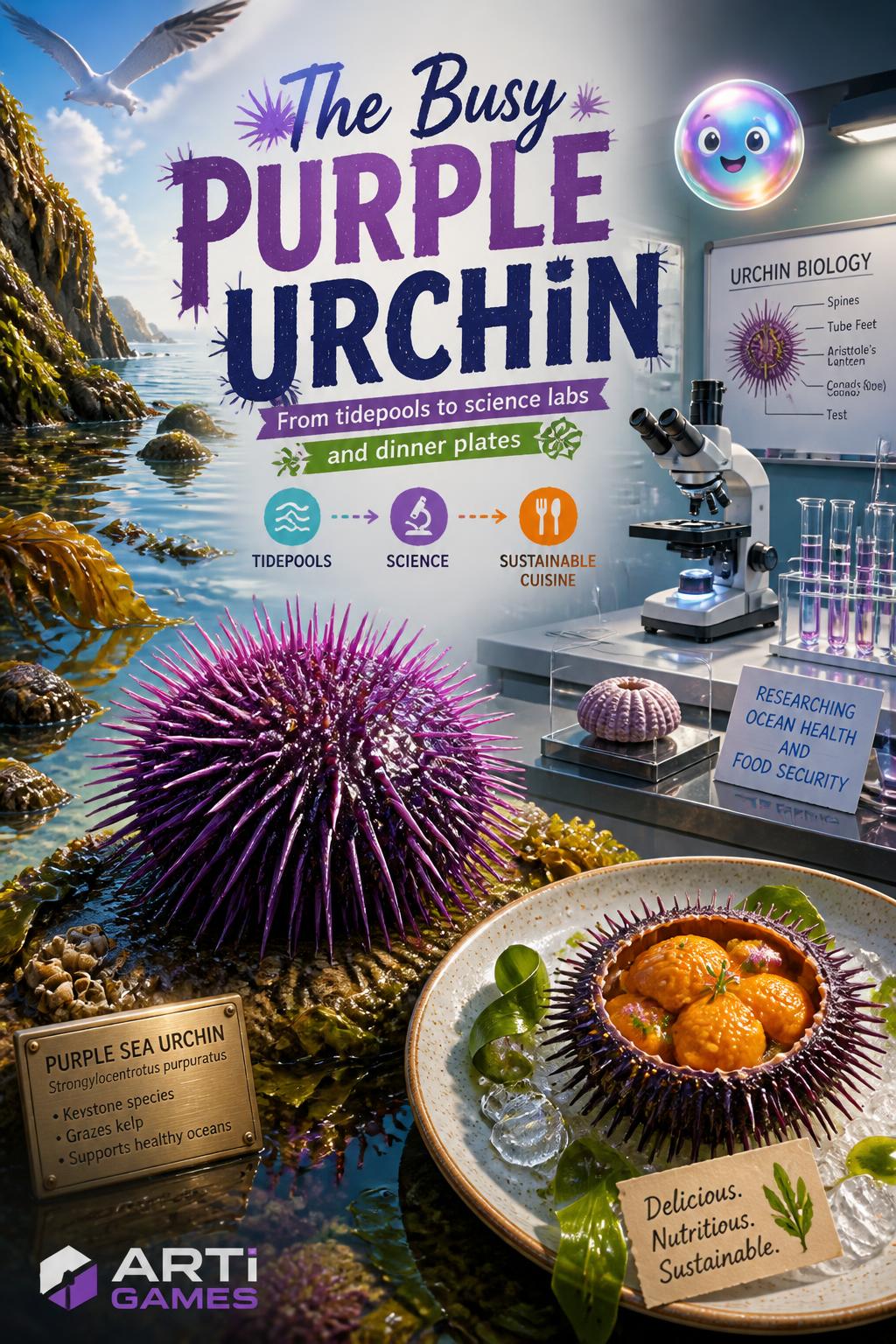
From tidepools to science labs and dinner plates

sonia These tidepool animals grind stone using their sharp teeth and spines. Over generations, the deep pockets shield them from crashing waves while they catch drifting kelp.
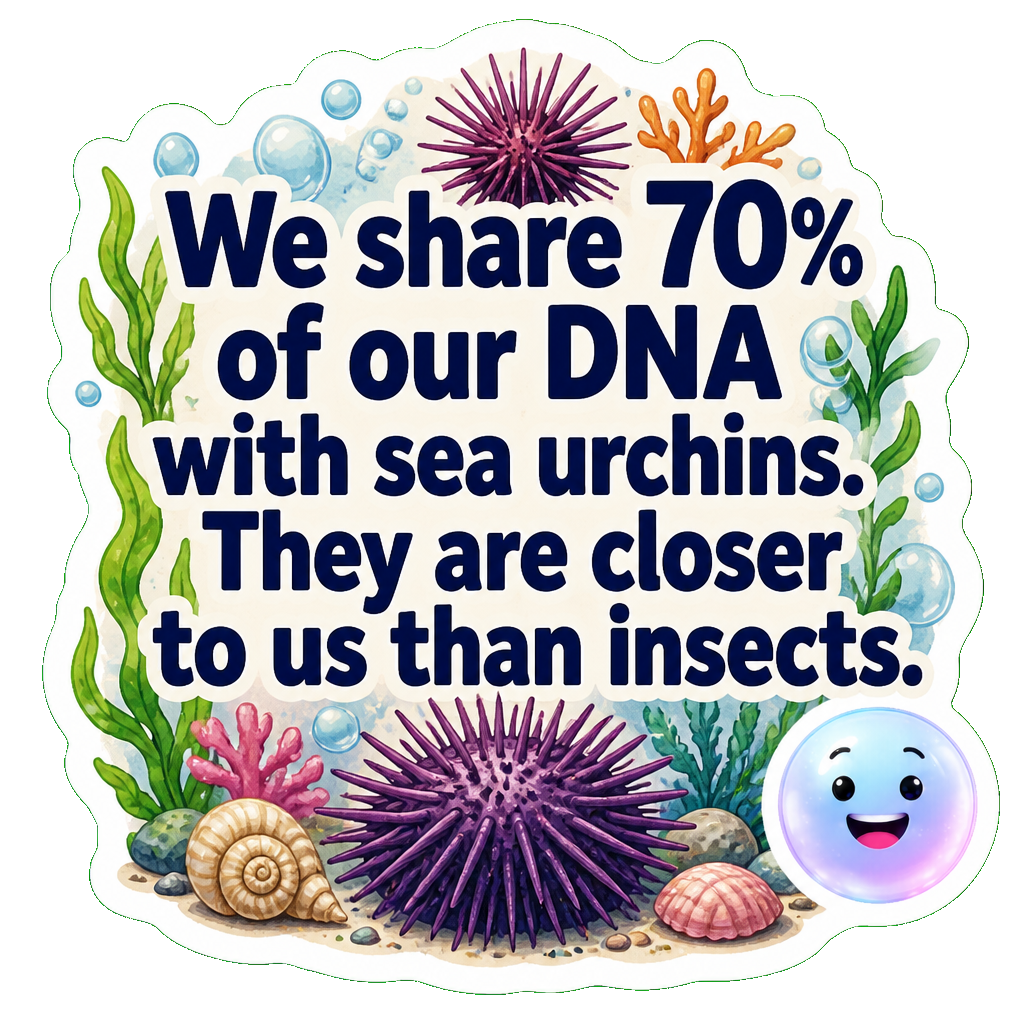
sonia In 2006, scientists sequenced the purple sea urchin genome, revealing we share 70 percent of our genes. Researchers use their transparent embryos to study human cell division.
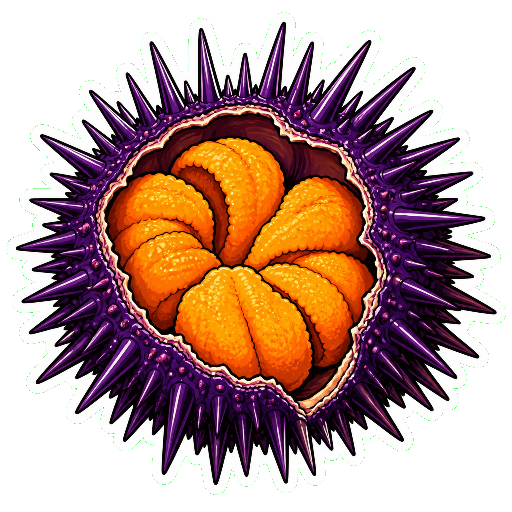
sonia This creamy, sweet delicacy is actually the reproductive organs of purple sea urchins. Premium markets sell this prized Japanese treat for over one hundred dollars per pound.
sonia Purple Sea Urchins
From the tidepools to the lab, this spiny purple wonder is a star on the plate!
sonia Divers harvest starving zombie urchins from barren reefs and fatten them in land-based aquaculture tanks. This process protects vital kelp ecosystems while producing premium seafood.
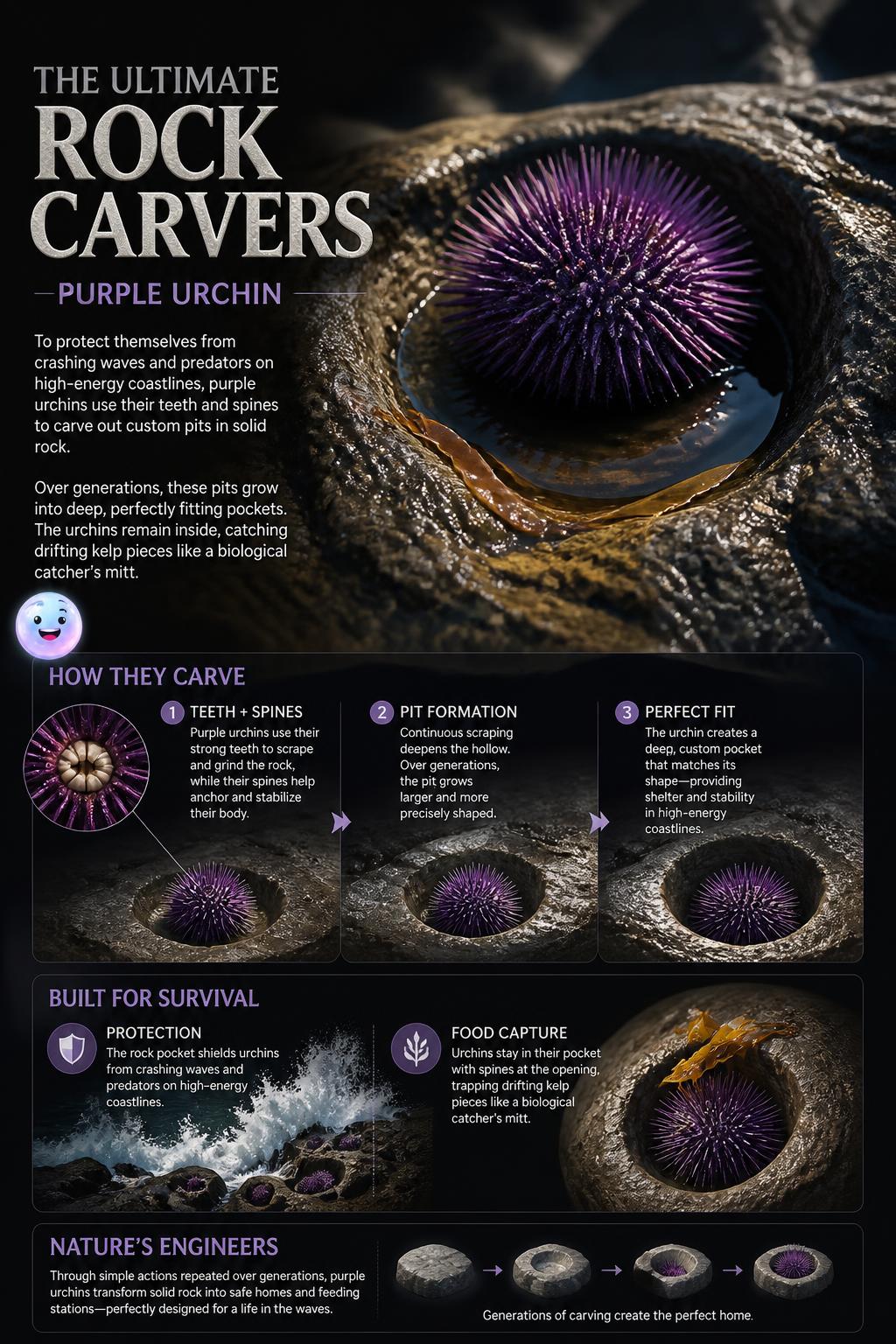
sonia Purple urchins can slowly excavate their own protective bunkers out of solid coastal sandstone.
Human cousins: Purple sea urchins share about 70% of their DNA with humans, making them closer relatives to us than insects!
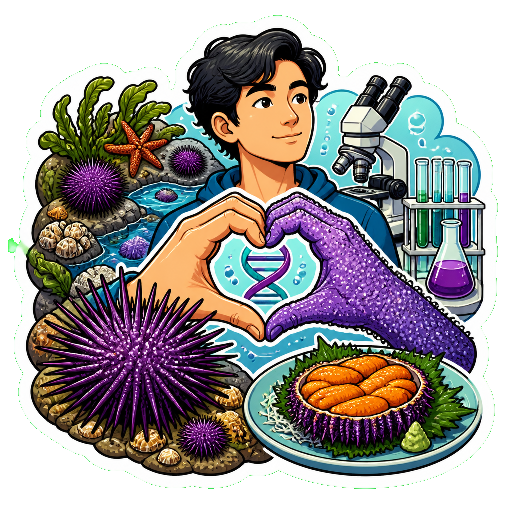
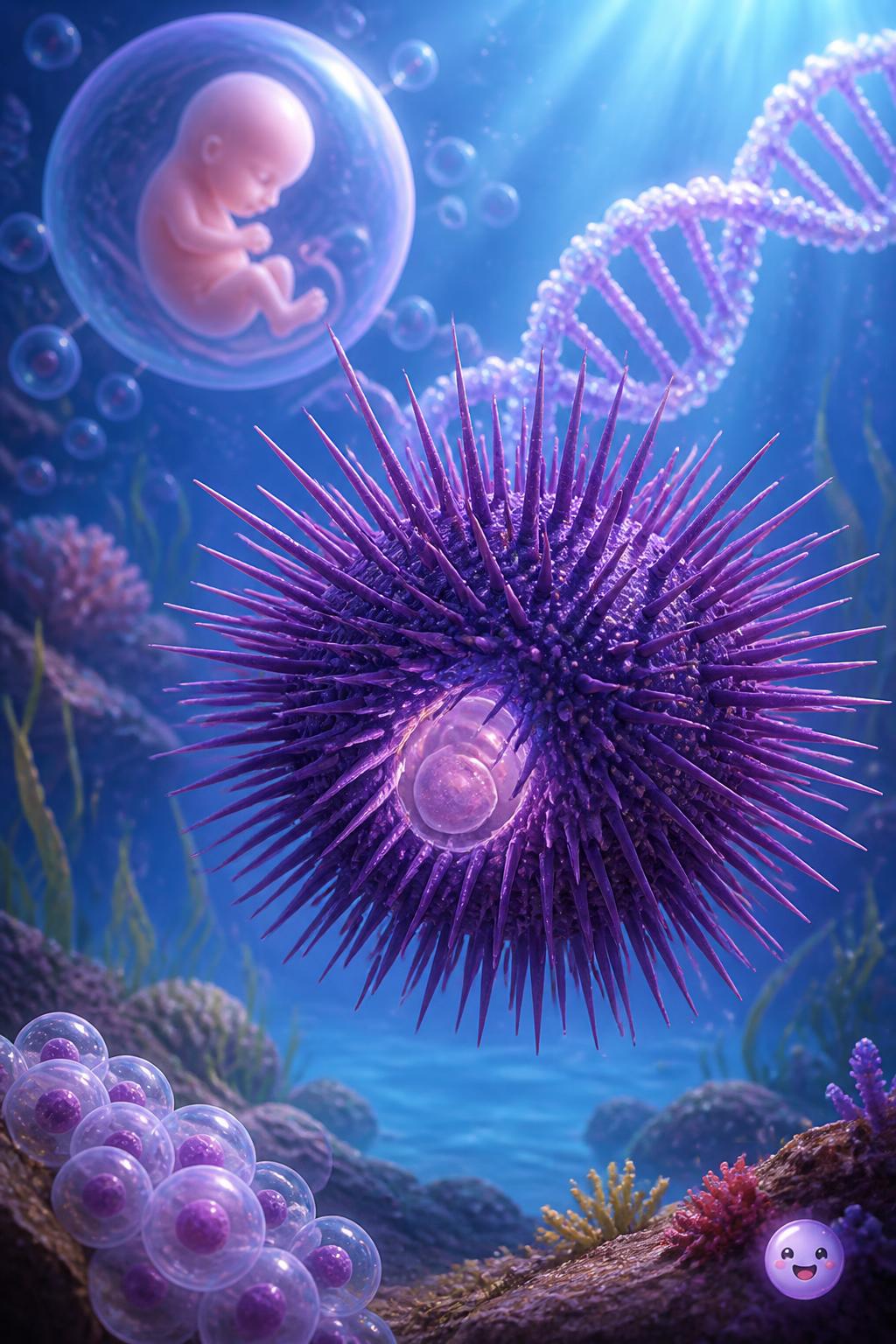
sonia Purple sea urchins share a surprising amount of genetic material with humans, making them vital for medical research.
The edible gonads of a sea urchin, typically prepared as a delicacy. In 2019, researchers at the Bodega Marine Laboratory partnered with Urchinomics to ranch purple urchins for uni.
sonia Swipe to feed the busy purple urchin to learn how they shape kelp forest ecosystems.