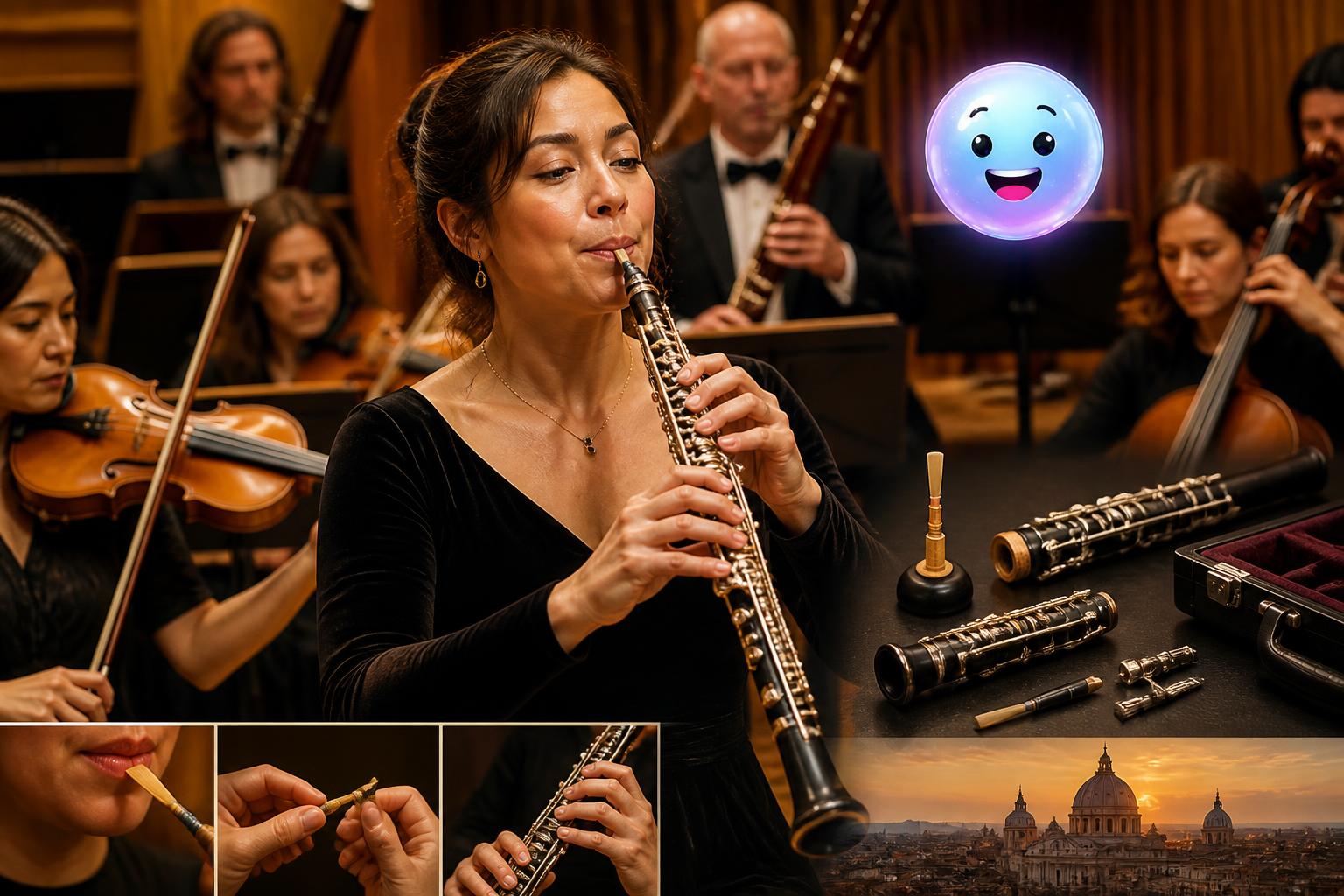
Would you want the high-pressure job of tuning the orchestra?
The physics of the double reed
From noisy outdoor shawms to royal courts
The orchestra's ultimate tuning boss
Oboe secrets and pop-culture crossovers
maestro Sergei Prokofiev used the oboe in his 1936 masterpiece to mimic a duck. The instrument's nasal voice and sliding melodies perfectly capture the bird waddling and swimming.
maestro Musicians listen to the oboe because its wooden body and double reed create a stable, piercing sound. This unique tone remains steady even when temperature changes affect string instruments.
maestro This instrument mimics the human voice to carry deep emotion over a roaring orchestra. Legendary composers like Tchaikovsky, Brahms, and Ennio Morricone chose it for their saddest melodies.
maestro The principal oboist plays a steady A note at 440 Hertz. Every musician from the violins to the brass tunes their instrument to match this exact pitch

maestro Tune the oboe's double reed to discover how it leads the entire symphony orchestra.
maestro The Oboe
Tune it up to the oboe's A (yeah, that A!) / Now we're ready to play! (ready to play!)

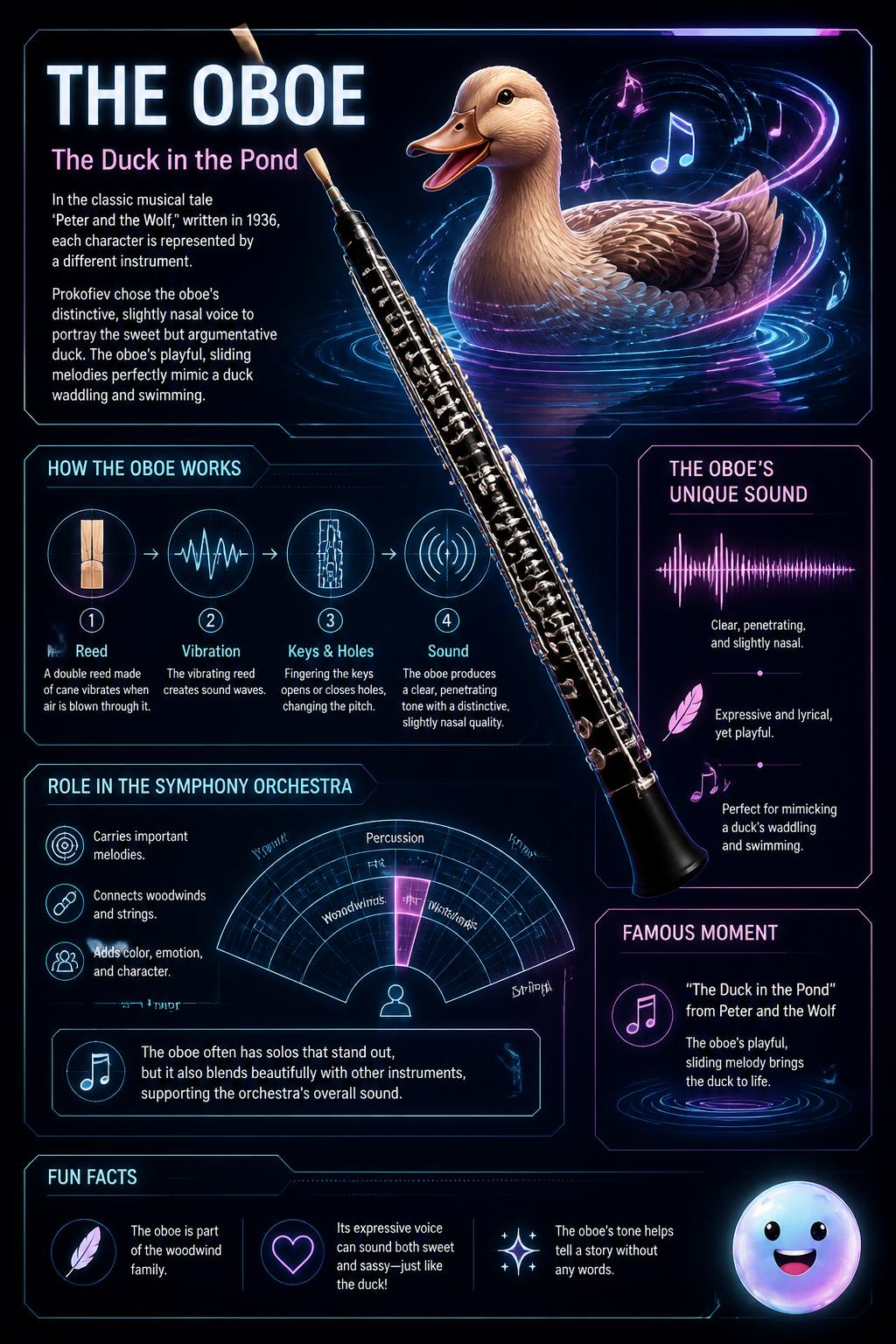
Tuning frequency: The tuning note played by the oboe is called 'A440' because the sound wave vibrates exactly 440 times per second.
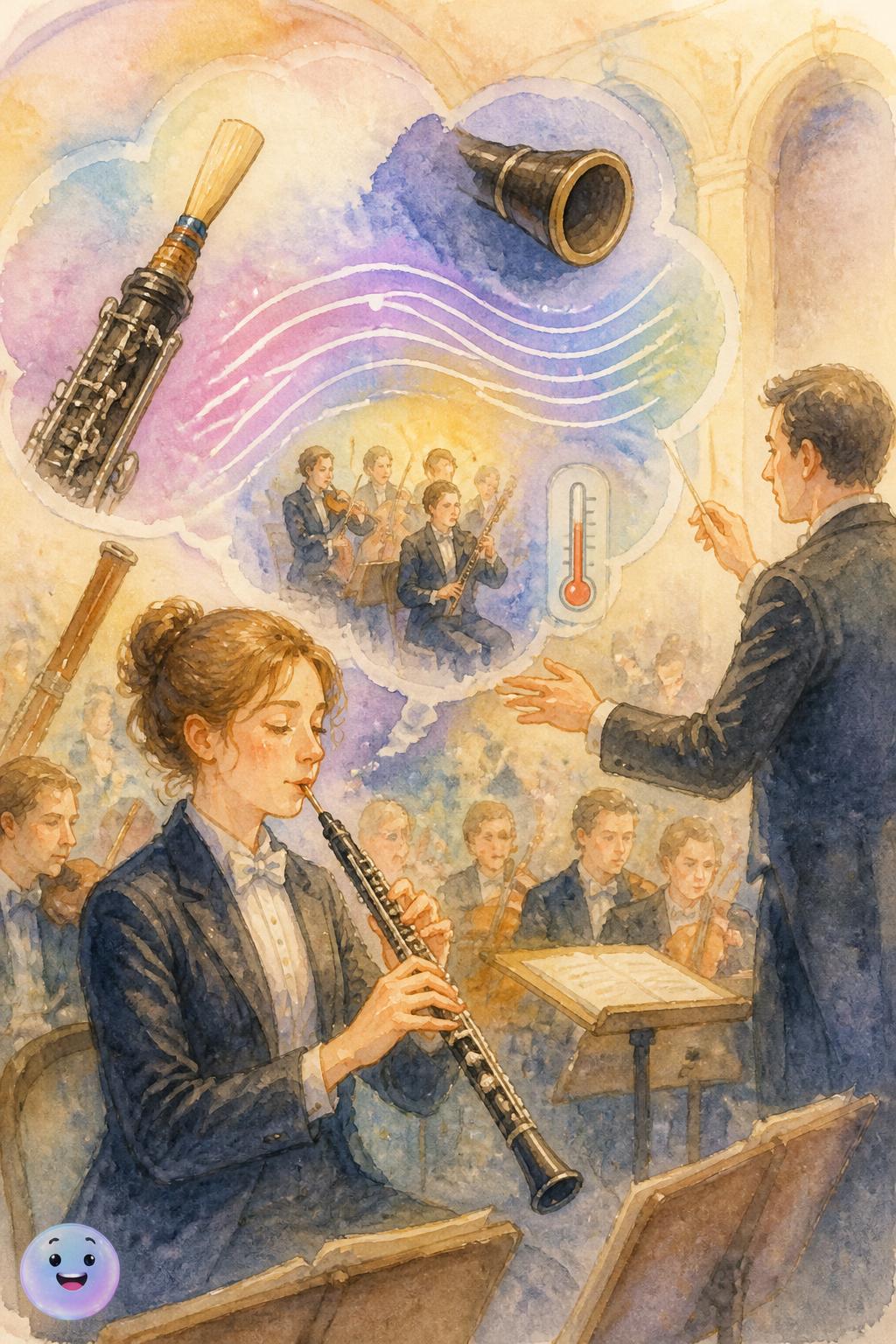
maestro Soft watercolor washes depict a wooden oboe leading a hand-drawn symphony orchestra.
The standard reference pitch of 440 hertz used by musicians to tune their instruments. Oboists sound this stable pitch to initiate the collective tuning of a symphony orchestra before a performance.
Who composed the hauntingly beautiful theme 'Gabriel's Oboe' for the 1986 film 'The Mission'?