Note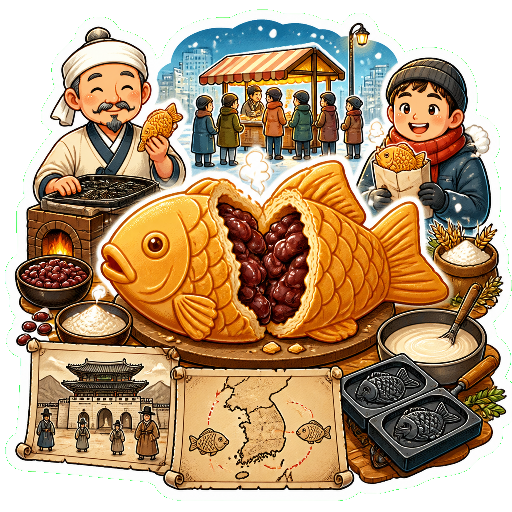
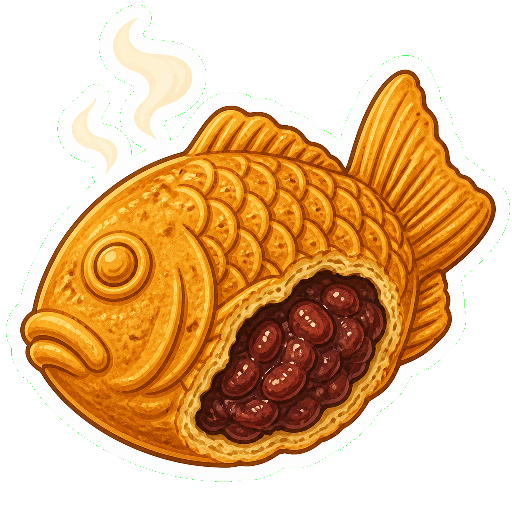
붕어빵 안의 달콤한 소가 너무 좋아

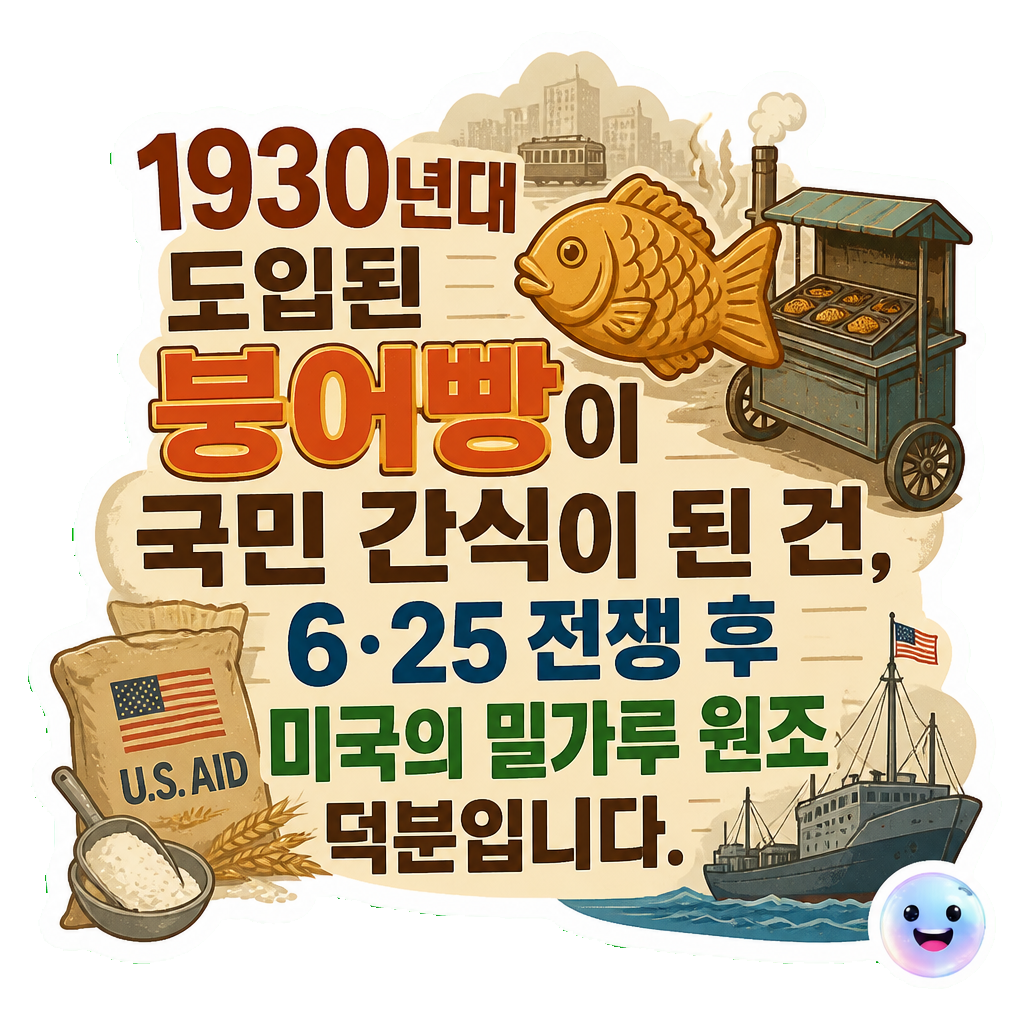
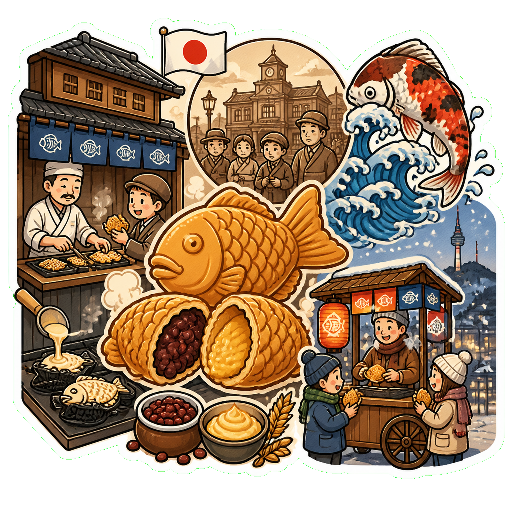
한국의 대표적인 겨울철 길거리 간식인 붕어빵은 1930년대 일본의 도미 모양 빵인 '타이야키'가 한국으로 건너온 뒤, 한국인들에게 훨씬 더 친숙한 물고기인 붕어 모양으로 현지화되면서 탄생했습니다.
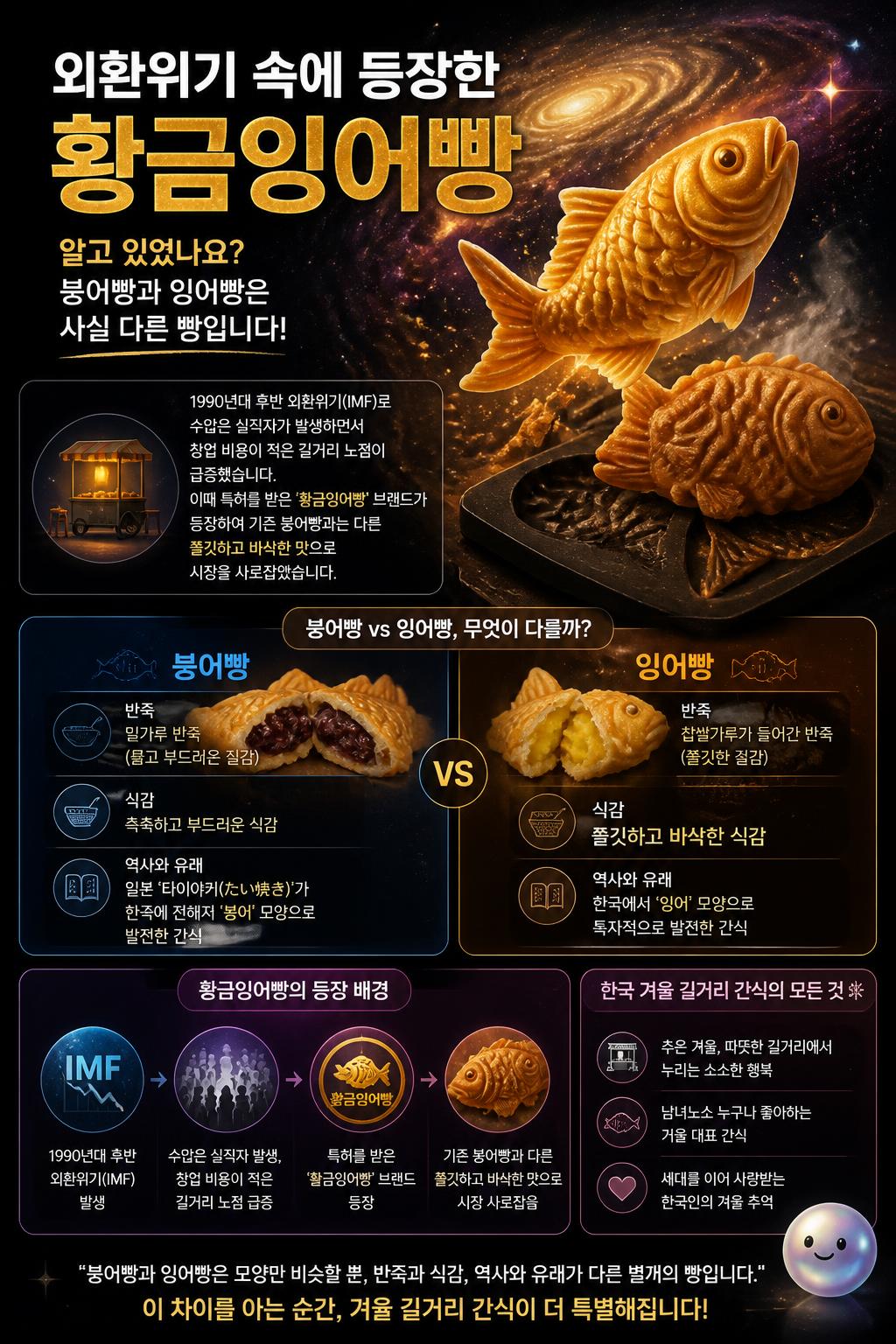
renato Mass layoffs in the late 1990s forced unemployed Koreans to open cheap street stalls. A patented recipe for chewy, crispy Golden Carp Bread quickly dominated the market.
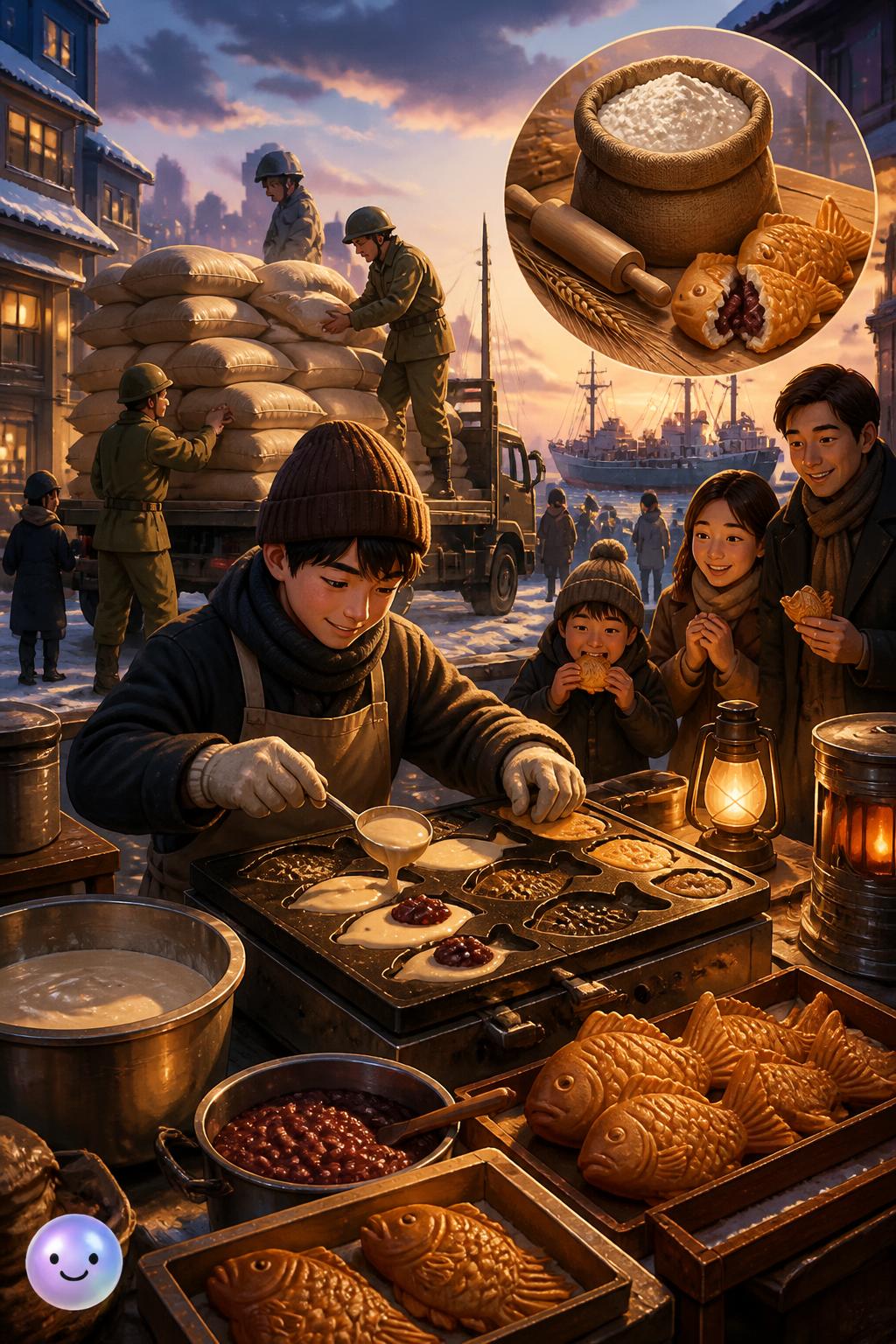
renato After the Korean War in the 1950s, cheap US aid flour flooded South Korea. Street vendors quickly used this ingredient to bake fish-shaped bungeoppang, creating a legendary national snack.
renato In the 1930s, Koreans adapted expensive Japanese sea bream pastries into familiar, affordable crucian carp shapes. This clever culinary swap created the beloved street food eaten today.
renato Seoul street vendors stopped selling bungeoppang during 1980s urban cleanup projects. The sweet red-bean pastry returned in the 1990s as retro nostalgia fueled a massive winter food comeback.
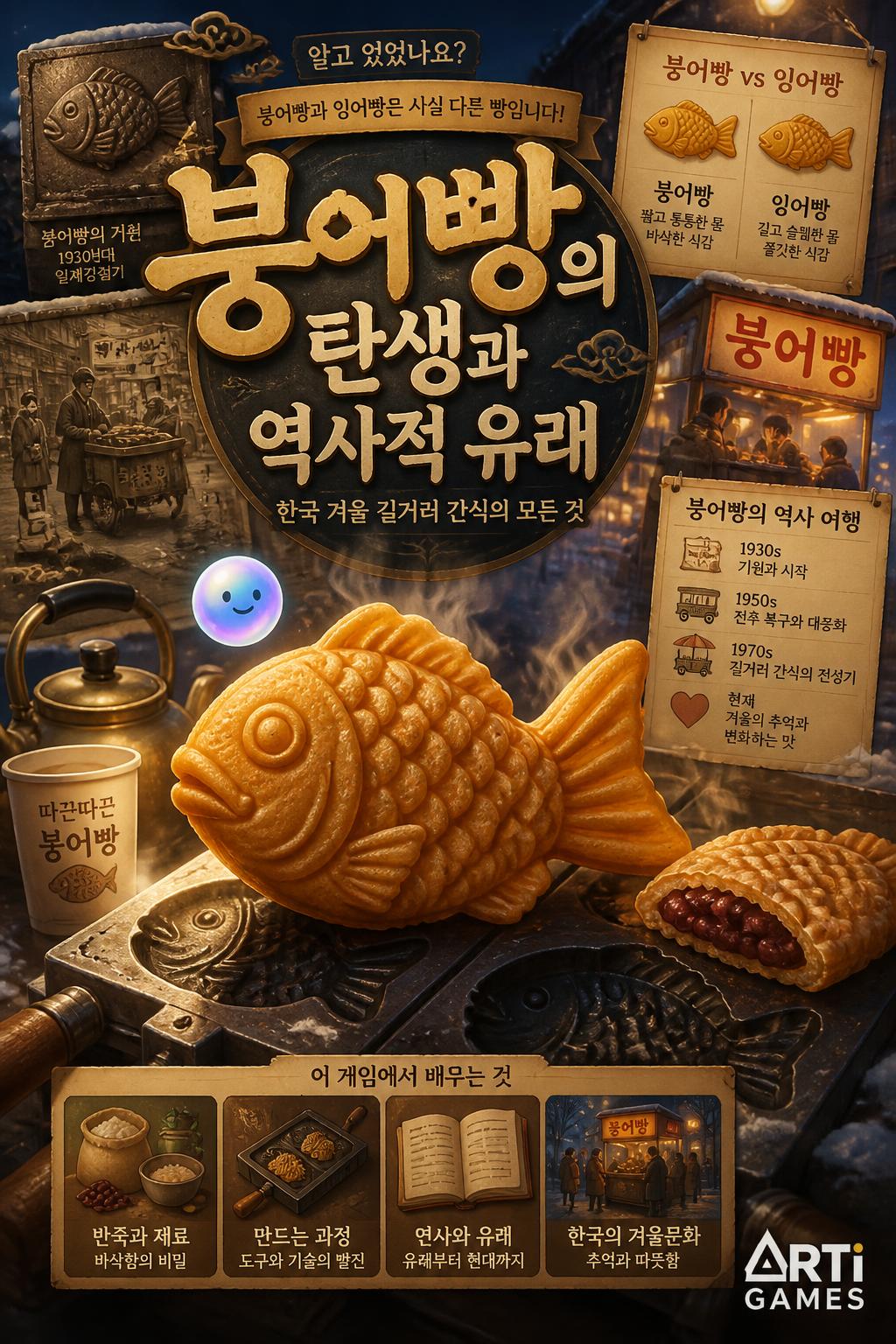
renato Sort ingredients and shapes to discover the history and differences of Korea's fish-shaped treats.