The mind behind the curtain
How the experiment works
The two principles of justice
Real world impact and criticisms

marcus John Rawls, the philosopher from Baltimore, created the veil of ignorance to design a fair society.
At which American university did John Rawls spend over thirty years teaching philosophy?
Which global conflict did John Rawls serve in as an infantryman, deeply shaping his views on justice?
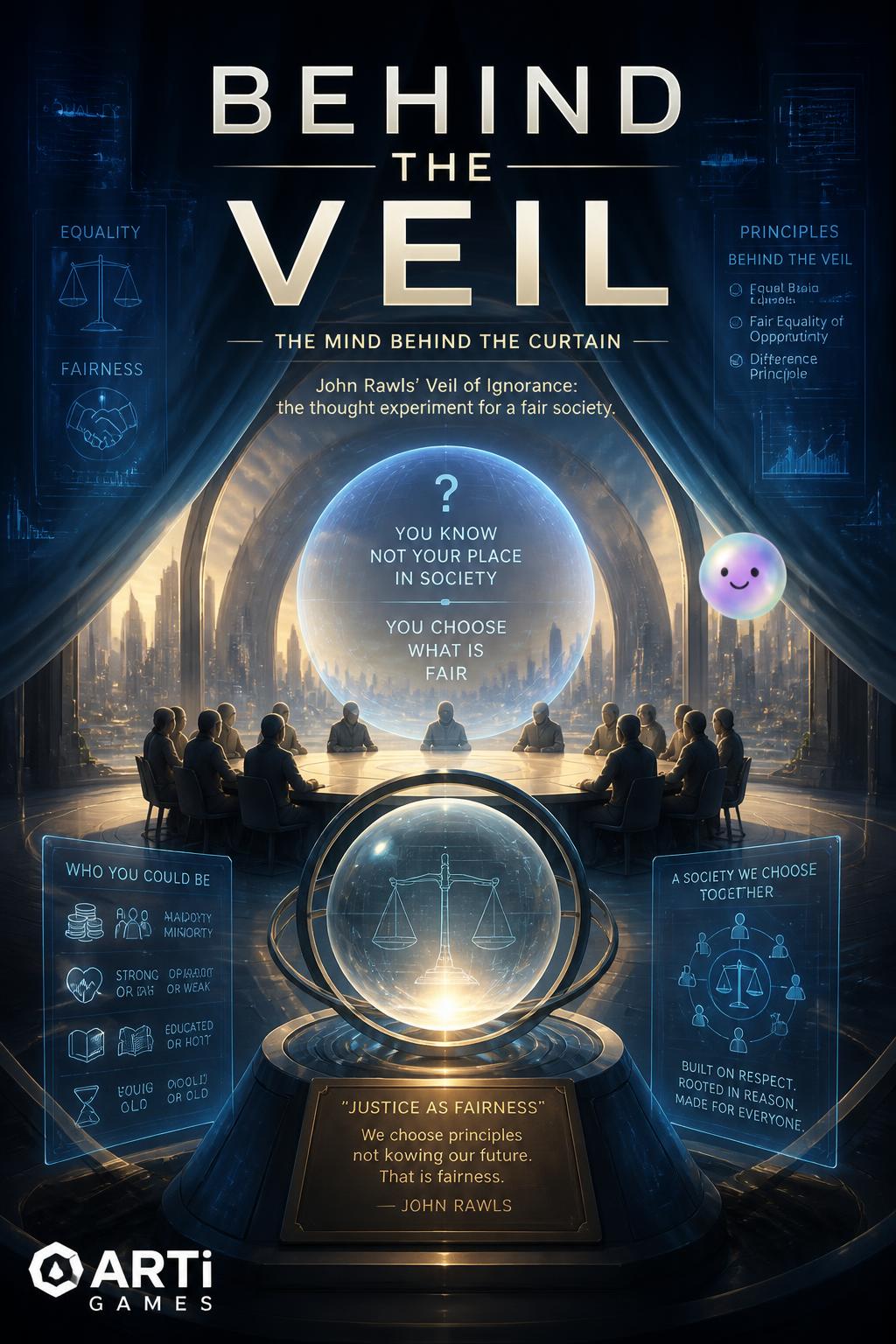
marcus Choose rules before knowing your identity to discover how to build a fair society.
marcus During 1960s American turmoil, John Rawls designed the veil of ignorance to protect vulnerable minorities.
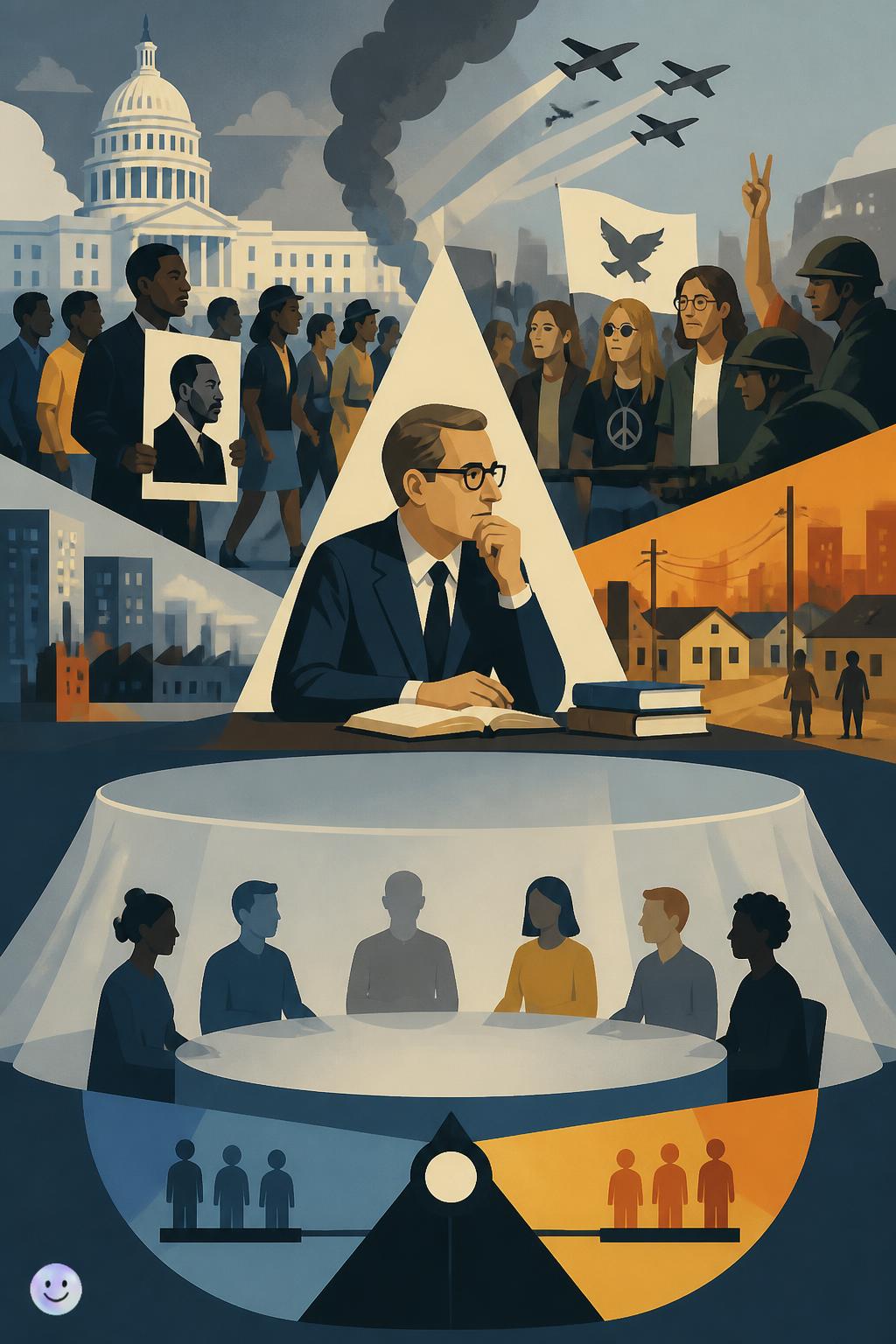
marcus In the turbulent 1960s, social unrest and inequality highlighted the urgent need for a new framework of justice.
In what year did American philosopher John Rawls publish his groundbreaking book 'A Theory of Justice'?
marcus The Mind Behind the Curtain
Behind the veil, drop your scale, make a world where all can win.
marcus Explore John Rawls' veil of ignorance, the revolutionary thought experiment for a fair society that changed the course of modern philosophy.
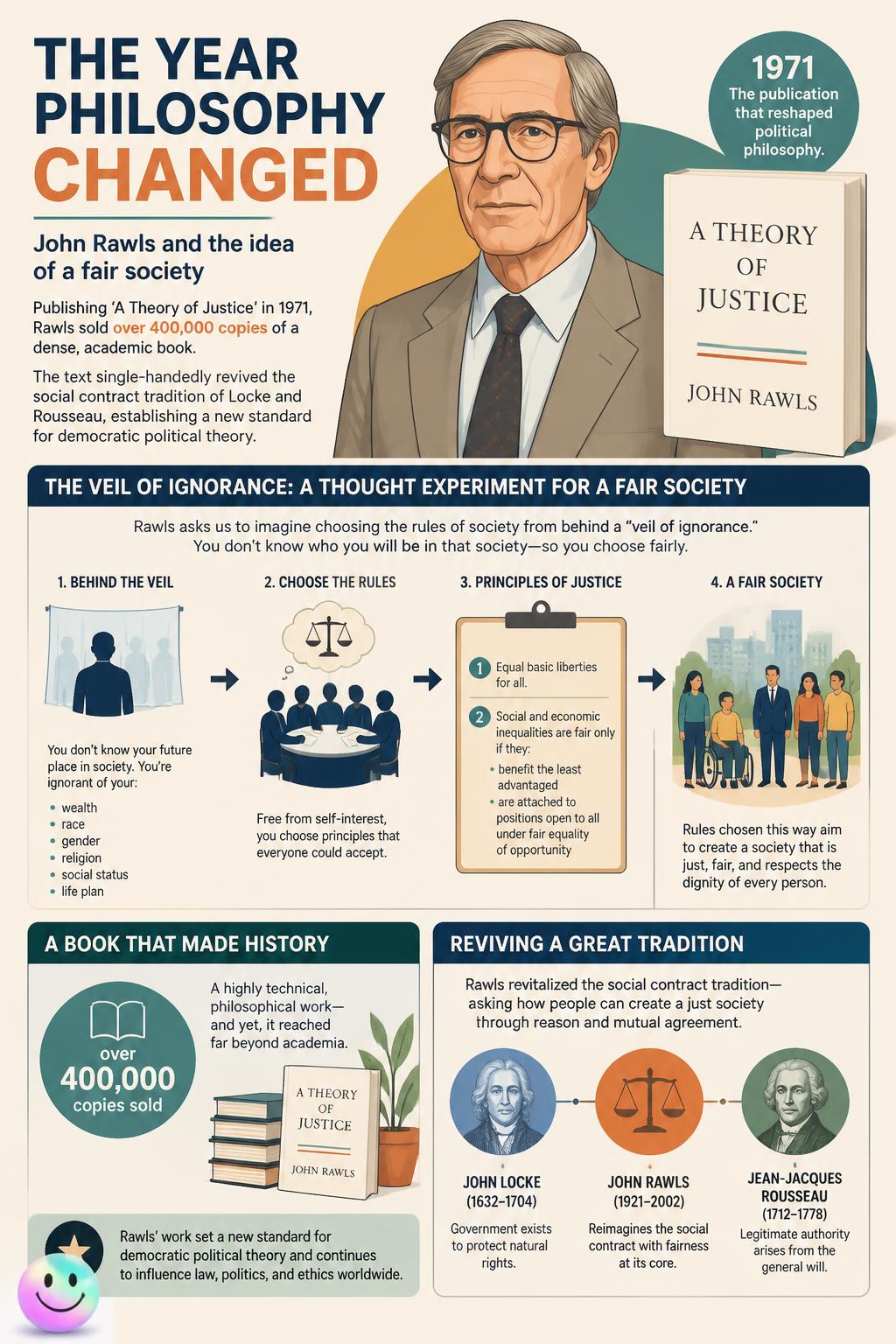
marcus Rawls' 1971 masterpiece revitalized modern political philosophy and challenged centuries of established thought.
What tragedy in John Rawls' childhood led to his lifelong stutter and deep empathy for others?
What is the name of the hypothetical starting state of equality that John Rawls proposed for designing a fair society?
Rawls's stutter: John Rawls developed a stutter as a child after two of his younger brothers died of infectious diseases they caught from him.
marcus Explore John Rawls' veil of ignorance. Learn how this famous thought experiment uses a blank slate concept to design a fair and just society.
Which philosophical tradition, popular in the 19th century, was John Rawls trying to challenge with his theory of justice?
Which major 1960s social movement in the United States heavily influenced the reception of John Rawls' 1971 book?
An American moral and political philosopher in the liberal tradition. The Harvard professor proposed a landmark fairness thought experiment in his 1971 book, A Theory of Justice.