The titan arum and the science of stench
Parasites of the jungle floor
Masters of deception and mimicry
Extreme survivors and water giants

Which plant genus serves as the exclusive host for the giant Rafflesia parasite?
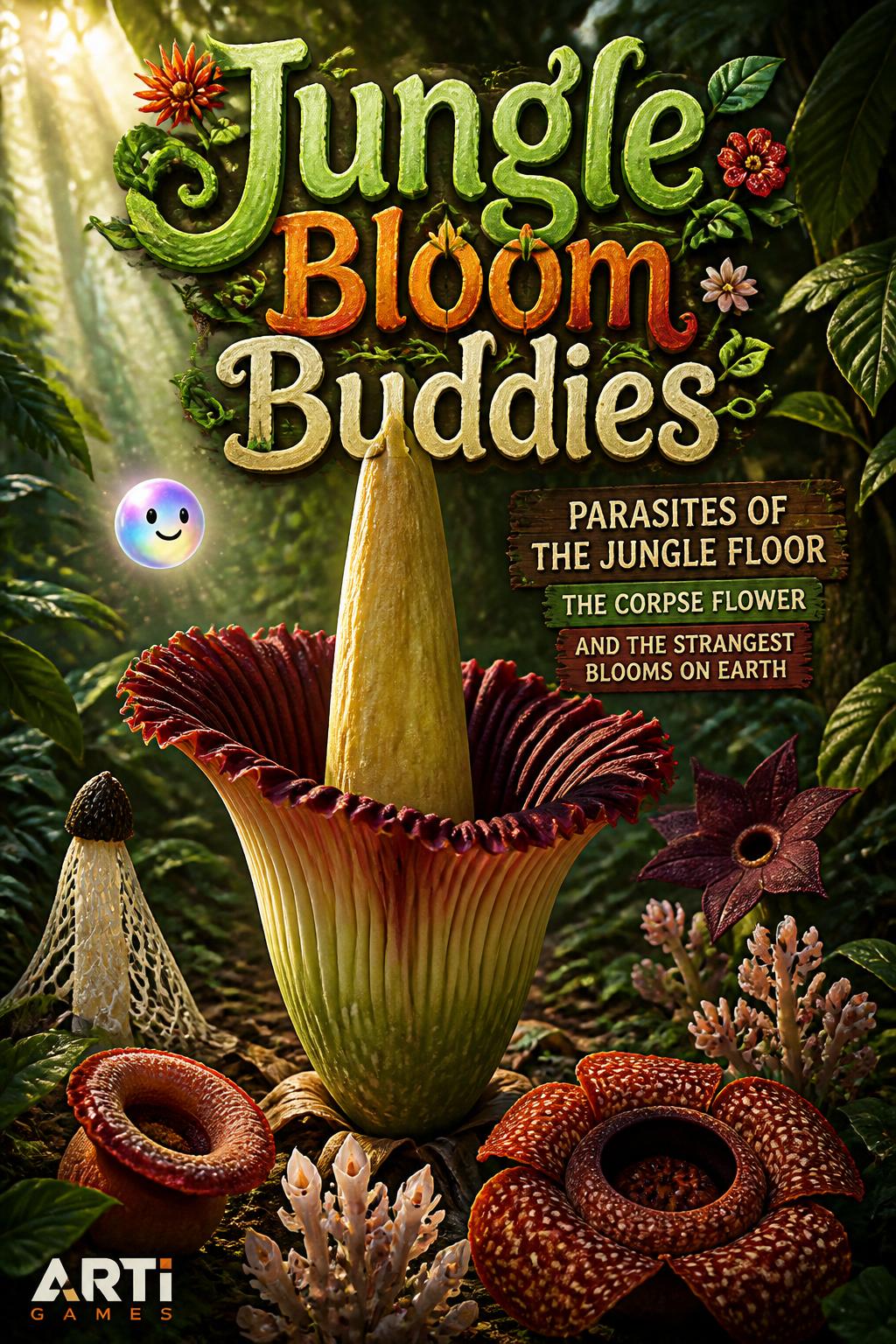
artiteacher Sort the world's strangest jungle flowers to learn how the stinky corpse bloom survives.
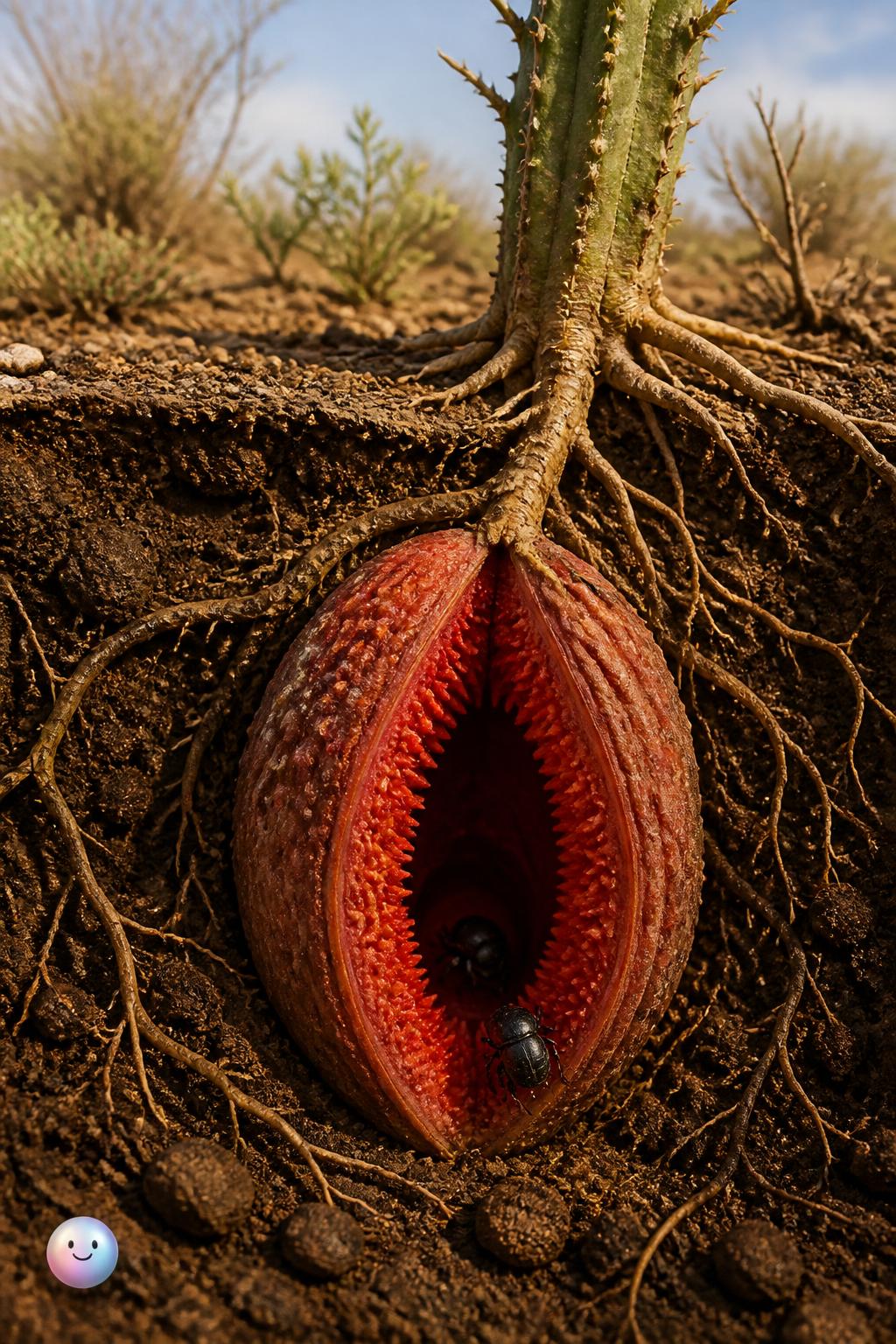
artiteacher This bizarre African parasite lives underground and smells like feces to trap beetles.
What is the name of the root-like structure parasitic plants use to penetrate host plants?
artiteacher Parasites of the jungle floor
I got no roots or leaves to touch the clay, I steal from vines to bloom and fade away.
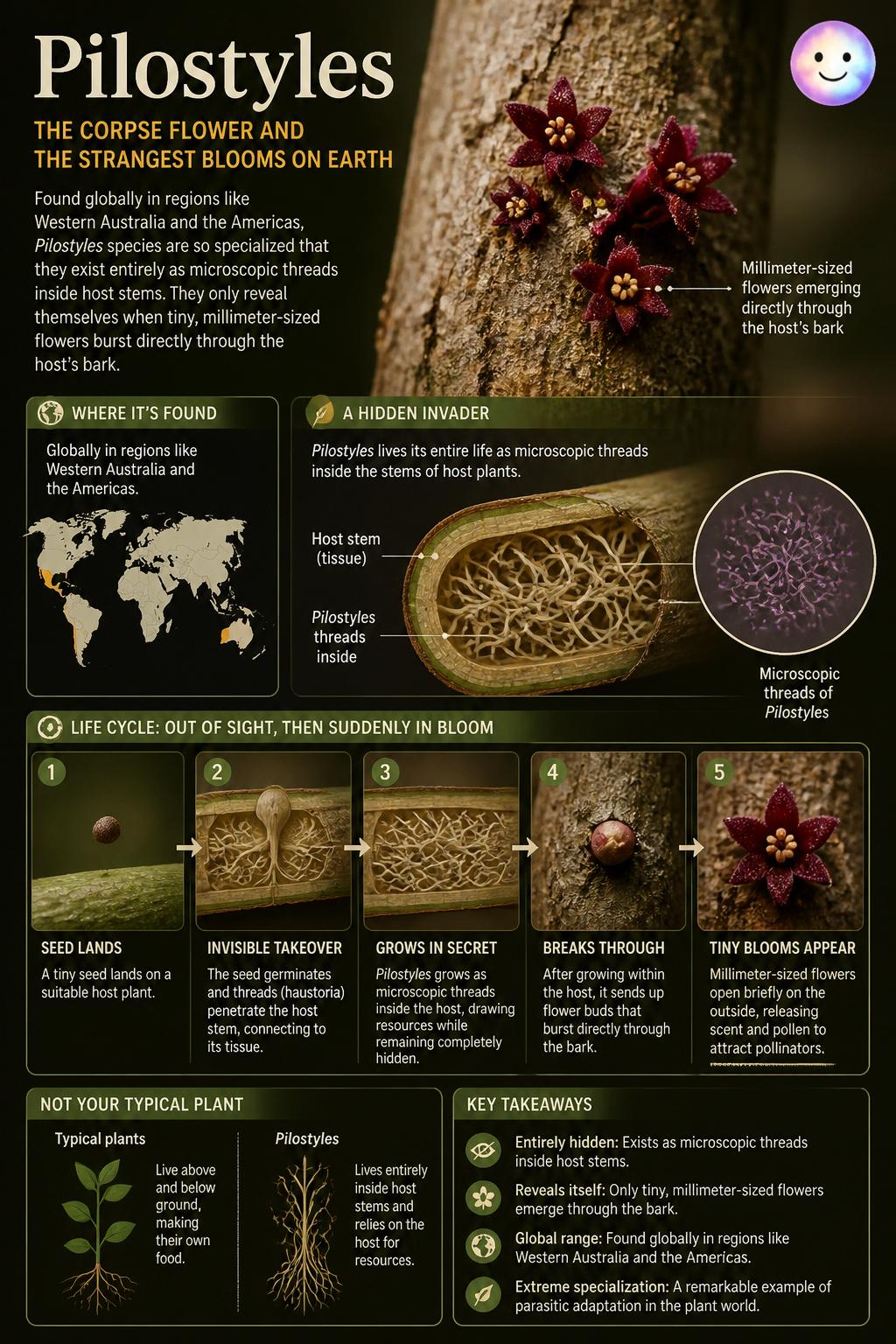
artiteacher Pilostyles is a tiny parasite that lives completely inside other plants' stems.
Rafflesia weight: A single flower of Rafflesia arnoldii can weigh up to 11 kilograms (24 pounds), roughly the weight of a medium-sized dog!
Which plant holds the record for producing the largest single individual flower in the world?
A rootless, leafless parasitic plant of Southeast Asian jungles that produces the largest individual flower in the world. In 1818, British botanist Joseph Arnold first documented this massive bloom during an expedition in Sumatra.