Profile

Artiteacher
✨2 friends
Masteries

No masteries yet
artiteacher El experimento mental de Galileo Galilei sobre la caída de los objetos.
artiteacher El experimento de la pluma y el martillo en la Luna
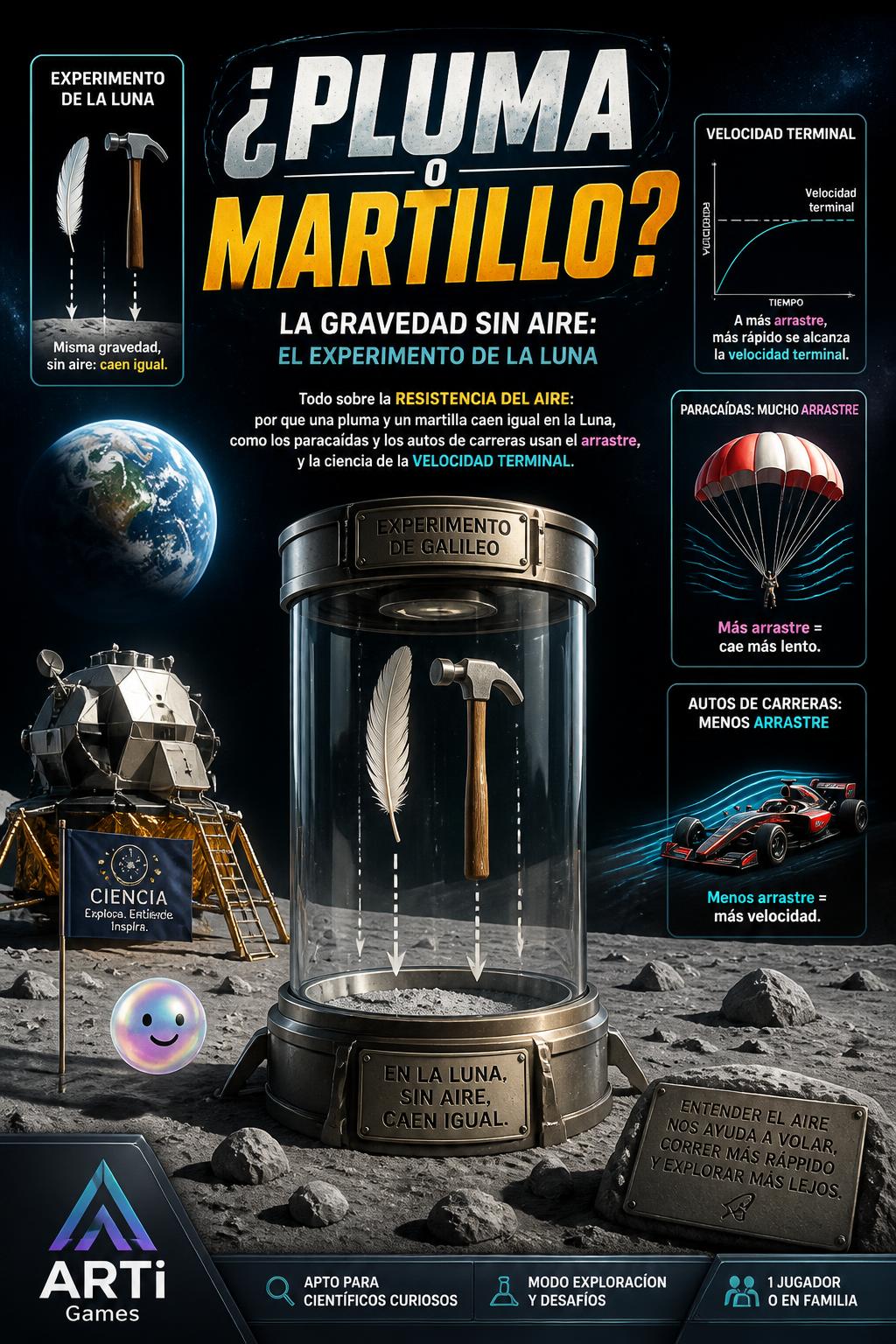
artiteacher Suelta plumas y martillos para aprender cómo la resistencia del aire afecta su caída.
artiteacher La cámara de vacío de la instalación Space Power de la NASA.
artiteacher El error de Aristóteles sobre la caída de los objetos.
artiteacher La gravedad sin aire
Pluma y martillo, caen a la vez, nada los frena.
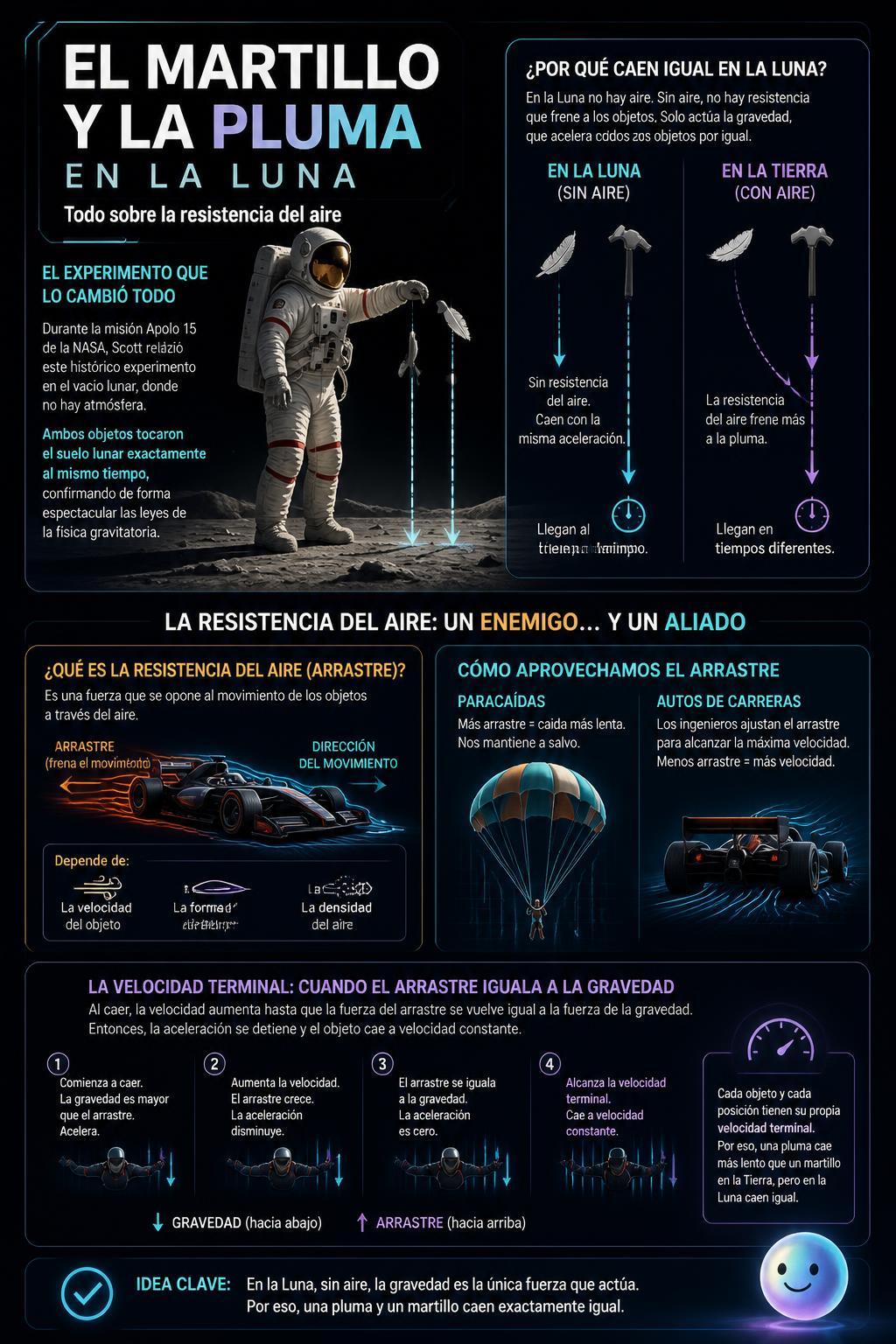
artiteacher En 1971, el astronauta David Scott dejó caer un martillo geológico y una pluma de halcón en la Luna para probar la teoría de Galileo.
Gravedad lunar: En la Luna, la gravedad es solo un sexto de la terrestre debido a su menor masa física.
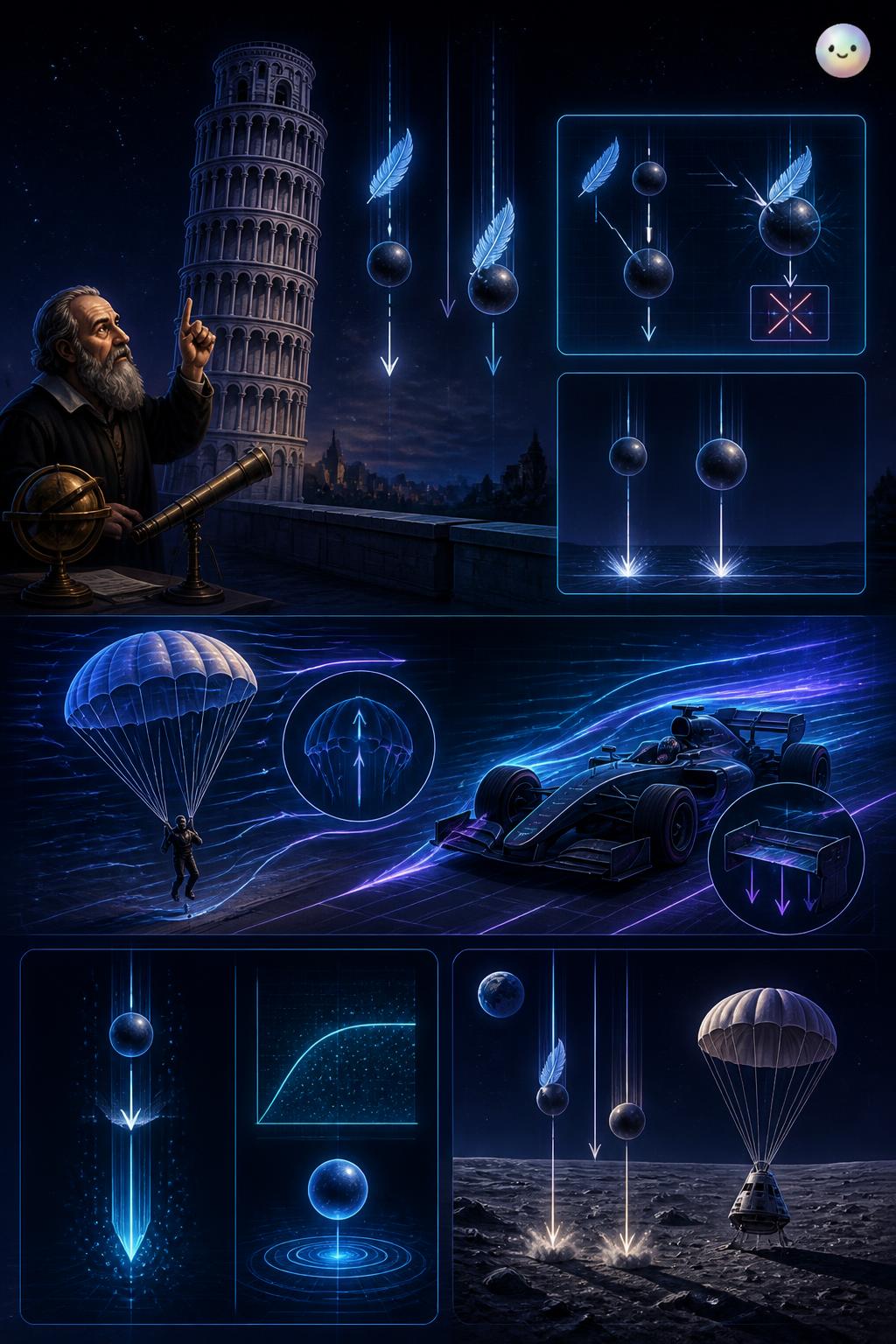
artiteacher Galileo Galilei demostró matemáticamente en 1589 que, sin resistencia del aire, todos los objetos caen con la misma aceleración constante.
Espacio que carece de materia o de aire en su interior. David Scott demostró esto en 1971 al soltar un martillo y una pluma en la Luna.
¿Por qué el martillo y la pluma caen al mismo tiempo en la superficie de la Luna?
¿Qué experimento espacial te parece más emocionante?
¿Dónde se encuentra la cámara de vacío más grande del mundo utilizada para experimentos de caída libre?
¿Qué científico italiano utilizó experimentos mentales para desafiar las teorías de caída de Aristóteles en el siglo XVI?
¿Qué filósofo griego afirmó incorrectamente que los objetos pesados caen más rápido debido a su peso?
¿En qué misión espacial de la NASA se dejó caer un martillo y una pluma en la Luna en 1971?
¿Cuál es el valor aproximado de la gravedad en la Luna en comparación con la gravedad de la Tierra?
¿De qué ave era la pluma utilizada en el famoso experimento de caída libre en la Luna de 1971?
¿Qué tipo de martillo utilizó el astronauta David Scott en su experimento en la Luna?
artiteacher Gravity and Air Resistance
Without the air to slow the feather's flight, They hit the ground together, heavy and light.
artiteacher Robert Boyle designs an air pump to create a vacuum.
artiteacher Earth's atmosphere acts as an invisible fluid.
artiteacher Galileo Galilei challenges ancient Greek theories about how objects fall.

artiteacher Drag and drop objects through different atmospheres to learn how air resistance affects falling speed.
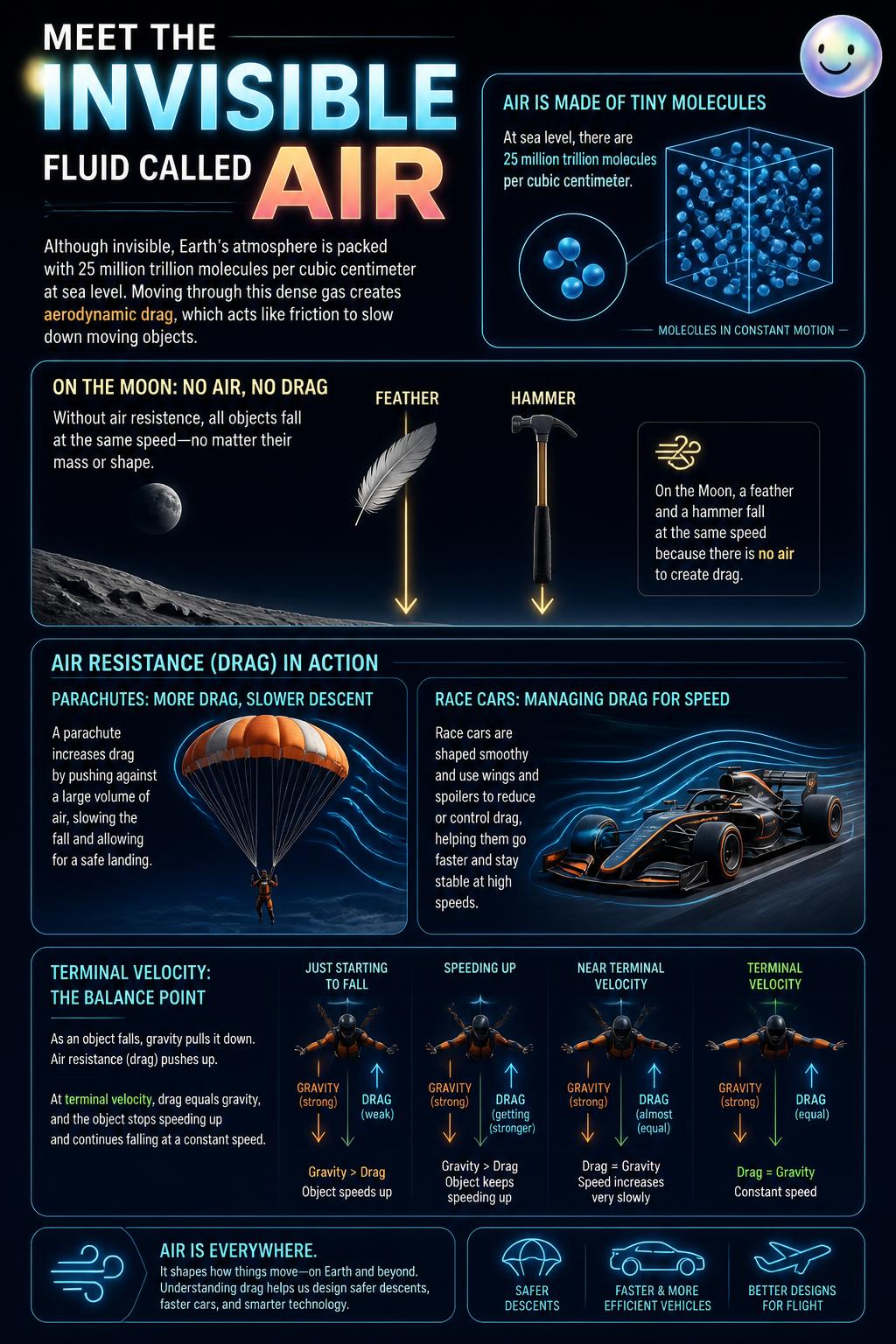
artiteacher Air behaves like a liquid, pushing back against anything moving through it.
Moon gravity: Astronauts on the Moon dropped a hammer and feather in 1971, and they hit the ground at the exact same moment due to the lack of air.
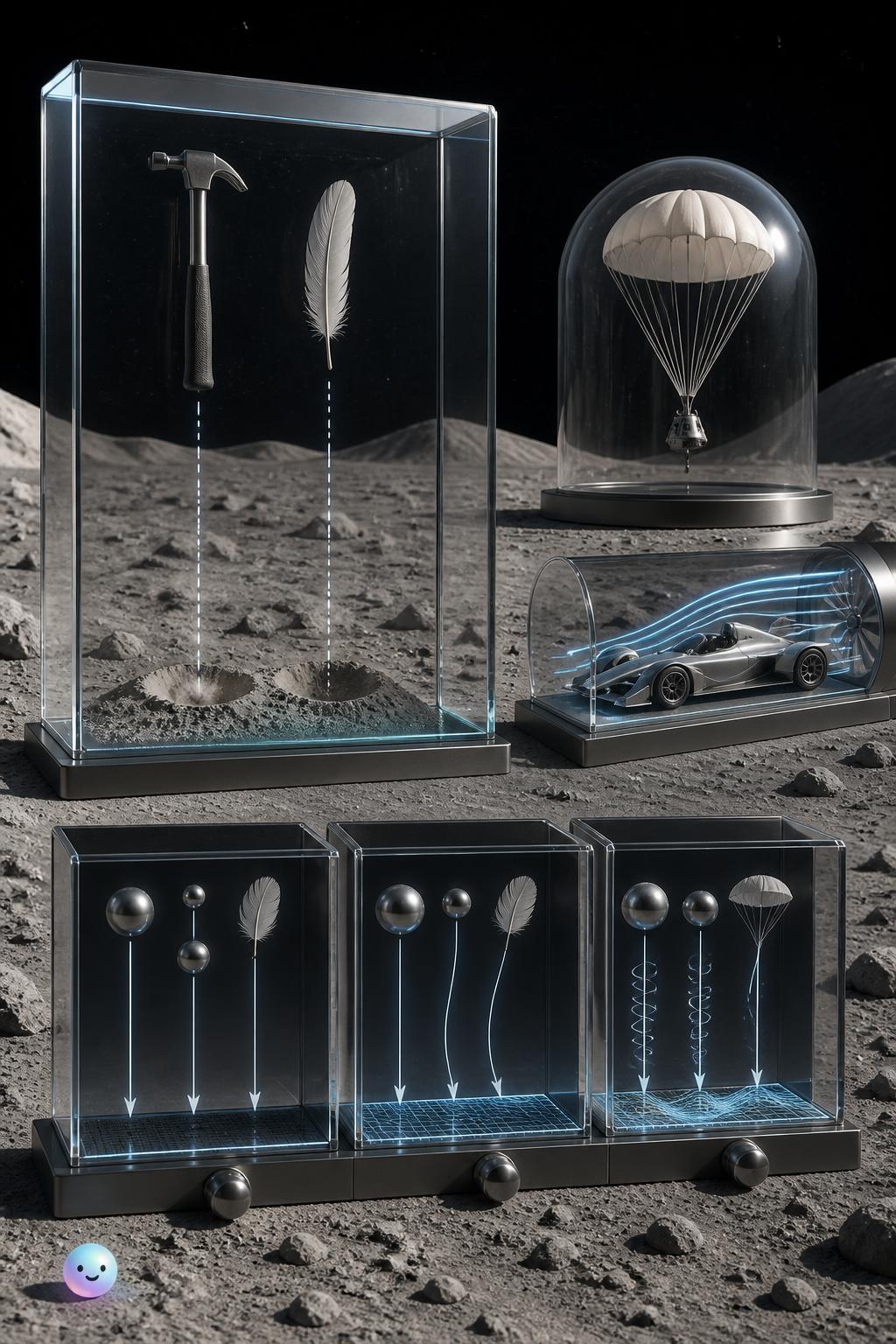
artiteacher Astronaut David Scott proved Galileo's gravity theory on the airless Moon.
A space entirely devoid of matter. In 1971, Commander David Scott dropped a hammer and feather on the Moon to demonstrate this concept.
What is the scientific term for the friction force exerted by air on a moving object?
Would you jump off a plane with a 15th-century wooden parachute?
Why did the hammer and the feather fall at the same speed on the Moon?
How does doubling an object's speed affect the air resistance it experiences?
What is the approximate air pressure at sea level on Earth?
Who famously disproved Aristotle's theory of falling bodies in 1589?
Who designed the advanced air pump in 1659 to create an artificial vacuum?
Which Apollo mission featured an astronaut dropping a hammer and a feather on the Moon?
artiteacher Drag daily choices onto the scale to discover Aristotle's ancient guide to a good life.
artiteacher Eudaimonia
Flourish every day, flourish every day, it's a lifetime of virtue.
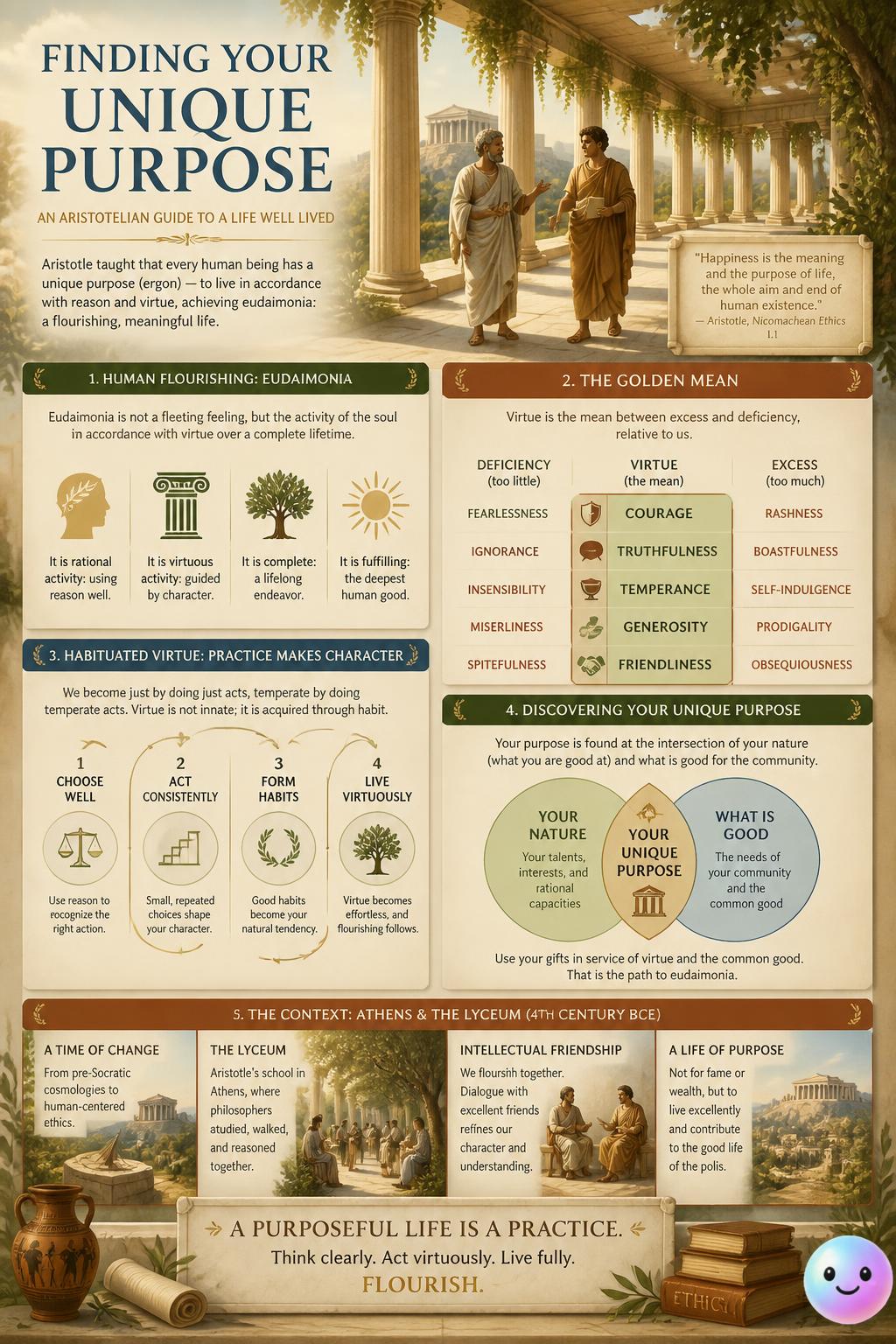
artiteacher Everything in nature has a specific function, and human flourishing comes from fulfilling ours.
Aristotle's lost dialogues: Aristotle wrote popular dialogues that were praised for their beautiful style, but only his dense lecture notes survived.
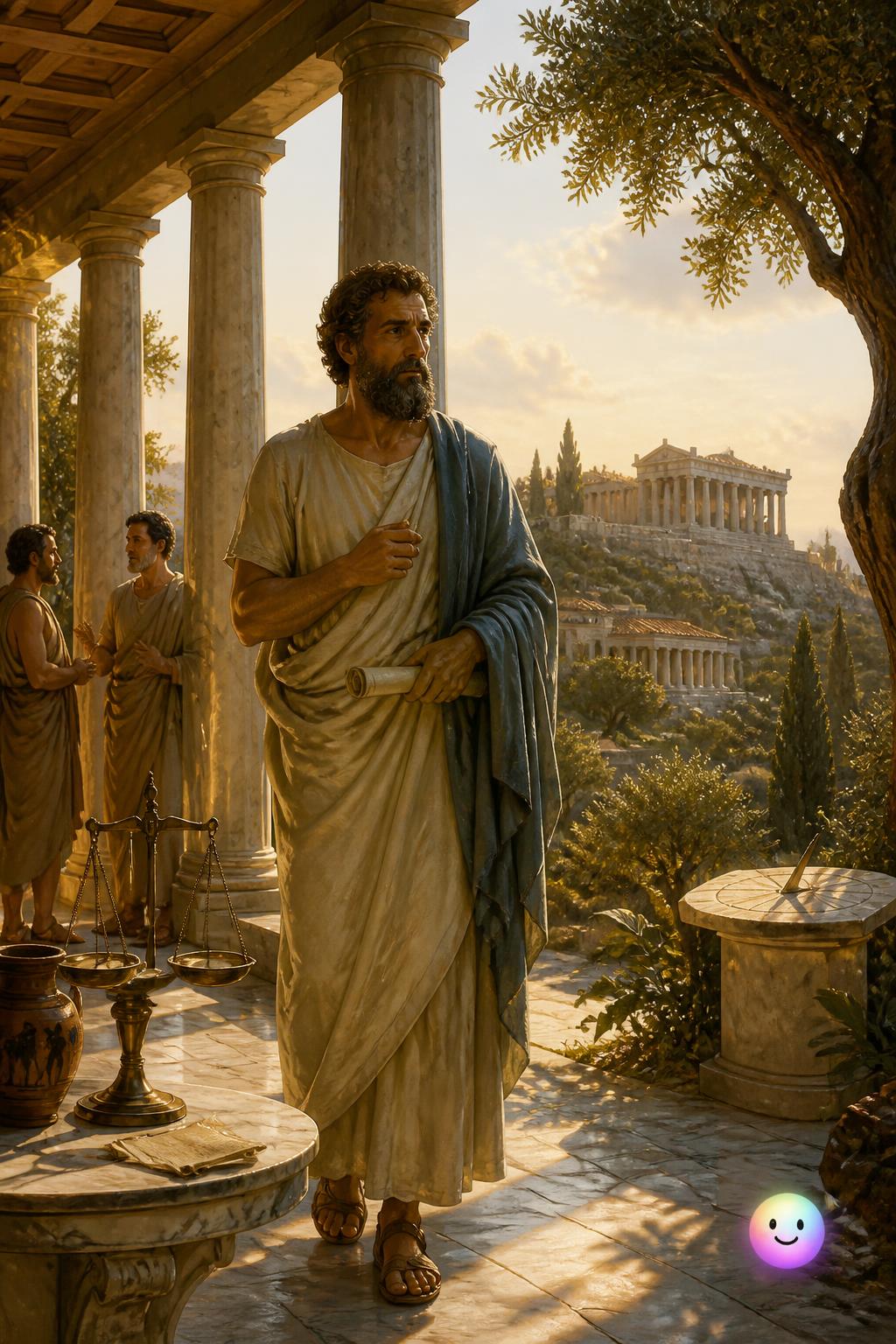
artiteacher Aristotle distinguished temporary pleasures from the deep fulfillment of living a virtuous life.
The state of human flourishing, well-being, or living a highly fulfilled life. Aristotle argued in his Nicomachean Ethics that this state is achieved through active lifelong virtue.
What did Aristotle call the fleeting, sensory pleasure that differs from deep, long-term flourishing?
What is the most important ingredient for a happy life?
To whom did Aristotle dedicate his famous book on ethics, the Nicomachean Ethics?
What did Aristotle believe was necessary to judge if a person had truly achieved a flourishing life?
How did Aristotle's view on happiness differ from the later school of philosophy known as Stoicism?
According to Aristotle's concept of 'telos,' what is the ultimate purpose or function of human beings?
In what century did Aristotle live and write his philosophical works?
Which philosopher was Aristotle's primary teacher at the Academy in Athens?
What ancient Greek term did Aristotle use to describe the ultimate state of human flourishing and well-being?

artiteacher Sort facts from rumors to learn how to question everything in a world of misinformation.