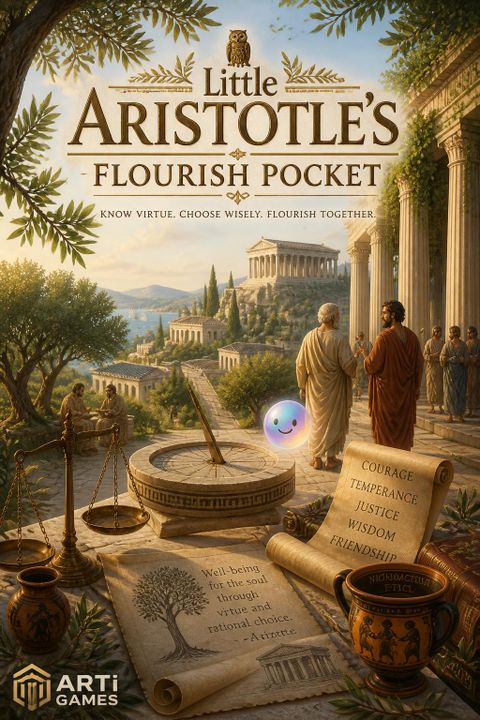
Little Aristotle's Flourish Pocket Game
Drag daily choices onto the scale to discover Aristotle's ancient guide to a good life.
The quest for eudaimonia
The art of the golden mean
Building character through habit
The global legacy of virtue

artiteacher Aristotle believed our unique purpose is to reason, so we flourish by making rational, moral choices.
artiteacher Aristotle argued that eudaimonia, or true happiness, is the ultimate goal achieved by developing reason throughout life.
artiteacher Aristotle argued that true flourishing comes from doing good through virtue, not just feeling temporary pleasure.
artiteacher Drag daily choices onto the scale to discover Aristotle's ancient guide to a good life.
artiteacher Eudaimonia
Flourish every day, flourish every day, it's a lifetime of virtue.
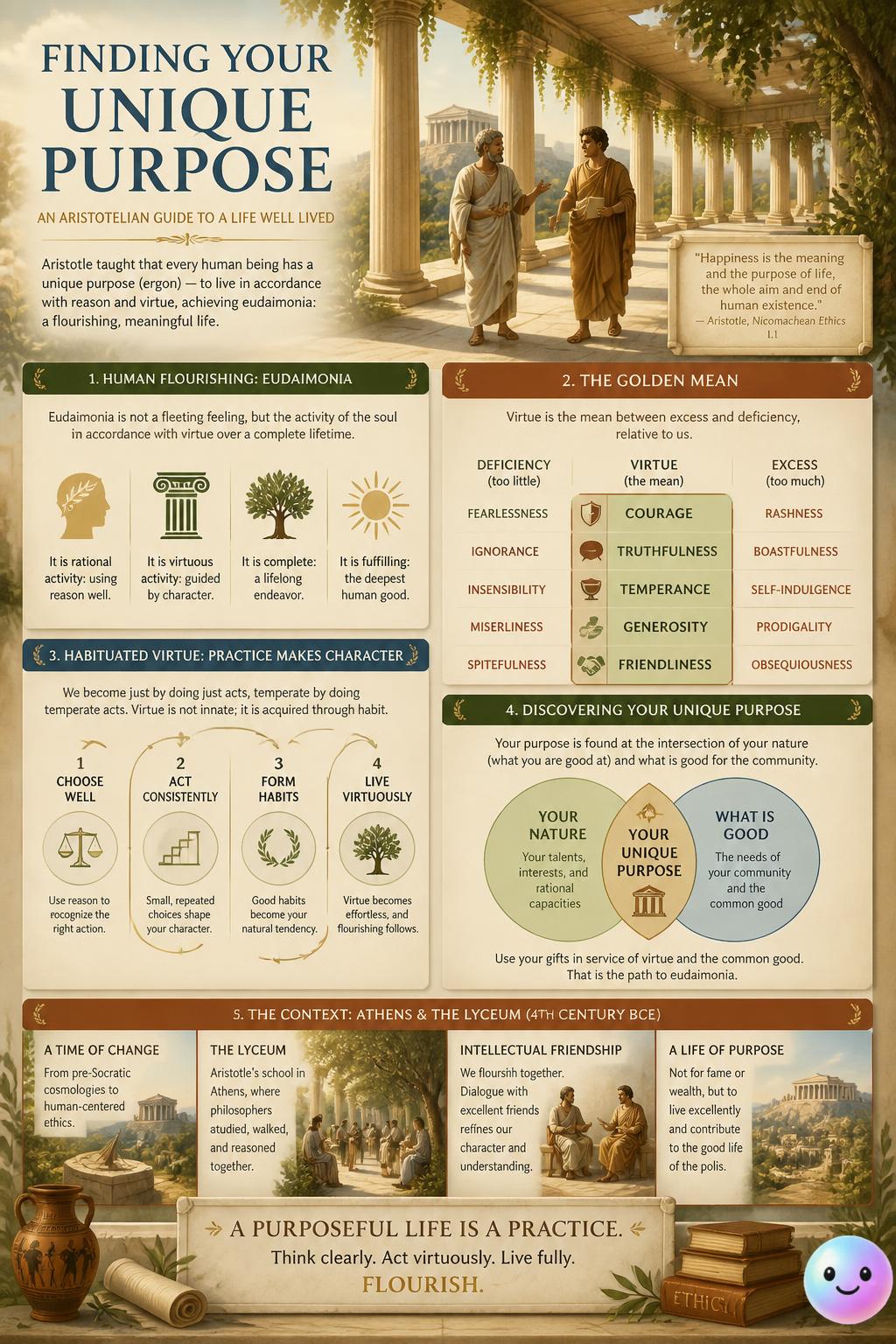
artiteacher Everything in nature has a specific function, and human flourishing comes from fulfilling ours.
Aristotle's lost dialogues: Aristotle wrote popular dialogues that were praised for their beautiful style, but only his dense lecture notes survived.
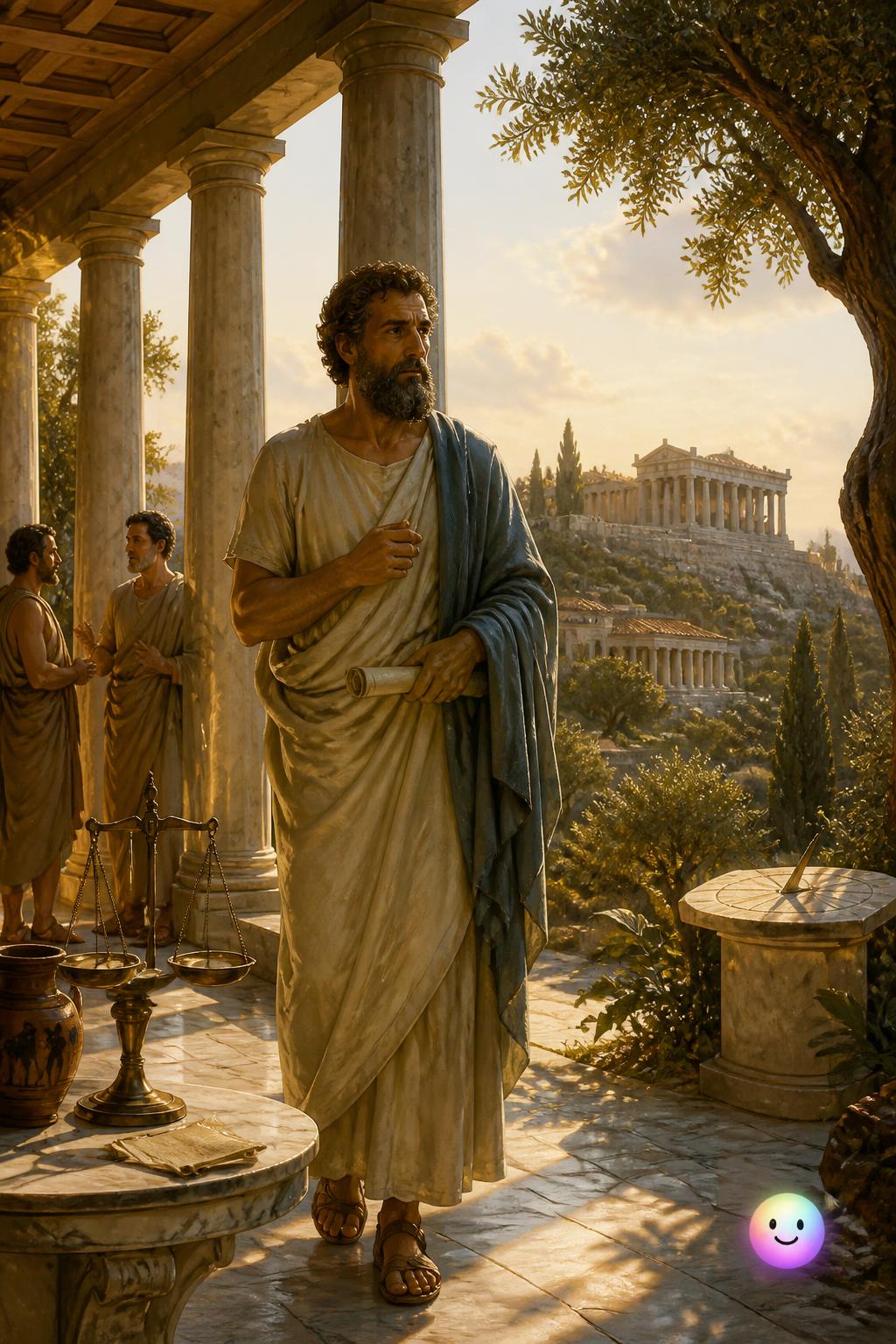
artiteacher Aristotle distinguished temporary pleasures from the deep fulfillment of living a virtuous life.
The state of human flourishing, well-being, or living a highly fulfilled life. Aristotle argued in his Nicomachean Ethics that this state is achieved through active lifelong virtue.
What did Aristotle call the fleeting, sensory pleasure that differs from deep, long-term flourishing?
To whom did Aristotle dedicate his famous book on ethics, the Nicomachean Ethics?
What did Aristotle believe was necessary to judge if a person had truly achieved a flourishing life?
How did Aristotle's view on happiness differ from the later school of philosophy known as Stoicism?
According to Aristotle's concept of 'telos,' what is the ultimate purpose or function of human beings?
What ancient Greek term did Aristotle use to describe the ultimate state of human flourishing and well-being?