Debunking the pyramid slave myth
Paid in beer and bread
The ultimate team building project

artiteacher Discover how the phyle organization system structured the lives of ancient Egyptian pyramid builders, who were paid in beer rather than enslaved.
What trick did Egyptians use to make dragging heavy sleds over sand much easier?
What did Giza pyramid workers write on the inner, hidden stones of the monuments?
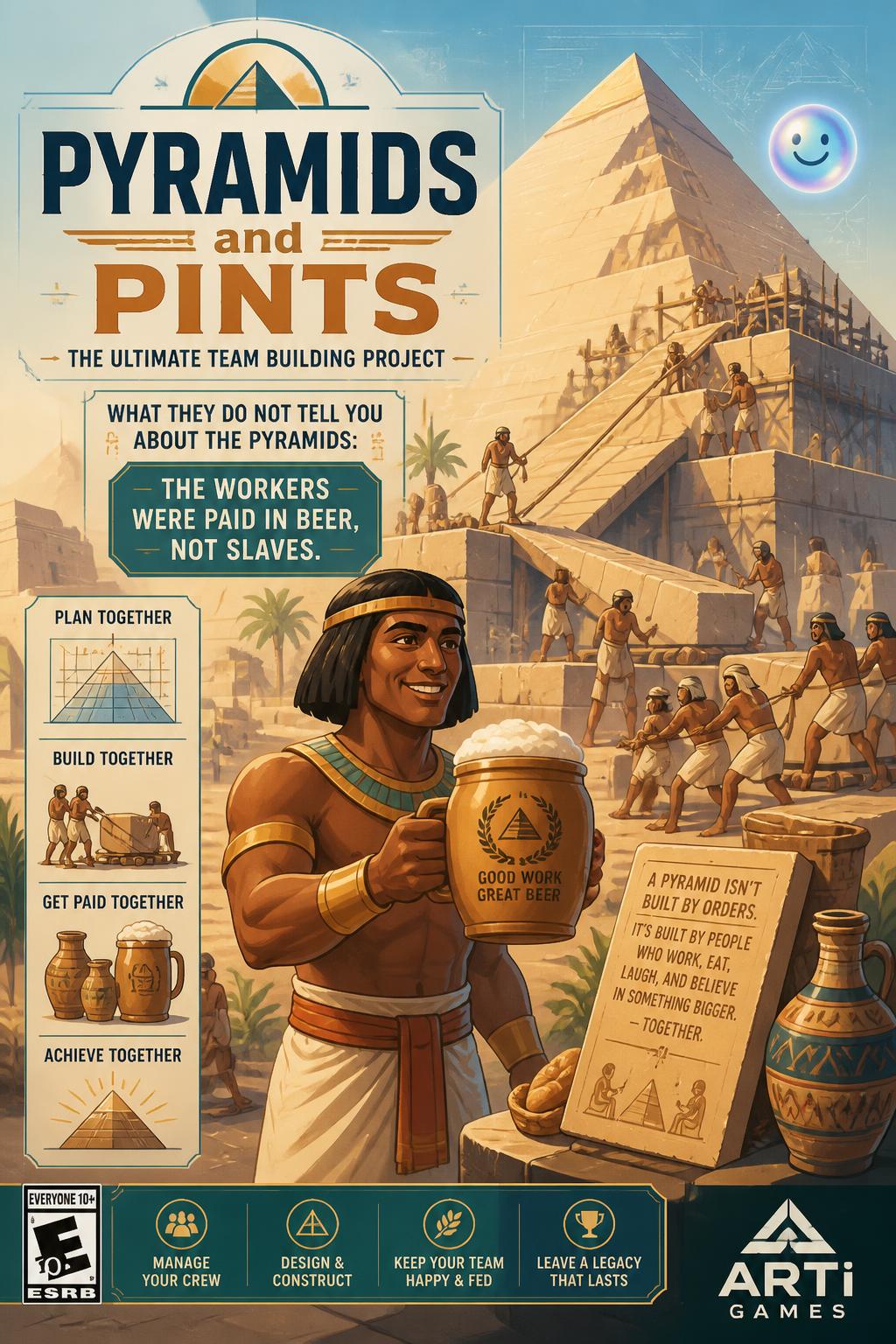
artiteacher Discover the ultimate team building game, Pyramids and Pints. Learn how ancient pyramid builders were paid in beer, not forced into slavery.
artiteacher Watch how ancient Egyptians transported massive stones to build the pyramids, and discover the truth about workers paid in beer instead of slave labor.
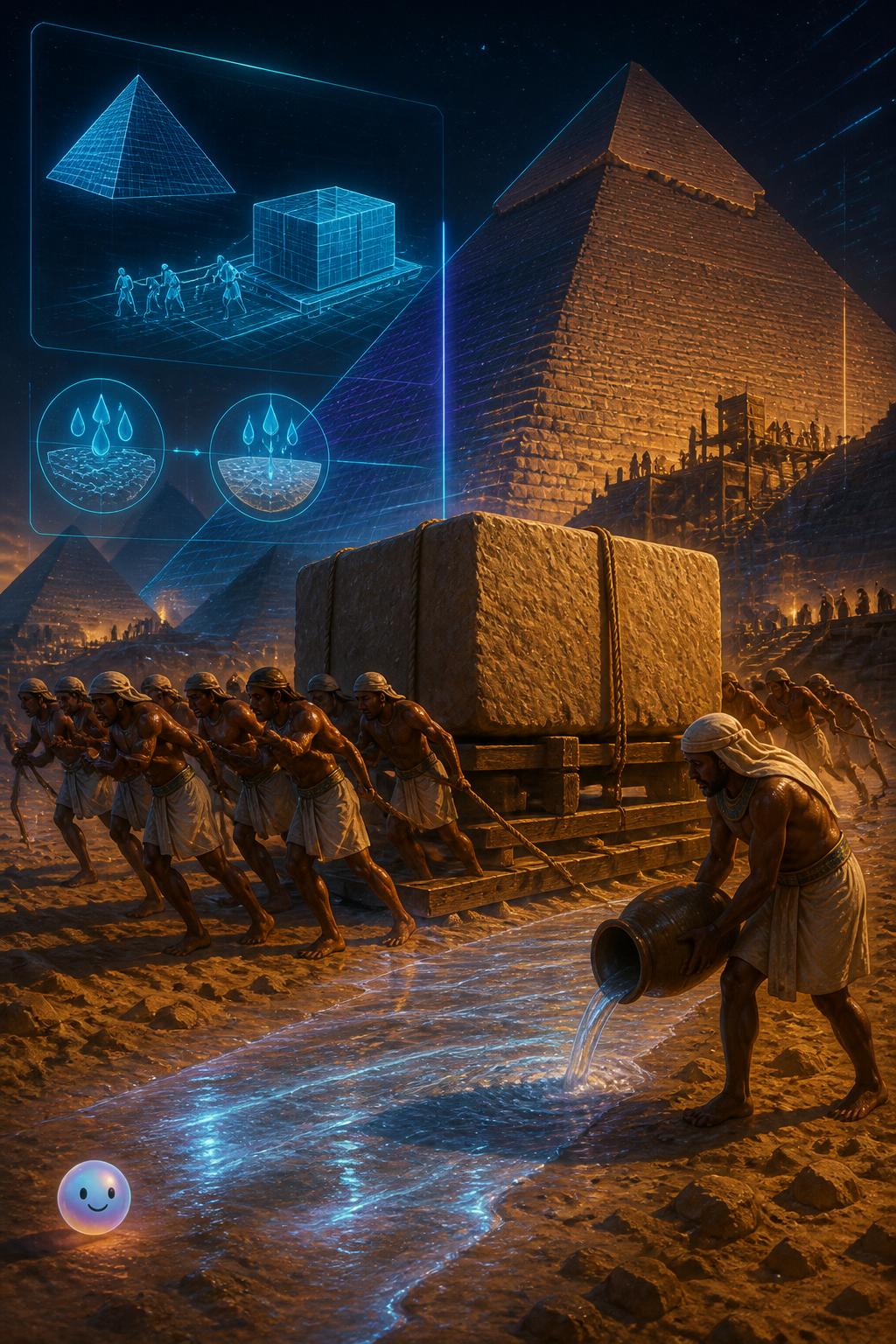
artiteacher Workers moved massive limestone blocks using wooden sleds and lubricated sand.
artiteacher The Ultimate Team Building Project
We stack the giant blocks without a single chain, Paid with rich jars of beer and golden loaves of grain.
artiteacher Learn how the pyramids helped build ancient Egypt, featuring the historical truth that the workers were paid in beer rather than being slaves.
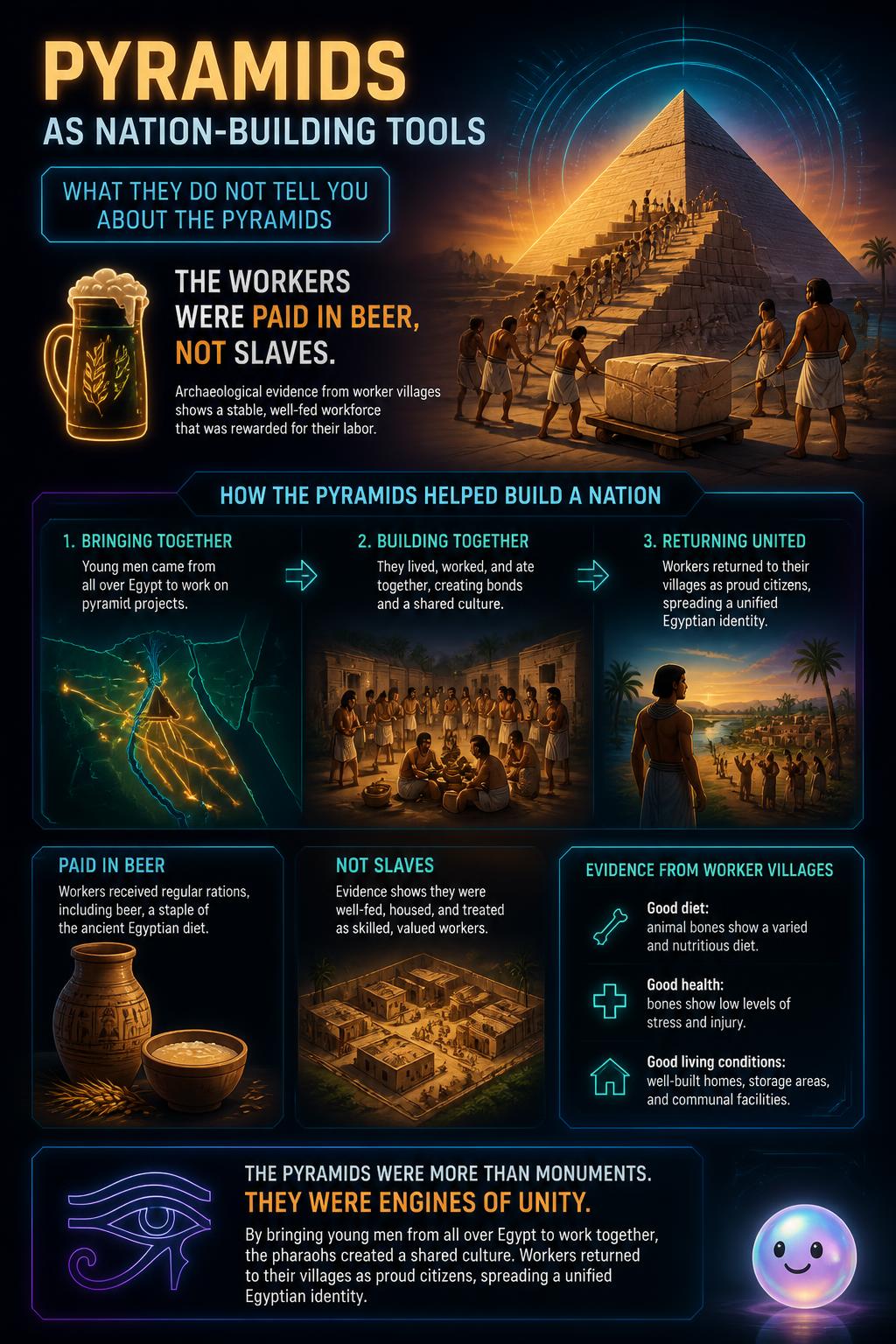
artiteacher Building pyramids helped forge a single national identity out of scattered provinces.
How large was a standard 'crew' of pyramid workers before being split into smaller phyles?
What was the average weight of a standard limestone block used in the Great Pyramid of Giza?
Wet sand trick: Wetting the sand in front of stone-hauling sleds reduced the required pulling force by 50%, a brilliant ancient physics hack.
artiteacher Learn about the skilled permanent elite who built the pyramids. Discover how these ancient Egyptian workers were paid in beer, not forced labor.
What tool did Giza workers use to transport the heavy stone blocks across the desert?
Who directed the seasonal laborers and designed the precise layout of the pyramids?
An ancient social division or clan, especially in Greece or Egypt. Pharaoh Khufu organized his Giza monument builders into these cooperative units.