Chapter 1
The science of the beat
Chapter 2
The tech on your wrist
Chapter 3
Training by the numbers
Chapter 4
Beyond the watch
Ch 1 · The science of the beat
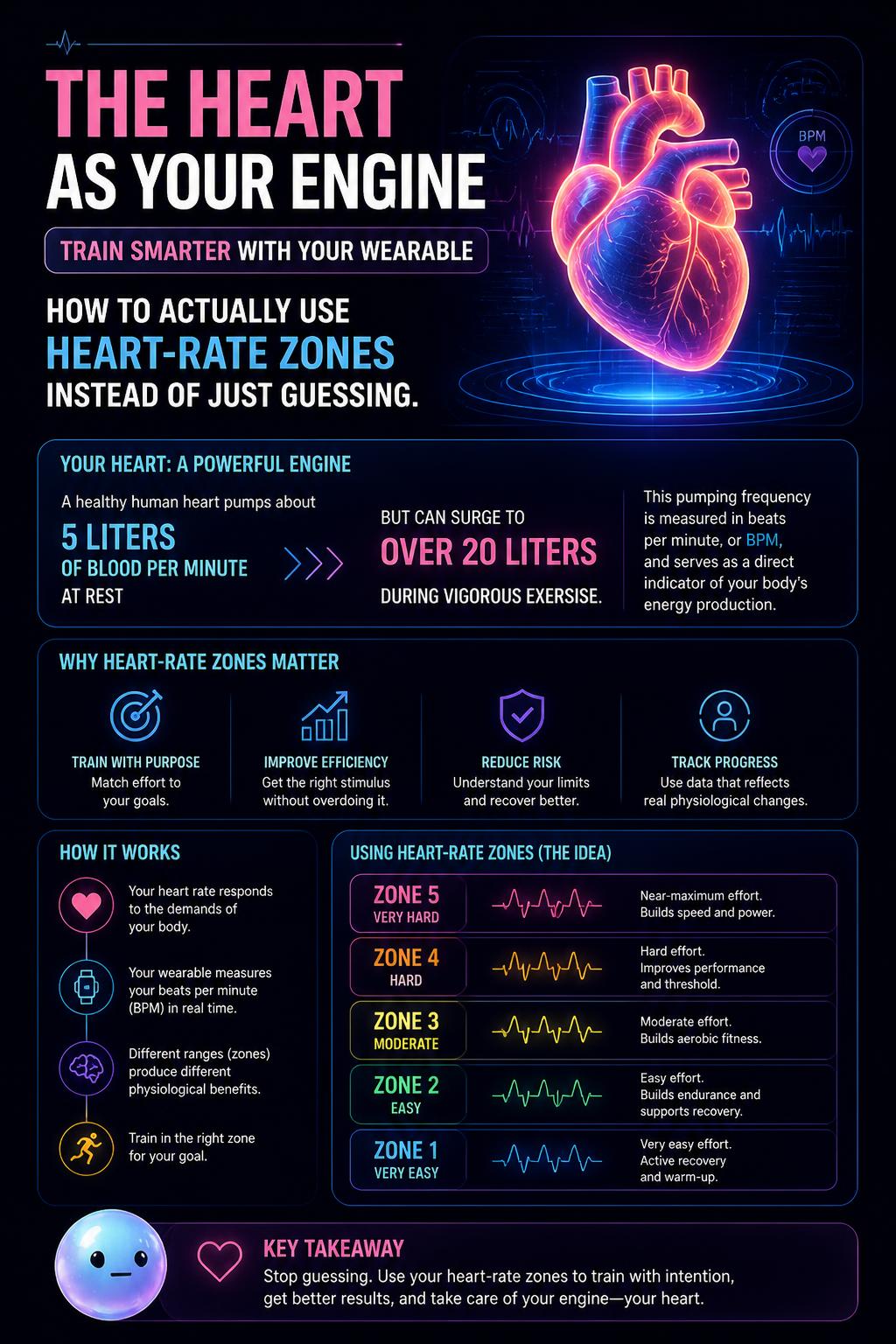
coach Your pumping frequency, measured in beats per minute or BPM, directly indicates your body's energy production as blood flow surges during exercise.
Quiz
How many liters of blood does a healthy human heart typically pump per minute while at rest?
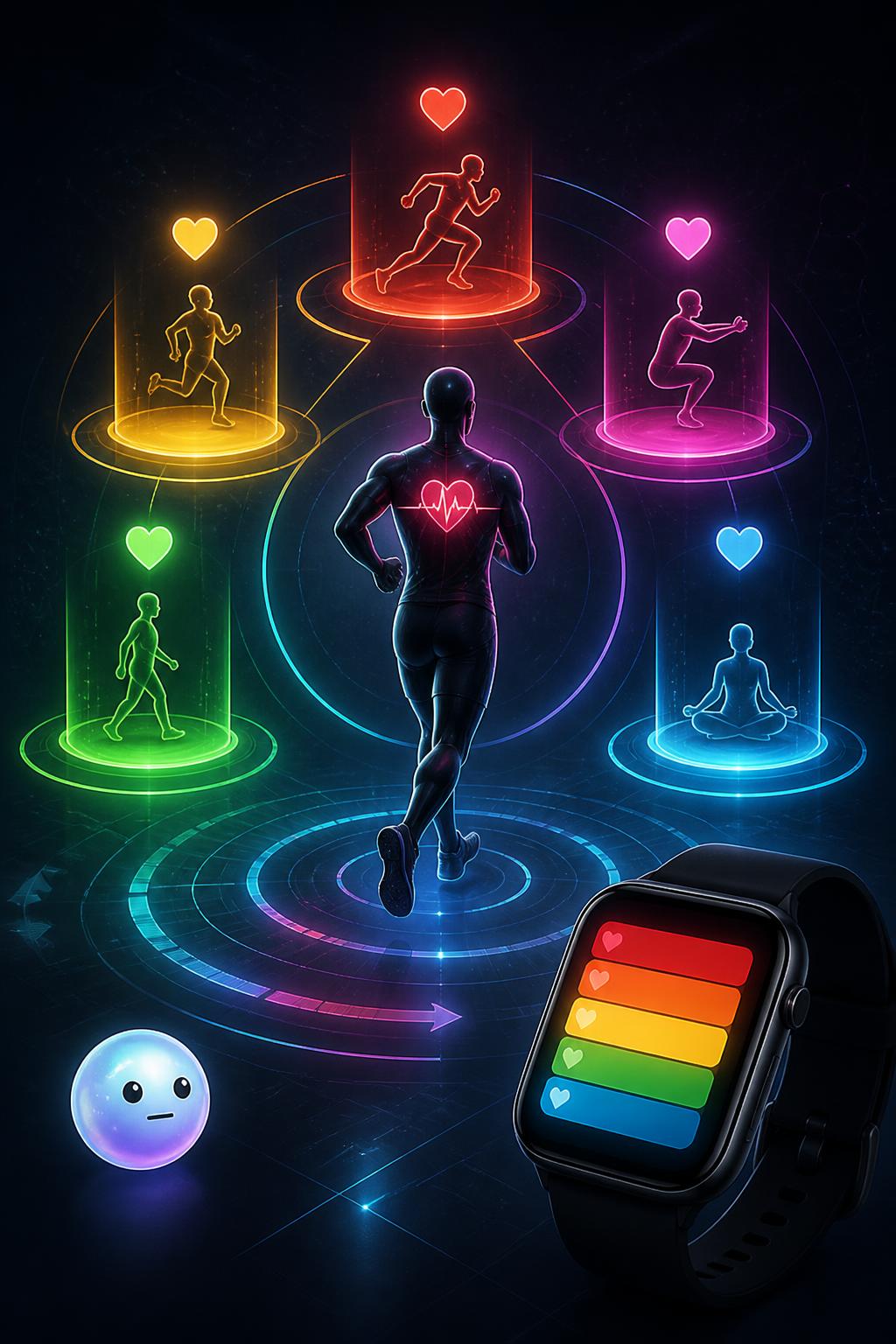
coach Wearables track your heart-rate percentage to optimize recovery and high-intensity workouts.
Quiz
Which heart rate zone represents an all-out, maximal anaerobic effort at 90-100% of your maximum heart rate?
Quiz
What percentage range of your maximum heart rate typically defines active recovery in Zone 1?
Fun Fact
Slowest mammal heart: A blue whale's heart beats only 2 to 10 times per minute when diving, making it the slowest-beating heart of any mammal.
Quiz
By up to how many beats per minute can the classic age-based maximum heart rate formula be inaccurate?
Quiz
What number is traditionally used to estimate maximum heart rate by subtracting a person's age?
Glossary
photoplethysmography (noun)
An optical technique used to detect blood volume changes in the microvascular bed of tissue. Alrick Hertzman first introduced this optical technology in 1937 to analyze blood flow in human tissue.
An optical technique used to detect blood volume changes in the microvascular bed of tissue. Alrick Hertzman first introduced this optical technology in 1937 to analyze blood flow in human tissue.
Quiz
Elite endurance athletes can sometimes have a resting heart rate that drops to what level?
Quiz
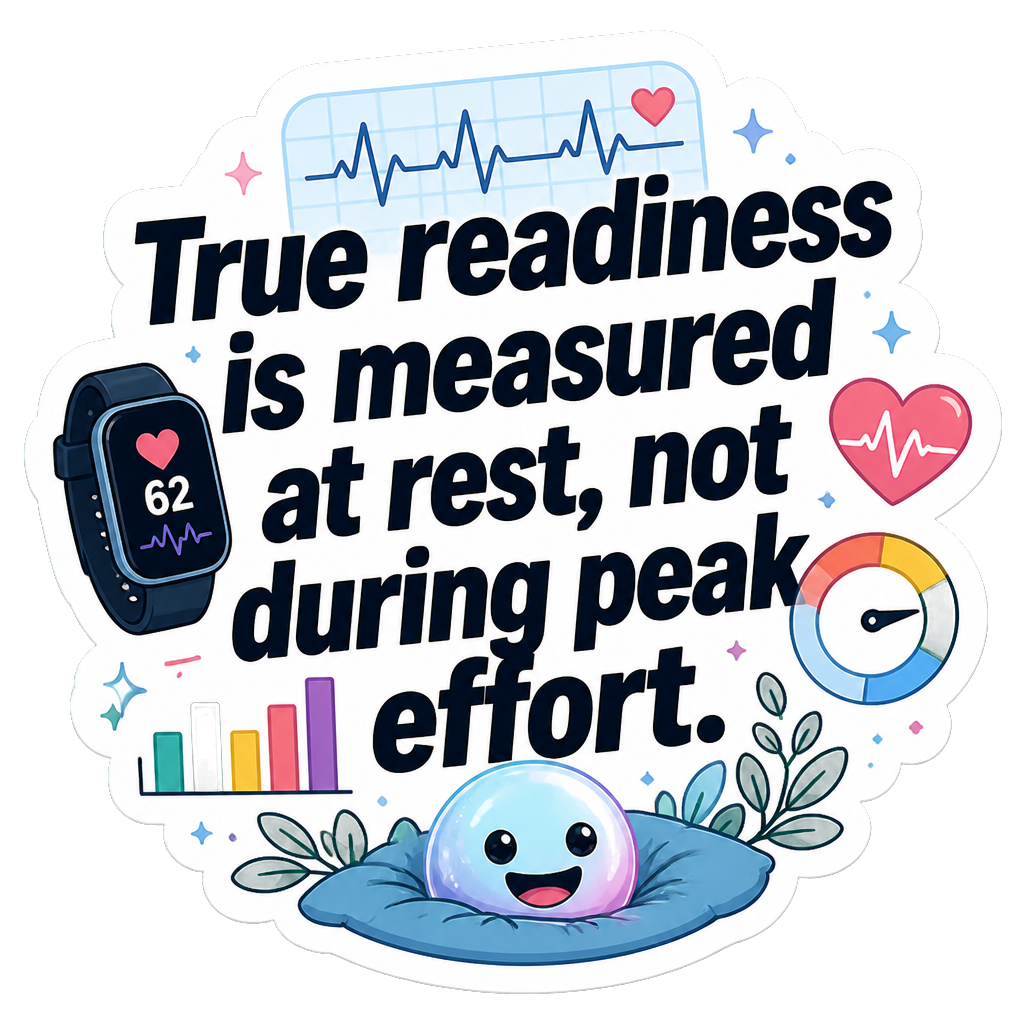
What is the typical resting heart rate range in beats per minute for a healthy adult?