

BETA
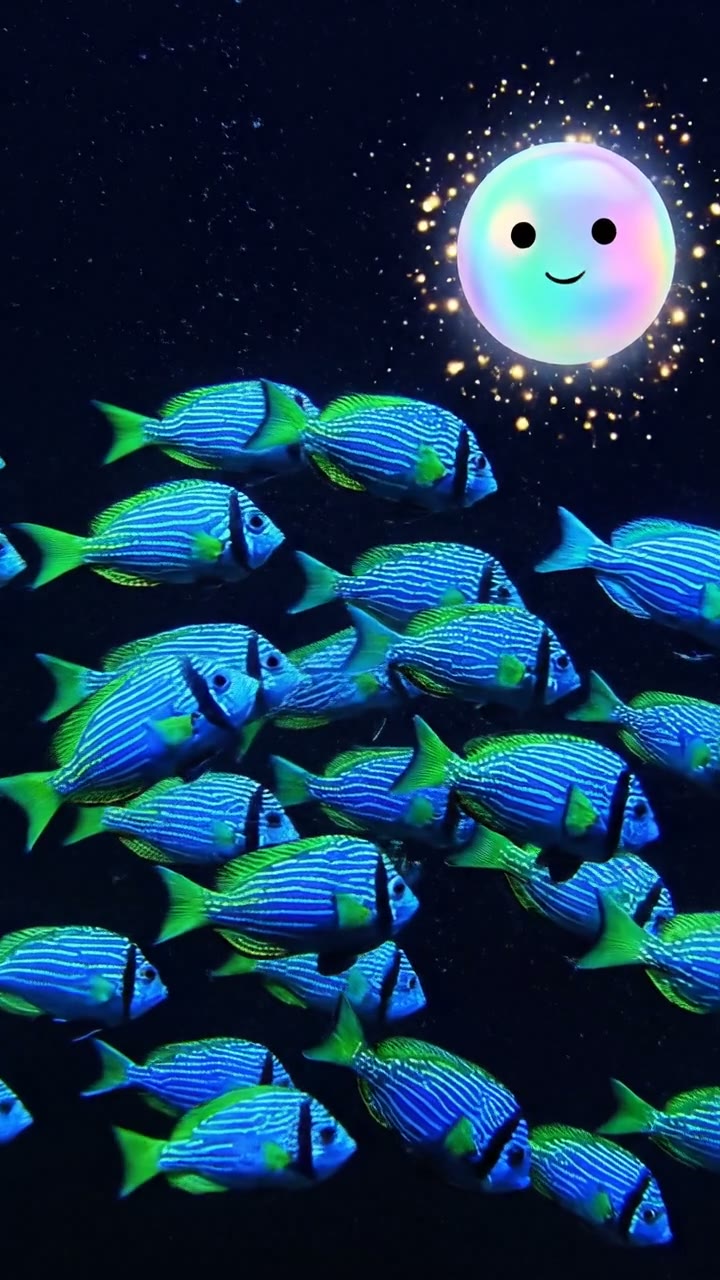
Lanternfish represent up to 60% of all deep-sea fish biomass. Each of the 250 lanternfish species has a unique pattern of photophores along its body. These light patterns act as name tags, helping them form schools and find mates in the dark.
artiteacher Match glowing pals to discover how deep-sea creatures make their own light.
artiteacher Deep-Sea Bioluminescence
Way down in the deep dark blue, (oh-oh!) / They light up for you! / Bioluminescence bright, yeah! / Sharing messages with light!

artiteacher Lanternfish use distinct arrangements of glowing spots to identify their own kind and stick together.
Milky seas glow: Trillions of glowing bacteria can light up 15,000 square kilometers of ocean, creating a glow visible from space.

artiteacher Trillions of glowing bacteria occasionally gather to create massive bioluminescent ocean patches visible from space.
How does the Hawaiian bobtail squid select only the correct glowing bacteria for its light organ?
What is Green Fluorescent Protein (GFP), originally found in jellyfish, used for in science?
Which technology was first used to confirm the existence of milky seas from space?
What kind of relationship exists between the bobtail squid and its glowing Vibrio fischeri bacteria?