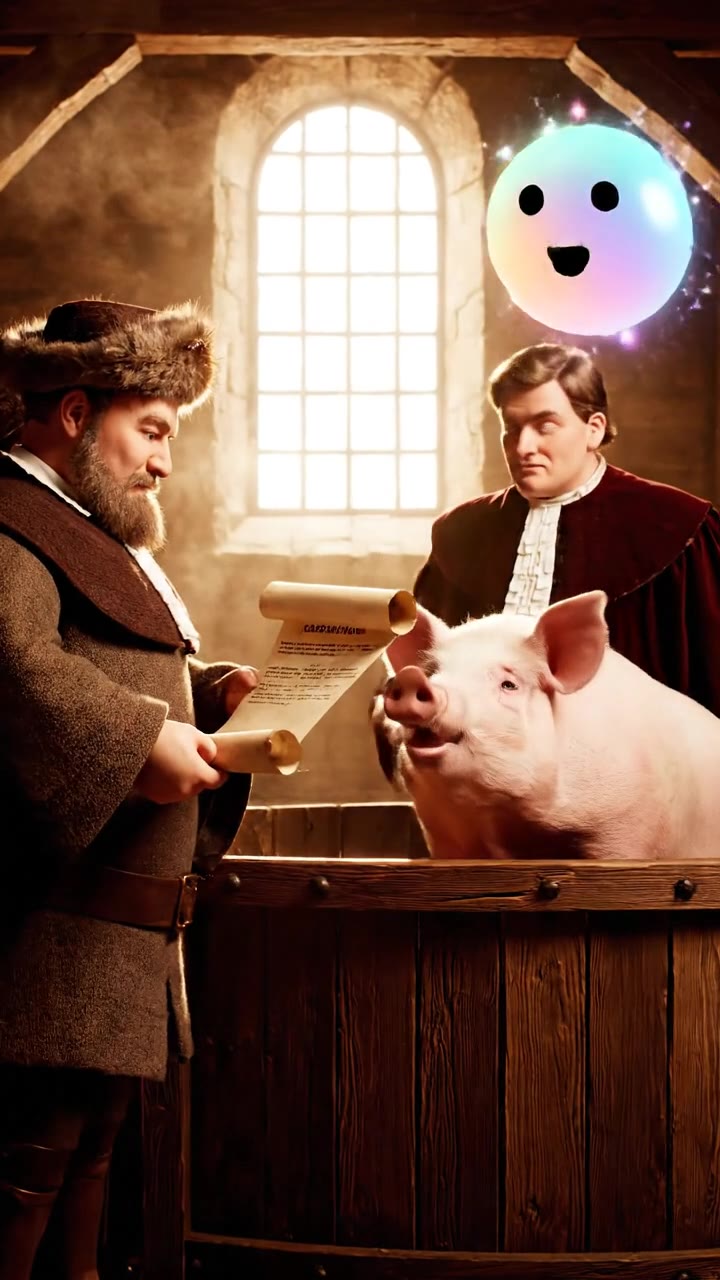
The pig in the dock
In 1386, a pig in Falaise, France, was arrested, dressed in human clothes, and put on trial for injuring a child. The local court found the animal guilty and sentenced it to public execution, demonstrating how medieval communities applied human laws to animals to maintain moral order.
Animals in the medieval courtroom
Wild cures and the four humors
Forensic flies and golden age science

Animal lawyers: In 1508, a French lawyer successfully defended rats in court by arguing they couldn't travel safely due to cats.

A formal legal proceeding in which a non-human animal is prosecuted for a crime. In 1386, a French court famously sentenced a pig to public execution for killing an infant.
How did medieval courts make animal trials resemble human trials as closely as possible?
Which Swiss city held a famous trial in 1478 that ended with beetles being banished?
Which type of court handled wild pests like locusts and weevils in medieval Europe?
Which animal was famously dressed in human clothes and executed in Falaise, France, in 1386?
In medieval France, what happened to a pig's owner if their pig committed a crime?
What spiritual punishment did medieval church courts threaten to use against disobedient locust swarms?
In 1508, how did lawyer Barthélemy de Chasseneuz excuse his rat clients from showing up in court?
What was the main philosophical reason for putting animals on trial in the Middle Ages?
