

BETA
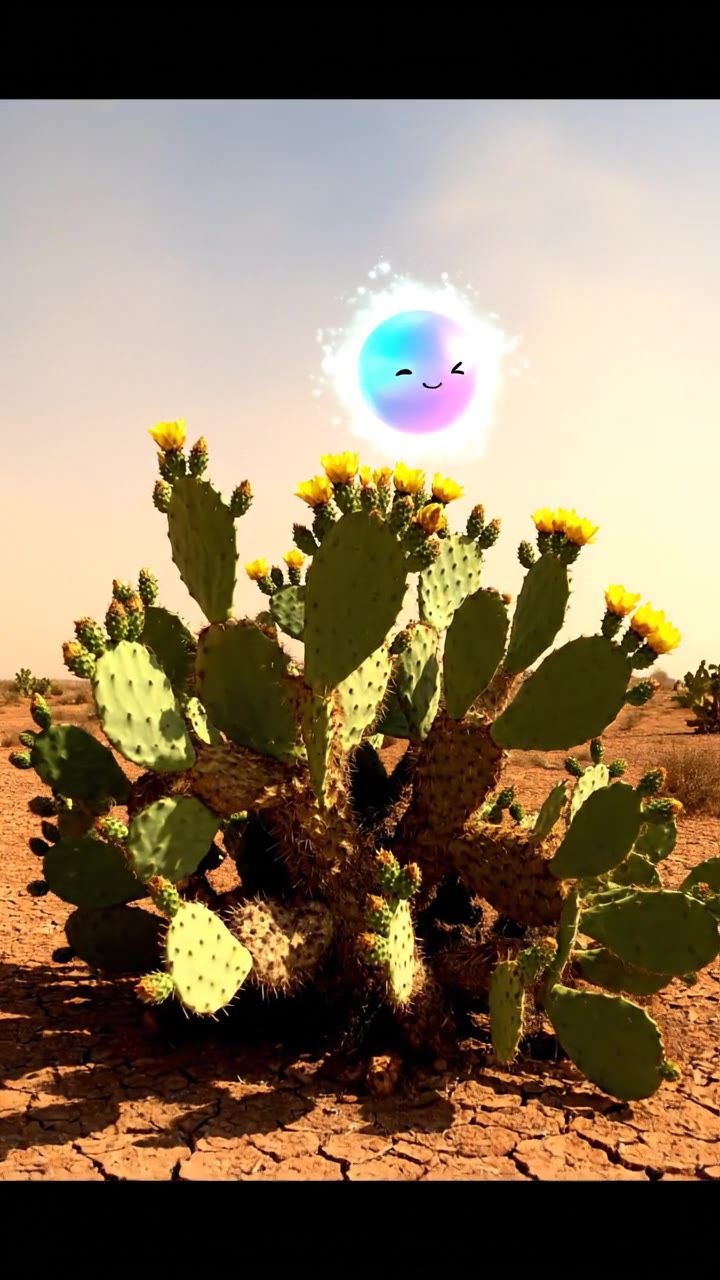
The genus Opuntia, or prickly pear, is incredibly resilient, surviving freezing temperatures in Canada and arid heat in Argentina. Their flat pads are modified stems, and their bright red fruits, called tunas, have been eaten for 9,000 years.
artiteacher Drag cacti to their native deserts to discover how they master extreme survival.
artiteacher Cacti of the Americas
Accordion pleats! Accordion pleats! Swell up, swell up! Watch me hold the rain!
Saguaro age: A wild saguaro cactus grows so slowly that it takes up to 75 years just to sprout its first arm.
How long does it typically take for a wild giant saguaro cactus to grow its very first arm?
What is the traditional Spanish name for the edible, bright red fruit of the prickly pear cactus?
How do high-altitude cacti in the Andes Mountains protect themselves from freezing temperatures?
What are the flat, leaf-like pads of a prickly pear cactus actually classified as?

