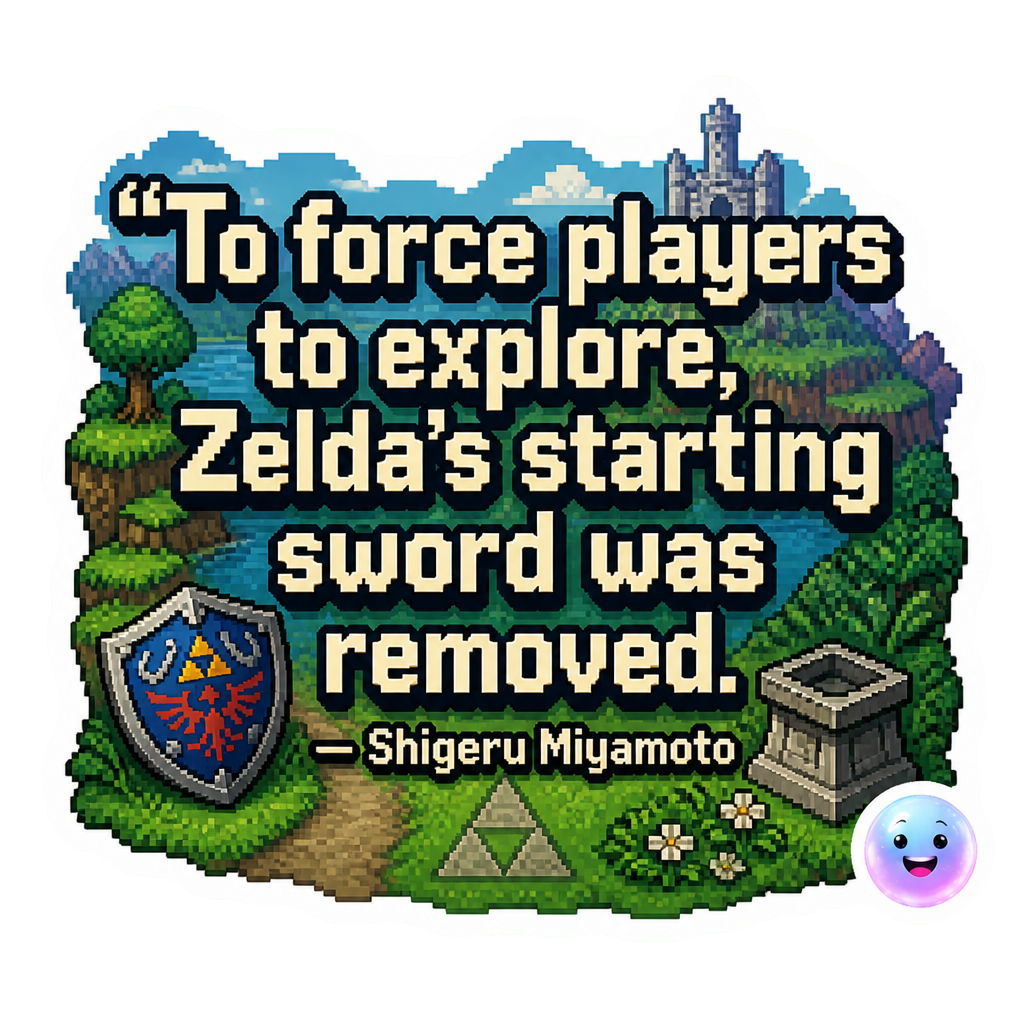
To force players to explore, Zelda's starting sword was removed.
The miniature garden of Shigeru Miyamoto
The architecture of dungeons and lock-and-key design
The hidden science of the chemistry engine
The interactive symphony of sound and music

nintendo Developers bypassed the console's tight 128-kilobyte memory limit using a grid of 128 screens. Transitional scrolling tricked the player's brain into feeling they explored a seamless continent.
nintendo Shigeru Miyamoto wandered the caves of Sonobe with a lantern during the 1950s. This childhood sense of mystery shaped the original 1986 Nintendo Entertainment System game.
nintendo Confused testers in 1986 struggled when starting with a sword. Developers removed the weapon, forcing players to enter the cave and speak with the old man to survive.
nintendo Miyamoto's Miniature Garden
Box garden, box garden / A world inside a tiny space
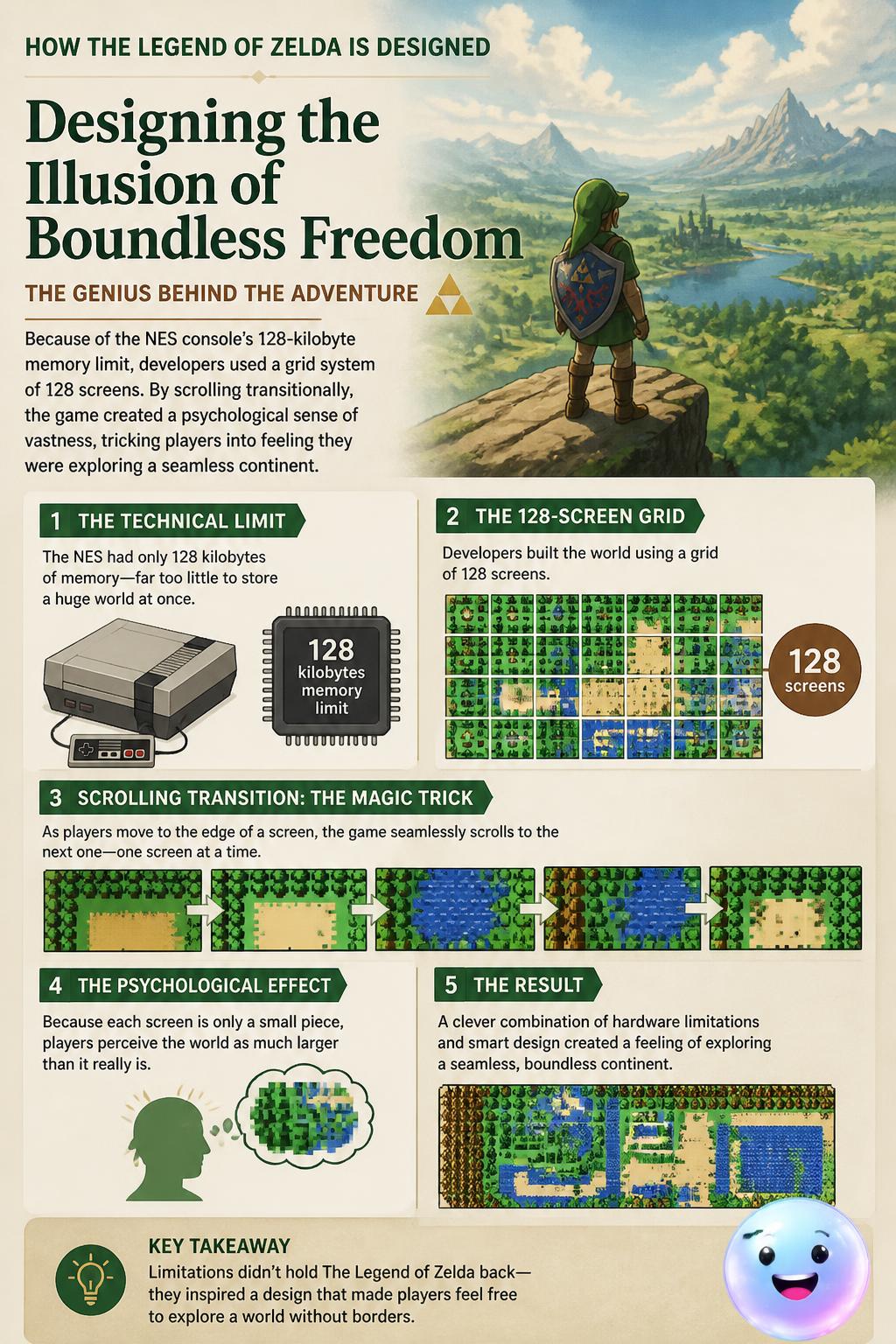
nintendo This diagram shows how transitional scrolling connects the individual screens of the map.
First save file: The original 1986 Legend of Zelda was the first home console game to feature an internal battery backup, allowing players to save their progress directly.
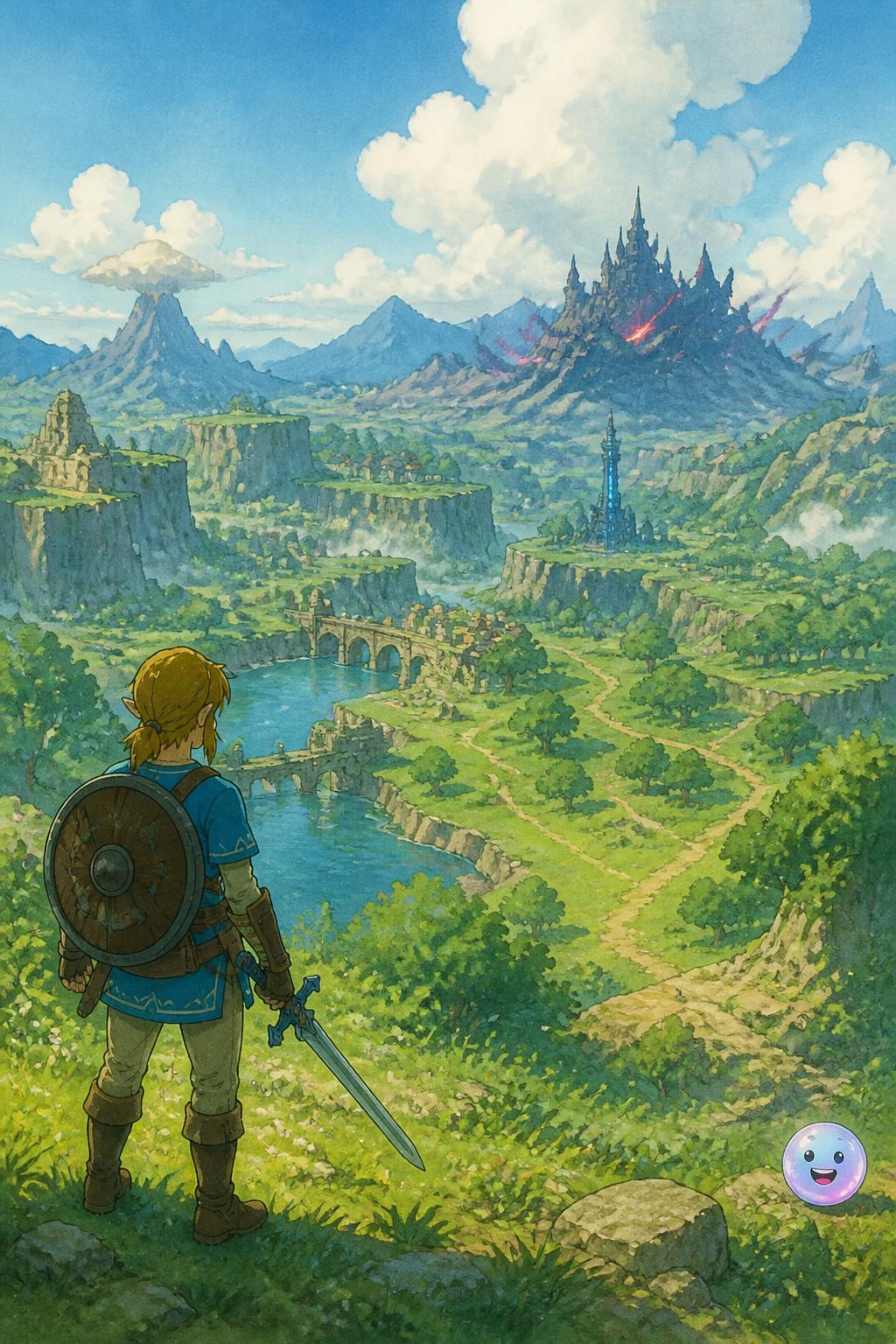
nintendo A painterly watercolor illustration of a traditional Japanese miniature garden inside a box.
A traditional Japanese miniature garden arranged in a shallow box. Shigeru Miyamoto applied this concept to design the exploratory world of the 1986 Nintendo release.
Which designer co-created the original Legend of Zelda alongside Shigeru Miyamoto?
Why did Shigeru Miyamoto remove the sword from Link's inventory at the very start of the original 1986 game?
What is the Japanese term 'hakoniwa,' which inspired the compact, secret-filled world design of Zelda?
What real-life object did Shigeru Miyamoto use to explore the dark caves of his childhood?
Which rural Japanese town did Shigeru Miyamoto explore as a child, inspiring the caves in The Legend of Zelda?