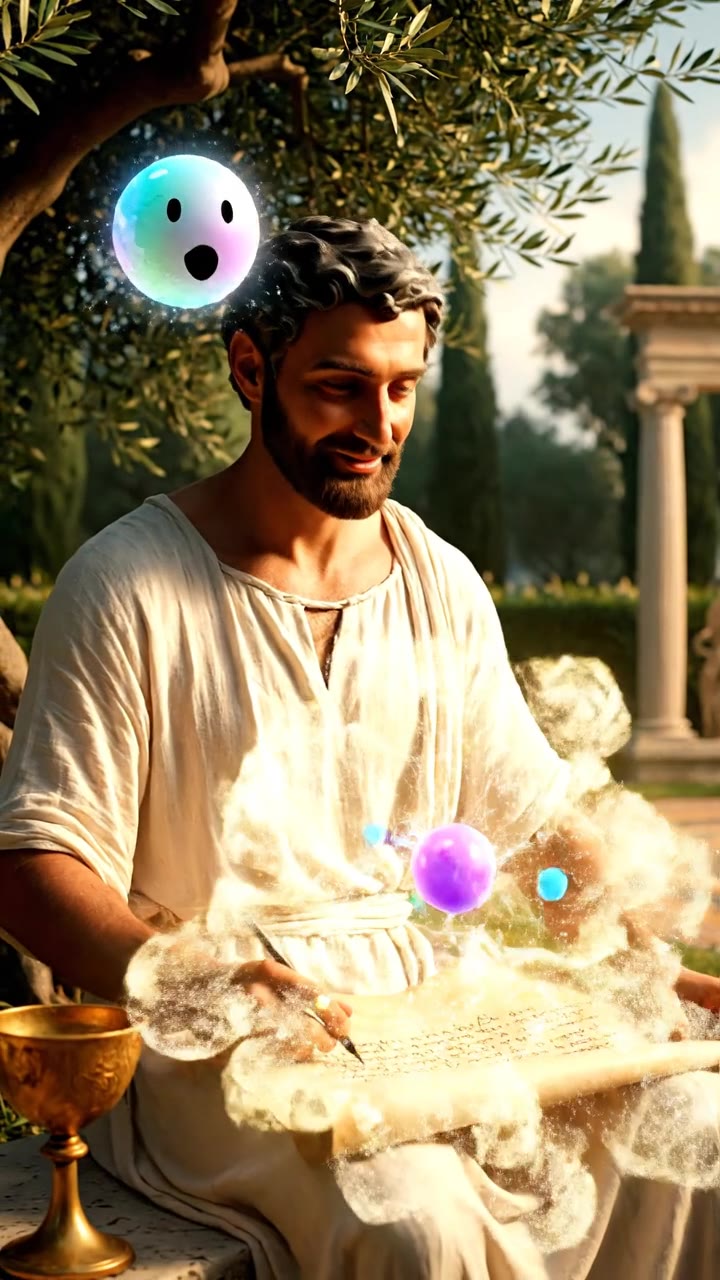
Lucretius and the Poetry of Atoms
Around 50 BCE, the Roman poet Lucretius wrote De Rerum Natura, an epic poem explaining Epicurean physics and ethics. By describing a universe made of atoms and void, he aimed to free Romans from the fear of gods and death.
The Garden of Epicurus
The anatomy of desire
Friendship over stuff
The misunderstood legacy

artiteacher Rivals falsely accused Epicurus's school of hosting wild parties, ignoring his teachings on finding pleasure in moderation.
artiteacher Explore Lucretius's poetry of atoms and Epicurus's philosophy on real pleasure versus consumerism. Learn how to find happiness with less.
artiteacher Discover how the Villa of the Papyri teaches us Epicurus's philosophy on real pleasure, overcoming consumerism, and finding happiness with less.
artiteacher Learn about Philodemus the Syrian philosopher and Epicurean views on real pleasure versus consumerism. Discover how to be happy with less in this video.

artiteacher Sort simple pleasures from costly traps to discover Epicurus's secret to happiness with less.
artiteacher Epicurean Pleasure
Simple is sweet, Simple is sweet, We don't need gold to feel complete.
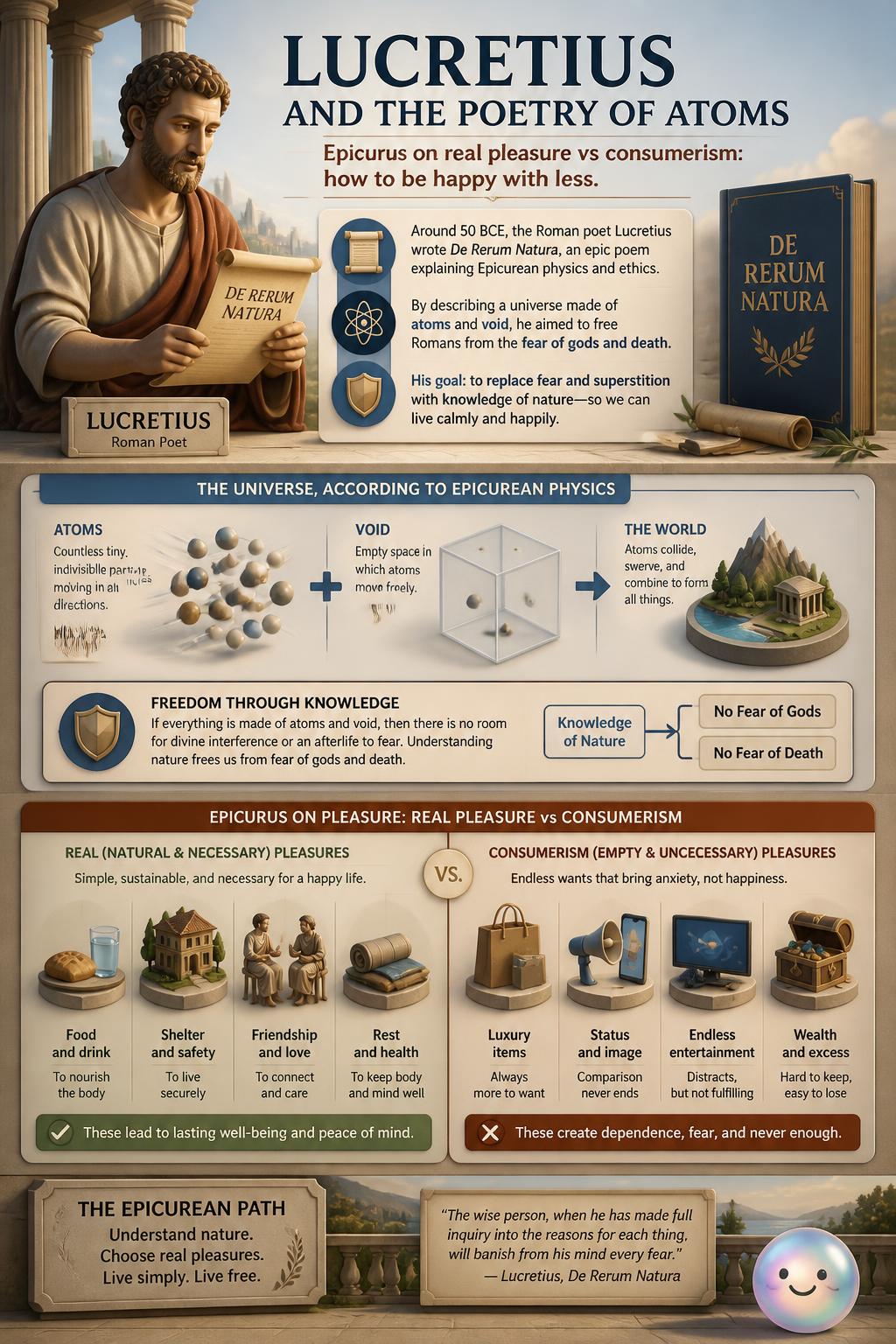
artiteacher The Roman poet Lucretius wrote "On the Nature of Things" in 50 BCE, explaining Epicurean science and philosophy to Rome.
The charcoal library: The carbonized scrolls found at Herculaneum in 1752 were so badly burned that workers initially mistook them for ordinary lumps of charcoal.
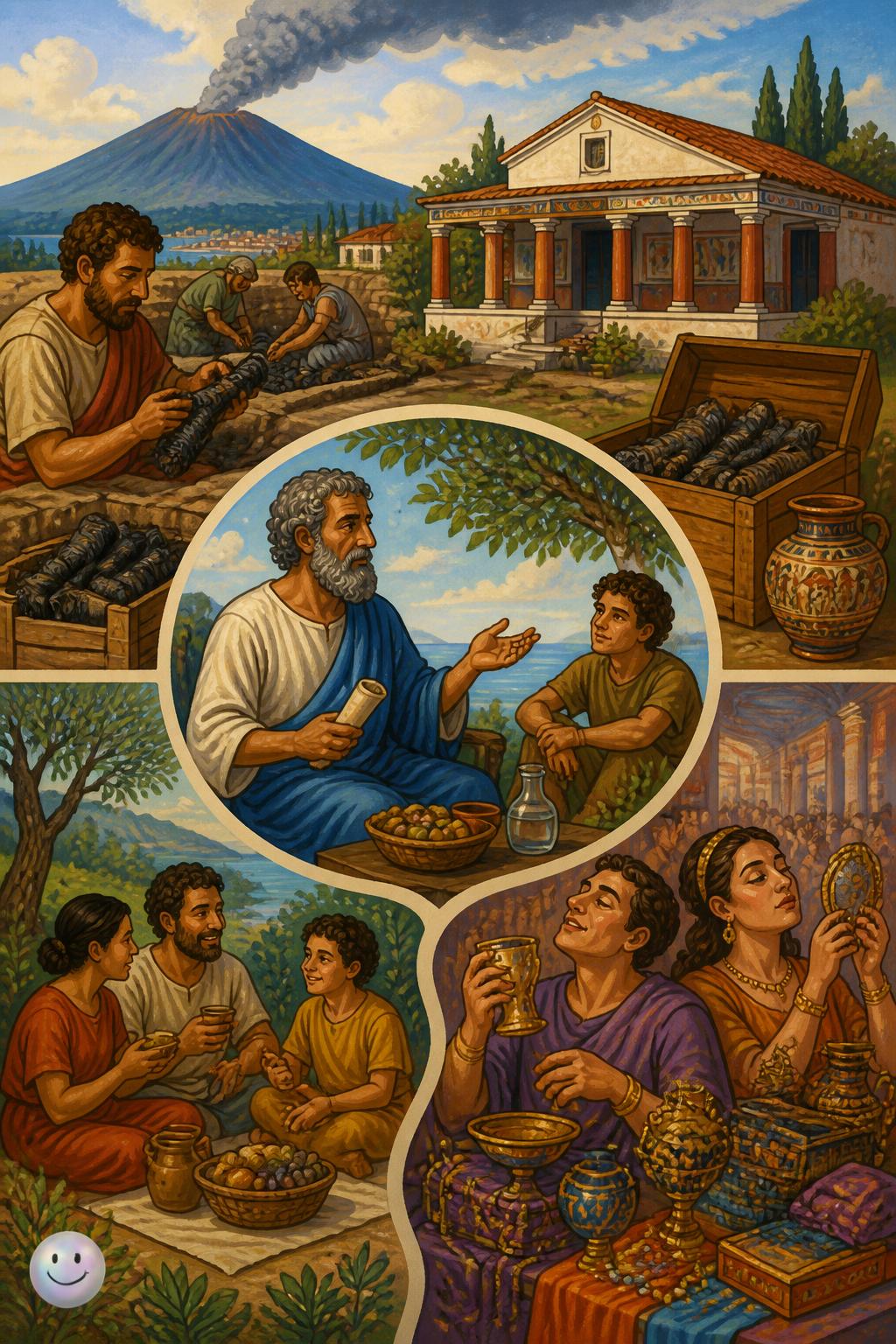
artiteacher Archaeologists in Herculaneum discovered a library of carbonized papyrus scrolls containing lost Epicurean texts buried by Mount Vesuvius.
A person devoted to sensual pleasure and luxury, especially the enjoyment of fine food and drink. In 306 BC, Epicurus established an Athenian garden community where he lived on simple bread and water.
Which rival philosophical group was most famous for actively debating and criticizing the Epicureans in ancient Rome?
Which Roman poet wrote the famous philosophical work "On the Nature of Things" to popularize Epicurean ideas?
What does the modern English word "epicurean" mean, which is actually the opposite of what Epicurus taught?
What major natural disaster in 79 CE buried and preserved the Epicurean library at Herculaneum?
Who was Philodemus of Gadara, whose writings were recovered from the carbonized Roman scrolls?
In which ancient Roman town was the Villa of the Papyri, containing thousands of Epicurean scrolls, discovered?
What high-tech method do modern scientists use to read the fragile, unrolled Herculaneum scrolls without destroying them?