
BETA
YOUR GOAL
Master of Everything about the telescope
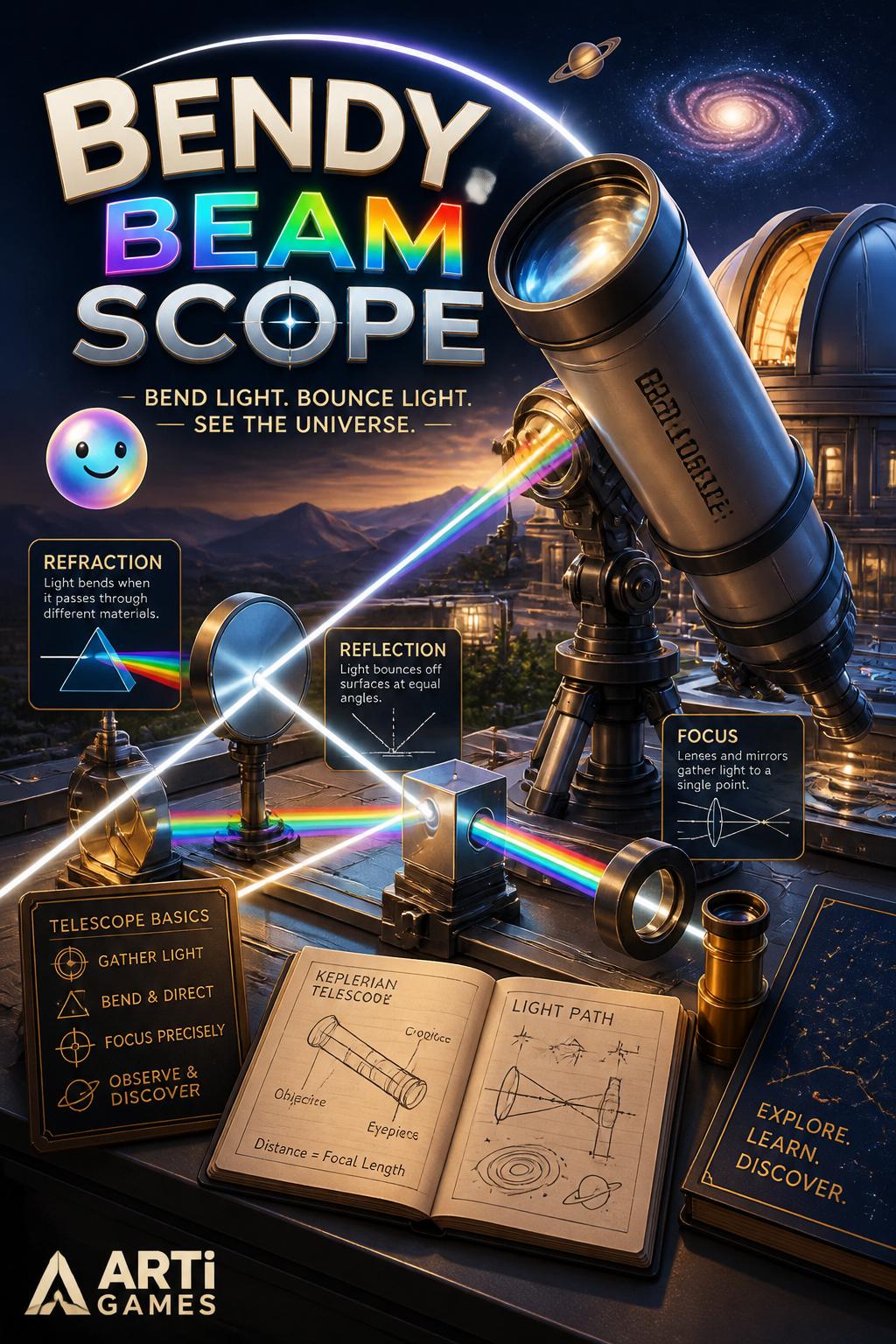
artiteacher Drag lenses to bend light beams to discover how telescopes focus distant starlight.
artiteacher Bending and bouncing light
Eighteen gold mirrors, Catching first light, Stars coming alive!
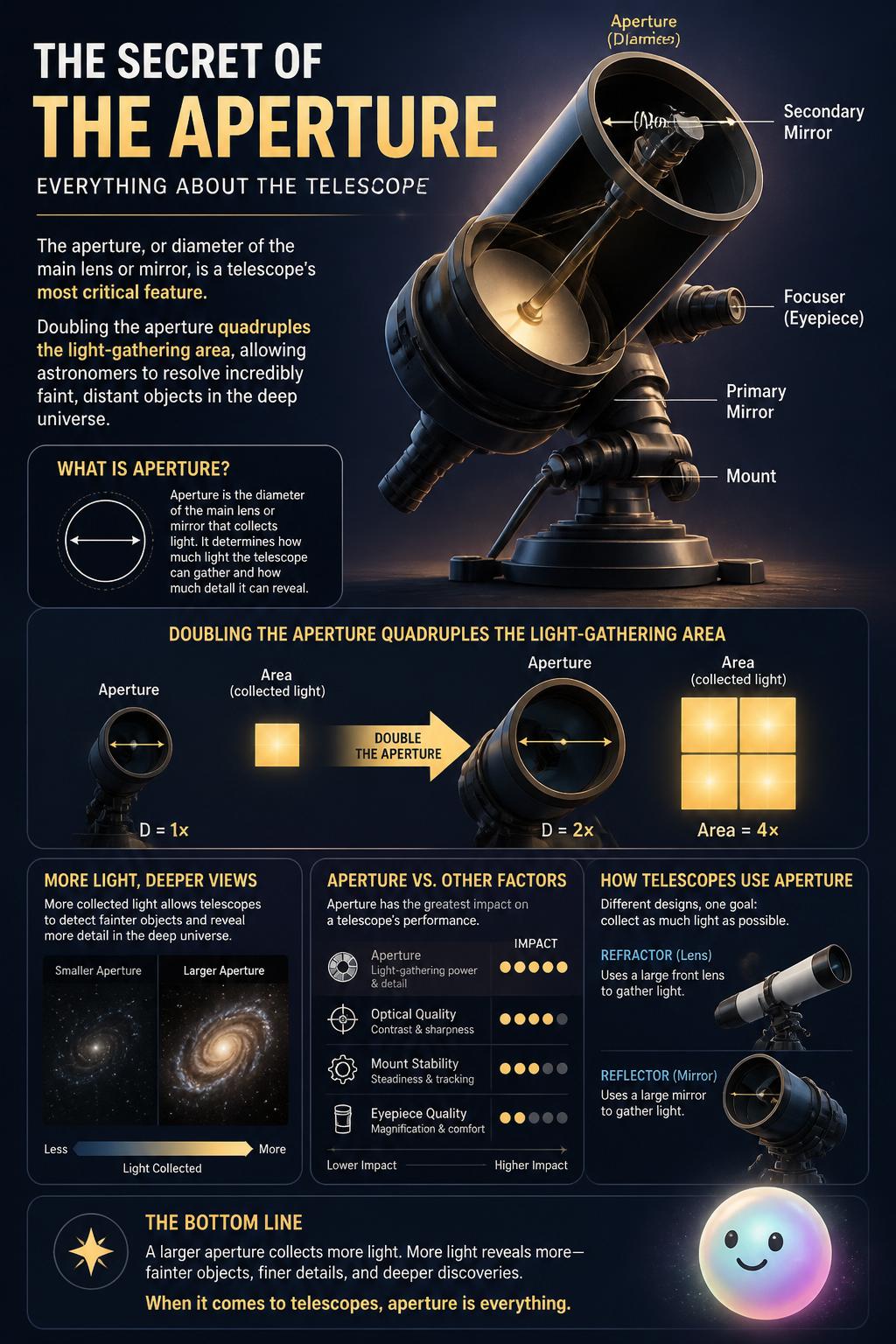
artiteacher A telescope's aperture determines how much light it can collect to see faint objects.
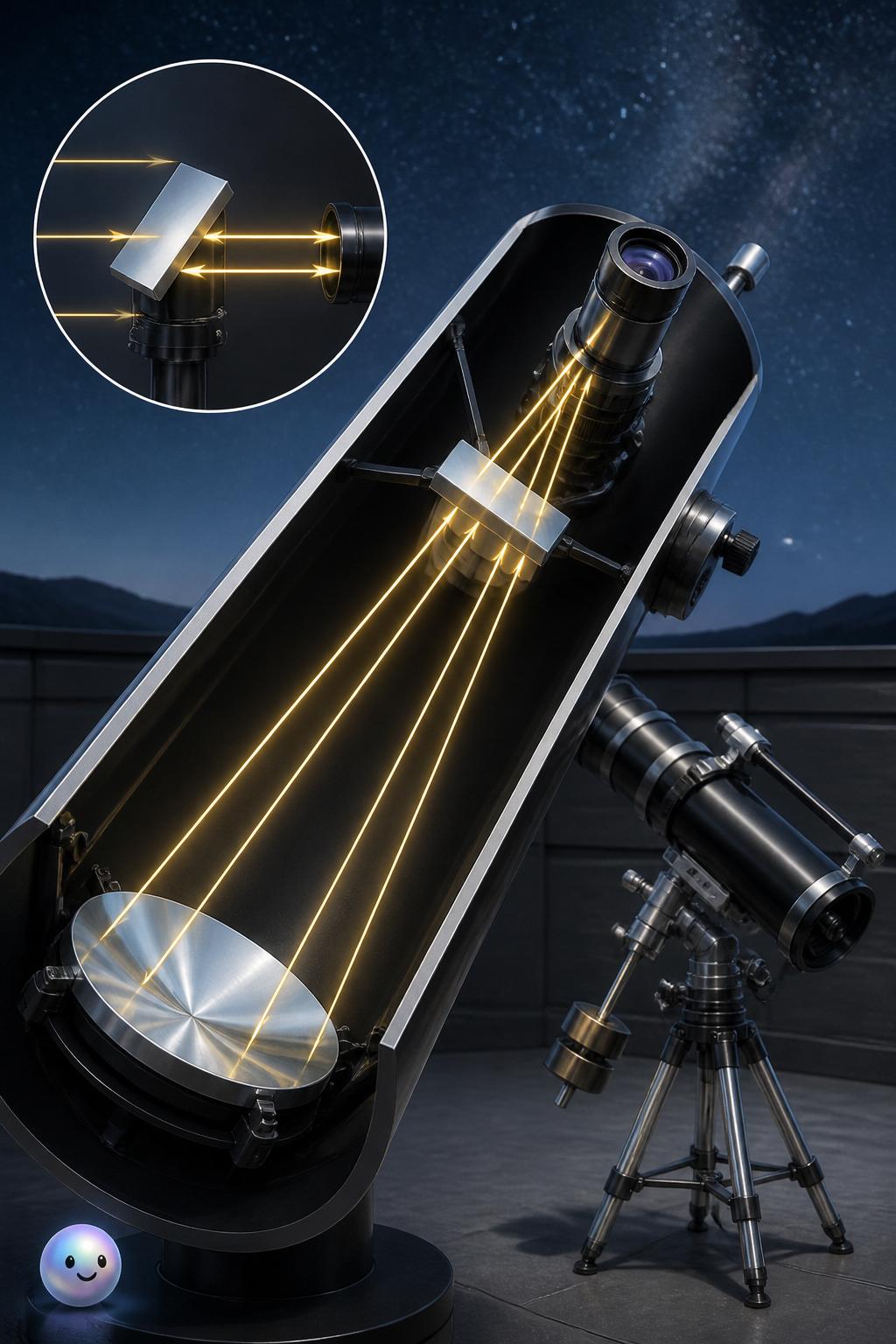
artiteacher Reflecting telescopes use curved mirrors to bounce light to a focal point.
Twinkling stars: Stars only twinkle because their light is bent by Earth's moving atmosphere; from outer space, stars shine with a steady, unmoving glow.
What is the scientific term for the bending of light as it passes from air into glass?
If you double the diameter of a telescope's aperture, how much does its light-gathering area increase?
What technology uses flexible mirrors to correct atmospheric blurring in real-time?
Why are reflecting telescopes preferred over refracting telescopes for very large designs?
Where is the primary mirror located in a standard Newtonian reflecting telescope?