The giant scale of gross domestic product
When money loses its magic
The puzzle of finding a job
The wizards of the interest rate
The government's giant checkbook

marcus Printing money faster than producing goods slowly shrinks the value of cash. Central banks target a two percent annual rate to keep people spending instead of hoarding dollars.
What target annual inflation rate do most major central banks, like the US Federal Reserve, aim to maintain?
What type of inflation occurs when rising costs of raw materials and wages force prices up?

marcus Adjust the interest rate slider to learn how central banks stop runaway inflation.
marcus In 1923, Germany printed massive amounts of marks to pay war debts, triggering extreme hyperinflation. Families burned banknotes for heat while workers bought bread before prices doubled daily.

What happens to the purchasing power of a currency when an economy experiences inflation?
marcus Japan entered its Lost Decades in 1991 when falling prices caused shoppers to delay purchases. This lack of spending forced businesses to cut wages and lay off workers.
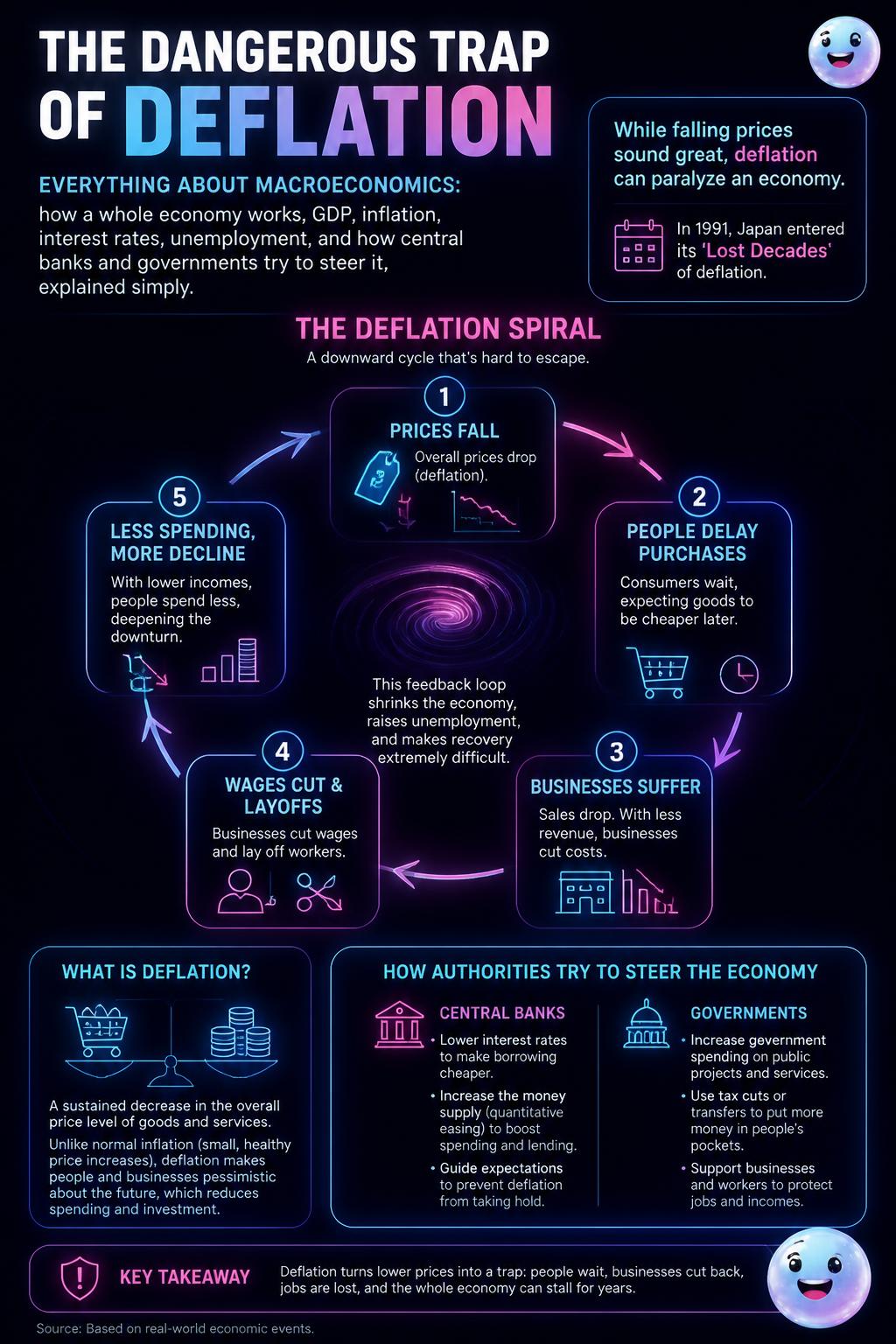
marcus A simple macroeconomic chart illustrates how governments and central banks steer the economy.
Which African nation experienced hyperinflation so severe in 2008 that it printed a 100-trillion-dollar bill?
In which year did Weimar Germany experience its famous hyperinflation, where money became cheaper than firewood?

marcus The United States formalized this system in 1913 using everyday items like milk and gasoline. Today, economists swap outdated cassette tapes for smartwatches to keep measurements accurate.
Which country entered a multi-decade period of deflation and stagnation known as the 'Lost Decades' starting in 1991?
What index did the US Bureau of Labor Statistics introduce in 1913 to track changes in consumer prices?
Zimbabwean trillionaires: During Zimbabwe's peak hyperinflation in 2008, the central bank printed a 100-trillion-dollar bill, which could barely buy a single loaf of bread.
To officially strip a currency of its status as legal tender. In 2016, India implemented this policy to combat corruption and curb the circulation of untaxed paper wealth.