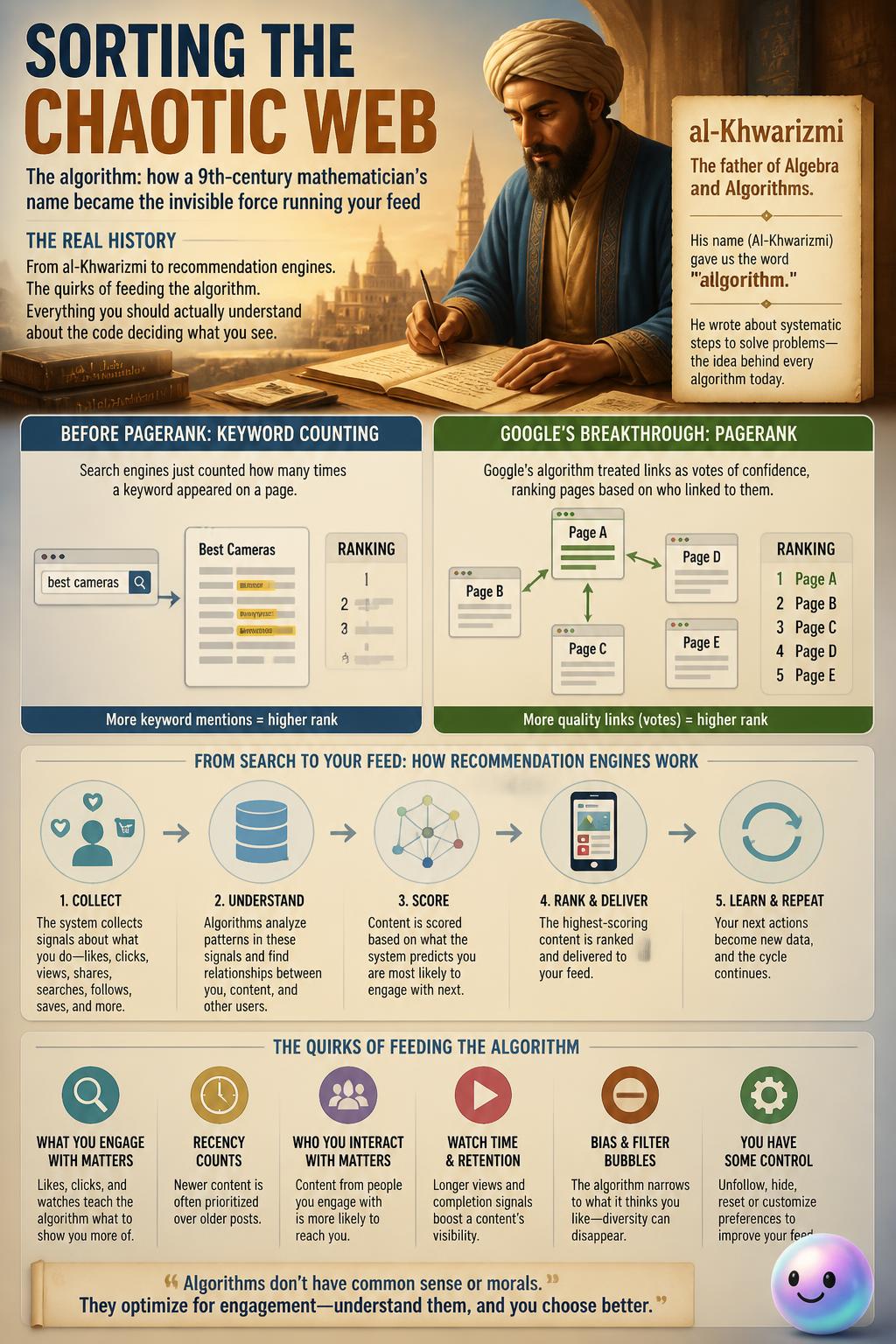
Algorithm History: From Al-Khwarizmi to Feed Engines
In 1998, Google's PageRank algorithm changed the internet by measuring a website's importance through links.
The House of Wisdom and the birth of the recipe
From punch cards to infinite scrolls
Inside the recommendation engine
Outsmarting the machine

futura Early search engines ranked pages by simply counting keyword repetitions. Larry Page and Sergey Brin revolutionized the web by treating links as votes of confidence.
futura While translating a paper on Charles Babbage's mechanical Analytical Engine, Lovelace added her own notes. She wrote an algorithm to calculate Bernoulli numbers, creating the first computer program.
futura Spinning rotors on this electromechanical device ran complex sorting algorithms to break German military codes. This wartime breakthrough saved millions of lives and started modern computer science.
futura Designer Aza Raskin created a clever algorithm that automatically loads new content before you reach the bottom. This seamless design permanently changed how we browse social media feeds.
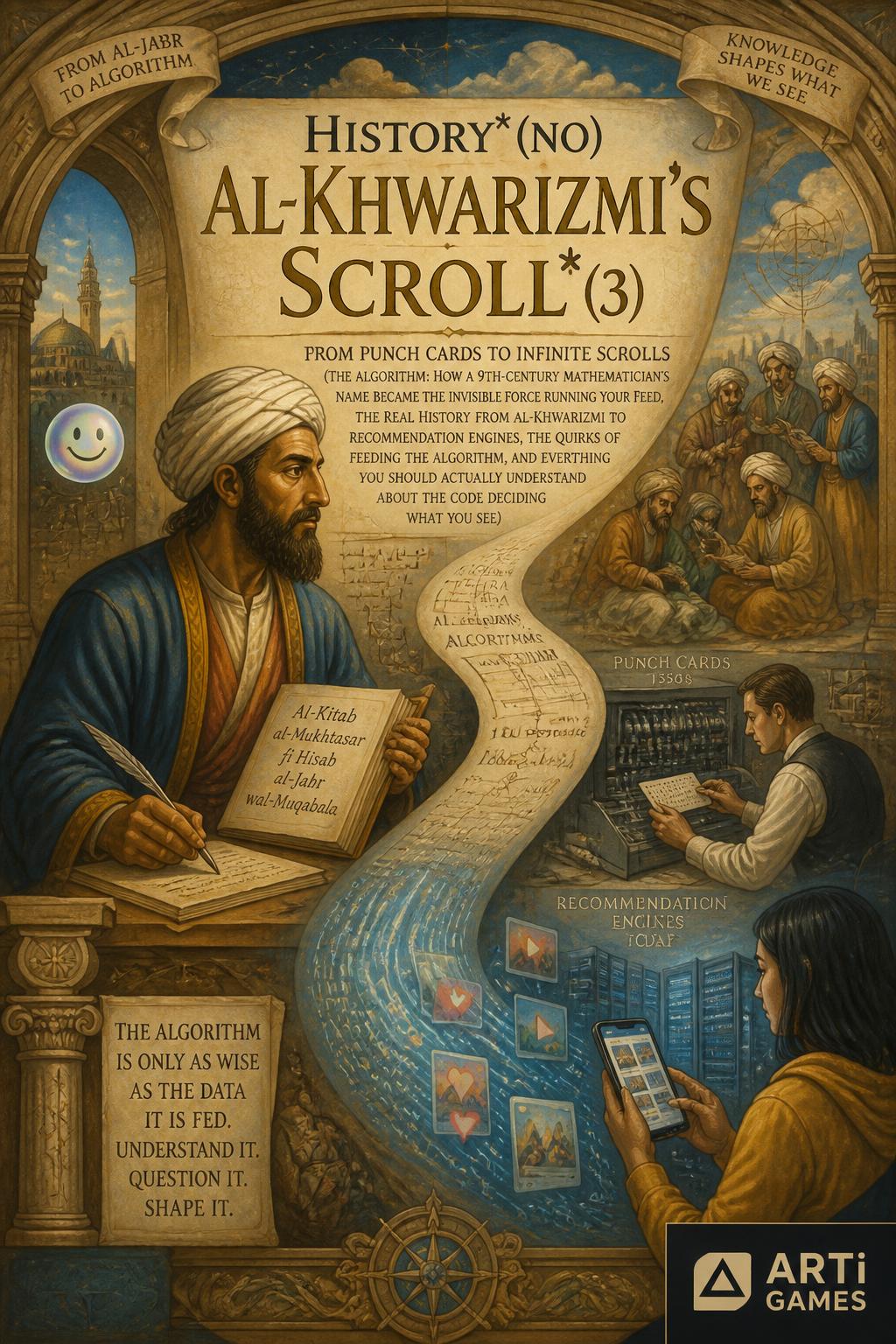
futura Decode Al-Khwarizmi's ancient scroll to learn how 9th-century math became the modern algorithm.
futura Punch Cards to Modern Feeds
We punched the cards to weave the thread (oh, weaved the thread) Now algorithms run your feed instead (yeah, your feed instead)
futura In 1998, Google's PageRank algorithm changed the internet by measuring a website's importance through links.
First computer bug: In 1947, computer pioneer Grace Hopper found a literal moth trapped in a relay of the Harvard Mark II computer, coining the term 'debugging'.
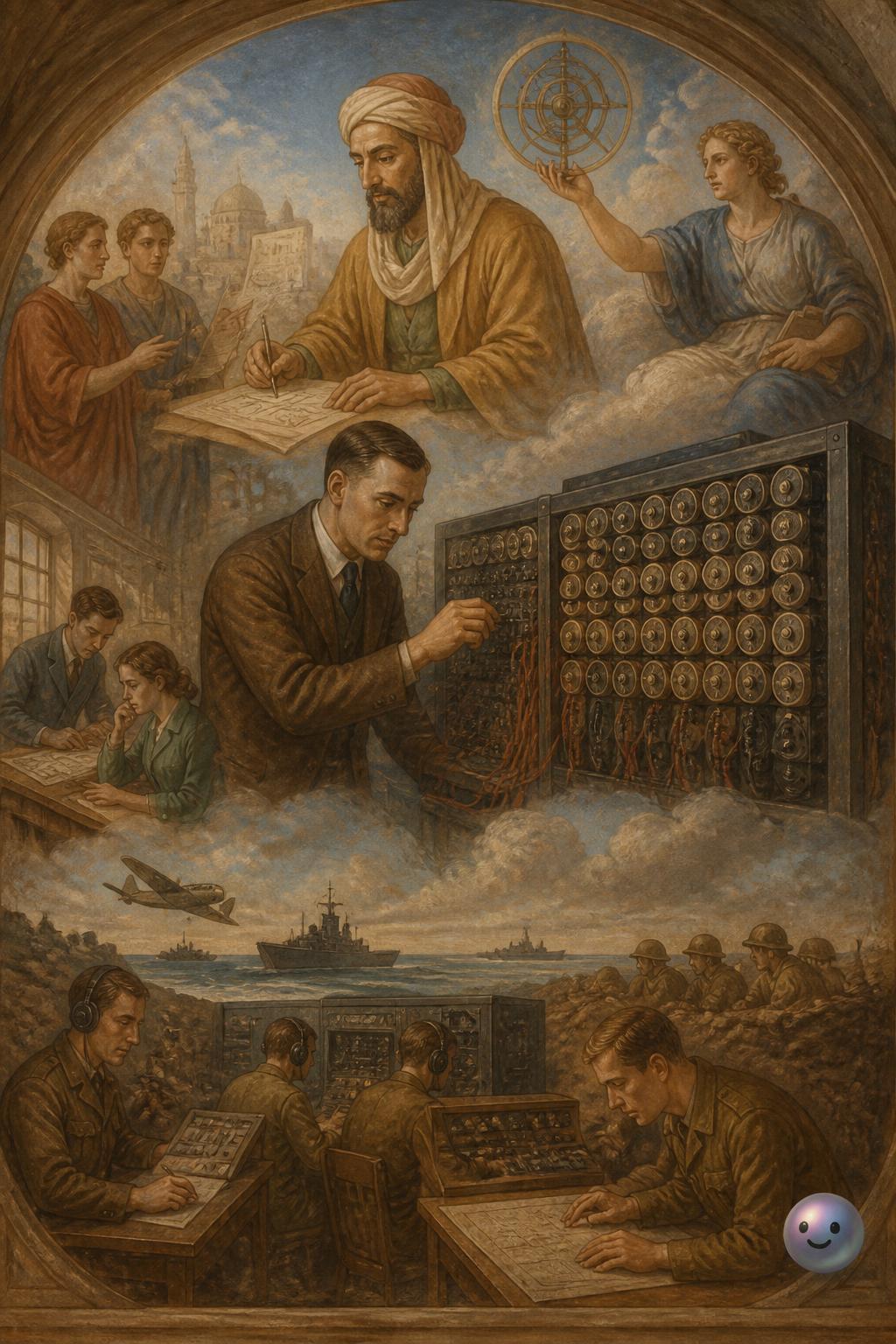
futura During World War II, Alan Turing used mathematical algorithms to crack the German Enigma code.
Computer systems use this method to execute a series of programs sequentially without manual user intervention. In the 1960s, programmers submitted physical paper cards to room-sized mainframes to run calculations sequentially.
Which computer pioneer discovered a physical moth inside a computer in 1947, popularizing the term 'debugging'?
What was the name of the original algorithm Google used to rank web pages in its search results?
What physical medium was used to feed algorithms and data into 19th and early 20th-century computers?
What was the primary goal of the codebreaking algorithms developed by Alan Turing at Bletchley Park?
What mathematical concept uses nodes and connections to map how websites link to one another?
Who is widely recognized as the world's first computer programmer for writing an algorithm in 1843?
In what year was the infinite scroll design pattern invented, changing how we consume feeds?